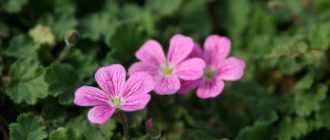
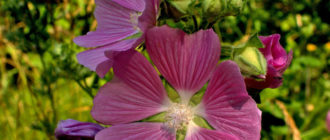
Lobelia is an annual plant in the campanulaceae family. It owes its name to Matthias de L'Obel, who tended England's Royal Botanic Garden. In its native South Africa, it is known as a perennial. It prefers moist and rocky areas. The best planting locations include temperate and subtropical zones. There are 300 species, some of which are considered medicinal. Just over 10 are popular.
Content
Description and characteristics of lobelia
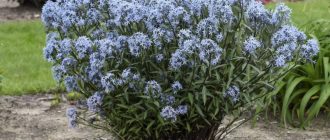
Characterized by delicate, vibrant flowers and lush bushes, it ranges in height from 10 to 70 cm. In Russia, it is grown without greenhouses, primarily in the temperate zone. It delights with its long blooms throughout the summer. Lobelia forms lush mats that add a unique charm to the garden, making it a popular groundcover. Its small, beautiful flowers stand out against the green foliage, resembling a cap. They can be compared to a bellflower or a forget-me-not.
Before frost, plants are sometimes transplanted into containers and stored throughout the cold season. During winter, little or no growth is observed, but replanting in the garden will result in more profuse blooms. Varieties differ in height and bush shape, as well as a wide range of colors: white, blue, pink, purple, red, and many others. Inflorescences with two shades are also available, with the second usually located in the center and resembling an eye.
Types and varieties of lobelia
Lobelias include all species of the bellflower family, from herbaceous plants to trees. Among this diversity, you can find:
- powerful representatives with many buds and large flowers;
- miniature bushes with small inflorescences that form a ball.
There are different forms:
- compact, 20 cm;
- upright (resembling a column), 30;
- climbing (branches fall in a cascade), 30-50.
There is a wide variety of varieties, the names of which indicate the main shade of color.
Lobelia magnifica
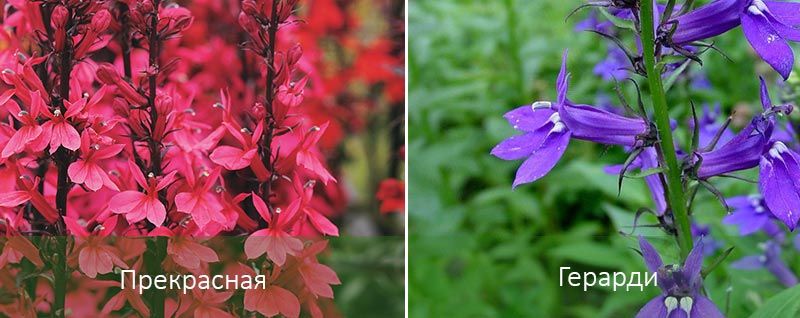
It is the most popular and most common perennial hybrid winter-hardy species. It is sometimes grown as an annual. A large number of cultivars, varying in shades of red, have been developed from it:
- Ruby Compliment Deep Red;
- hot pink Fan Deep Rose;
- rich scarlet color, a reddish tint of the Fan Scarlet plant itself;
- the same Russian Princess, smaller in size.
Lobelia Gherardii
A fairly tall plant, it can reach 1.2 m. The lilac-purple flower resembles a bell. The most famous cultivar is 'Vedrariensis.'
Blue
Occasionally found in gardens, its blue-purple flowers beautifully imitate water and resemble a waterfall. In the Middle Ages, it was believed to cure syphilis. This misconception is reflected in the Latin name Lobelia siphilitica.
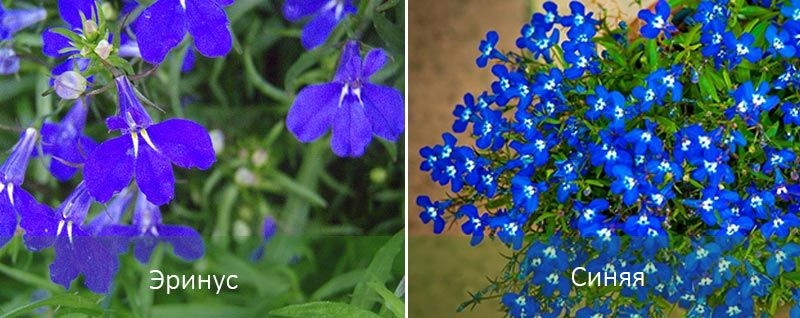
Erinus
An annual and the most commonly used species in landscape design, it grows as a low bush, 10-15 cm tall, covered in small flowers. Several forms are distinguished, varying in size and bush structure:
- spreading;
- compact;
- dwarf;
- upright;
- ampelous.
Each of them has several varieties. The most popular are: Half Moon, Riviera Lilac, Reggata Rose, and Cascade Mixed.
Crystal Palace
An annual, compact, ornamental shrub. The leaves are almost impossible to see through the blue flowers. It is sensitive to wind and drafts. Peat pellets are recommended for cultivation.
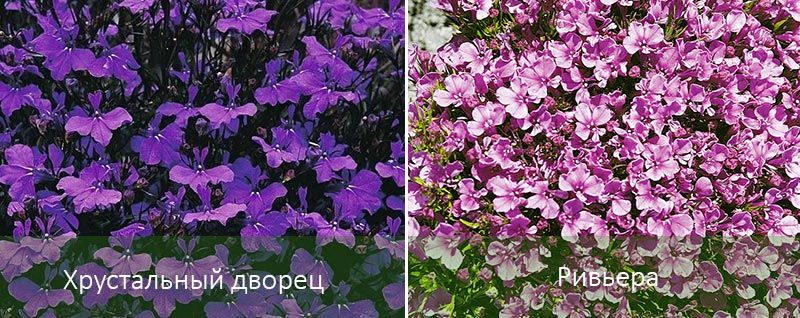
Riviera
An early-blooming variety (10-13 cm) with graceful flowers. Grow in partial shade or full sun.
Emperor Willy
A low-growing plant with blue flowers. It's used for garden decoration and in group plantings. It prefers fertile soil. The slender stems form extensive branches. Pruning will encourage a second bloom in early fall.
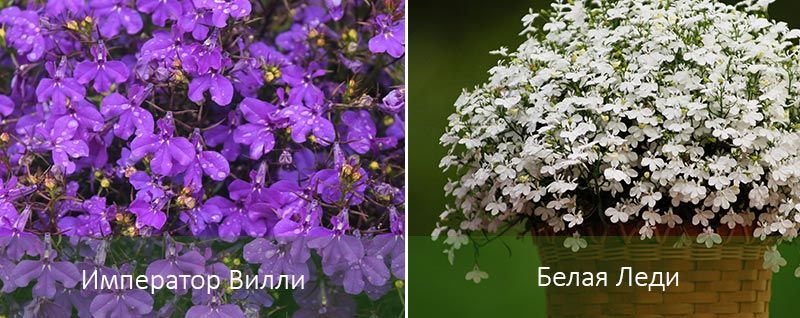
White Lady
Small white buds (up to 2 cm) cover each stem, forming a beautiful snow-white carpet. Care is straightforward.
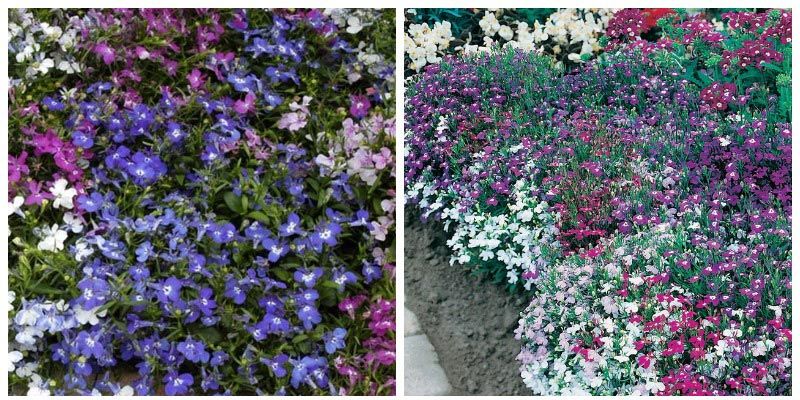
String of pearls
Flowers of a wide variety of colors resemble jewels scattered on the ground. They reach 10 cm in height and enjoy regular watering and sunlight.
Perennial varieties
The following types are distinguished.
Swallow's Nest
The blue-violet flowers are spike-shaped. This beautiful ornamental plant (up to 70 cm) can grace the garden for a long time.
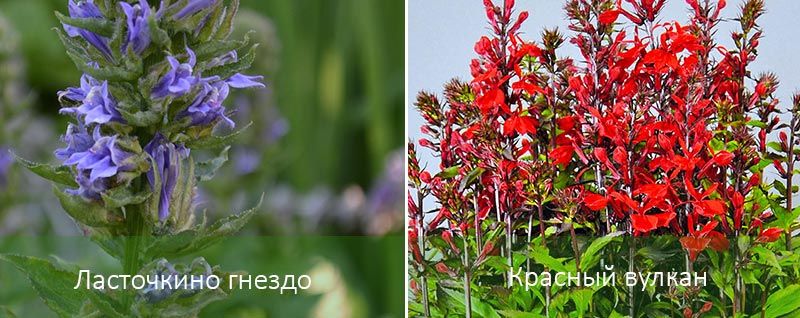
Red Volcano
The leaves have bronze and orange hues. The inflorescences are a fiery red. The sturdy, branched stems, up to 80 cm tall, require no additional support. It is excellent for garden arrangements and is often found near ponds.
Crystal Palace
Characterized by highly branched, thin stems that form a ball (approximately 23 cm). Flowers are dark blue (1.5 cm). To encourage strong branching, pinch.
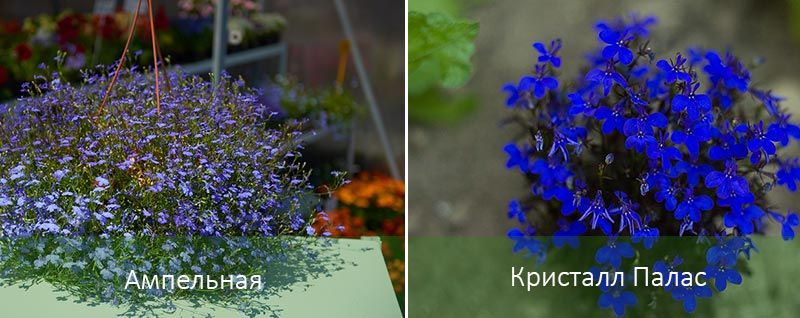
Ampelous
A hybrid created from several species. It is distinguished by its long, stiff stems. It is grown in pots, containers, or hanging baskets. The most popular varieties are:
Sapphire
A trailing, spreading plant. Pale green leaves. Cornflower-blue flowers with a white dot in the center. It's fussy about soil and fertilizer. Drainage should be added to the container.
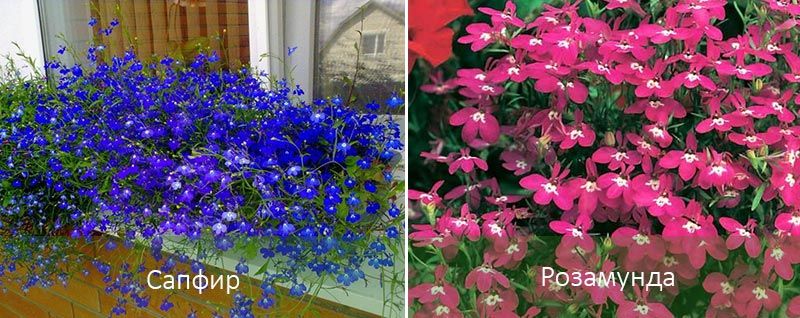
Rosamund
Hidden within the leaves on short stalks are crimson-red flowers (up to 2 cm) with a spot inside. A compact ball (15 cm) is formed by highly branched stems.
Strong
Its appearance resembles Erinus (40 cm). The difference lies in its larger flowers and leaves.
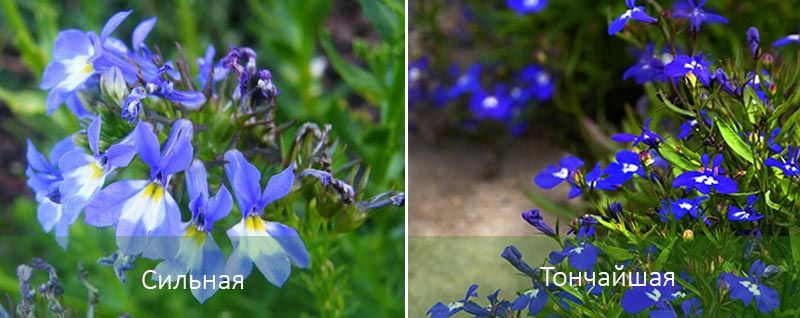
The finest
Rarely seen. Can grow up to 30 cm. Large, usually pink flowers.
Cascade
Long, drooping shoots, completely covered in small flowers, form a spherical bush. It prefers full sun and moist soil and is resistant to wind and cold. It can be repotted during flowering. Its characteristic color comes in various shades of white or blue.
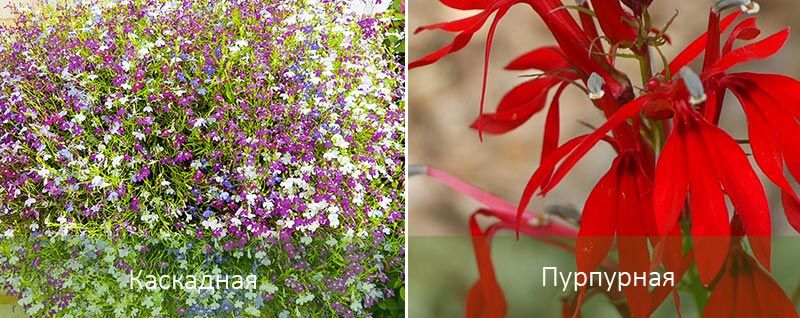
Purple (Cardinal)
Native to North American waters, its name derives from the color of its flowers. It thrives in aquariums and requires little maintenance, which has contributed to its widespread distribution. The oval-shaped leaves are arranged spirally on a straight stem, with the undersides turning reddish-purple under intense light. Good conditions will ensure the bright red flower emerges from the surface of the water. Pinching the tops will encourage the growth of side shoots, creating a beautiful appearance. Shrimp and juveniles love to feed on the leaves. Propagation is by cuttings.
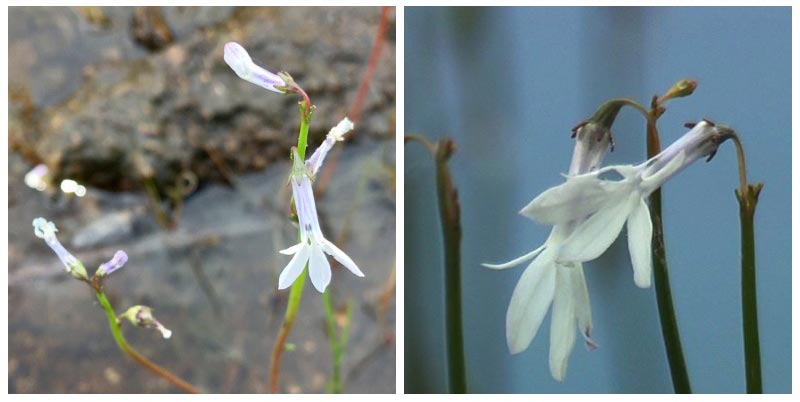
Dortman's lobelia (water lobelia)
This herbaceous plant is a rare relict species and is listed in the Red Book. It grows near bodies of water or in shallow water, on silty, sandy, or stony-gravelly soils. Leaves grow underwater near the basal rosette. The long, straight stem (60-80 cm) lacks leaves. Blue flowers appear in the leaf axils or at the top of the plant; less commonly, white-pinkish or purple flowers are also present.
Lobelia care
Successful cultivation and sufficient flowering require compliance with a number of basic conditions:
- the soil should be light, loose, but not fertile (sandy loam or loamy soils are well suited);
- good sunlight;
- constant hydration;
- application of necessary fertilizers in certain doses;
- pinch or trim seedlings;
- prune mature plants.
Planting and care vary depending on the location: soil or special containers. Limited space requires more frequent fertilization, while dry, hot weather calls for additional watering. In warmer regions, perennial lobelia can be kept in the open ground. Cover it with a thick layer (at least 20 cm) of special material to prevent frost damage to the roots. Air access and drainage of meltwater are essential. Most often, lobelia is propagated from seedlings as annuals.
Diseases
The main diseases are fungal and bacterial. At the first sign of infection, infected plants are isolated or destroyed, and the remaining ones are treated with fungicides. All equipment used is disinfected. Insufficient moisture causes leaf curling, while excess moisture causes white mold. The plant is susceptible to pest attacks. Standard measures are used to combat this problem:
- mechanical (restrict access using special traps, collected manually);
- chemical (treated with pesticides in accordance with the attached instructions).
Top.tomathouse.com recommends: Using lobelia in the landscape
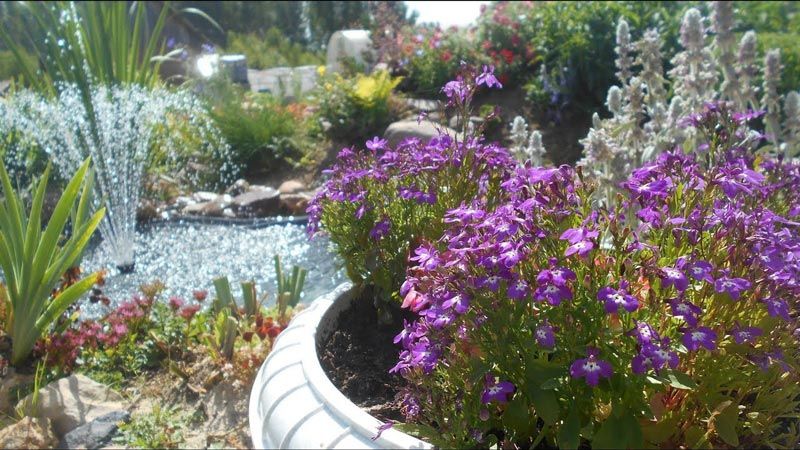
These plants require a fair amount of care, but the resulting beauty fully justifies the effort. To decorate gardens, they are planted along paths, around flower beds, near ponds, in pots, or in rock gardens. Trailing varieties are grown in boxes, pots, and special planters, completely concealing them. These containers are used to decorate terraces and balconies.
A diverse range of colors and the use of adjacent plants with contrasting shades create beautiful flowering arrangements. Lobelia can be planted alongside flowers with similar soil requirements. A beautiful look can also be achieved by combining different shades of this single plant. All these advantages allow it to seamlessly fit into any landscape and style.
The purple lobelia aquarium species beautifully decorates them and delights with its flowers. Its requirements include a volume of 40 liters, soft to medium water hardness, a temperature of 18 to 26 °C, supplementary feeding, and bright lighting.