The genus Lobelia includes approximately 300 species, but only 20 are widely cultivated as ornamental plants. One of the most popular is Lobelia erinus, native to South Africa. It has numerous cultivars in a variety of shades: blue, light blue, purple, reddish, and white.
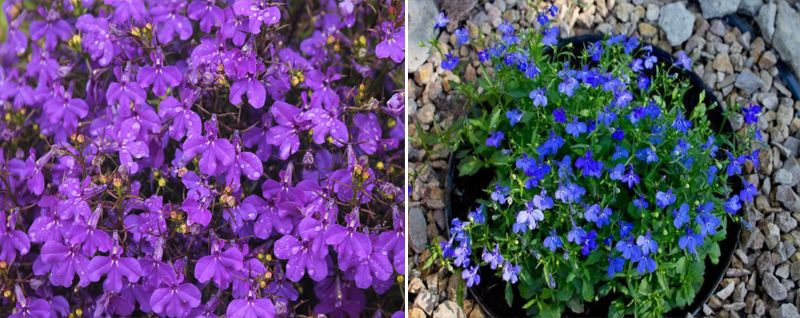
A remarkable variety is 'Emperor Willie,' a member of the Campanulaceae family. It is prized for its low maintenance, abundant blooms, and ability to thrive alongside other flowers. Although a perennial, it is also grown as an annual.
Description of the lobelia variety Emperor Willie
This herbaceous plant grows as small, spherical bushes. Small, entire leaves are borne on slender stems branching from the base. Blue flowers, borne on short peduncles, are not obscured by foliage and can reach 2 cm in diameter, with the bush reaching a total height of 10 cm.
Pros and cons of lobelia varieties
Pros:
- Continuous flowering from June to September;
- High variability of placement;
- Unpretentious in terms of lighting (tolerates partial shade well);
- Attacks by insect pests are excluded;
- Practically not susceptible to diseases;
- Lush flowering on "poor" soil.
Cons:
- The process of picking is complicated due to the small size of the young plant and its fragility;
- Demanding to temperature conditions and humidity parameters.
Using Emperor William
Lobelia is often planted along paths to create a dense border, interspersed with other perennials. Color combinations are important. For example, lobelia pairs well with plants such as carnations, salvias, petunias, verbena, and campanulas. It can be planted in flowerbeds, containers, and hanging baskets. Emperor William is excellent for filling empty spaces between larger shrubs, creating a green "carpet" over large areas that will be covered in bright blue flowers during the flowering season.
Used in conjunction with decorative stones, especially for rock gardens. This composition looks most effective when composed of rough, broken rocks such as slate, granite, tuff, or limestone. Boulders and hewn stones are less desirable. However, for a natural look, combine no more than two varieties. Miniature conifers can be used as additional flora, and other perennials and shrubs also work well. It's not recommended to create a rock garden with more than five tiers; an odd number is preferable.
Features of growing the variety
Seedlings are preferred. The seeds don't need to be planted—they'll germinate naturally when exposed to light.
The seedlings are covered with glass, having been moistened with a spray bottle. Seedlings do not emerge until at least 10 days after planting, and they grow slowly. After three weeks, they are transplanted into groups of four.
Seedlings are planted in late spring. The plant requires high moisture content, soil with a neutral pH, and low organic matter. Both loamy and sandy loam soils are suitable.
Powdery mildew and black rot are the only diseases that Emperor Willie is susceptible to. These diseases, which affect plants of any age, are triggered by high humidity. At the initial stages of these diseases, phytosporin or a strong solution of potassium permanganate can be used. When using the latter, water the soil and leave it to dry for a couple of days in a warm place.
Top.tomathouse.com recommends: Care tips for Emperor Willie lobelia
Overfertilizing will lead to over-fertilization of the soil, causing the lobelia to grow rapidly, the foliage to become overweight, and take over the plant's full potential. Flowering will also be delayed and sparse.
In poor soil, on the other hand, this perennial will delight its owner with lush, long-lasting blooms. To prepare this soil, you'll need loose soil and river sand in a 3:1 ratio. As a preventative measure, the sand should be baked in the oven for half an hour. Another essential ingredient is vermiculite, which will loosen the soil and saturate it with oxygen and minerals. Adding wood ash will increase the phosphorus, potassium, and calcium levels to the required level. Sift the ash thoroughly before adding it. The final ingredient in the mixture is a small amount of superphosphate. When purchasing a ready-made mixture, it's best to choose a specialized soil for violets.
Before planting, allow the soil to settle in the container. To prevent infection, water the soil with a fungicide solution about 2-3 days before planting. In open ground, planting holes up to 30 cm deep should be spaced at least 15 cm apart. Avoid disturbing the root ball, as this can cause significant damage to the lobelia's fragile root system. Water after planting only with meltwater.
The bottom of the hole is filled with broken brick or expanded clay, providing drainage for the Emperor Willie. The bush is placed on top, and its roots are covered with soil. Young seedlings, up to five in number, are safely planted in a single hole.
The first feeding is carried out two weeks after planting the seedlings in a permanent place or after germination.
During the initial stages of plant development, watering from a watering can or similar container is not recommended. A spray bottle is also unsuitable. A medicinal enema is the best option. There's no need to water the seedlings initially, as they absorb sufficient moisture from the soil surface.
When growing seedlings in winter, it's best to use artificial lighting. LED, fluorescent, and halogen lamps are excellent choices. Plants tend to stretch if they receive insufficient light. During the first few weeks, lobelia will benefit more from artificial lighting than direct sunlight.
When the seedlings reach 1 cm in height, the film or glass should be removed. Removing the cover abruptly is a mistake, as the plant risks stress and death that same day. It's better to gradually uncover the surface.
For germination, maintain a temperature of around 27°C (80°F) with high humidity. To prevent souring or mold formation, ventilate the seedlings three times a day.
Pricking out lobelia is a very delicate process. A wooden stick is recommended, but a sharpened pencil will also work. Use these to gently pinch the roots of the young plant to encourage branching and thickening of the root system.
The duration and vibrancy of flowering directly depend on proper care, particularly the timely removal of faded stems. Pruning should be done at the end of the first bloom, at a height of 5 cm from the ground.
Then new shoots begin to grow and bloom more abundantly. By late summer, the number of flowers on the bushes has significantly decreased. To maintain a lush appearance, it is recommended to replant with new potted plants.