In this article, you'll learn how to grow lobelia from seed, the best time to plant it this year according to the Lunar Calendar, and more. But first, let's look at what kind of plant lobelia is.
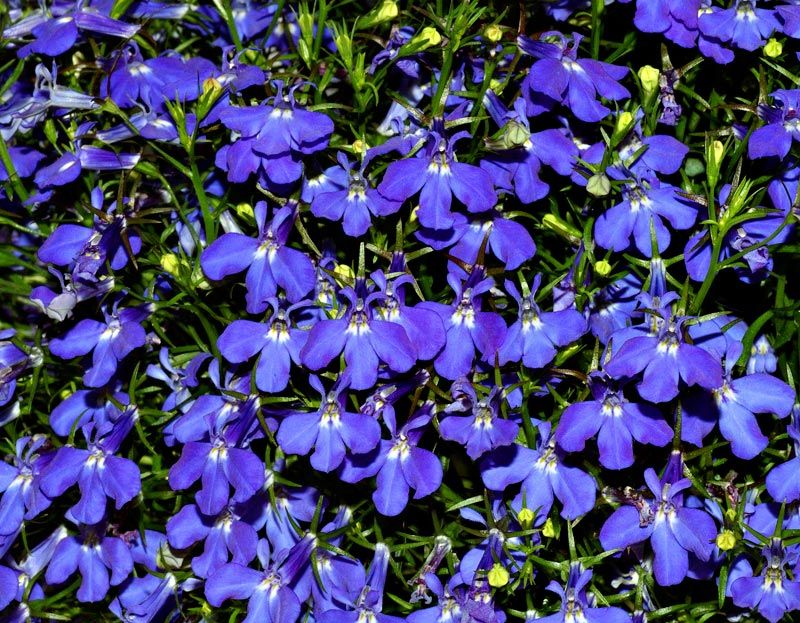
Lobelia is a profusely flowering herbaceous shrub or subshrub. This South African plant has become established in Russia. It blooms all summer long. White, blue, pink, purple, and blue caps of small flowers offset the green foliage. The length and height of the stems depend on the lobelia variety. The annual potted plant is brought indoors for the winter, where it remains until planting in a flowerbed the following year. Gardeners love to decorate their gardens with this flower. To grow strong and vigorous lobelia seedlings, it is important to understand its characteristics, planting techniques, and the rules for sowing and caring for it.
Content
Timing of sowing lobelia seedlings
Lobelia is propagated by seeds (their viability lasts for three years), and occasionally by cuttings. The plant germinates and develops slowly. It is recommended to sow while there is still snow outside. This ensures flowering in early summer. The first shoots will appear in 5-10 days after sowing, and the lobelia will bloom in 50-60 days. If you sow the seeds in April, the plant will bloom only in June.
The difficulty lies in the fact that daylight hours are still short, and lobelia seedlings require 10 hours of full light. Therefore, indoor plantings are illuminated with photo lamps or grown in heated greenhouses.
Some believe that March crops catch up with February crops in development. This can be verified by sowing two batches of seedlings at different times and choosing the optimal dates for your region.
Lobelia planting by region
The decision to begin sowing is made based on the region's climate. In the south of the country, seeds are planted in February, and even January, to beautify flowerbeds and trim garden path borders before the onset of hot weather.
When sowing lobelia seeds, take into account not only the regional climate, but also the weather conditions.
| Region | March | April | May |
| Krasnodar Krai | +4…+9 °C | +9…+16 °C | +15…+22 °C |
| Karelia | -5…-2 °C | +1…+5 °C | +7…+13 °C |
| Central Russia | -8…0 °C | +1…+10 °C | +8…+19 °C |
| Siberia | -8…-3 °C | +2…+8°C | +7…+14 °C |
| Yakutia | -19…-14 °C | -6 …-2 °C | +4…+11°C |
| Far East | -4…-9 °C | +1…+8 °C | +8…+16 °C |
In southern Russia, you can start sowing seeds as early as February. In northern regions, sowing is postponed until March. Residents of Siberia and the Urals begin work at the end of March. Once the threat of night frosts has passed, lobelia seedlings can be transplanted into clusters, and potted plants can be moved outdoors.
Sowing dates according to the Lunar Calendar for 2019
For those planning gardening according to the lunar calendar, the following dates are recommended for sowing lobelia:
| Month | Favorable days for planting lobelia | Unfavorable days | |
| Annual | Two-year-old | ||
| January | 17-19, 23-27 | 14-19, 23-27 | 5, 6, 21 |
| February | 6-8, 11-17, 21-25 | 11-13, 20-25 | 4-6, 19, |
| March | 12-17, 19, 20 | 12-17, 19, 20, 27-30 | 6, 7, 21 |
| April | 6-8, 11-13, 15-17, 29,30 | 6-8, 11-13, 15-17, 24-26, 29, 30 | 5, 19 |
| May | 8-17, 21-23, 26-28 | 6-8, 10-17, 21-23, 26-28, 31 | 5, 19 |
| June | 1, 2, 5, 6, 9-13, 16, 18-20 | 1, 2, 5, 6, 9-13, 16, 18-20, 27-30 | 3, 4, 17 |
| July | 8-10, 25-31 | 8-12, 25-31 | 2, 3, 17 |
Soil and containers for lobelia
The plant's soil should be light, crumbly, and have a neutral or slightly alkaline pH. This can be easily tested with litmus paper or vinegar. Place the soil on a piece of glass and water it with the solution. The desired reaction is a slight fizz.
Use ready-made nutrient soil or prepare your own potting mix. The following composition (2:2:2:1) is recommended:
- garden soil;
- peat;
- humus;
- river sand.
Other mixture options include vermiculite, coarse river sand, garden soil, or humus.
A composition of the following components is used, take 1 part of each:
- river sand;
- peat or leaf soil;
- turf soil;
- coconut substrate.
A high organic content in the soil stimulates foliage growth despite sparse flowering. Vermiculite reduces soil acidity, increases permeability, and stores water. This has a beneficial effect on lobelia development.
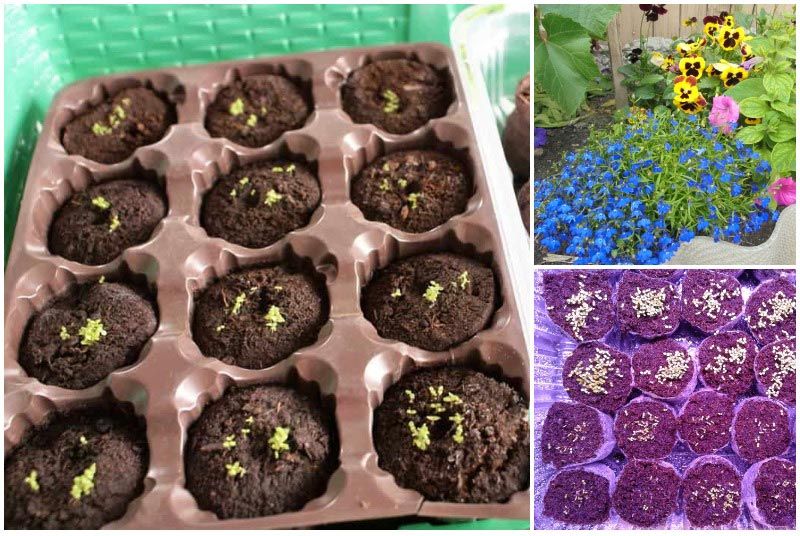
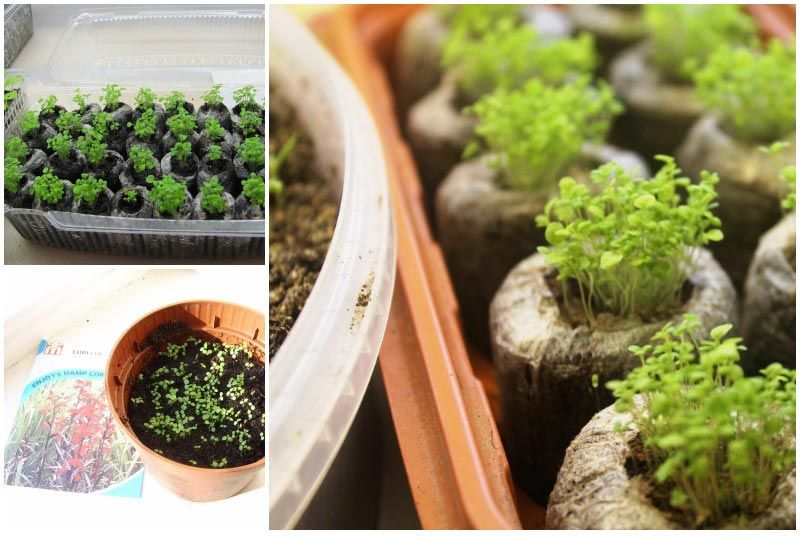
It's convenient to use ready-made peat pellets. They are sold in various sizes and in special plastic containers of 6, 50, or 100 pellets. The seeds are germinated, pricked out, and transplanted to a permanent location along with the substrate.
The soil mixture is disinfected before sowing:
- calcined in the oven;
- pour boiling water over it;
- treated with 1% potassium permanganate solution;
- warm up with steam;
- use fungicides Previkur or Maxim.
To sow lobelia seeds use:
- boxes made of wood or plastic;
- used cups and jars for fermented milk products;
- eggshells and packaging;
- tea bags; plastic cassettes.
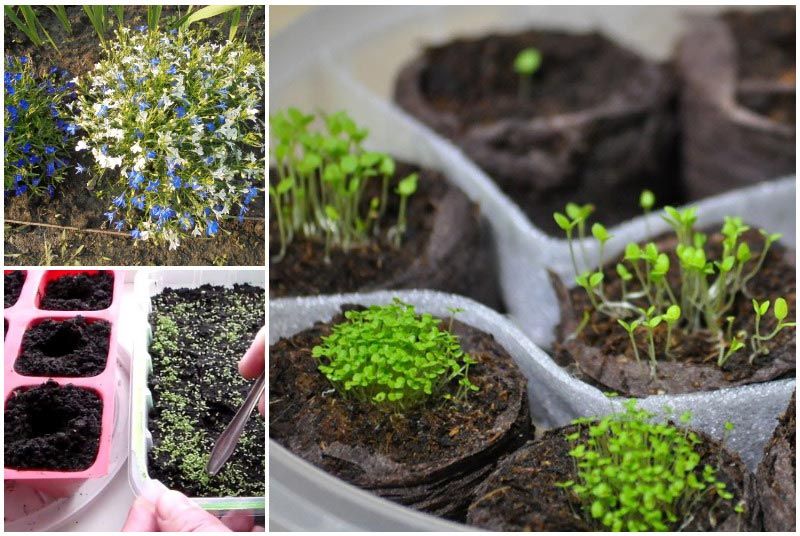
Containers should be washed with baking soda or treated with potassium permanganate. To prevent root rot, make drainage holes in the bottom of the containers. Plastic can be easily pierced with a heated nail or awl.
Top.tomathouse.com recommends: various methods for sowing lobelia
One gram of planting material contains 45,000 seeds. It is packaged in paper packaging, ampoules, and plastic zip-lock bags. The planting method is chosen based on the small size of the seeds.
Lobelia is traditionally sown in a container. Follow these steps:
- pour 1 cm of drainage layer onto the bottom of the container;
- fill with soil mixture to three-quarters;
- water the soil with solutions of potassium permanganate or fungicide;
- level the surface and compact it;
- mix lobelia seeds with sand on a sheet of paper;
- sow evenly over the entire soil area;
- cover the box with film or glass;
- Place in a bright place with an air temperature of +23…+25 °C.
Gardeners are experimenting with new ways to sow lobelia seeds.
Toothpick
The soil in the box is covered with a layer of snow. The scattered seeds are clearly visible on the white surface. Using a toothpick, they are evenly distributed over the soil.
Hydrogen peroxide
Place lobelia seeds in a glass and soak them in hydrogen peroxide for 5-10 minutes. Add water, stir, and spread the mixture over the prepared soil surface with a teaspoon.
Tea bags
Cut off the glued joint and the string, and straighten the bag. The tea leaves remain as drainage and fertilizer. Add soil to the top of the bag and place it in a plastic container. Place one seed per bag onto the watered, compacted soil.
Toilet paper
Place 2-3 layers of toilet paper on a strip of plastic wrap. Moisten with water. Use tweezers to space the seeds 2-4 cm apart, leaving 1.5 cm from the edge of the strip. Cover the seeds with another layer of paper and roll them into a roll. Secure with a rubber band and attach a label with the variety name and date. Place the roll in a glass, add 3-4 cm of water, and cover. Pick the sprouted seeds and plant them in separate containers along with the paper.
Peat tablets
A practical method: Soak the tablets in boiling water for 10 minutes, and after the peat has swollen, sow the lobelia. The grown seedlings, along with the peat, are transferred to a pot or planted in a flowerbed or border.
Underlay for laminate
This method is called the "snail." Meter-long strips of 2 mm thick substrate are cut into 10 cm wide strips. Soil is placed on the moistened surface of the material at 20-30 cm intervals at one end and carefully rolled into a "snail." The roll is secured with rubber bands, placed vertically, and topped with soil. Ten seeds are distributed in a spiral pattern with a wet toothpick, spaced 5 cm apart, and moistened. The roll is placed in a light-permeable container and traditionally covered with glass or plastic film.
Caring for lobelia seedlings
Seedlings emerge in 5-10 days. The plant's roots grow near the surface, so if the soil dries out, the seedlings die within a couple of hours. Ventilate the seedlings daily and remove condensation on the lid. This reduces the risk of root rot and blackleg. Do this for 10 minutes during the first few days, then for half an hour. Harden off by adding 20 drops of water daily.
Lighting
Place the seedlings in diffused light or oblique sunlight for 12-14 hours. Use photo lamps if natural light is insufficient. In bright sunlight, cover the sprouts with paper or place the seedling boxes in west-facing windows.
The recommended temperature for Lobelia sprouts is +13…+17 °C.
Watering
Lobelia seedlings tolerate dry soil worse than excess moisture. The leaves curl, and the plant dies. Water the early seedlings around the perimeter of the container, then under the roots. Ensure there is no excess water in the trays, as this can lead to seedling diseases. Use settled, room-temperature water for watering.
Top dressing
Use a general-purpose fertilizer. For month-old seedlings, reduce the solution concentration by 2-3 times.
Picking
The procedure time is determined by the number of leaves (2-3) and the plant's height reaching 4 cm. A group of 4-10 plants is dug up, the roots are pinched, and the plants are transplanted with a lump of soil into containers 8-9 cm in diameter. A teaspoon is used as a tool. The transplanted seedlings are sprayed with an Epin solution for adaptation. Dissolve 3 drops of the solution in 1 liter of water.
Pinching
Remove the tops of shoots with 5-6 leaves, 5-7 cm tall. This prevents the seedlings from becoming overgrown. This helps form a lush bush and prepare for future abundant flowering. Lobelia begins blooming before repotting, while still in small pots or containers.
Hardening
If the outdoor thermometer reads +10…+15°C, we're preparing the seedlings for planting outdoors. The seedling trays are placed outside or on the balcony for 5-10 minutes two weeks before transplanting. The hardening-off period is gradually increased. Then, they are left outdoors for the entire day, and then overnight.
They monitor the weather forecast to avoid seedlings dying due to night frosts.
Transfer
Lobelia is planted outdoors in May or early June. Choose loamy or sandy loam soils. The flowerbed should be well-lit. The beds should be positioned so that the plants receive morning slanting sunlight and receive partial shade during the midday heat. Seedlings are planted in groups of 5-10 plants, spaced 10-15 cm apart. Formed bushes create colorful flower borders and complete the flowerbed.