Lobularia, or Lobularia maritima, is a genus of flowering plants in the Brassicaceae family. It is closely related to the genus Alyssum. Previously, they were not distinguished, but now Lobularia is recognized as Lobularia. Therefore, Lobularia maritima is often called Alyssum maritima. The article below compares these two plants.
Content
- 1 Description of lobularia or lawnwort
- 2 A brief table of the conditions for growing lobularia
- 3 Lobularia species with photos and descriptions + 33 varieties
- 4 Growing Lobularia from seeds at home
- 5 Planting lobularia seedlings in open ground
- 6 Planting lobularia seeds in open ground
- 7 Caring for Lobularia in the Garden
- 8 Diseases and pests of lobularia, control methods
- 9 Combination with other plants, lobularia in landscape design
- 10 What is the difference between Lobularia and Alyssum?
Description of lobularia or lawnwort
The flower got its name from its fruits, which look like tiny pods – lobulus in Latin.
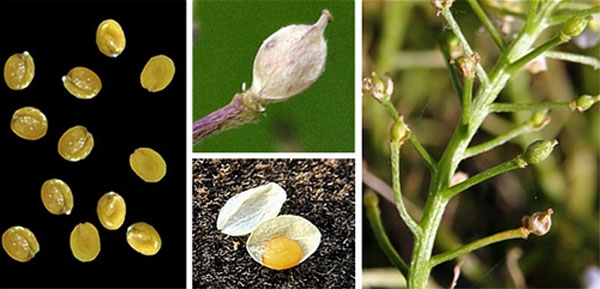
The plant has several other names, such as lawn plant or stone plant.
There are five species of Lobularia, the most common among gardeners being Lobularia maritima. Native to the Mediterranean, the plant can be found in a wide variety of colors and sizes.
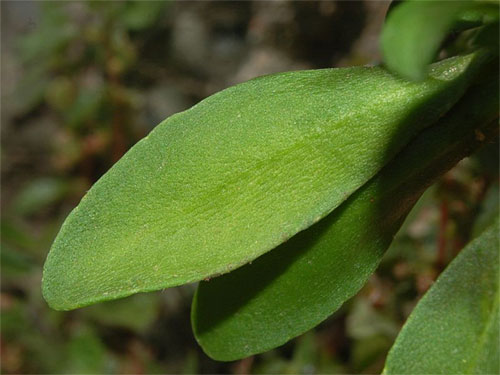
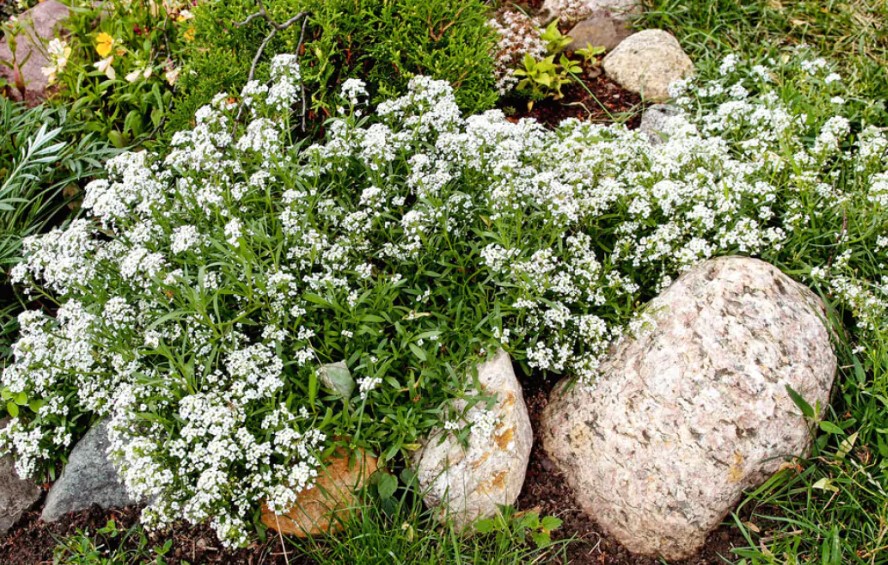
The plant can reach a height of 8 to 40 cm, with branching beginning almost at the base. The leaves are small, lanceolate, and pointed; due to the dense fur, they appear grayish-brown from a distance, as if carved from stone.
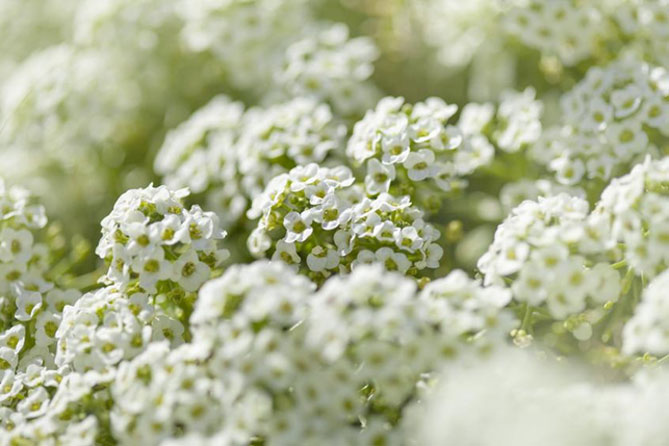
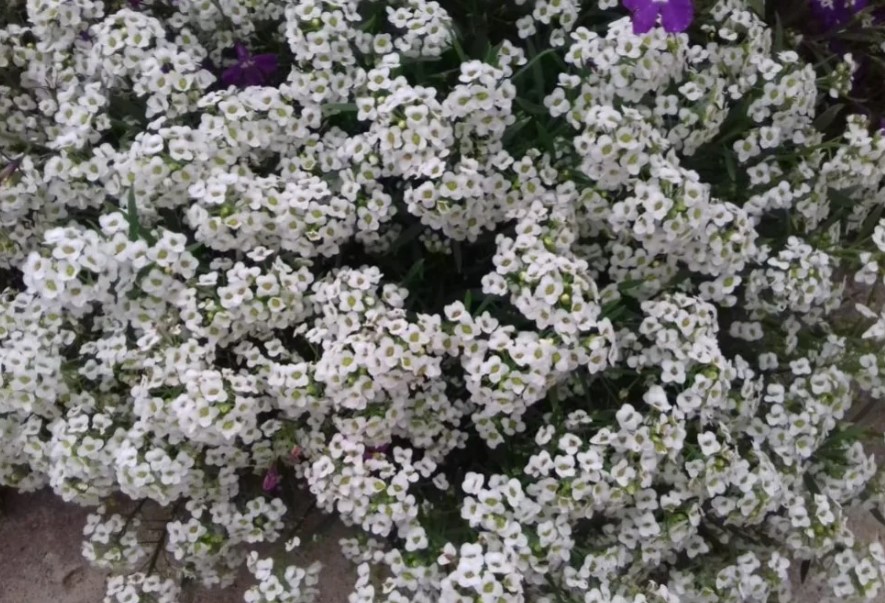
The flowers are small, gathered in fluffy, racemose inflorescences. The color will depend on the cultivar.
Annual varieties of lobularia are grown in most of our regions.
A brief table of the conditions for growing lobularia
| Landing | Seeds can be sown starting in the second half of March. They can be transplanted into open ground in May. |
| Bloom | Long-term, from June to September. |
| Lighting | Bright, does not like shade. |
| Priming | Neutral or slightly alkaline, lightweight, permeable to water. |
| Watering | It is carried out only in hot weather conditions with a prolonged absence of precipitation. |
| Top dressing | Doesn't need it. |
| Reproduction | Seeds. |
| Diseases | May be susceptible to fungal infections. |
| Pests | Affected by slugs and cruciferous flea beetles. |
Lobularia species with photos and descriptions + 33 varieties
There are currently five species in the genus Lobularia. They grow wild on the shores of the Mediterranean, the Canary Islands, and West Africa. Lobularia maritima, an annual flower, is grown in gardens everywhere.
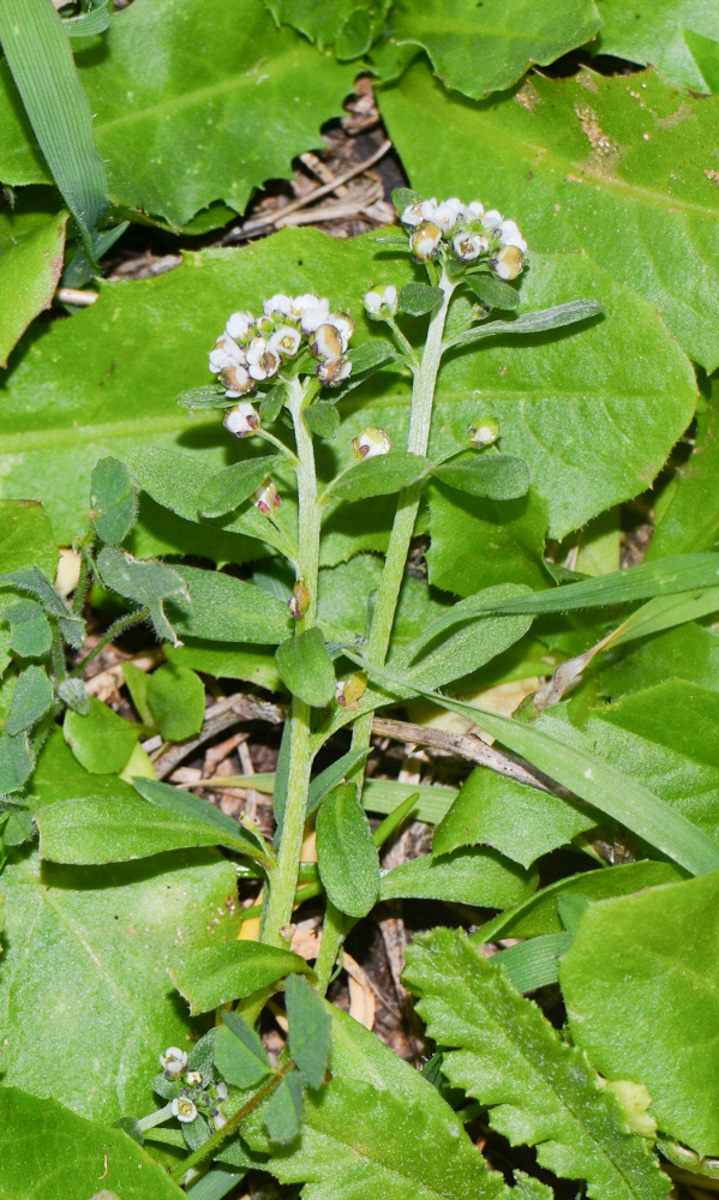
Lobularia arabica
A relatively tall variety of Lobularia, with shoots up to 40 cm. The leaves are quite large for a Lobularia, shaped like an inverted teardrop. The inflorescences are small. The flowers are white.
Lobularia canariensis
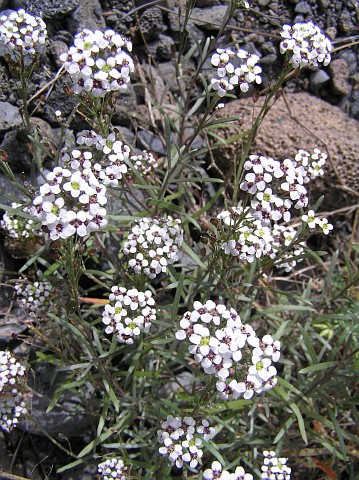
This species includes several subspecies, including Lobularia canariensis (common in Gran Canaria and Tenerife), Lobularia canariensis fruticosa (Cape Verde), Lobularia canariensis marginata (Lanzarote and Fuerteventura), Lobularia canariensis intermedia (Tenerife, La Gomera, El Hierro, and La Palma), and others. The plant typically grows as a compact bush with white flowers. It requires a specific climate and plenty of light.
Lobularia libyca
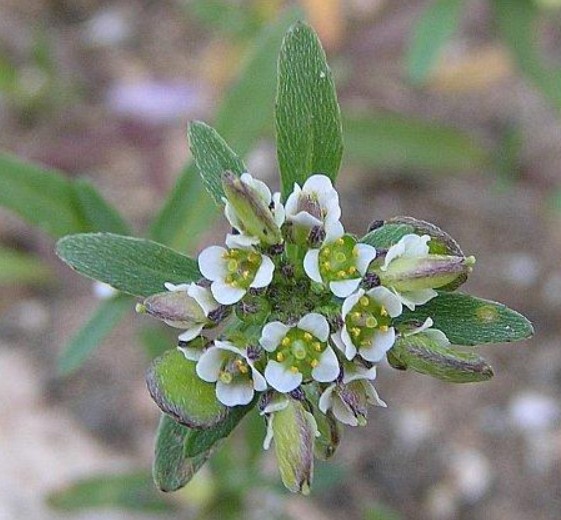
An annual plant up to 40 cm tall. The flowers are large and white. Each fruit contains up to 5 seeds.
Lobularia maritima
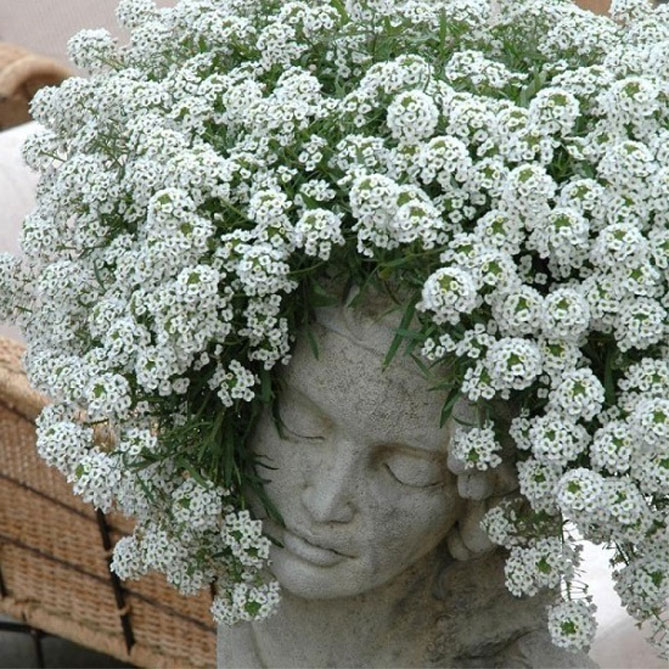
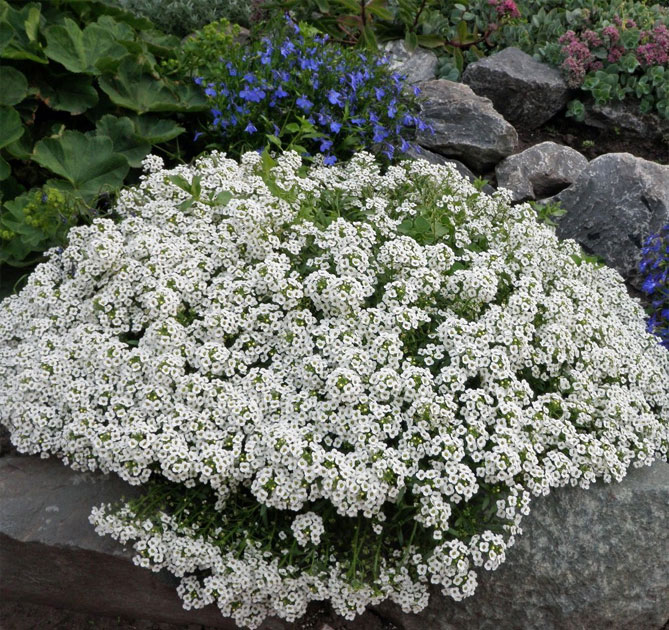
Lobularia maritima, or seaside lobularia, is the most common species found in our country. It includes a large number of cultivars, which have been classified into appropriate groups based on various characteristics. The flowers can be purple, pink, or red, depending on the cultivar. The shoots are medium-sized and spreading. The bush is very bushy, the leaves are small, and from a distance, seaside lobularia resembles a large blooming ball. Furthermore, the plant exudes a wonderful honey-like aroma.
| Group | Variety | Height and color | Description |
| Bentham (var. bentamii) | Wise Risen or Resurrection of the Sage
|
Up to 35 cm tall, flowers are white. | A relatively large plant. Flowering begins in late spring, producing large inflorescences. |
| Schneesturm or Snowstorm
|
Up to 25 cm, white flowers. | Medium-sized variety, flowering from late May to first half of June. | |
| Compact (var. compactum) | Violet Konigin or Violetta Konigin (Violetkonigin)
|
Height up to 15 cm, flowers are purple. | A plant with branching shoots. |
| Snow Carpet
|
Bushes are 12 to 15 cm high, flowers are white. | Compact bushes, inflorescences have a distinct aroma. | |
| Royal Carpet | Height 8-12 cm, color is multi-colored: lilac, pink, purple and white. | The bushes are branched, very compact, and completely covered in flowers. They have a distinct honey aroma and bloom for a long time. | |
| Prostrate (var. procumbens) | Schneeteppich or Carpet of Snow
|
Up to 15 cm tall, flowers are white. | The shoots are spreading, the variety is suitable for alpine slides and balconies. |
| White City
|
Height 8-12 cm, flowers are white. | An annual. The inflorescences completely cover the plant during flowering. | |
| Rosie O'Day (Rosie O'Day)
|
Height up to 12 cm, flowers are pink. | A densely branching plant with a distinct honey scent. | |
| Heart note
|
Height 10-12 cm, flowers red-pink. | A compact, densely branching variety, ideal for balcony cultivation. | |
| Variegated (var. variegatum) | Easter Deep Rose
|
Height up to 20 cm, flowers are deep pink. | A compact bush with bright flowers and a long flowering period |
| New Apricot
|
Height up to 20 cm, color pale apricot. | Dense bushes with fragrant flowers. | |
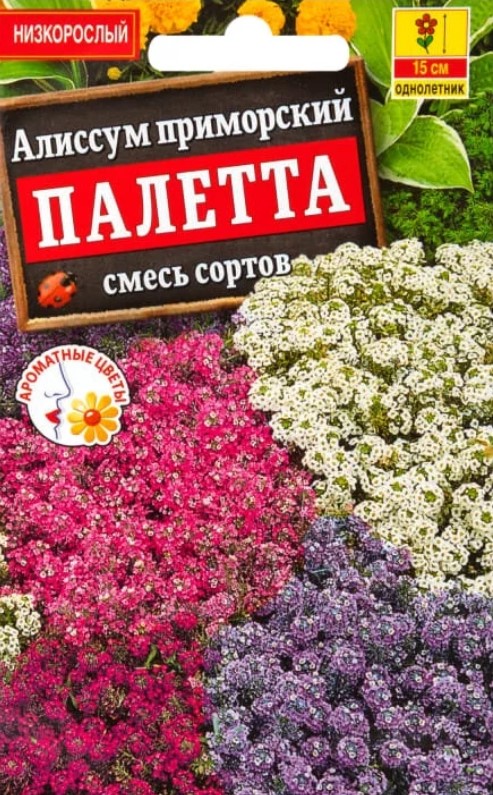
| Paletta
|
Mixture Bushes up to 10 cm high, color can be white, pink, blue or lilac. | An unpretentious variety with high decorative value. | |
| Salmon or Salmon
|
Height no more than 10 cm, salmon color. | The shoots are branched, neat, with small oval leaves. | |
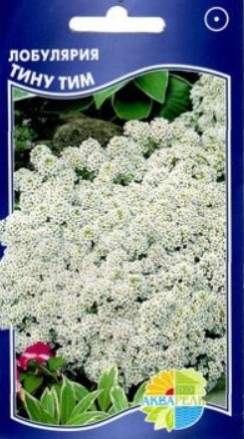
| Tiny Tim
|
Height up to 10 cm, flowers pinkish-white. | A compact bush, suitable for multi-tiered flowerbeds. | |
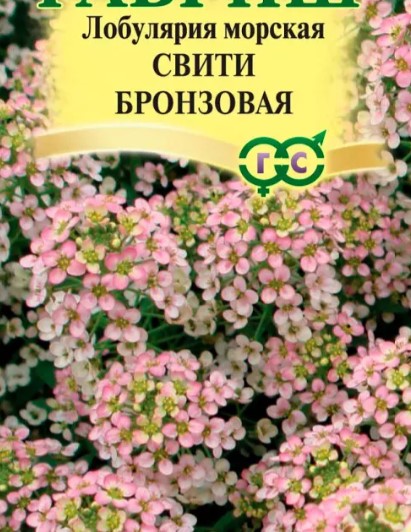
| Bronze sweetie
|
Height up to 12 cm, inflorescences of bronze hue. | An annual with a honey aroma. |
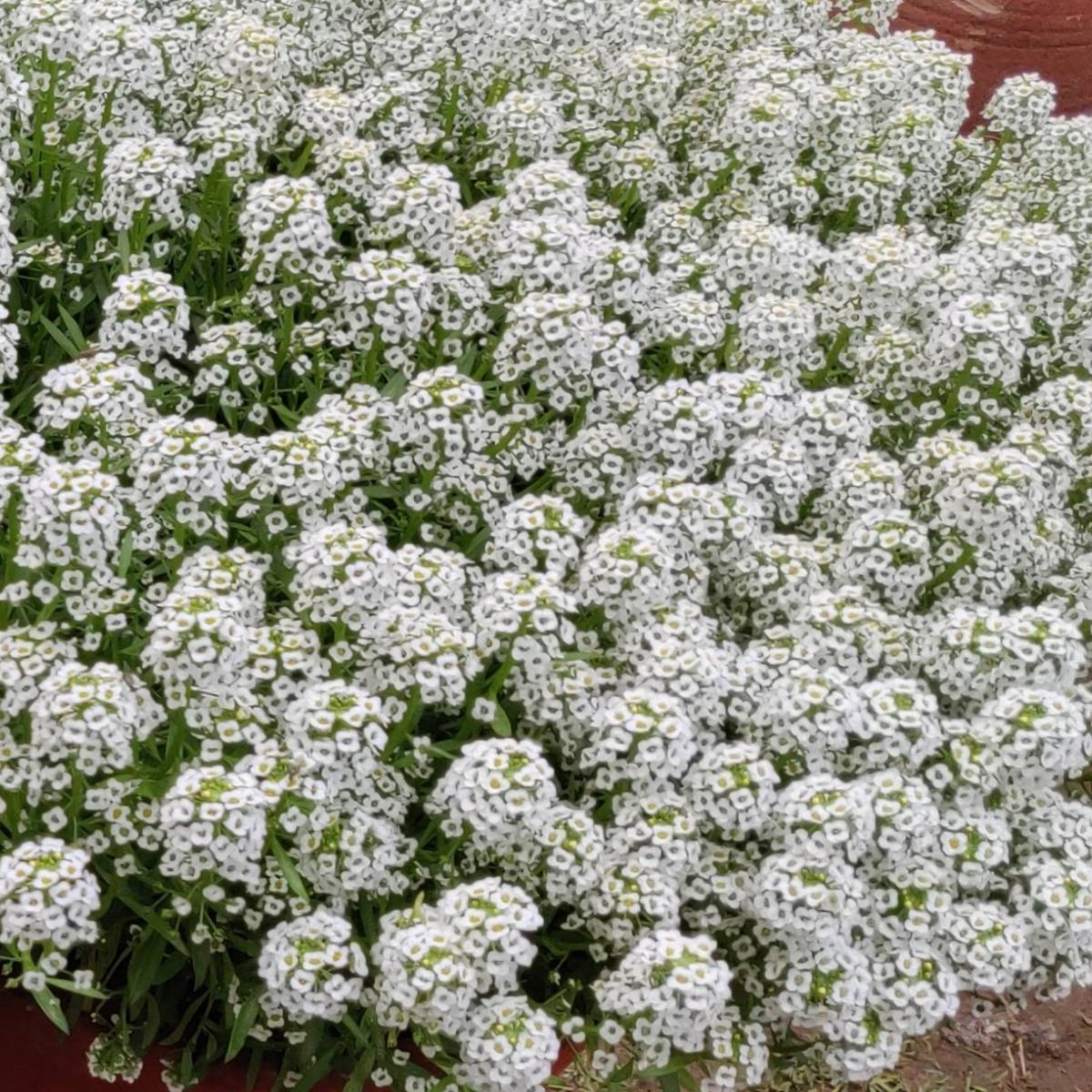
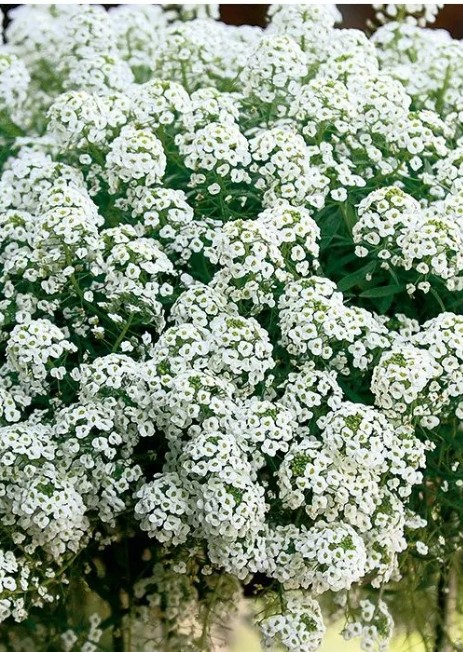
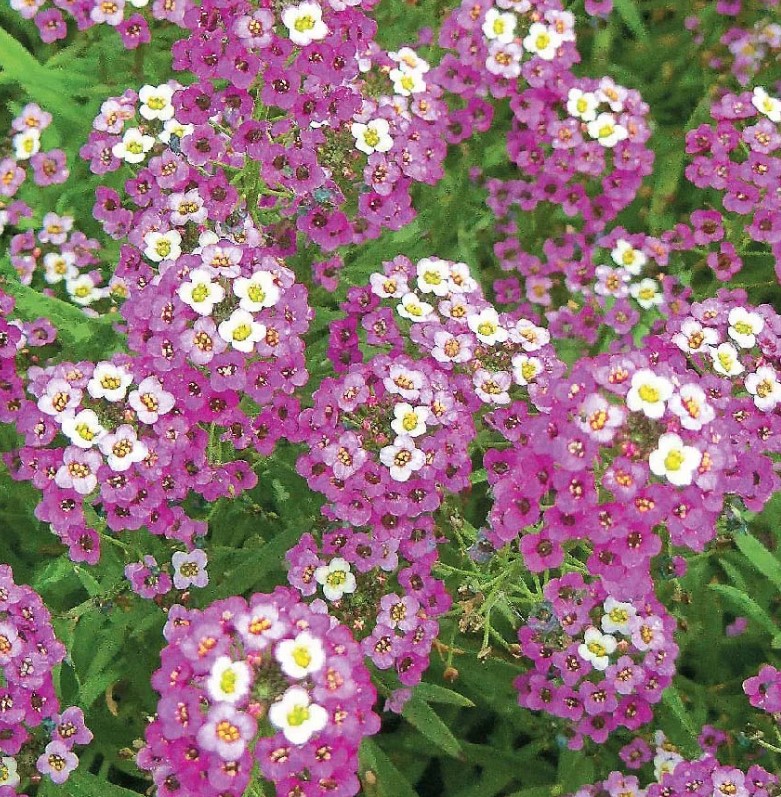
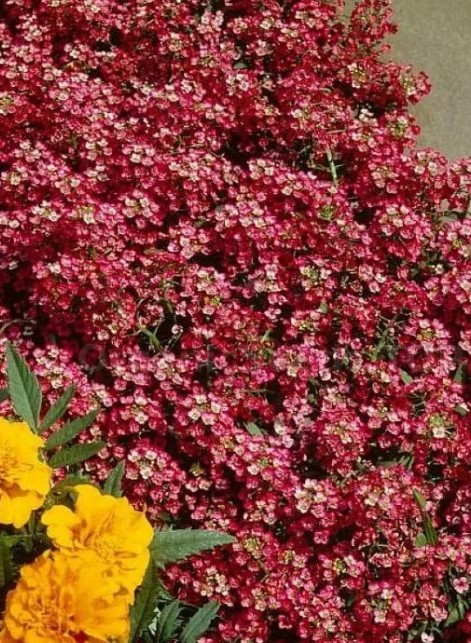
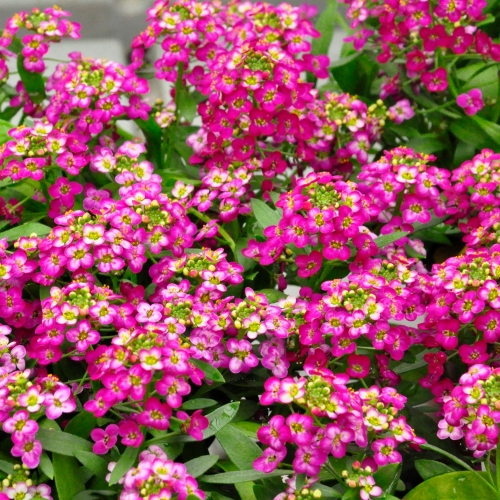
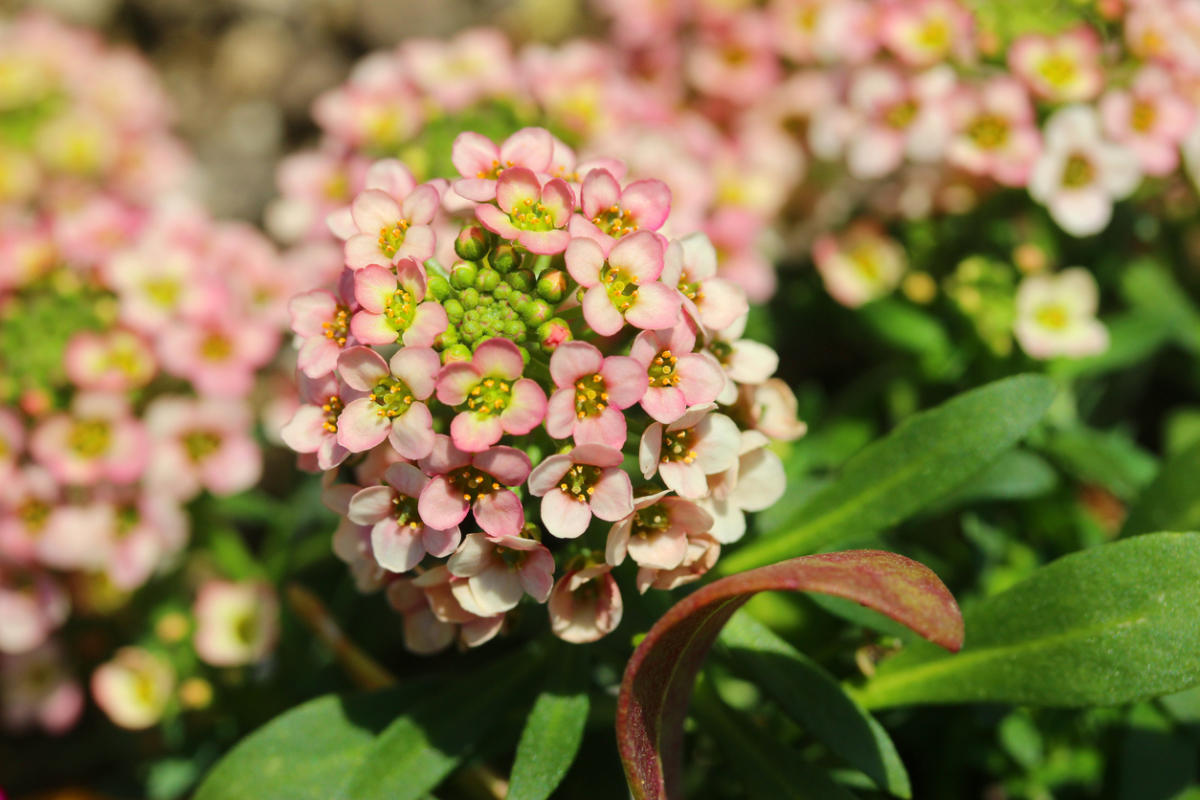
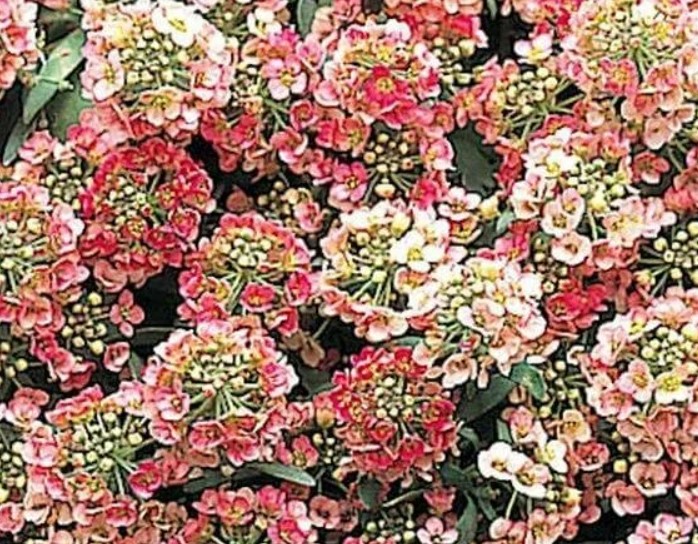
Lobularia varieties by color
Now let's look at different types of lawn mowers depending on their color.
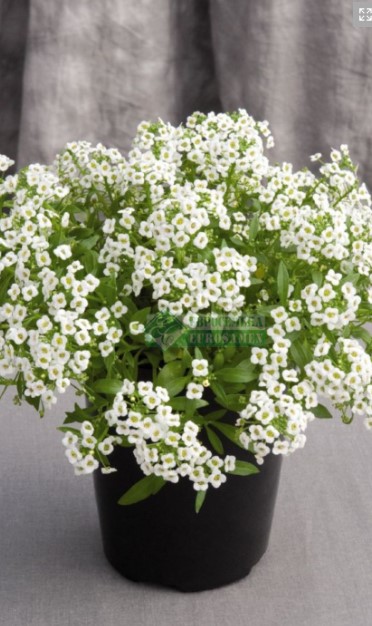
Whites
- Easter Bonnet White is a groundcover annual with shoots up to 25 cm high, snow-white flowers with a green center.
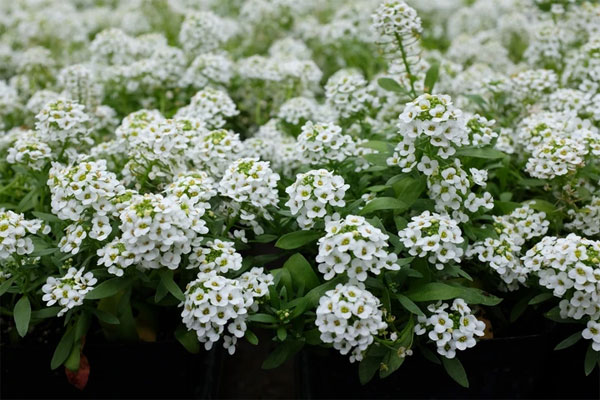
- Snow Princess is a compact variety with small white flowers and a pleasant aroma.
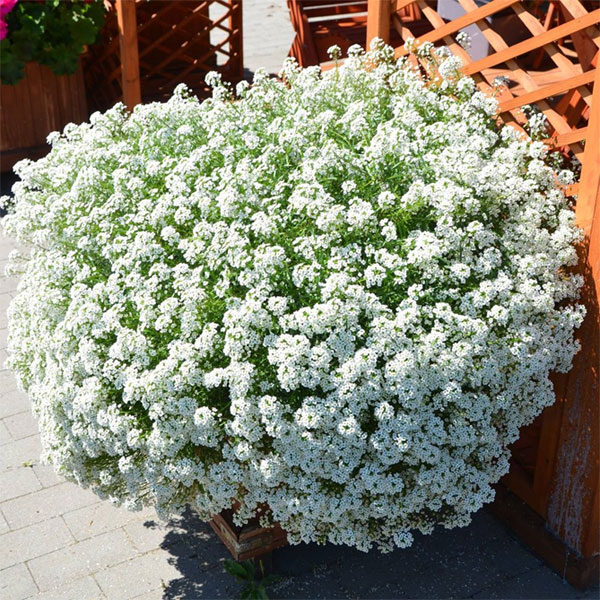
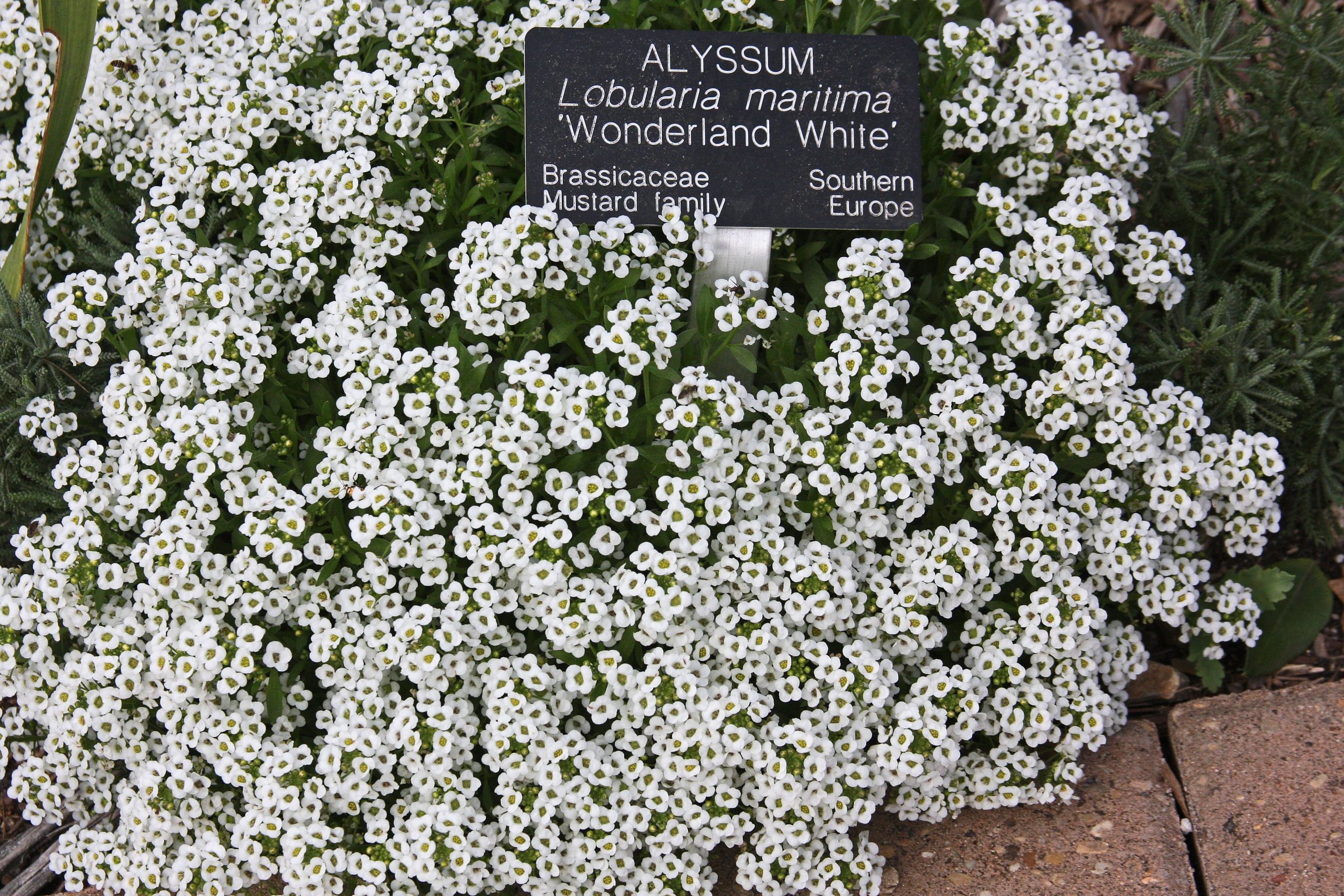
- Wonderland White – flowering creeping shoots up to 10 cm high.
- Benthamii (this is a group of varieties) – shoots are relatively tall, up to 40 cm. Flowers are white, up to 5 mm in diameter.
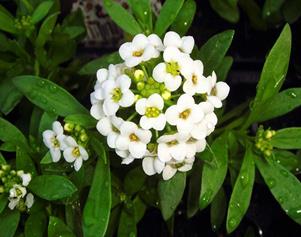
- Snow Crystals is an early annual with shoots up to 20 cm high.
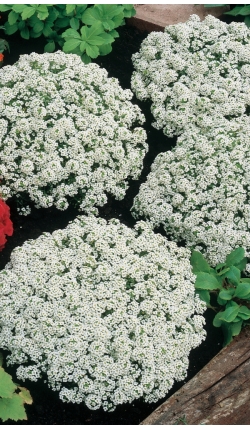
- Carpet of Snow – grows up to 15 cm in height, during the flowering period the bush is completely covered with white flowers that exude a honey aroma.
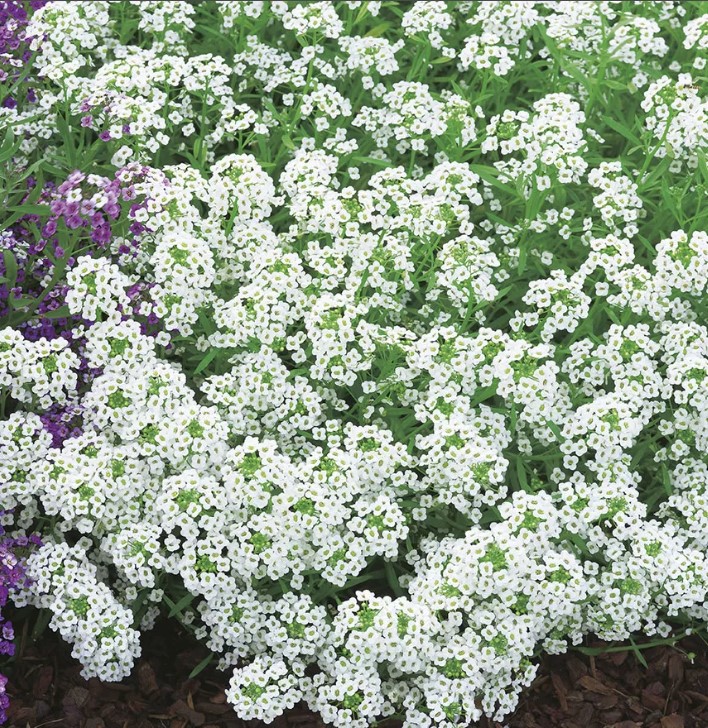
- The Capri and Giga White varieties also have beautiful white flowers.
Purple
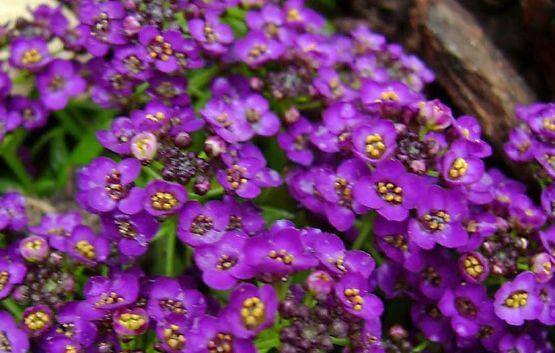
- Royal Carpet is a vigorous, sun-loving variety with lavender and purple flowers. The bush grows to a minimum height of 20 cm.
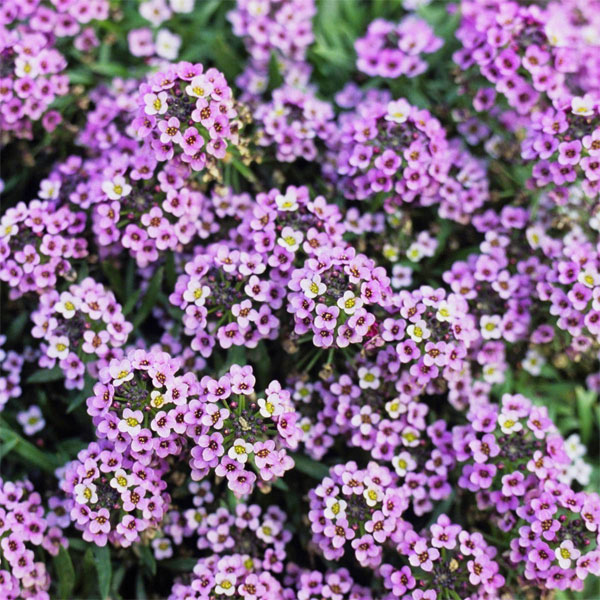
- Violet Queen – bushes up to 15 cm tall, can be sown before winter. Flowers are small, purple.
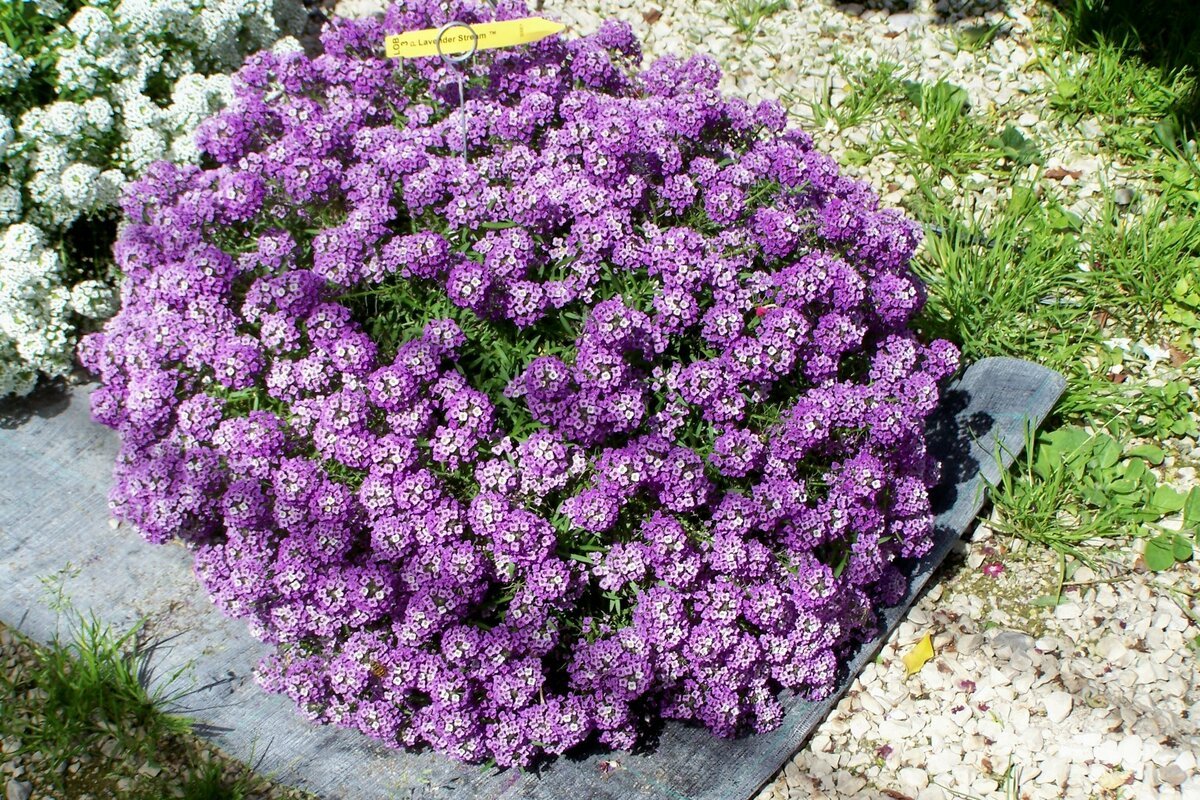
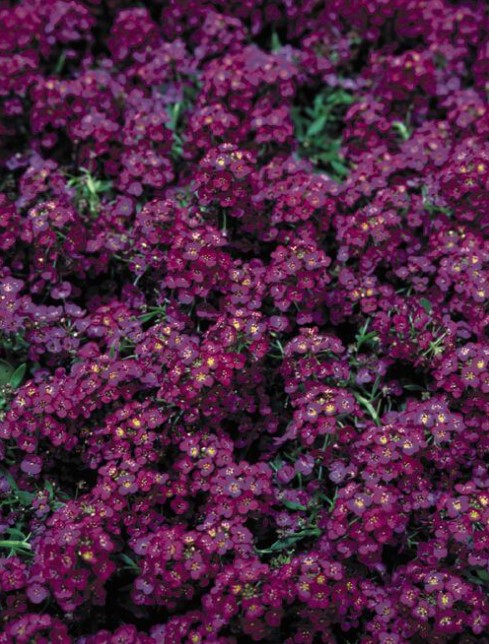
- The Malta and Oriental Night varieties also bloom with a dark purple carpet.
Pink
- Pastel Carpet is a medium-sized variety of lobularia with pink flowers.
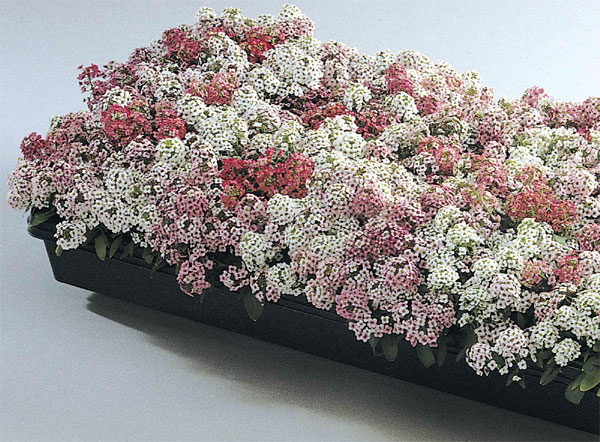
- Rosie O'Day is a compact variety with shoots up to 10 cm and flowers of a soft pink hue.
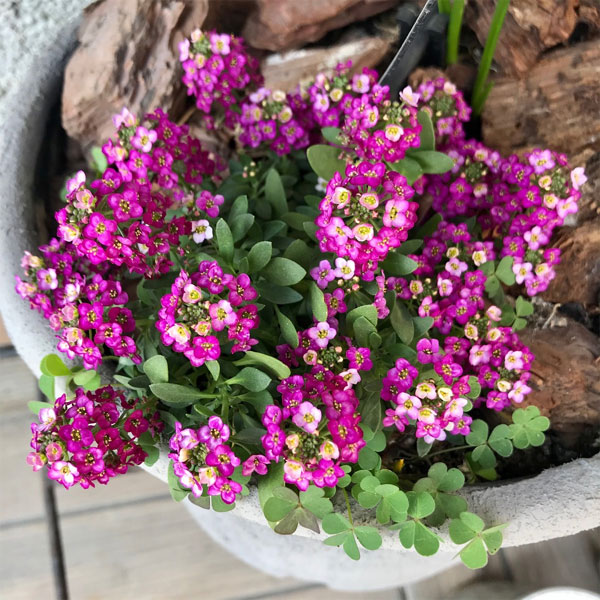
A unique, colorful palette
- Aphrodite – blooms early. Shades include red, purple, lemon, salmon, and apricot.
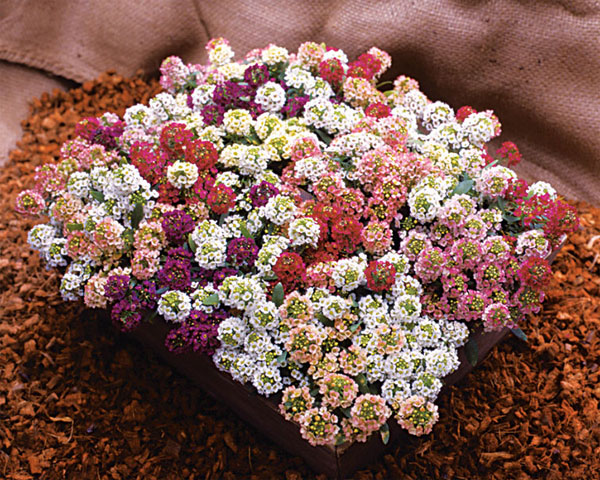
- Clear Crystals is a medium-sized bush with large flowers in shades of white, purple and lavender.
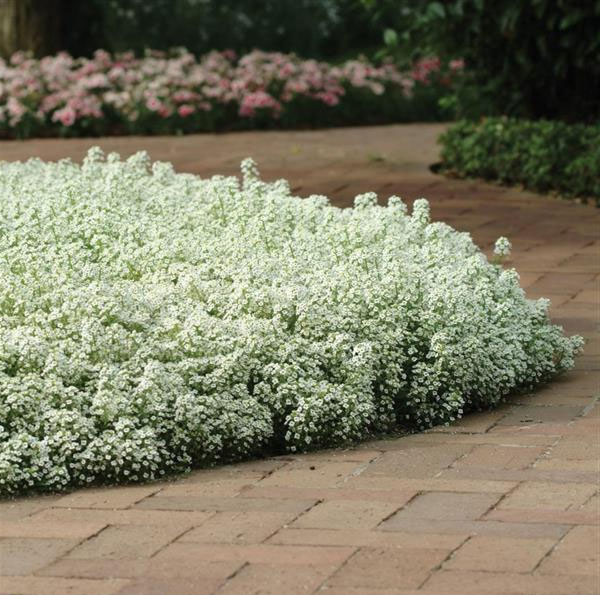
- Easter Bonnet – ideal for pot growing, blooms in purple, pink, white and orange.
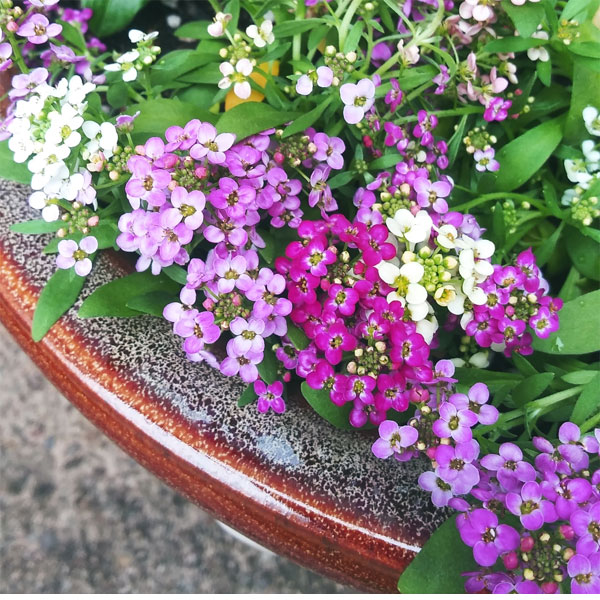
- Paletta is a very easy-to-grow variety with bushes up to 10 cm tall. It can be white, pink, blue, or lilac in color (see photo above).
Growing Lobularia from seeds at home
Lobularia is grown from seeds indoors. They can be sown directly into the ground, or seedlings can be grown. This allows the lobularia to bloom earlier, which is ideal for northern regions where summers are relatively short.
Timing of sowing lobularia seedlings
The exact sowing time will depend on the growing region. Depending on the variety, it takes 45-60 days from sowing to flowering. Planting can only take place after the danger of night frosts has passed. In temperate climates, this doesn't happen until mid-May, so sowing can begin in late March.
Preparing soil and seeds
For sowing lobularia, it's more convenient to use a separate container. Fill it with a specialized potting mix or a mixture of sand, peat, and soil in equal parts.
Flowers thrive in light soil, so it's important to ensure proper drainage when planting. Vermiculite can be added to the soil at a rate of no more than 10% of the total volume.
You can use seeds you've collected yourself or buy at a store. It's important that they're no more than three years old. To speed up germination, soak the seeds in a stimulating solution before planting.
Sowing lobularia seedlings
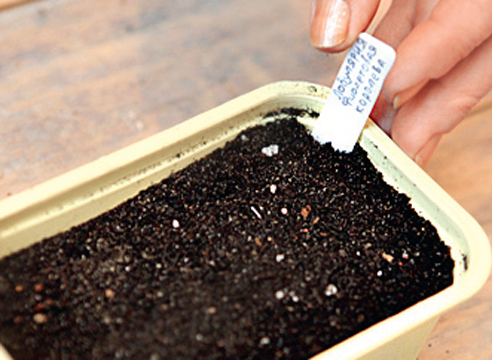
Fill the selected container with soil. Make shallow furrows in the surface, and plant the seeds in them using a toothpick. Cover them with soil and water with a spray bottle. Cover the container with glass or plastic wrap and place it in a warm place. Open the plastic wrap daily to prevent condensation from forming. Water as needed.
Caring for Lobularia seedlings at home
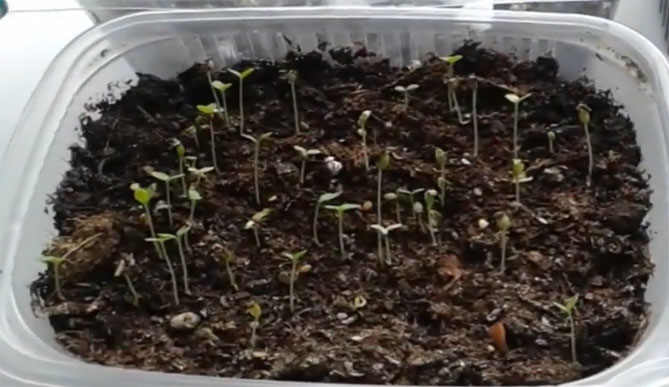
As soon as the first shoots appear, the cover can be removed. The seedlings are moved to a slightly cooler room. If the lobularia are grown on a windowsill, it's a good idea to place a piece of foam under the seedling container to keep the roots warm. In cloudy weather and in the evening, the seedlings should be provided with supplemental lighting using a special lamp.
Do I need to transplant Lobularia?
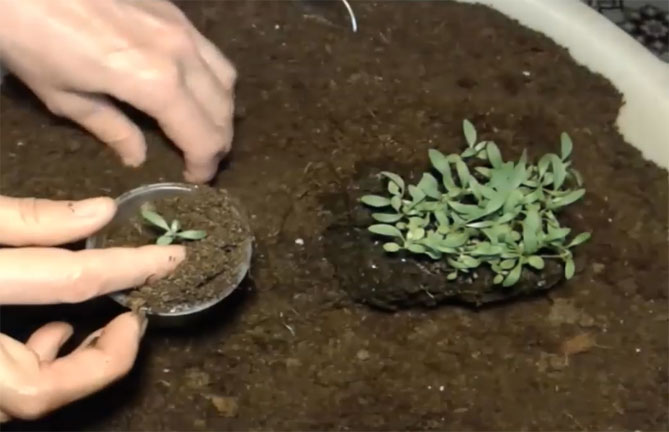
If the shoots are growing very slowly and developing poorly, it is recommended to transplant them. This is done when four full-fledged leaves appear on the stem. Lobularias are carefully transplanted into separate containers, without pinching the roots.
If the seedlings are strong and healthy, then picking is not necessary; it is enough to thin out the plantings, leaving a distance of at least 5 cm between them.
Planting lobularia seedlings in open ground
Lobularia is a heat-loving plant and does not tolerate cold temperatures. Therefore, repotting should be done when the threat of night frosts has passed. In most regions, this period occurs in late May or early June.
Lobularia doesn't thrive in heavy soil with poor drainage and stagnant water. Therefore, it's best to choose areas of the site where snow melts first and where the sun shines most of the day.
Before planting, make holes in the flowerbed. The plants are then placed into the holes along with the soil. It is not recommended to plant the stems too deeply.
The distance between holes should be at least 30 cm.
Flowering occurs approximately 1.5 months after planting.
Planting lobularia seeds in open ground
If weather and time permit, you can plant lobularia directly into open ground, rather than waiting for seedlings.
Rules and terms
Depending on weather conditions, seeds can be sown from late April to late May. Some gardeners plant lobularia before winter. This allows for earlier flowering. However, there is a risk that not all seeds will survive the harsh winters.
The main condition is that the soil warms up to +12 degrees and is not too heavy.
Location
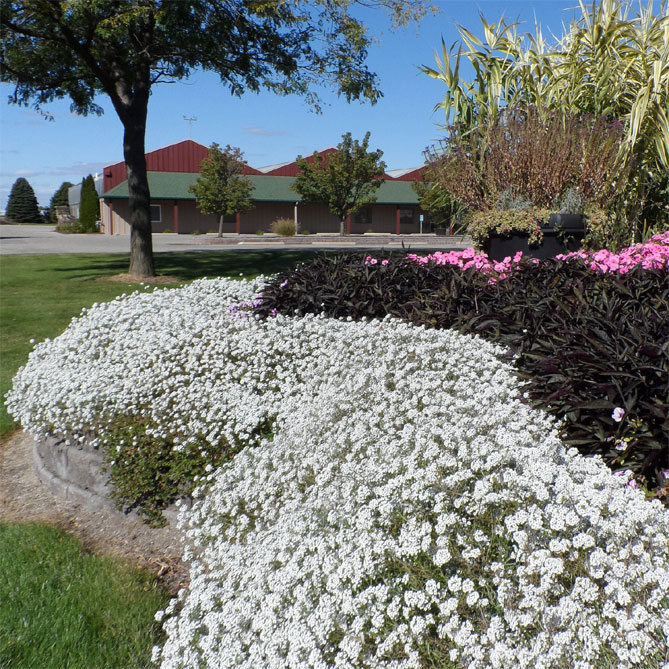
Lobularia loves light, so shaded areas are absolutely unsuitable. It will also grow poorly in partial shade, damp, and cool locations. Flowering in such conditions will be very limited.
Soil preparation
Lobularia doesn't require any special soil preparation; its composition can be anything. The most important thing is good drainage. If the soil is heavy, add equal parts sand and peat. Regular loosening of the soil is also essential.
Sowing
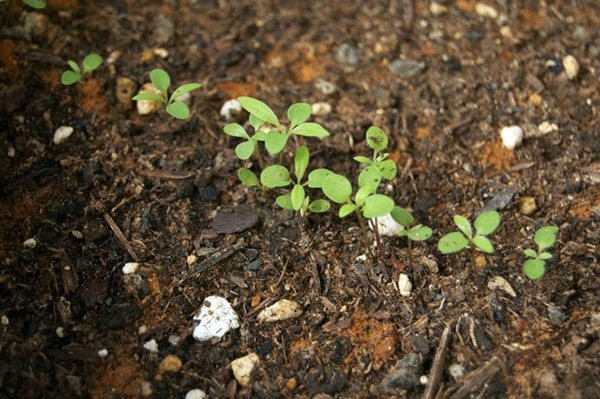
The soil in the flowerbed is dug over, and the seeds are laid out in a straight line on the surface, spaced 10-15 cm apart. They are then compacted to a depth of approximately 2 cm. However, do not cover them with soil, as this will delay germination. Watering should be done so that water does not fall on the seeds themselves and cause them to sink deeper into the bed.
Caring for Lobularia in the Garden
Let's look at how to properly care for the lawn at your dacha.
Watering
Lobularia does not tolerate drought well. Watering should be done as the soil dries out, but avoid allowing waterlogging around the roots.
It's best to use settled, sun-warmed water. If the weather is rainy or cool, there's no need to water the lobularia.
Fertilizers and feeding
Lobularias grow well even in soils without special fertilizers. However, if you want lush and long-lasting blooms, you can feed the flowers.
This is done 3-4 times per season.
Once the plants are planted in the garden bed, add nitrogen. During flowering, use any complex fertilizer for ornamental plants. If the weather is very hot, you can add potassium and phosphorus supplements.
Trimming
Lobularia is pruned for better flowering. After the first flush of bloom, it is recommended to cut back the lobularia by 5 cm. Fertilizing can be added at this time, which will encourage a second flush of bloom. Pruning can be used to shape the plant and prevent unwanted growth.
In August, the bushes are pruned again to give them a neat appearance if seeds are not needed.
Bloom
Flowering begins 1.5-2 months after sowing lobularia. Flowering can last for several months if the plants are properly cared for.
- Drought should not be allowed, but there should also be no stagnant moisture.
- Flowers should grow in a well-lit area.
- All withered and dead inflorescences and leaves are removed from the bush.
- Pruning shoots after flowering will stimulate the formation of new buds.
Diseases and pests of lobularia, control methods
Lobularia is sensitive to overwatering, so the most common disease among these plants is various types of rot. These affect the leaves, which begin to turn black and die. In such cases, the damaged areas of the bush are removed, and the plants are treated with a soapy solution.
If water stagnation occurs around the roots, late blight may develop. It can be treated with a phytosporin solution in the initial stages or with special fungicides in more severe and advanced cases.
Lobularia often becomes prey to the cruciferous flea beetle. Only specialized pesticides can help control it. Mature plants can be treated with a vinegar solution at a rate of 1 teaspoon per 1 liter of water.
To prevent aphids and cicadas, you can use solutions based on citrus oils. The scent repels insects. Affected leaves can be washed with a soapy solution to block oxygen from reaching the pests.
Combination with other plants, lobularia in landscape design
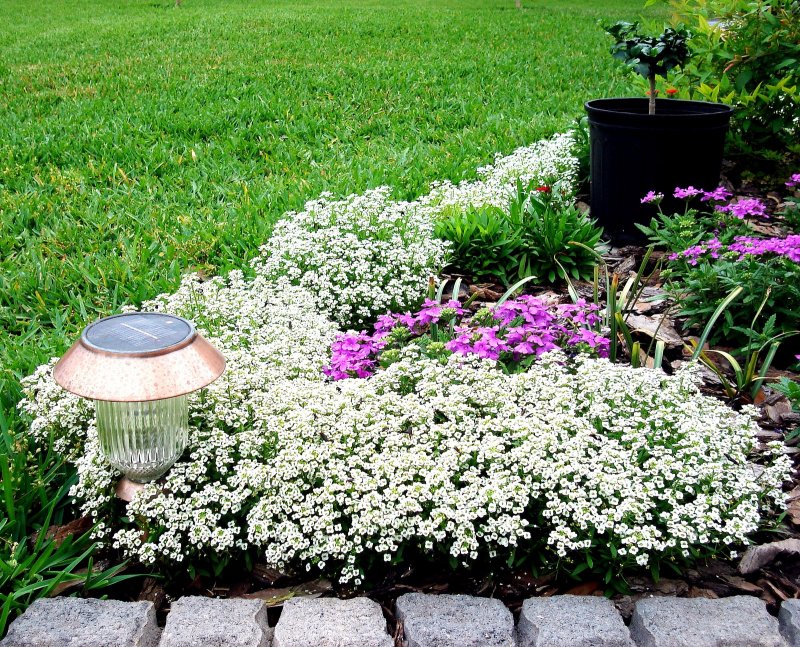
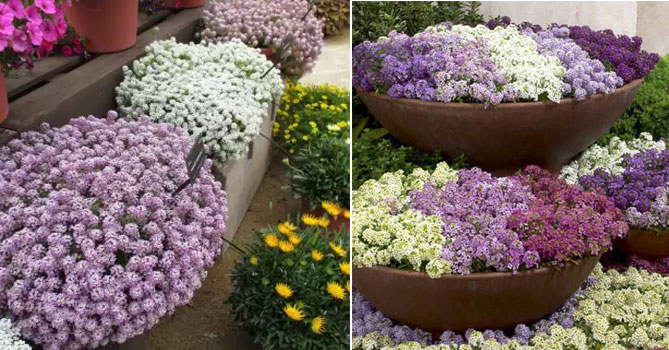
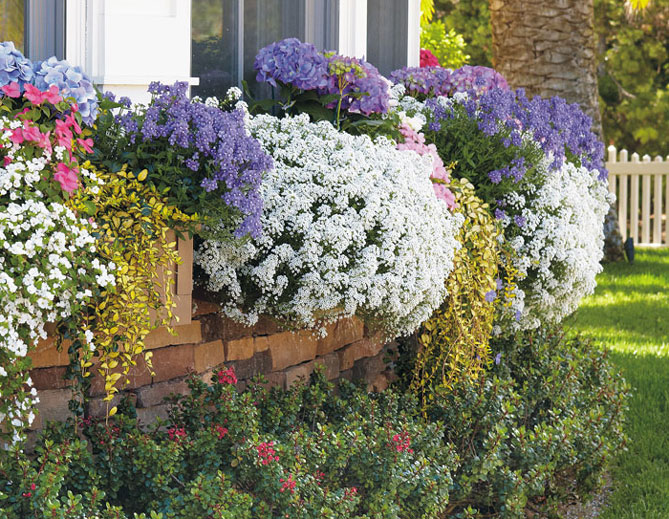
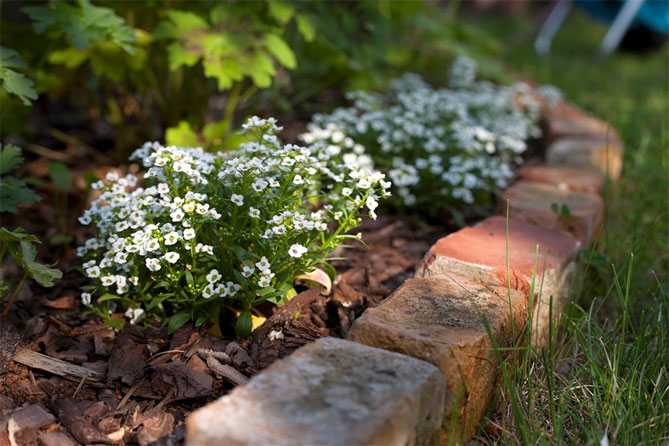
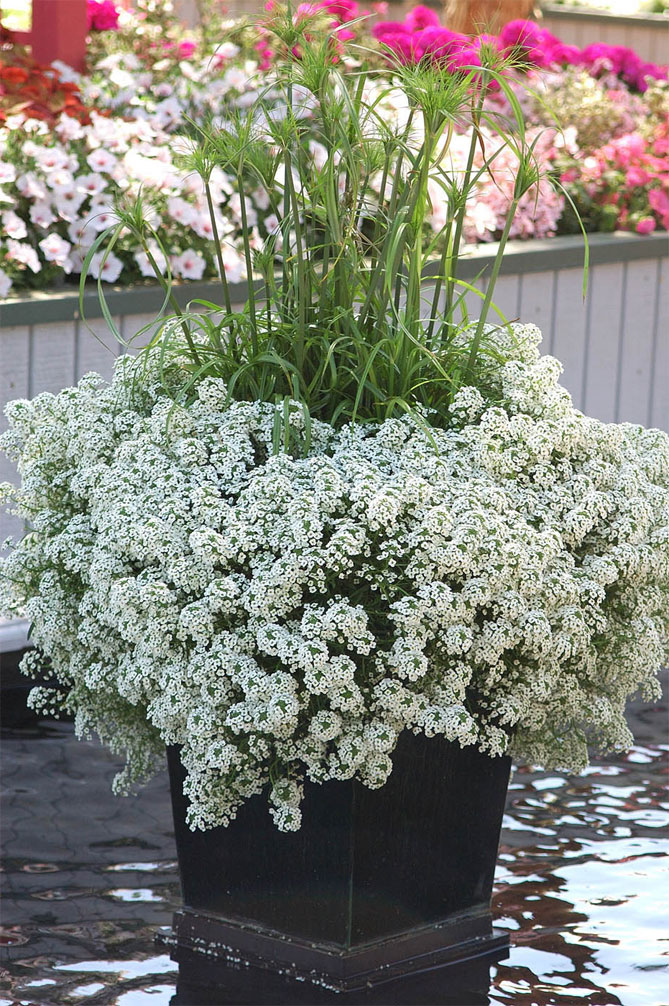
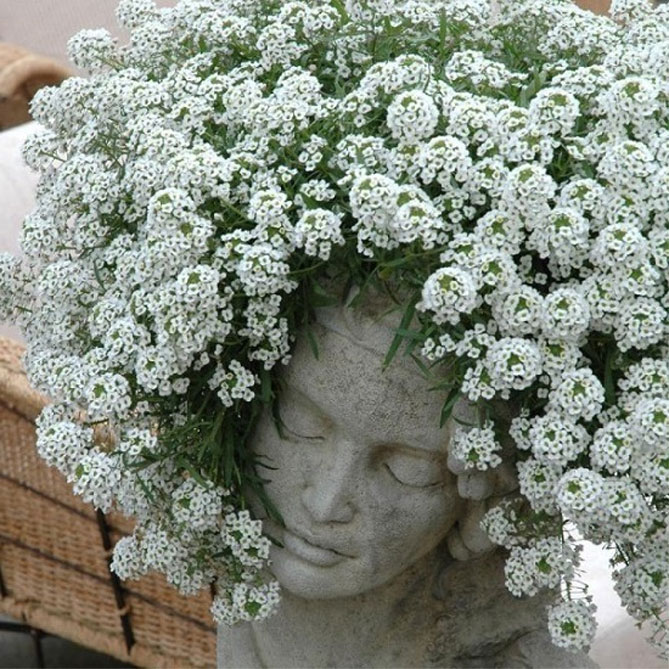
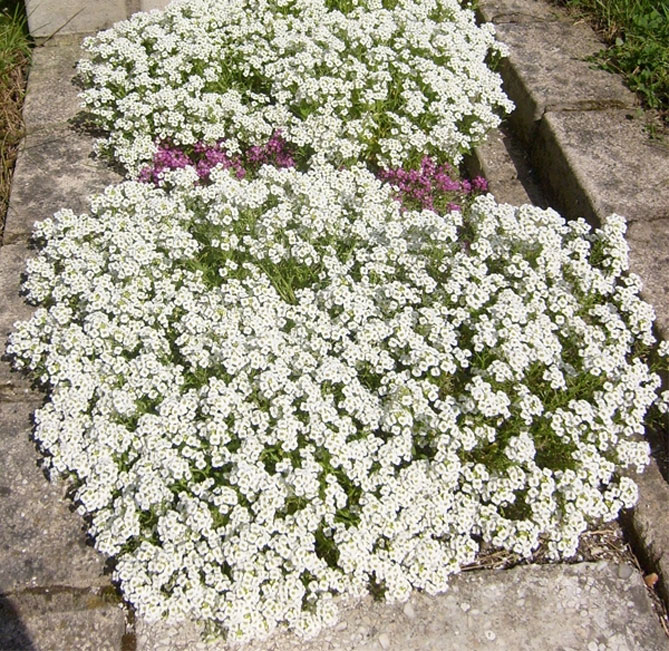
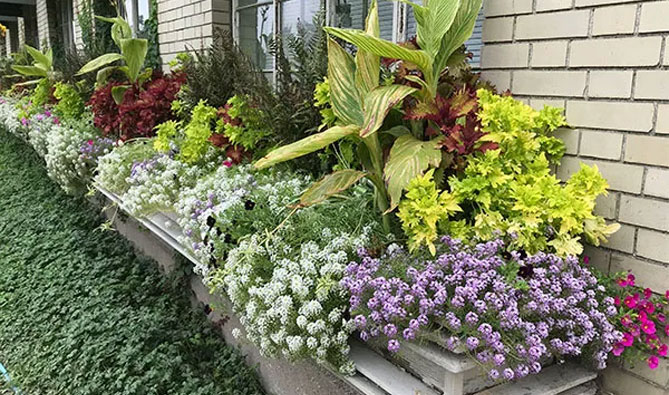
Lobularias are often used to decorate borders, terraces, balconies, and complex flowerbeds. They often complement rock gardens and mixed flower beds. The flowers look especially impressive in decorative or hanging pots.
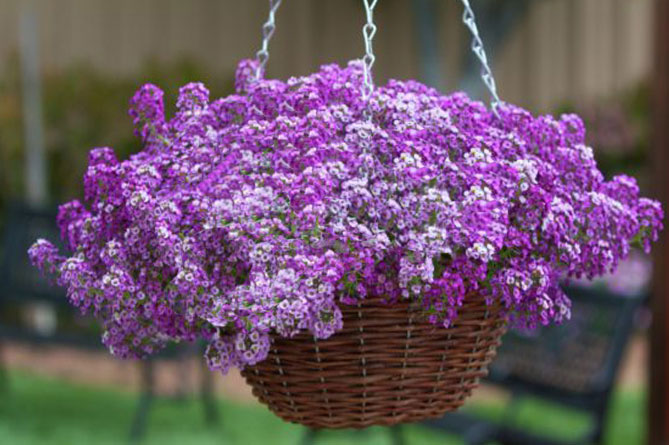
You can plant lobularia varieties of different colors at the same time to create a unified composition, but there is a high risk of color mixing due to pollination.
The following plants go best with lobularia:
- phloxes;
- roses;
- heliotropes;
- forget-me-nots;
- marigold;
- pelargoniums;
- nemophiles;
- verbena;
- Arabis;
- cellosia.
What is the difference between Lobularia and Alyssum?
Lobularia and alyssium belong to the Brassicaceae family, so they are often confused not only by ordinary people, but also by growers, who equate these two flowers.
Indeed, the two plants are very similar in appearance, practically indistinguishable. Alyssium is now classified as a perennial with yellow flowers, while Lobularia is classified as an annual with white flowers. The latter's shoots are quite compact, while those of alyssium are slightly larger.
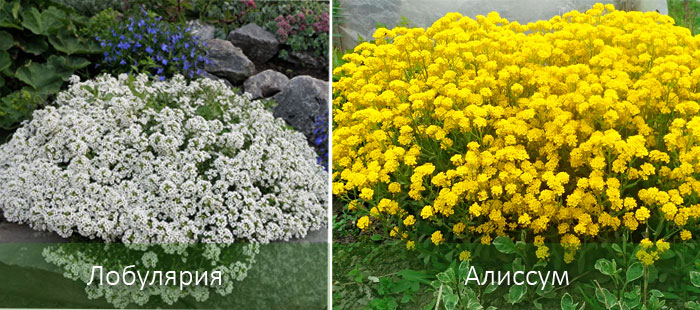
If you're looking for a specific color of Lobularia, but only Alyssium has it, go for the latter. You're unlikely to notice the difference as it grows.
Read about the alyssum flower on our website.