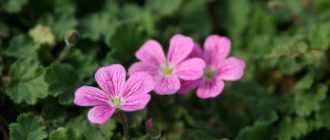
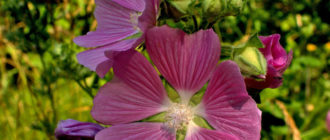
Daisy is a herbaceous plant of the Asteraceae family (Bellis perennis) that is widespread in the wild throughout the world, from Europe, Africa, the USA, and ending in the Mediterranean.
It's been known since ancient Greece, where this flower was called a pearl. In the East, it was called the "eye of the day," the buds opening with the appearance of the morning sun. In English, it's called daisy-eye, hence the affectionate name "daisy" in England. The Germans used it as a measure of love, because girls used it to tell their future husbands.
Content
Description
The daisy is a frost-hardy, low-maintenance plant growing to 2-30 cm. It is grown as a biennial. In the first year, rosettes of leaves develop, and the following year, flowers appear.
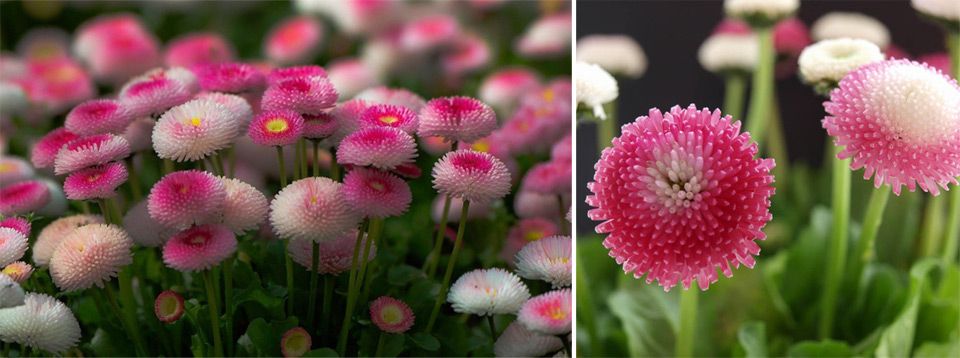
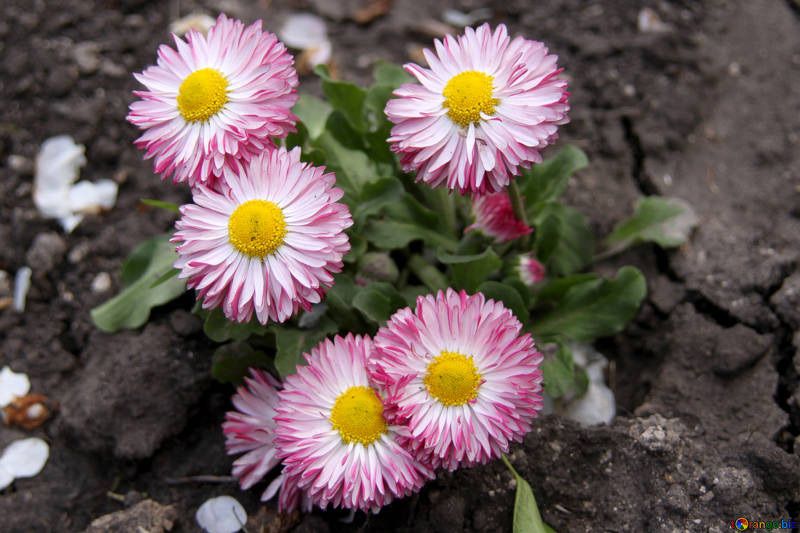
It has a small root, spatulate leaves closer to the rhizome, and a leafless stem, from which a single, single, ligulate, double or semi-double, white-pink female inflorescence appears, with a bisexual, tubular, yellow flower in the center. Flowers also vary in size (from 1.5 to 6 cm). The daisy fruit is flattened.
Varieties of daisies
The annual daisy (bellis annua) is a low-growing plant with double white flowers with a yellow center. They bloom in August and continue to delight until the first frost. They are propagated by seed and grown as a houseplant.
The perennial daisy (bellis perennis) is about 15 cm tall with a small but dense root system, spreading and forming a turf. The rosette of leaves at the roots is spatulate, hairy, and serrated. A single flower, a flower head on a stem, is approximately 8 cm in circumference. Flowering begins in May-June and continues until November. The fruits are flattened and ripen in August-September.
| Flower type | Variety | Description
Height (cm) |
Flowers/Bracts Bloom |
| Reed (v. R. Var. Ligunosa hort.) |
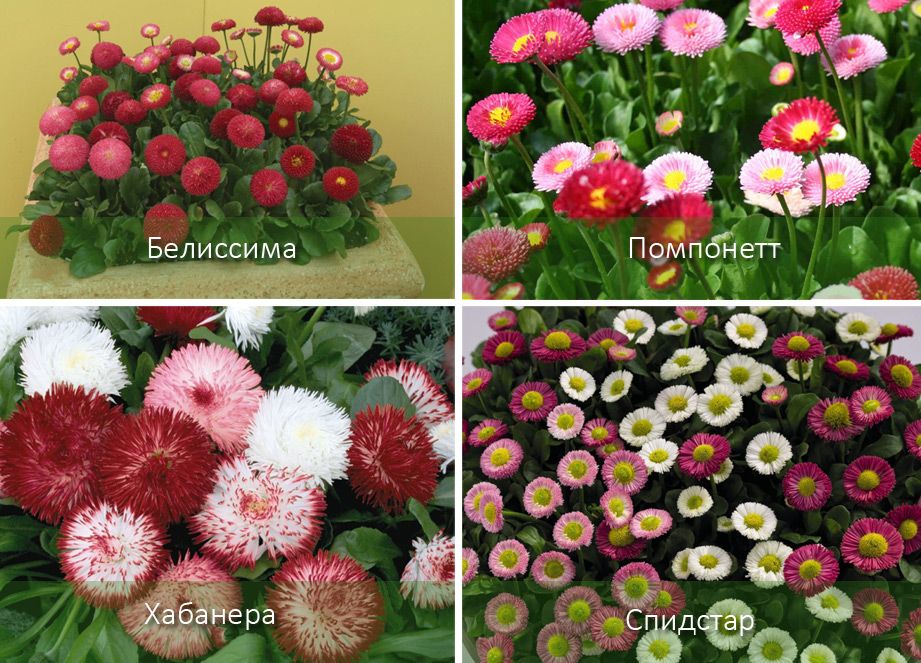
Bellissima | Sometimes grown as a biennial. 15-20. |
They resemble spherical pom-poms, tubular, 4.5 cm. The color is red or pink. April-October, with a mild climate - all winter. |
| Pomponette | Bred by French breeders. Up to 40 medium-sized double inflorescences, similar to aster.10-15. |
The petals are tubular, tapering to a point. The color ranges from pale pink to bright crimson. April-June. |
|
| Habanera | They are distinguished by high winter hardiness. 10-30. |
Large, fluffy, aster-like flowers, about 6 cm. Elongated petals, white with a red edge or pinkish. Blooms in June. |
|
| Speedstar | Universal use, in protected and open ground. 13. |
Semi-double with yellow petals. The inflorescences are snow-white, deep brick-red, or blush-red. They bloom in the same year as the seeds are sown. |
|
| Rominet | Non-volumetric. 12. |
Very double, large, burgundy-colored, long dense peduncles. | |
| Tubular (v. P. Var. Fistulosa hort.) | Rosabella | 30. | Large, spherical, sunny in color, up to 5 cm. |
| Robella | 15. | Dense spherical baskets, 5 cm, color from light scarlet to dark red. | |
| Tasso | 12. | Large, up to 6 cm. Dense, close-growing baskets. White or pink shades. | |
| Rob Roy | Not high. 10. |
Small, no more than 2 cm, usually red in color. | |
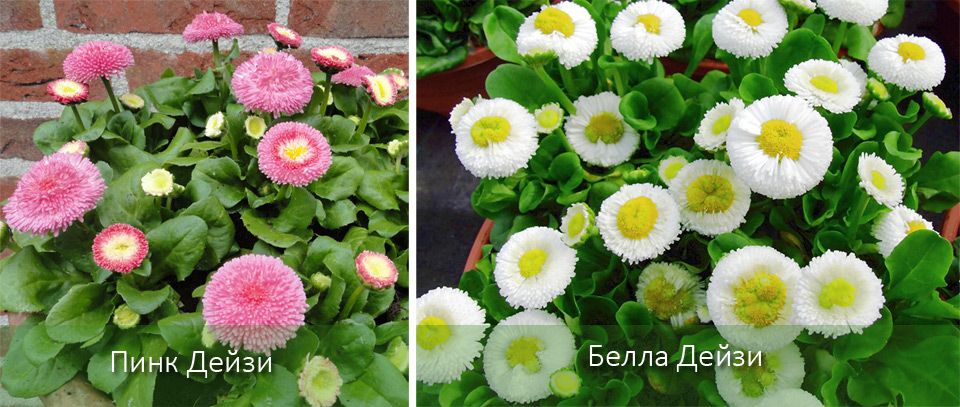
| Bella Daisy | Blooms early. | Double, 2.5 cm, tubular petals, white, turning to pink at the edges, with a yellow core. |
Daisy: growing and care
Daisies planted in open ground from seeds and cuttings will bloom only the following year. To obtain a flowering plant this year, you need to grow it from seedlings.
Or, if you have mature plants, separate them into individual ones. The flower prefers a sunny location.
Daisy from seeds using seedlings
Daisies propagate easily from seedlings. The seeds have an excellent germination rate. Between February and March, take plastic cups filled with soil or other containers and add one or two seeds, lightly covering them. After two weeks, the sprouts that appear are not pricked out; the pots are moved to a room with an air temperature of 15°C. Provide the young plants with at least 14 hours of light, using artificial lighting if the light is less. Hardening off begins a week before, at the end of May.
Sow all the seeds in a single container, moistening the soil. Keep the soil moist and not too dry. Cover with a plastic bag until the first shoots appear, opening it periodically for ventilation. Then remove the cover completely. When two leaves appear, transplant them into cups. Plant them in open ground only after gradually acclimating the seedlings to fresh air. Plant them in the garden when nighttime temperatures no longer drop below 0°C.
Planting in open ground
Sow seeds directly into the soil in April-May. Scatter them on top, covering them with sand or humus. To speed up germination, don't cover the seeds with soil, but cover them with something dark for two days.
It's important to maintain humidity by covering the seedlings with a special cloth to protect them from strong sunlight and nighttime temperature fluctuations. If everything is done correctly, the first shoots will appear within two weeks. These are transplanted to the flowerbed at the end of summer, planted tightly, no more than 5 cm apart.
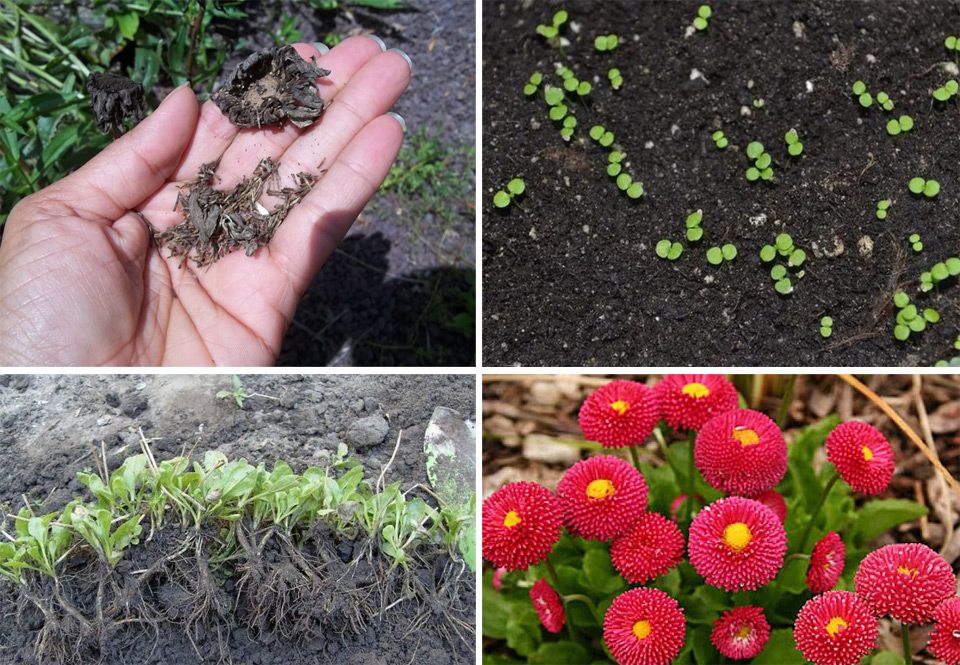
Self-seeded plants are weeded. They generally do not reproduce the parent variety's characteristics.
Daisies prefer light, neutral soil. Compost or peat can be added to sandy soil.
Prefers sun, but can be planted under an apple or plum tree.
Seedlings grown from seeds are planted in the prepared area, still in the soil, at a distance of 0.2 m, in a random pattern. They are then watered generously. This perennial plant enjoys being transplanted, even while flowering.
Caring for daisies in the garden
In the spring, after the snow melts or heavy rains, the soil is loosened to improve air circulation. In the summer, especially during dry periods, water regularly, preventing standing water. To avoid this, loosen the soil around the bushes and apply mulch. If the summer months are not too hot, water 2-3 times a week. Insufficient moisture will cause the flowers to become small and stunted.
Daisy has an amazing property - it suppresses all weeds due to its dense growth.
Fertilize with flowering plant fertilizer in the spring, and with potassium chloride and ammophoska four times a day, 10 days apart, in the summer. To give the daisy carpet a more polished appearance, trim off faded blooms.
Wintering of daisies
There are several rules to follow to prepare the bush for winter:
- cut off dried leaves and inflorescences;
- mulch the soil (sawdust, spruce branches, peat) or sprinkle humus to a height of 10 cm, roots that are on the surface;
- do not use fallen leaves for mulching (fungus develops);
- It tolerates snowy winters well, but if there is no snow, it is better to cover it with spruce branches.
Propagation of daisies
New flowers are obtained by: seeds, cuttings, bush division.
Cuttings
In late May or early June, a shoot with buds is separated from a mature bush, the leaves are cut back by about half, and the plant is planted at a depth of 1 cm, creating a greenhouse effect or in a hothouse. Pre-treat the soil with Kornevin. Use a flowering soil or peat mixture. Moisten the soil, making sure it doesn't dry out. In late September, the grown seedling is planted in a prepared area and covered for the winter. The daisies will not bloom until the following year.
Dividing the bush
A plant that is at least 3 years old is rejuvenated in early spring or after flowering.
The bush is dug up, divided into five parts, the roots are trimmed, and the plants are replanted in the chosen locations. Up to 12 new plants can be obtained from one plant. Flowers and buds on the replanted daisies are cut off.
Seed collection
Seeds can be stored for about 3 years, so they can be collected from non-hybrid parent plants:
- only faded inflorescences are picked;
- lay them out on newspaper in the sun;
- they are dried so that the seeds themselves easily fall out of the inflorescences;
- Store in paper bags, preferably labeled with the year of collection, name and variety.
Planting material is prepared throughout the flowering period, but only from wilted and well-dried flowers.
Top.tomathouse.com recommends: daisies in the landscape
This is an unpretentious plant, which is much loved by garden and park designers for its long, abundant flowering and excellent combination with other crops.
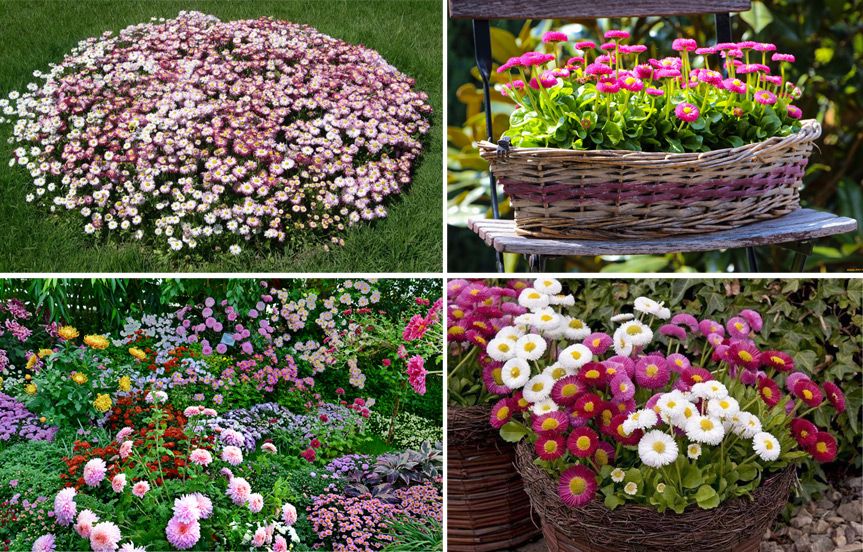
Daisies form a carpet of various shapes and colors. Therefore, they are often planted:
- next to daffodils, tulips, hyacinths in flower beds;
- around ponds and reservoirs (they like moist soil);
- on Moorish and meadow lawns;
- as a group separate planting (10-15 bushes, crowded);
- small bushes on alpine hills;
- Florists use it to create wedding bouquets.
They are grown on balconies, and gazebos and terraces are decorated with pots containing them.
Diseases and pests
Daisy is unpretentious, but if all growing rules are not followed, it may be affected by pests or have diseases.
| Cause/Pest | Signs | Methods of elimination |
| Gray mold | Leaf blades and stems with a grey coating. | Reduce soil water content. Remove damaged plants and spray with Skor and Chistotsvet. |
| Rust | Brown spots appear on the leaves. | Remove diseased leaves, loosen the soil, and water with Bordeaux mixture. |
| Powdery mildew | Dry soil and too much water. The leaves turn dark and a white coating forms. | Cut off diseased leaves and stems. Treat the remaining ones with Chistotsvet, Fitosporin, and Trichodermin. |
| Brown spot | The leaves are covered with white spots, the result of bacterial infection. | Remove affected parts or the entire bush. Treat the plant with Kuprotox and Hom, and treat the soil with a solution of ferrous sulfate or a 3% solution of Bordeaux mixture. |
| Mice, shrews, moles | They eat the roots. | They lay out poison for mice, find mole burrows, insert an exhaust pipe, and turn on a chainsaw. Only then will they emerge. |
| Spider mites and thrips | A web forms on the leaves and stems. | Spray with a solution of laundry soap or preparations such as Aktara or Iskra. |