Representatives of the genus Masdevallia are epiphytic, lithophytic and even terrestrial plants, belonging to the Orchidaceae family.
Distribution area: humid forests of central and southern America.
Description of the Masdevallia orchid
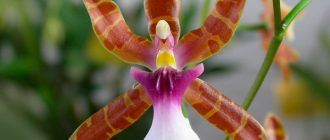
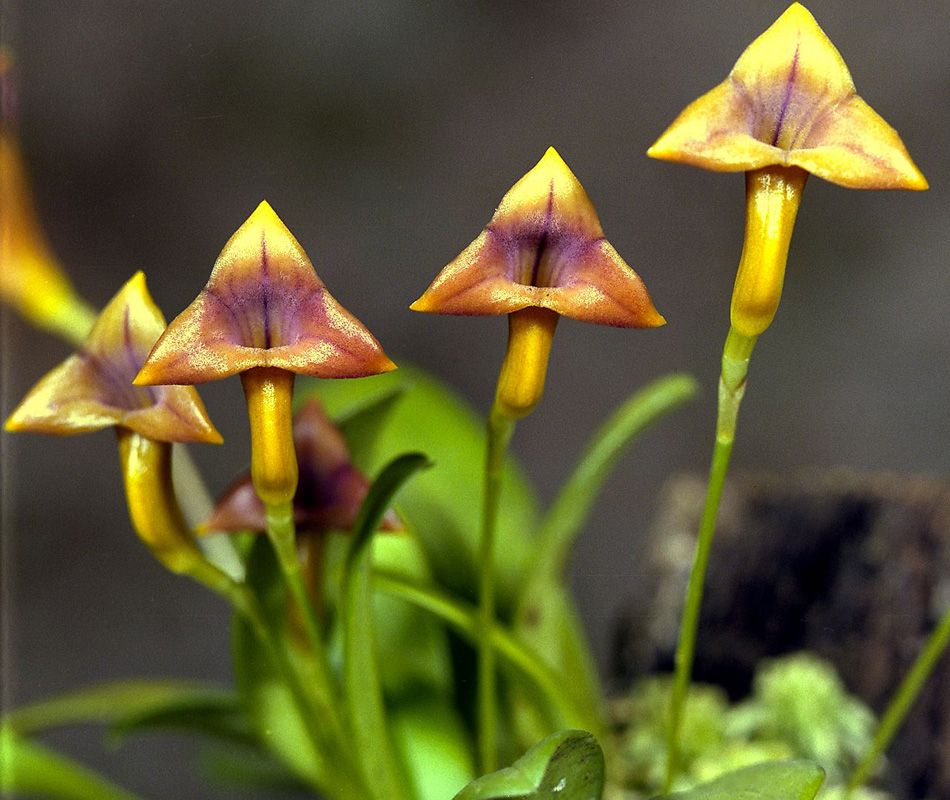
These plants are characterized by a short, thin, creeping root system from which straight stems emerge, each supporting a single, elongated-oval leaf. The flowers are bright but small (about 5 cm), solitary or in clusters, and have an unusual triangular shape. The sepals often end in long, thin tendrils. Coloration varies, and some are fragrant.
Masdevallia species
Since the homeland of representatives of such orchids is humid, high-mountain forests, they are accustomed to coolness and abundant moisture.
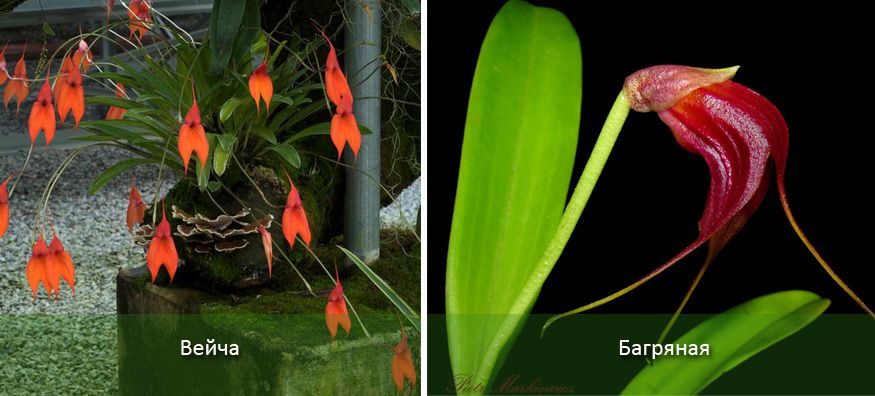
Only two of these, the most heat-loving, are grown indoors (Masdevallia purpurea and Veitchii). Others require the cool of greenhouses. However, new varieties are now being developed based on these.
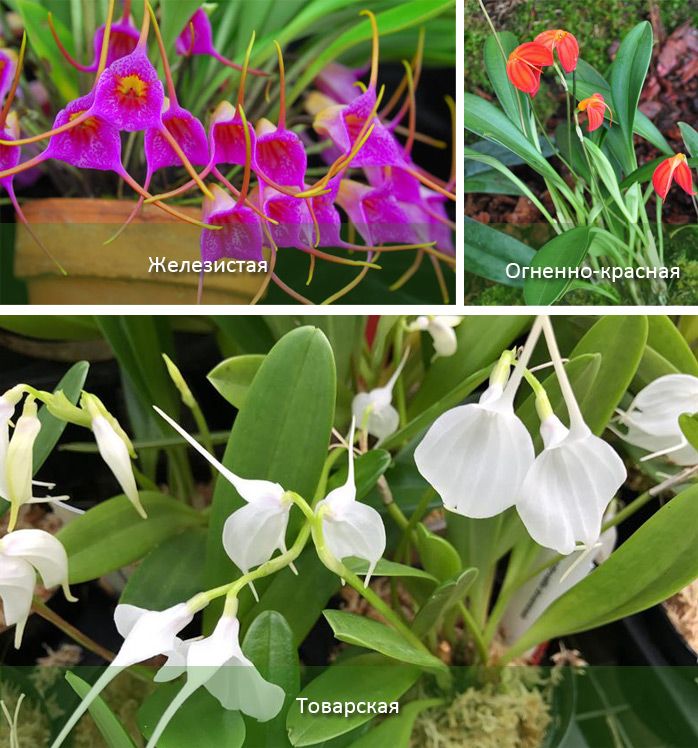
The most popular Masdevallias:
| Varieties | Leaves | Flowers, their blooming period |
| Crimson | Leathery, oval (7 cm). | Single, dark red or raspberry pink. April - July. |
| Veicha | Oblong-ovate, 16-18 cm. | Individual, bright orange, with very small petals and lips.
April - May, September - December |
| Fiery red | The lower part is narrow, elliptical-lanceolate at the top (30 cm). | Peduncles 35 cm. Single (8 cm), scarlet.
April. |
| Tovarskaya | Small, light green (10 cm). | White. 2-7 of them are collected in racemes, located on 15 cm peduncles. They have a faint aroma.
Spring. |
| Glandular | The base is elongated, widening at the top (10 cm). | The 4-cm flower stalks are solitary, bell-shaped, pink, with orange tips. Inside are small, darker-colored glands. They have a strong clove scent.
April - May. |
Masdevallia care: important tips in the table
When caring for a masdevallia at home, you need to follow certain rules, otherwise it will not only fail to bloom, but may even die.
| Parameter | Conditions |
| Location/lighting | A west or east-facing window is preferable. A south-facing window provides shade from direct sunlight, while a north-facing window provides additional lighting. Ensure at least 10-12 hours of daylight. |
| Temperature | Daily temperature fluctuations are necessary. In summer: daytime temperatures of +15…+23°C, nighttime temperatures of +10…+18°C (take them out to the balcony or garden). In winter, keep them cool, no more than +10…+18°C. |
| Watering | Use only filtered water above 40°C. Submerge the flower for 0.5 hours, then remove and let drain. Do not allow the soil to dry out. |
| Humidity | In cool conditions - 50%, in hot conditions - 80-90% (use humidifiers or grow in an orchidarium). |
| Top dressing | Use orchid fertilizer. Dilute half the strength in water and spray once every 14 days. |
Transplanting, soil, and containers for growing masdevallia
To maintain the orchid, use special clear plastic orchid pots with holes in the sides or grow it on slabs (providing high humidity and good ventilation). Pieces of foam, expanded clay, or stones can be used as drainage media.
The soil is selected based on the characteristics of the root system: the thinner it is, the more fragments of sphagnum moss there are; with thicker soil, small pieces of bark predominate.
Repot the plant only if the soil is damaged or the plant itself has outgrown the pot. This is done after flowering.
Reproduction
The expanded flower can be divided into sections, as long as each shoot has developed roots and at least five leaves. Propagation by seed is also possible.
Mistakes in caring for Masdevallia, diseases, pests
If the plant's maintenance conditions are not met, it may be susceptible to insect infestations (aphids and mealybugs). If these are detected, the plant should be sprayed with insecticides (Aktara, Actellic). If rotting occurs, the damaged parts should be removed and the plant treated with fungicides (Fitosporin).
| Manifestation | Cause |
| The leaves are falling. | Overwatering. |
| Growth has slowed. | Elevated temperature. |
| The roots and stems are rotting. | Water is not filtered or irrigation is not standardized. |
| The leaves change color. | Excessive lighting. |
| They don't bloom. | Lack of oxygen, untimely disturbance of the plant. |