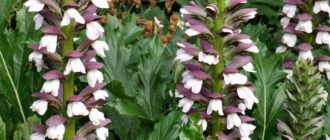
Matthiola (stock) belongs to the Cruciferae family. This fragrant shrub is native to the Mediterranean coast. The genus includes about fifty species. The flower is used in garden decoration for its rich fragrance.
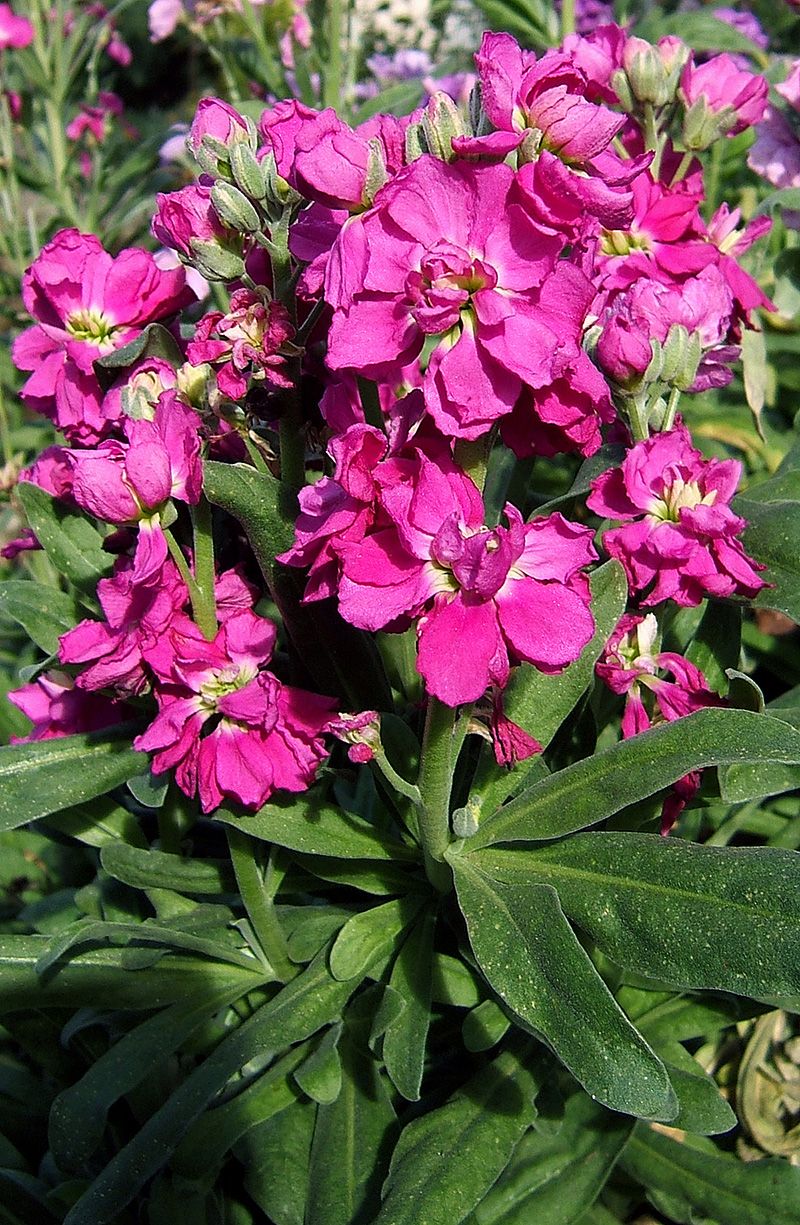
Description
This is an annual or perennial herbaceous plant, reaching 0.3-0.9 m. The stem is thick, erect, and heavily branched. It is covered with a thin skin: bare or with short hairs. The lanceolate leaf blades are entire or toothed along the perimeter. They are pubescent and soft to the touch. At the base, they are gathered into fluffy rosettes.
In late May, racemose inflorescences of single or double buds emerge. The petals are rounded and come in a variety of colors: snow-white, violet, lilac, crimson, blue, and lemon. The scent they emit attracts pollinating insects.
After flowering, the buds are replaced by fruits. These are flattened pods containing numerous small seeds.
Matthiola bicornis and other species
All varieties can be divided into:
- low-growing (dwarf);
- average;
- high.
Description of some species:
| Name | Description | Leaves | Flowers/their period of appearance |
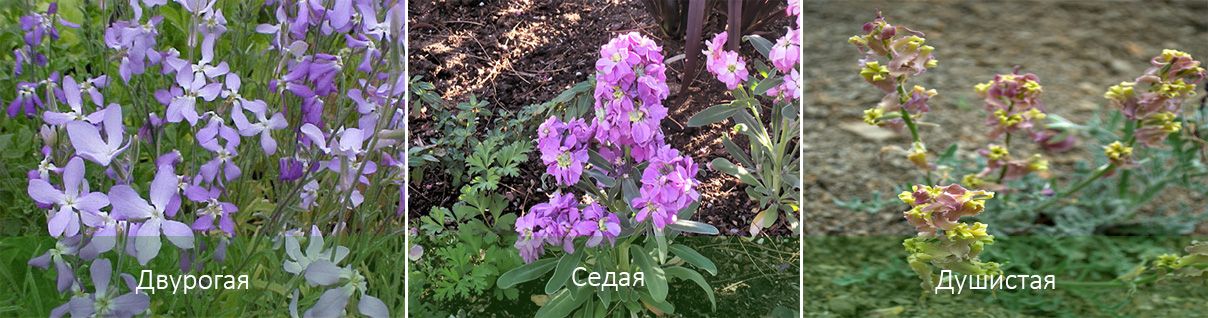
| Two-horned | A thin, well-branched stem forms an annual spherical bush up to 0.5 m in height. | Greyish-green, linear, petiolate. |
They form panicle-shaped inflorescences with simple, four-petaled corollas. They are soft or dirty pink. June-August. |
| Gray-haired | An annual plant up to 20-80 cm tall with a weakly branching trunk. | Oval or narrowly linear, with slight pubescence. |
Single or double. Various shades: snow-white, pink, yellowish, sky-blue, dark lilac. From the 2nd month of summer until the onset of frost. |
| Fragrant | Perennial up to 45 cm. | Emerald, with long, felt-like, silver-toned pubescence. The leaflets are petiole-less, oblong, and gathered into a lush rosette at the base. |
Simple, amber-brown, they form loose, racemose inflorescences. May-June. |
Matthiola bicornis varieties: Evening scent and others
Most popular:
| Variety | Description | Flowers |
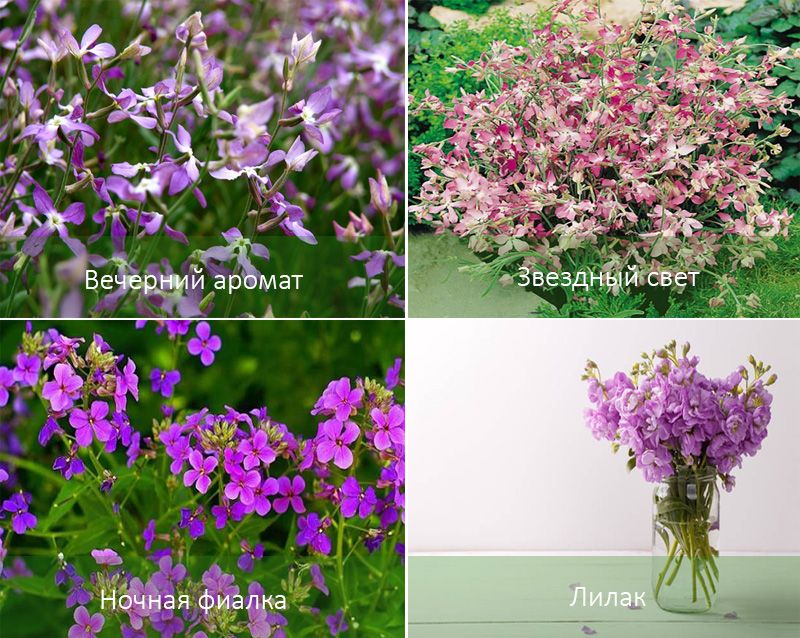
| Evening scent | Up to 45 cm tall with a straight, branching stem. Can grow in partial shade. | Purple, gathered in loose, raceme-shaped inflorescences. The petals open in the evening and close at sunrise. |
| Starlight | Up to 30 cm. Can withstand temperatures down to -5 °C. | Available in a variety of shades. They are not decorative, but have a strong, pleasant scent. |
| Night violet | Up to 25 cm. Loves full sun but tolerates frost. The stem is heavily branched, with coarsely toothed leaves. | They are collected in racemose inflorescences. The flowering period is long. |
| Lilac | Up to 50 cm. Distinctive feature: frost resistance. | Purple, cluster-shaped flowers appear just two months after sowing. |
Matthiola: growing from seeds and when to plant
Seed propagation is preferred. Sow in open ground in November or April:
- In a lighted area, dig trenches at a distance of 20-25 cm, up to 5 cm deep.
- Mix the seeds with sand and distribute evenly over the holes.
- Water when sowing in spring.
- Thin out after 3 true leaves appear. Leave the strongest and healthiest shoots at a distance of 15-20 cm.
Growing seedlings at home
Sowing seeds for seedlings is done in March:
- Pour turf and sand into the container in equal quantities.
- Soak the seed material in potassium permanganate for 30 minutes, rinse with water, and dry thoroughly.
- Deepen into the soil mixture by 5 mm at a good distance from each other.
- Moisten with a fine spray.
- Cover with cellophane, place in a room at a temperature of +11…+14 °C, create bright light.
- Remove the cover when the first shoots appear (after 3-4 days).
- After 12-14 days, transplant into separate containers (small pots or plastic cups).
- Continue growing until mid-spring.
- Harden off the bushes before planting them in open ground: start taking them outside for a couple of hours a week beforehand.
- By the first days of May, transplant the seedlings to a permanent location.
Perennial Stock: Planting and Care
Matthiola requires a well-lit location. It's best to avoid other Brassicaceae plants in the area (the soil may be infected with fungus). Matthiola thrives in nutritious, airy soil with a neutral pH. Heavy soil will cause it to die.
Planting is done by transshipment, along with the root ball. The seedlings are planted to the depth of the rhizome, leaving a distance of 17-20 cm. Planting too densely may result in various diseases. It is recommended to plant in the late afternoon, during rainy weather.
The plant is not difficult to grow, the most important thing is to choose the right place for planting and water it.
| Parameter | Recommendations |
| Watering | Regularly, in small doses. The bush can be sprayed in the evening to enhance the aroma. |
| Loosening | Apply periodically to improve soil aeration. Prevent weeds from becoming overgrown, as they deplete nutrients and promote disease. |
| Top dressing | When planting in a nutrient-rich substrate, no fertilizer is needed. In the spring, you can use complex mineral mixtures for flowering plants. Organic fertilizers are not recommended. |
Diseases and pests
Like any other plant, stock is susceptible to diseases and insects. It is particularly susceptible to:
| Disease | Signs | Treatment and prevention |
| Clubroot of Cruciferae |
In the early stages, it's difficult to detect. Small, spherical or spindle-shaped growths, the same color as the rhizome, appear on the roots. Over time, they grow, turn brown, and spread to the above-ground parts. Soon, the cones decompose and infect the soil. Fungal spores persist in the soil for up to 10 years. When damaged, the plant lags in development. The aboveground part wilts and turns yellow. |
There is no cure. Affected specimens must be destroyed and the soil disinfected. To avoid disease, follow planting guidelines. Avoid overwatering the substrate when watering. |
| Blackleg |
|
The plant will die in any case. It must be destroyed, and the soil treated with HOM to prevent infection of other bushes after planting. |
| Cruciferous flea beetle |
|
|
Top.tomathouse.com recommends: Matthiola in landscape design
Matthiola is a flower planted in gardens not for its attractive appearance, but for its sweet aroma. However, varieties with double blooms can still decorate any garden and make a wonderful addition to a flower arrangement. Matthiola is planted near windows, benches, and arbors to enjoy its wonderful scent.
The flowers are suitable for cutting and can last up to two weeks in a vase, exuding a pleasant, sweet aroma.