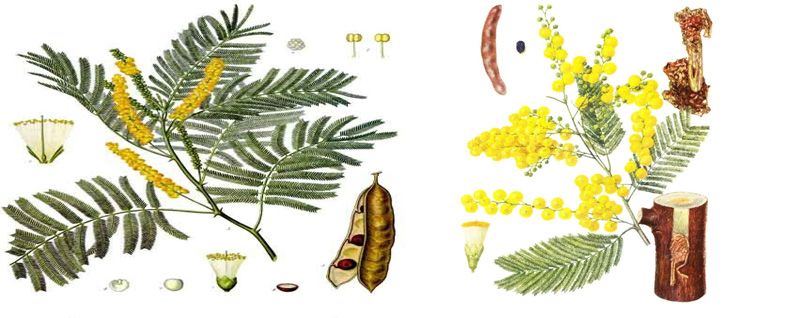
Mimosa belongs to the legume family. According to various sources, the genus contains 300-600 species. The plant is native to the tropics and subtropics of Africa, America, and Asia. Only a few varieties are grown indoors or outdoors.
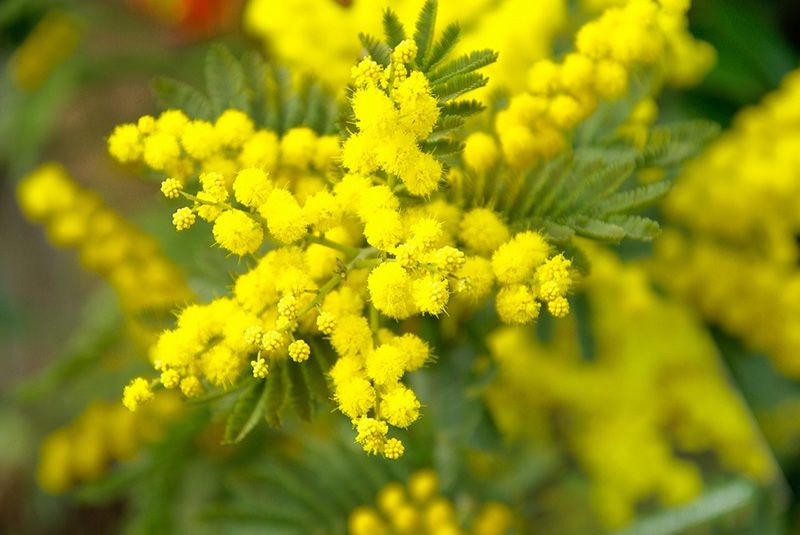
Description of mimosa
The genus is represented by shrubs, herbs, and low trees. The number of flower parts is usually quadruplicate, rarely 3 or 6. There are the same number or twice as many stamens. The inflorescences form dense heads or racemes.
Peculiarities of mimosa behavior
Mimosas don't tolerate being touched; if shaken, their leaves immediately curl up. This also happens during temperature fluctuations and after sunset. After a while, the flower opens its leaves again.
Botanists explain this by saying that the plant protects itself from tropical rainfall in the wild. During rain, it closes its leaves, and when the sun comes out, it uncovers them.
Types of mimosa
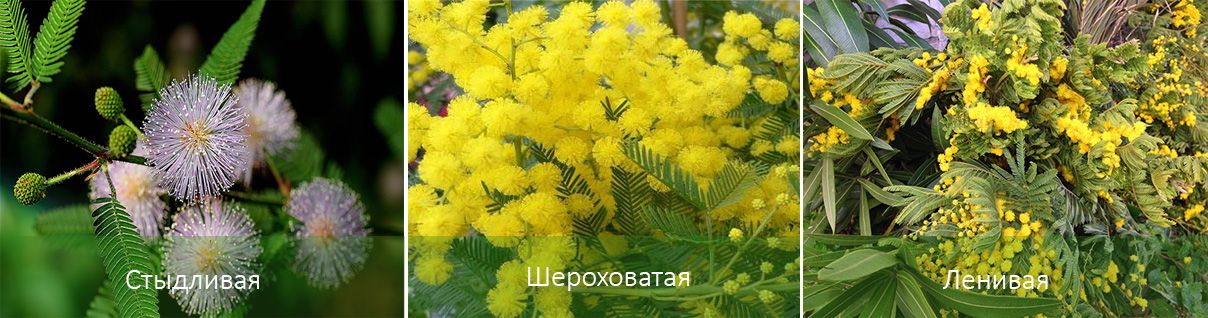
The following types of mimosa are suitable for growing indoors and in gardens:
| Name | Description |
| Shy | Also known as silver acacia, this is the most popular cultivar. It grows wild in Brazil. In summer, it produces purple-pink buds. It is cultivated as an annual. |
| Rough | It grows in the forests of South America. The buds are snow-white, gathered in inflorescences. |
| Lazy | The flowers are white, small, and very decorative. They reach 50 cm in height. The stems are erect and branched. The leaves are fern-like. |
Growing and caring for mimosa at home
Mimosa is easy to care for. However, caring for it at home requires following certain guidelines:
| Factor | Spring/summer | Autumn/Winter |
| Location/lighting | Near western and eastern windows, where direct sunlight does not penetrate. Loves bright light, but needs to be gradually accustomed to it. |
A dark, cool room. No additional lighting is necessary. |
| Temperature | +20…+24 °С. | +16…+18 °С. |
| Humidity | High, 80-85%. Place a basin of damp moss or expanded clay next to the plant. Daily misting with settled, chlorine-free water is necessary. It's also a good idea to install a humidifier in the room where the mimosa is growing. | |
| Watering | Abundant, once every 2-3 days. | In autumn, moderate watering; in winter, only when necessary (when the bush dries out). |
| Top dressing | Every 2 weeks, apply mineral fertilizers with increased concentrations of phosphorus and potassium. The dosage indicated on the package should be reduced by half. | No need. |
Caring for mimosa in open ground
Mimosa grows naturally in the tropics, making it difficult to grow in our climate. The plant is typically kept in greenhouses, houses, conservatories, and orangeries. In regions with warm winters, the bush can also be planted outdoors, but proper care is required:
| Parameter | Conditions |
| Location/lighting |
South, southeast, southwest, east, and west. The plant should be protected from drafts. Young specimens require partial shade. Once the bush has become accustomed to ultraviolet rays, it can be transplanted to a south-facing location. Bright sunlight; if kept in the shade, mimosa will lose its decorative properties and stop blooming. |
| Temperature | Not below +10 °C. |
| Humidity/watering | Water regularly for the first few days after planting to promote rooting. Stop watering after a few months. Mimosa is drought-resistant, but it needs watering in very hot weather. Moisten the soil with rainwater or river water. If this isn't available, you can use filtered tap water, boil it, and let it sit for a couple of days. |
| Soil | Drainage is essential to prevent water stagnation. It is laid out with medium-grain expanded clay. The substrate can be made from equal parts of turf, peat, humus, and sand. After planting, the soil is regularly loosened and weeded. |
| Top dressing | Fertilization is carried out during the growing season (spring-summer). Twice a month, mineral fertilizers should be applied when buds appear—mixtures for flowering plants. |
Features of pruning and replanting mimosa
Buds appear only on young shoots. To encourage more new branches, pinching is necessary. This will ensure longer flowering. Pruning is also necessary to prevent the stem from becoming leggy, which will help maintain the mimosa's decorative appeal.
The first time this is done is in early April, the following April after flowering has finished. To ensure it's beneficial, it's important not to overdo it, and only prune very elongated shoots, otherwise the bush will die.
When growing mimosa as an annual, repotting is not necessary. If the bush is preserved after winter dormancy, it will no longer be able to fit in the old pot. The plant is transferred to a new pot by transshipment, without disturbing the root ball. The remaining voids are filled with fresh potting soil. This is made from the same components as the substrate used for the initial planting (when purchasing mimosa, be sure to check the soil type it was planted in). After repotting, the bush is watered.
Reproduction of mimosa
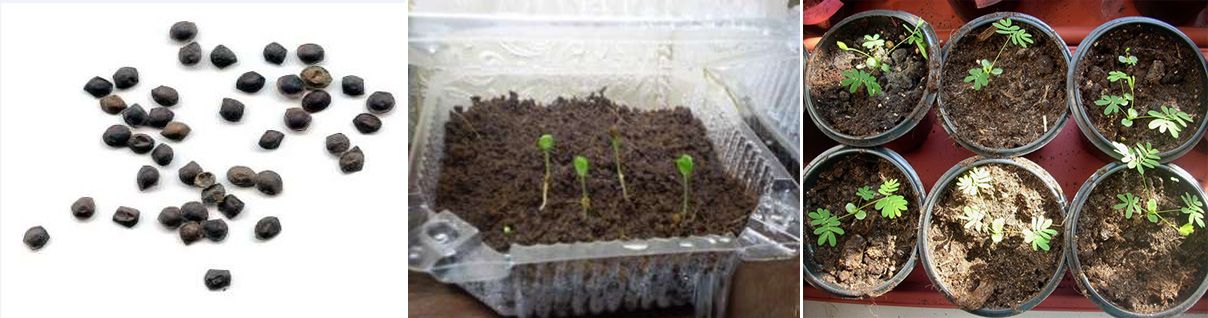
Mimosa is propagated by seeds and cuttings. The first method is used in February:
- Distribute the seed material evenly over the ground.
- Sprinkle a little sand.
- To stratify, place the container in the refrigerator for a month.
- At the beginning of spring, move it to a room with a temperature of +25 °C.
- After several true leaves appear, transplant the seedlings into separate pots.
Step-by-step propagation by cuttings:
- Cut 10 cm cuttings from the tops of the branches.
- Cut off the side shoots and place them in Kornevin for 8 hours.
- Plant in soil to a depth of 2 internodes.
- Cover with glass and place in a warm, well-lit place.
- Remove the cover daily for ventilation and watering.
- Rooting will occur in 2-3 months.
Potential problems, pests and diseases of mimosa
If there are any shortcomings in care, the following problems may arise:
| Manifestations | Reasons | Elimination measures |
| Sugary sticky coating, presence of small, green or black insects. | Aphids, due to high humidity. |
|
| Deformation and shedding of foliage. Fine webbing on the underside of leaves and in the internodes. | Spider mites, due to the large amount of moisture in the air. |
|
| Yellowing and falling leaves. They do not open during the day. | Excess moisture. | Observe the watering regime. |
| Strong elongation of stems. | Lack of light. | Move to a well-lit place. |
| Lack of flowering. |
|
Normalize conditions of detention. |
| Dry, light-brown spots appear. Grayish fluff appears on the stem. | Gray rot, due to excessive soil moisture, hypothermia. |
|