Mirabilis (from the Latin mirabilis, meaning "amazing") is a genus of ornamental flowering plants. It belongs to the Nyctaginaceae family, which comprises 50 species. In the wild, these bushy perennials are found in the fields of South America, and sometimes in the northern part of the country.
Content
Description of Mirabilis
In Russia, mirabilis is common as an annual plant, as it cannot tolerate temperatures below -5°C. In southern regions where frosts are rare, perennials are found.
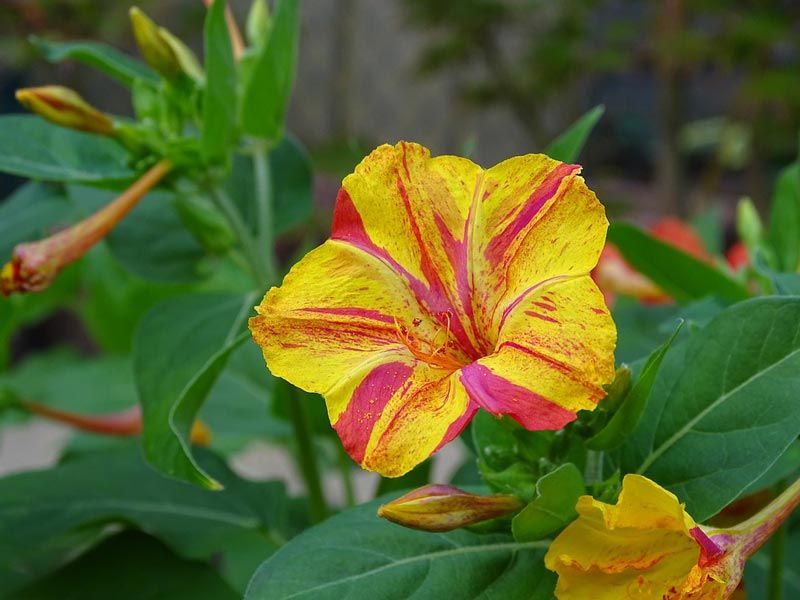
This unique plant, also known as the "night beauty," boasts numerous small, brightly colored, gramophone-shaped flowers that bloom in the dark. Its petals open in the evening and close with the first rays of sun. At this time, its sweet tropical aroma attracts pollinating insects.
The upright or prostrate stems, sticky and fuzzy, grow into a bush up to 80 cm in diameter. Finger-like tubers extend from a long main root. These tubers store nutrients needed during periods of drought and cold. The leaves are paired, oblong, bright green, velvety or smooth. The pointed tip and clearly defined light vein give the leaves a heart-like appearance. At the top of the stem, cymose inflorescences form, consisting of 5-6 funnel-shaped flowers up to 3 cm in diameter with 3-6 stamens.
Self-pollinating mirabilis produces fruits in autumn with one seed, hard, smooth or pubescent, obovate in shape.
Tall flower species are used to create a hedge that looks lush and vibrant.
Mirabilis: varieties and varieties
Fifty species of this night beauty cross-pollinate, producing new varieties and unusual colorings each year. Some varieties have mixed bud colors on a single bush. Hobbyists have grouped the most common garden and houseplants according to the following characteristics.

| Name | Height, cm | Flower color | Features of growth and flowering |
| Elvira | 100 | Purple, lilac shades. | Thick velvety leaves. |
| Red lollipop | Bright red. | Numerous flowers 3-6 cm in diameter. Erect stems are naked. | |
| Dragon | 80 | Scarlet. | Fragrant tubular flower buds. |
| Yalapa | 30-80 | White, yellow, pink, red. | The ornamental rhizome is covered with silvery scales, often visible above the surface. |
| Iolanta | 50 | Hot pink. | Bright strokes on the perianth plate. |
| Marble | 80 | White and yellow. | Annual, bizarre two-color bud pattern. |
| Serenade | 50-90 | Mixed paints. | Large flowers up to 6 cm. |
Mirabilis propagation methods
Gardeners consider seed propagation to be the preferred method for Mirabilis. The seeds are collected after the mature plant's flower has dried. Less common and labor-intensive, but also reliable, are growing this nocturnal beauty from tubers and cuttings.
Sowing seeds
Mirabilis seeds can be planted as seedlings or directly into the garden bed. The former will result in early flowering and a neater flowerbed. To sow the seeds and prepare the seedlings, prepare trays filled with soil. To maintain humidity and a constant temperature, a greenhouse or suitable location in the apartment is necessary.
In early spring, soak the seeds in a damp cloth for several hours or place them in a thermos filled with water slightly warmer than room temperature overnight. To plant the prepared seeds, make 2-cm-deep holes in the soil, plant 1-2 seeds at a time, level the soil, and water thoroughly. The first sprouts may appear within one to two weeks. Once the seedlings reach 15 cm, they can be replanted in larger containers and watered with a mixture containing mineral fertilizer.
You can sow prepared seeds or transplant seedlings outdoors when the outside temperature is consistently above freezing. To form a slender hedge, thin out any overgrown flower stems after a couple of weeks.
Propagation by tubers
Night beauty tubers are available at all gardening stores, but if you have the storage conditions right, you can use home-grown tubers. Otherwise, there's a high risk of the tubers drying out or sprouting, making them unsuitable for planting.
In the spring, tubers ready for germination are placed in a dry, sunny spot and sprinkled with warm water. The first shoots appear within 7-10 days. Weakened shoots are pinched to encourage the stronger ones to develop stems. They are planted in a flowerbed, turning the root ball over to avoid damaging the roots. The root area is mulched with ash.
Propagation by cuttings
Due to its labor-intensive nature, propagation by cuttings is rarely used by lovers of this nocturnal beauty. Strong, woody shoots are cut from the plant, dried, and placed in a germination solution for a while. The cuttings are planted in seedling boxes with a nutritious substrate, watered frequently, and kept warm. Once established, the shoots are transplanted to flower beds in the spring.

Caring for Mirabilis in the Garden
Mirabilis is an easy-to-grow plant, requiring only standard gardening care. Regular loosening of the soil, clearing the root zone of weeds, and daily watering at the base of the plant are all that's needed. To prevent the plant from drying out or from becoming unable to water frequently, you can bury a five-liter plastic bottle with holes in the bottom next to the plant and fill it with water. This will help retain moisture at the roots for a long time.
To ensure lush flowering, apply mineral fertilizer a couple of times during the growing season. While fertilizer is not necessary for this plant, organic additives are harmful to the bush.
The plant prefers wind, sunlight, and non-acidic soil. To neutralize the soil, use lime or dolomite flour.
Loosening is a desirable procedure for the night beauty to saturate the roots with oxygen and promote lush flowering.
Mirabilis wintering
Preserving the tubers and planting them next spring is the task of any gardener accustomed to growing mirabilis in their garden. They are dug up after flowering has ended, before frost, washed with a potassium permanganate solution, and stored at +5°C in sand, peat, or sawdust.
In regions with a warm climate, plants are cut almost to the root in the fall, covered with spruce or foliage and left to overwinter.

Pests and diseases of Mirabilis
Mirabilis japonica rarely gets sick. Only if it's not properly cared for, specifically overwatering, will its roots rot, its leaves become covered in rusty spots, and the plant dies. Such a bush is dug up and the soil is watered with a fungicide solution to prevent fungal infections.
Caring for Mirabilis at Home
Indoors, seed germination is very high even after 3 years of storage, making it possible to preserve your favorite variety.
To grow mirabilis at home you will need the following:
- seeds soaked in a damp cloth for 24 hours;
- slightly acidic soil, turf and river sand or fine gravel in a ratio of 1:1:2;
- a handful of ash to neutralize the alkali;
- boxes with soil or plastic cups for separate germination of seeds;
- thinning of shoots after 2 weeks.
Young plants with strong leaves can be transplanted into indoor pots 60-90 days after germination. Further care for indoor Mirabilis varieties is similar to regular garden care.
Top.tomathouse.com informs: Mirabilis in combination with other plants
When using mirabilis in landscape design, consider the height of the bush. Low-growing plants are planted in groups to decorate borders and lawns. In such cases, they are complemented by groups of bellflowers, anemones, and marigolds that complement each other in texture and color.
This plant is aggressive towards shorter and weaker relatives and can easily destroy them. Therefore, choose a spacious location for the bush. Lavender, lobularia, and sweet tobacco make good neighbors.
This night beauty, with its bright, contrasting, numerous flowers, can decorate a terrace or loggia, even planted as a single stem in a separate pot.
Mirabilis hedges look original and contrasting, especially in areas where the site is illuminated at night.
Thanks to their spicy aroma, the flowers have found use in perfumes and cosmetics. Natural dyes are made from the vibrant buds.
This unpretentious night beauty delights flower lovers with its beauty and rich aroma, making them want to plant it again every year.