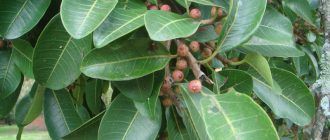
The myrtle tree belongs to the Myrtaceae family of plants. It is native to the Mediterranean region but is also found in some North African countries with subtropical climates. There are approximately 10 different species, as well as several artificially created cultivars.
Content
- 1 Description
- 2 What species can be grown at home?
- 3 How to grow myrtle at home
- 4 Choosing a pot, soil composition, planting, replanting
- 5 Proper watering and fertilization
- 6 Propagation of the myrtle tree
- 7 How to make a myrtle tree bloom
- 8 Top.tomathouse.com recommends: myrtle as a bonsai
- 9 What diseases can myrtle get?
- 10 Mistakes in caring for a myrtle tree
- 11 Beneficial properties, contraindications, use in folk medicine
Description
In its natural environment, myrtle can grow up to three meters, but indoor plants will not exceed 60 cm. The leaves are dark green, round and pointed at the end.
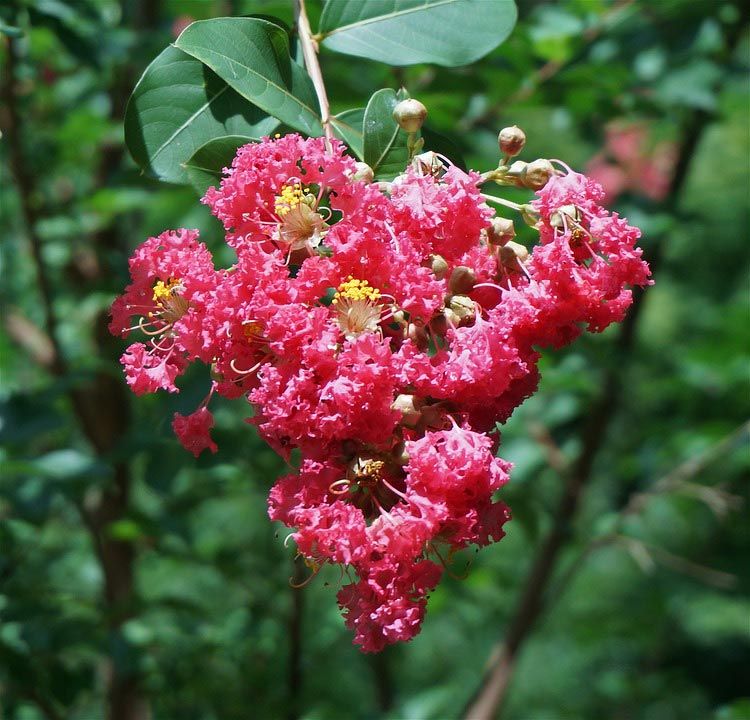
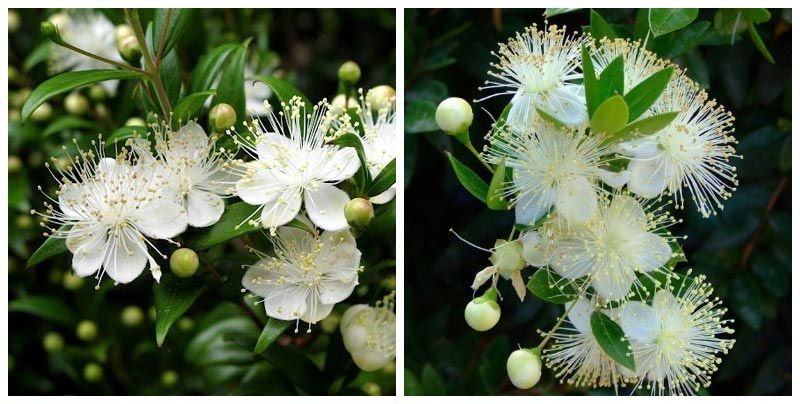
Myrtle can be identified by its distinctive branches. When flowering, single, small, round flowers bloom. They come in various shades depending on the shrub species. In common myrtle and Boëtica myrtle, they are white. In lemon myrtle, the flowers darken over time to cream or yellow.
In summer, after flowering, dark blue berries no more than 1 cm in diameter appear. They have an enticing aroma and are edible.
Myrtle is a magical plant, and in ancient times it was given special significance. It was a symbol of warmth, compassion, and generosity. It was often used as a decoration at weddings, and wreaths were woven from it, as it was believed to bring good fortune.
Myrtle is the source of many legends and tales, and there are various omens and superstitions. For example, placing a sprig of myrtle under your pillow will induce a prophetic dream, and a tree grown from seed will help you conceive a daughter. In feng shui, the myrtle tree is described as a plant with gentle energy. In Taoist practice, it symbolizes family well-being.
Besides decorating homes and bouquets, it's used in cooking, for example, when frying meat and fish, and in making pickles. Dried berries are used in some types of sausages, and in France, they're used to make jam. However, due to their bitter taste, their quantity should be controlled.
What species can be grown at home?
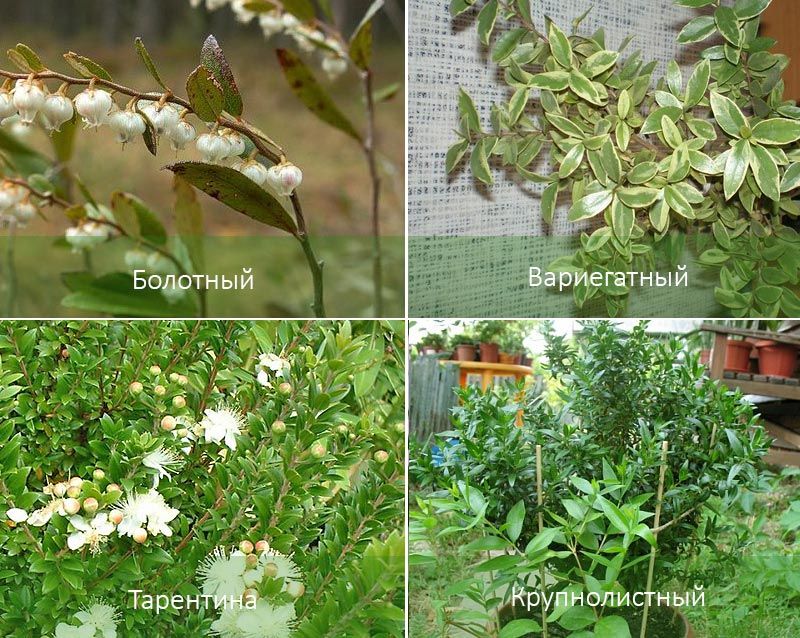
There are several types of myrtle tree suitable for growing at home.
| Name | Description | Distinctive features | Benefits and harms |
| Marsh (Cassandra) | Adapted to winter conditions. Height no more than 1 meter. Lives up to 50 years. Grows in sphagnum bogs. | It tolerates cold winters. Its leaves fall in winter and bloom again in spring. | Poisonous, dangerous for pets. |
| Variegated | Brightly colored leaves with amber stripes along the edges. | White flowers with a beige tint and golden stamens. Fragrant aroma. | Air purification, reduction of carbon dioxide. |
| Hymen | Belongs to the common myrtle family. As a houseplant, it grows no taller than 1 m, but in the wild, it reaches 3-5 m. | It has a strong, sweet smell. | They decorate bridal bouquets with it. |
| Large-leaved | It is classified as a variety of the common myrtle tree. | Large leaves about 5 cm. Grows up to 4 m. | It kills bacteria and is also used in the treatment of gastrointestinal diseases and sinusitis. |
| Tarentina | The leaves are elongated, up to 1.5 cm in size. | A dwarf tree. Many flowers form clusters. | Due to its pleasant aroma, it is used for the production of essential oils. |
| Communis (standard) | In the natural environment, it is about 5 meters tall, with elongated leaves. | It has a lemon scent. | It is used to make spices, seasonings, etc. |
| Ordinary | In nature it reaches 4 m, in an apartment it rarely grows up to 1 m. | Oval leaves with fragrant flowers. Suitable for growing as a bonsai. | Used for preparing medicinal decoctions and infusions. |
How to grow myrtle at home
To prevent the bush from dying, it is necessary to adhere to certain conditions.
| Season | Lighting | Humidity | Temperature |
| Spring | Myrtle requires bright light, but the north side should be avoided. | 60-70%. Frequent watering is required. During flowering, avoid getting the buds wet. Rinse in the shower, then dry the soil to remove excess moisture. Place the pot on a pebble tray filled with water. | +20°C. The plant needs fresh air and ventilation. |
| Summer | Keep in the shade during hot days. | Up to +25°C. | |
| Autumn | Place in the sunniest locations and use artificial lighting. As the days get shorter, the myrtle sheds its leaves. | Moderate humidity – 50-60% if the room temperature is low. In a warm place, at +20°C, humidity is 60-70%. The tree should also be kept away from heating devices and moistened using various methods: showering, spraying, etc. | +20…+25°C. If the plant was outside or on a balcony, gradually acclimate it to the new temperature. |
| Winter | +12…+15°C; below +6°C, the shrub will die. If the temperature rises above +15°C, the leaves will begin to fall. Avoid drafts. |
Choosing a pot, soil composition, planting, replanting
Until a myrtle tree reaches three years of age, it's repotted annually in the spring. Depending on its growth, the pot size should be adjusted. Mature trees are not very vigorous, so repotting is done every four years.
You should also monitor the size of the pot; it should be changed only after the roots have occupied all the soil.
Myrtle is fussy about soil, so it should be light, loose, and moderately nutritious. Drainage should also be considered, with high-quality soil preferred. Suitable materials include fine expanded clay, perlite, and brick chips.
Experienced gardeners suggest three types of soil mixture for planting:
- Universal soil for indoor plants, coarse sand is added, it is possible to use moss fertilizer.
- Turf soil, peat, organic fertilizers and sand in equal proportions.
- A mixture consisting of 2 parts leaf and peat soil and 1 part each of turf soil and sand.
When choosing pots, choose ones that are equal in height and width. They should have large holes to drain excess water.
When growing a myrtle tree as a bonsai, the pot should be low.
The material can vary; both plastic and ceramic pots are suitable. However, myrtle will look more attractive in the latter. Another advantage of the latter type of pot is its stability, which is important when growing a tall tree.
The main mistake when choosing a container is buying it for growth, which does not allow the plant to bloom in the future, which means the pot should be chosen accordingly.
Step-by-step transplant scheme:
- Prepare a sterile container, soil and drainage.
- First, place a drainage layer on the bottom and some soil on top.
- Do not water the tree the day before so that the soil dries out and it can be easily removed from the old pot.
- Carefully remove the plant.
- Inspect the roots and trim off any rotten ones.
- Shake off the soil from the outer roots and treat with Kornevin.
- Carefully place the myrtle into the new container and straighten the roots.
- Fill the gaps between the tree and the walls of the container with soil.
- Compact the soil with your hands.
- Water the myrtle and spray the crown.
- Leave the pot with the plant in partial shade for a week.
Proper watering and fertilization
The myrtle tree should be watered with settled water at room temperature, without chlorine.
The frequency of watering depends on various factors: temperature, air humidity and amount of light.
One of the most important factors is the soil condition. It shouldn't be completely dry. Overwatering can lead to root rot and leaf drop.
If the plant's leaves are drooping and dull, it's time to spray it. A myrtle shower is also essential for controlling pests and various diseases. You can moisten the tree by placing containers of water close to the plant. A humidifier will also make the task easier.
Myrtle requires fresh air, so the room it's in should be constantly ventilated. However, at this time, the plant should be moved to another room to prevent it from freezing.
Myrtle trees are fertilized, but this should be done carefully. If compost is added to the soil when replanting, the next feeding can only be done in the summer. Typically, the plant is fertilized with complex fertilizers in the spring, and with nitrogen-based fertilizers after flowering. Myrtle also responds to fertilizer by spraying.
Propagation of the myrtle tree
The myrtle tree is propagated by cuttings and seeds.
Cuttings
- Propagation is carried out in winter and summer. Branches are used after crown pruning.
- Cuttings are taken 5-8 cm long and taken from the lower or middle branches. The diagonal cuts are treated with a root growth promoter.
- The cutting is planted in a mixture of sand and sphagnum moss or leaf mold. The container is then covered with plastic wrap and stored in a dark place. The cuttings are aired several times every 7 days.
Germination usually occurs within a month. You can tell by the new leaves, which indicate rooting. After this, the cuttings can be transplanted into individual pots.
Using seeds
Growing myrtle from seed is more difficult; this method requires much more time and patience.
- First of all, when propagating, prepare a mixture of peat and sand, moisten it, and scatter the seeds into small depressions, sprinkle with soil and cover with film.
- Keep the container at room temperature, away from direct sunlight. Air the container several times a week, removing the plastic wrap. The first sprouts will appear within 14 days.
- Replant after two leaves appear, and then only when the roots fill the entire pot.
How to make a myrtle tree bloom
To make the plant bloom at home, you need:
- First of all, extend daylight hours and add lighting. Avoid direct sunlight during the summer.
- Give the myrtle a rest period, during which watering is stopped and the temperature drops to +8…+10°C. Then return to room temperature.
- When replanting, use a soil mixture of peat, humus, turf soil and sand.
- Feed with mineral fertilizers, but only after finding the correct ratio. Lack of flowering can be caused by a lack of phosphorus and potassium or an excess of nitrogen.
- Water frequently without over-watering the soil.
- Prune myrtle every year.
Top.tomathouse.com recommends: myrtle as a bonsai
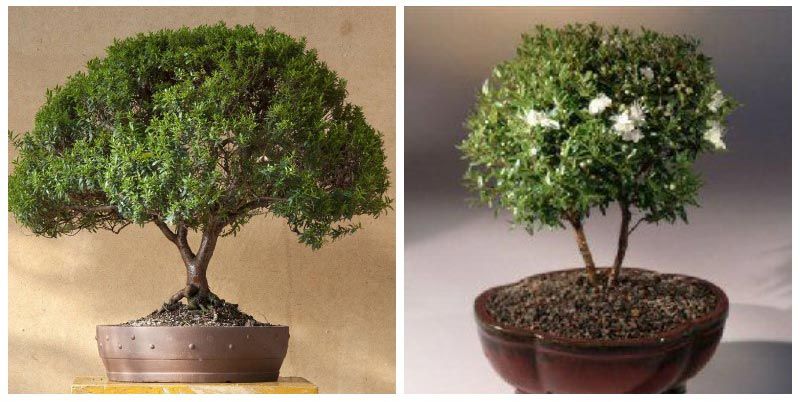
Myrtles of the Microphylla or Boetica species are suitable for bonsai formation. Choose a three-year-old plant; it's best not to use a young one.
Creating a bonsai begins with choosing a pot. It should be ceramic and low.
When replanting, a large amount of sand is added to the soil; in this case, the myrtle tree grows more slowly, but constantly.
Repotting is done once or twice a year, with the roots being shortened by half.
To create a bonsai, you need to use copper wire and follow these rules:
- The wire is wound in a spiral around the trunk and branches of the tree.
- They give the trunk the desired shape by carefully bending it.
- The plant is left with the wire wound around it in this position for six months; if the tree is young, the period is reduced to 2-3 months.
- Watering is regular and spraying is daily.
- After 3-6 months, the wire is cut and the myrtle is given time to rest, then all the described steps are repeated until the myrtle reaches the desired shape.
Myrtle is sensitive to temperature fluctuations, so the room temperature should be around 17°C even in winter. It also loves light, but doesn't like direct sunlight.
What diseases can myrtle get?
If the plant is not cared for properly, there is a risk that it will become sick or be attacked by pests.
| Manifestations on leaves | Cause | How to cure |
| Darkening, sticky coating. | Scale insect. | Remove the pest with a cotton swab soaked in soapy water. Treat with an insecticide. |
| They are drying up. | Aphid. | Use insecticide. |
| A white web appears at the bottom. | Spider mite. | Clean with soap or tobacco solution. Treat with insecticide. |
| White coating. | Mealybug. | Remove the pest and use Aktara. |
| The upper part has light spots, while the reverse side has dark spots. | Thrips. | Apply Actellic. |
| They dry up. | Root rot. | Cut off diseased roots and transplant into uninfected soil. |
Mistakes in caring for a myrtle tree
| Manifestation on leaves | Cause | Elimination |
| They dry out and curl up. | Lack of moisture. | Moisturize the plant. Adjust the watering schedule. |
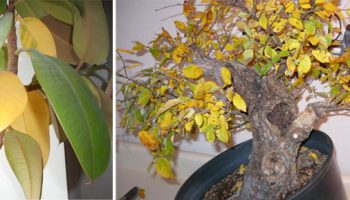
| They fall off, the ends of the shoots darken. | High temperatures and dry air in winter. | Use a humidifier or place a container of water. |
| They become dull and the shoots stretch out. | There is not enough lighting. | Move to a brighter place, turn on the backlight. |
| They lose color and curl up. | Direct rays. | Move to a shaded area during summer heat. |
Beneficial properties, contraindications, use in folk medicine
Myrtle is considered a medicinal plant and is commonly used in folk remedies because it is harmless and does not cause side effects. It is used prophylactically to combat the following ailments:
- herpes;
- kidney inflammation;
- prostate diseases;
- cystitis;
- sinusitis;
- pulmonary tuberculosis;
- asthma;
- flu;
- bronchitis;
- gastrointestinal diseases.
In folk medicine, myrtle leaves, flowers, fruits, and shoots are used in recipes. Essential oils, infusions, ointments, and medicinal powders are prepared from the leaves.
Scientists have identified the following properties of the plant:
- bactericidal:
- immunostimulating;
- expectorant;
- antiseptic;
- sedative (has a beneficial effect on the nervous system);
- stimulating brain function.
The plant also helps with burns, wounds and other skin diseases.
To relieve the patient's condition from itching or burning, compresses are made from infusions based on myrtle leaves.
Myrtle is added to cosmetics and perfumes for its pleasant scent. Masks made with this plant strengthen hair follicles and moisturize and firm the skin.
There are also contraindications for taking folk remedies that include myrtle, these are:
- pregnancy;
- old age;
- individual intolerance.
It's also not recommended to leave the plant in the bedroom, as it can cause headaches. Myrtle infusions should be taken before evening, otherwise sleep problems may occur.