Miscanthus, or fan grass, belongs to the Poaceae family. The genus includes approximately 400 species. They can be found in the tropics and subtropics, as well as in temperate regions of Asia, Africa, and Australia. Although the plant prefers warmth, three species are cultivated in the Moscow region and other regions of Russia.
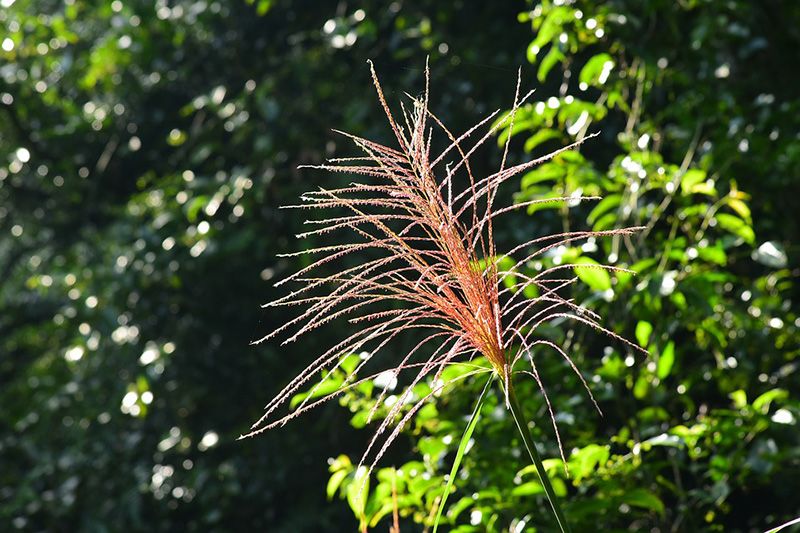
Miscanthus flower description
This is a perennial herbaceous plant, reaching 80-200 cm in height. It has large, loose tufts with creeping roots that go down to a depth of 4-6 m, and vertical stems.
Dense, rigid, scaled plates. Grass-colored, linear or lanceolate-linear, 0.8-1.8 cm wide. At the end of the season, they acquire a wine, copper, brownish, or canary-yellow color. The lower ones are shorter, membranous, with or without awns.
The fan-shaped paniculate inflorescences grow to 10-30 cm. They have elongated lateral branches with an underdeveloped common awn. The spikes have a developed single flower and thin, leathery scales.
Miscanthus species and varieties: Chinese and others
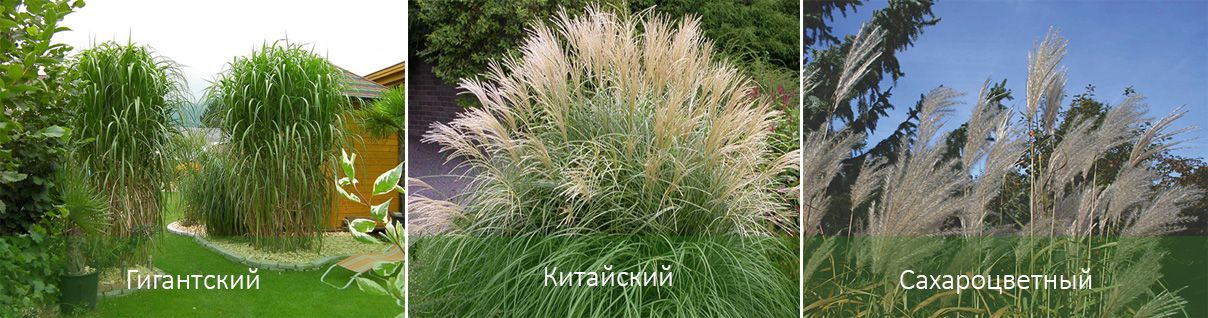
Fan grass is among the most sought-after ornamental grasses among experienced and amateur gardeners. The following varieties are commonly used for landscaping:
| Name | Description | Leaves | Flowers/their formation period |
| Giant | Origin unknown. It is believed to be a complex hybrid. It grows up to 3 m tall and has a spreading turf. |
They cover the trunk on all sides. Dark malachite-colored, drooping, they resemble the spray of a fountain. There's a white stripe down the center. The lower ones are located at a level of up to a meter from the base. They turn brown and fall off in July. |
Pink, turning silver over time. At the end of August. In regions with short and cool summers, it may not bloom. |
| Chinese | A perennial grass with a shortened rhizome and erect stems, leafy at the base, up to 300 cm tall. It has been cultivated for nearly 150 years. |
Longer than wide, with a prominent ridge down the middle, rough and dense. The lower ones are scale-like with a geniculate-curved awn. |
Single-flowered spikelets with an underdeveloped main axis. Summer-early autumn. |
| Sugarflower | With a bare trunk up to 2 m. | The length significantly exceeds the width. |
The panicle-shaped inflorescence is snow-white or silver-crimson. July - October. |
The listed species are used not only for decoration, but also for:
- pellet production: woodchips are a high-calorie biofuel (when burned, a lot of energy is released with a minimum amount of ash, because the material contains little liquid);
- paper production;
- feed and bedding for livestock.
Varieties of Chinese Miscanthus
The Chinese variety is the most popular, and some of its cultivars are successfully grown in the Moscow region and central Russia, where severe frosts occur. The following cultivars are often used in landscape design:
| Name | Description |
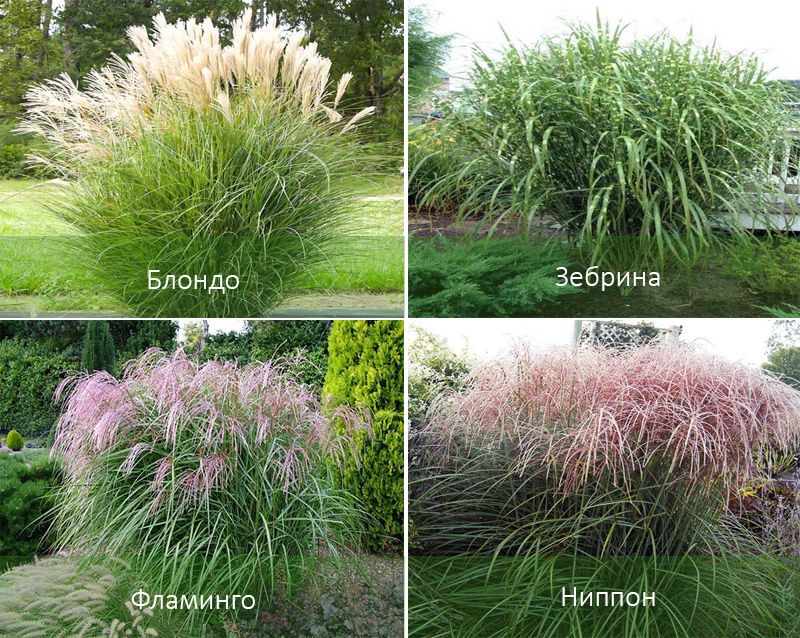
| Blondo | Forms a bush up to 200 cm tall. Its distinctive feature is its winter hardiness. It survives frosts down to -35°C without additional shelter. |
| Zebrina | A variegated variety with bright green foliage with yellowish transverse lines. It grows to 2.5 m. |
| Flamingo | Up to 8 inches tall, with fluffy, drooping panicles of a pinkish hue. Drought-resistant, recommended for growing in southern regions. Plant singly or in groups. |
| Hinyo | Tall, branched, with bright emerald plates and golden transverse stripes. |
| Nippon | Up to one and a half meters in height. In autumn, the foliage can turn from orange to bright scarlet. The inflorescences are strawberry-red. |
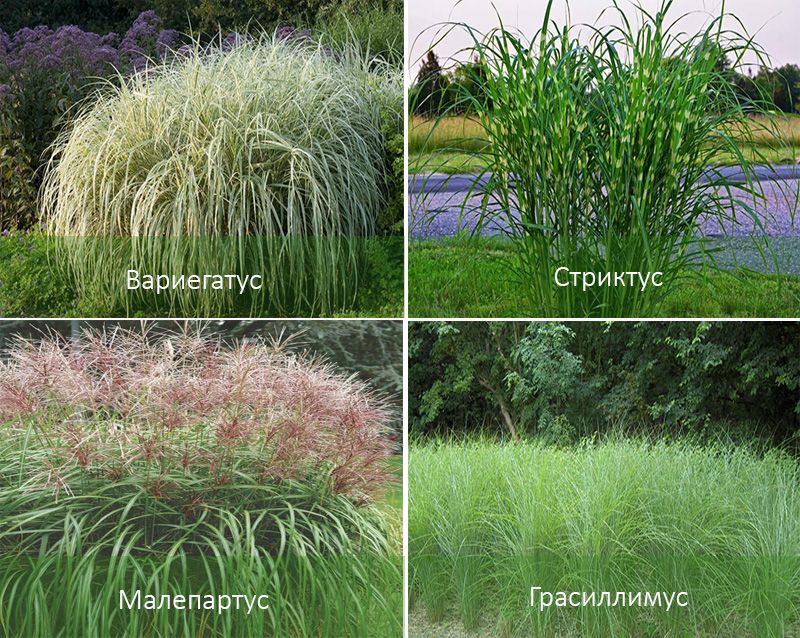
| Variegatus | Up to 200 cm, plates with snow-white axial lines on a rich green background. |
| Strictus | Rough, coarse foliage of a rich emerald hue with numerous light, distinctive stripes. The spikes bear a single flower, with burgundy panicles. |
| Malepartus | Paniculate, reddish-brown inflorescences begin to form in June. In autumn, they acquire a fiery scarlet color. |
| Grasillimus | Up to 200 cm, rounded in shape. Flowers are copper-colored. The blades are narrowed, turning golden before winter dormancy. |
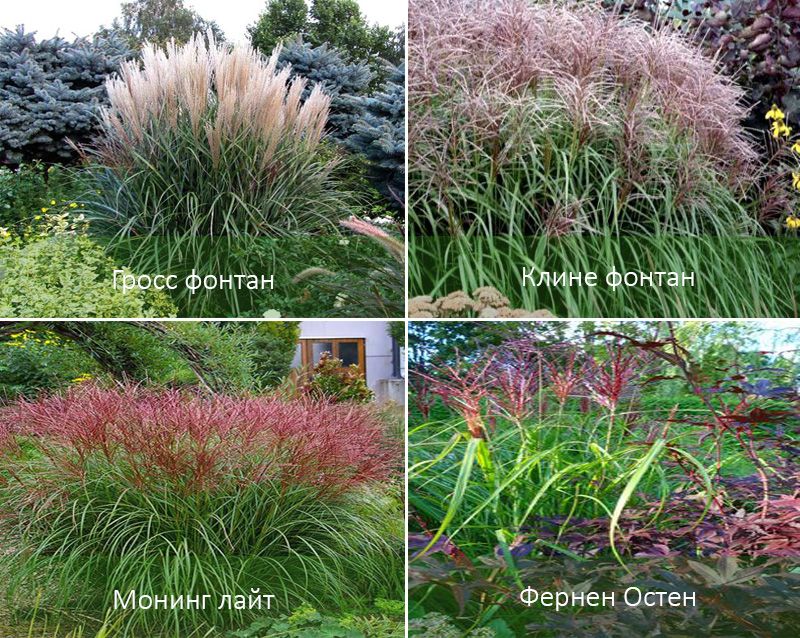
| Gross Fountain | With green leaves, up to 2.4 m. Leafy stems grow vertically. Paniculate inflorescences are silvery. The root is fibrous, branching in various directions. |
| Klein fountain | A profusely flowering variety, up to 1.2 m tall. The flowers are reddish-brown. |
| Morning Light | Grows 120-180 cm. The leaves are tapered, thin, with white lines along the edges. The panicles are pinkish-silver. |
| Fernand Osten | It has green, narrow leaves with a longitudinal whitish stripe; in autumn they acquire a light burgundy color with a rusty tint. |
Growing Miscanthus from Seeds
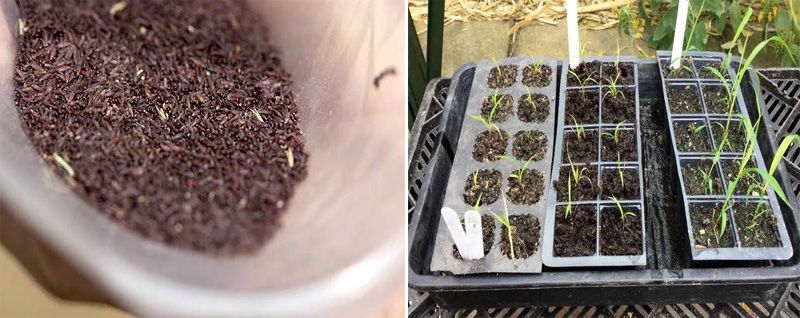
Sowing is done in the fall. The seeds do not require pre-stratification; here's a step-by-step guide to planting:
- Place 1-2 units of seed into separate small containers. Press lightly into the surface, but do not bury them too deeply.
- Cover with a plastic bag or glass to create a greenhouse effect.
- Remove the cover daily for watering and ventilation. Wipe away any condensation from the walls. Keep the container with seedlings in a room with diffused light.
- After the seedlings appear, remove the film.
- Keep at +19…+21°C. If daylight hours are short, extend them with phytolamps. The soil should always be slightly moist.
Miscanthus propagation
The flower is propagated not only by seed but also by division. This method of propagation should be used no more than once every three years, as it does not tolerate it well. Division is performed in early spring or summer:
- Dig up the mother bush.
- Divide into parts so that each one has a developed root system and healthy petioles.
- It's best to transplant the cuttings immediately. However, if necessary, they can be kept in a cool place for 2-3 days.
- The bushes won't grow for a long time. For development to begin, air temperatures of at least 25°C (77°F) are required for several days in a row.
You can buy pre-prepared seedlings at a specialty store or nursery. It's best to choose mature plants, as young ones may not develop enough strength before the cold weather sets in and may die. Before purchasing, carefully inspect the fan grass for damage, diseases, and insect pests. Also, pay attention to the potting soil: it should be moderately moist, free of mold and cracks.
Planting miscanthus
Planting in the garden takes place in the spring, when the ground no longer freezes at night (April-May). The shoots are hardened off first by placing them outside for two hours, gradually increasing the time. Before planting, the bushes should spend the night outdoors. During this time, they should be protected from drafts, strong gusts of wind, and large raindrops.
Hardening off the plant will ensure it survives transplantation well and begins to grow vigorously. The plant is moved from its pot carefully, without disturbing the soil. To ensure it emerges easily from the container, water it moderately the day before transplanting, allowing the soil to become completely moist.
The fan grass is a heat-loving plant, so choose a sunny location, protected from drafts and cool winds. It will not bloom in the shade.
Miscanthus prefers moist, fertile soil in coastal areas near bodies of water. Proximity to groundwater and flooding won't harm it. Substrate composition isn't critical, but the plant grows poorly in sand or heavy clay.
Planting is done as follows:
- At a distance of 20-50 cm, dig holes (slightly larger in diameter than the rhizome).
- They pour nutritious soil mixture into them.
- Place the seedlings.
- Fill the voids with the remaining substrate by compacting it slightly.
- Water generously.
Miscanthus forms dense thickets; to prevent them from spreading too much, it's recommended to dig a plastic fence around the planting site. Miscanthus has a creeping root located close to the surface, so it won't be able to overcome a barrier. If you don't build a fence, miscanthus will crowd out other crops.
Caring for Miscanthus in the Garden
Miscanthus is easy to care for. Even an inexperienced gardener can grow it. However, for it to thrive, retain its decorative appeal, and bloom, proper care in the open ground is essential:
| Manipulation | Recommendations |
| Watering | During the first year of growth, abundant and consistent watering is needed to establish roots. Then, moisten the soil regularly. During dry periods, water with a hose so that drops reach not only the roots but also the foliage. |
| Loosening | After each watering. Weeds spoil the appearance and sap the energy of young plants. Mulch the trunk area with 3 cm of peat. |
| Top dressing |
No need for fertilizer during the first season after planting. Apply regularly from the second year onward, but in minimal amounts; otherwise, it will only cause harm. For example, nitrogen-containing fertilizers will kill the crop. Three additional feedings during the spring-summer period are sufficient:
|
| Garter | Only for tall varieties, so that gusts of wind do not break the shoots. |
| Wintering |
Winter-hardy varieties tolerate frosts without shelter. Other varieties require protection from the cold. They need to be prepared for winter before the first frost, otherwise they will die:
|
Diseases and pests of miscanthus
Miscanthus is resistant to various diseases and enjoys excellent health. To date, no diseases or insect pests capable of destroying it have been identified. If they do occur, they are isolated cases, the exception rather than the rule.