Monarda (or garden bergamot) belongs to the Lamiaceae family and is native to North America. It is named after N. Monardes, who in 1574 published a popular science book describing new flora discovered in that country. The genus includes 22 species. The flower also has a second, familiar name: bergamot. It is also grown as a garden plant in Russia. It is used in landscape design, alternative medicine, cosmetology, and in cooking and beverages.
Description and characteristics of monarda
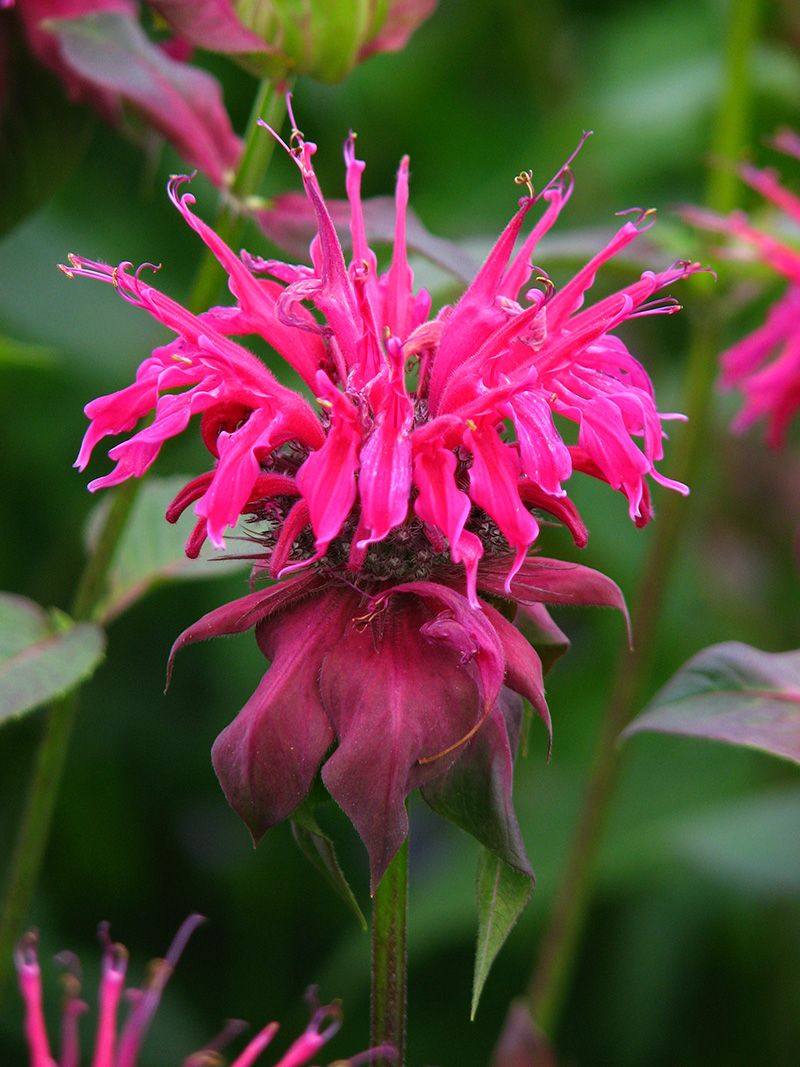
This herbaceous plant grows up to 1.5 m. It has an erect, well-branched stem. The leaf blades have pointed edges, are oblong-lanceolate, and have a greenish hue.
The flowers are small, tubular-funnel-shaped, and borne on a single or multiple capitate inflorescences. They reach 5-7 cm in circumference.
Monarda doublyata, lemon, hybrid, and fistulosa: description in a table and photo
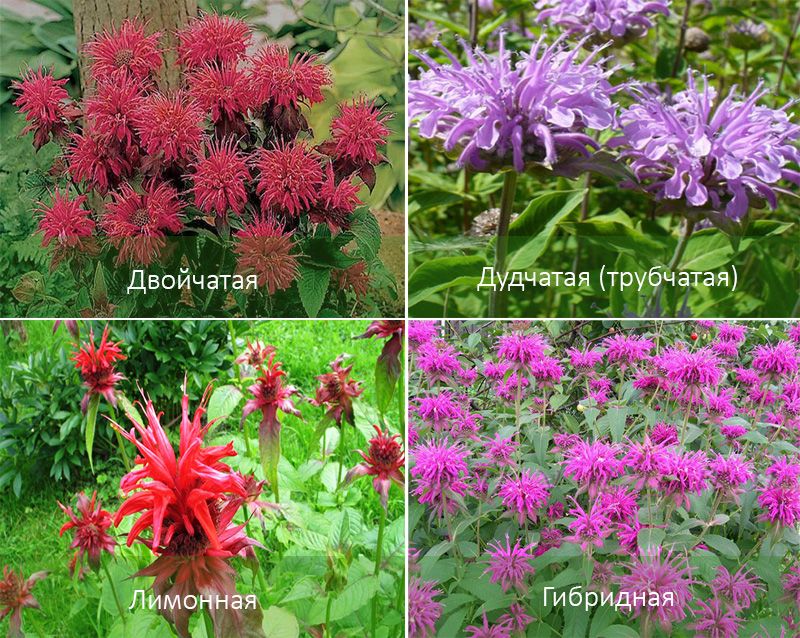
Varieties cultivated in Russia:
| Name | Description |
| Double | The tallest perennial, reaching 0.7-1.5 m. The rhizome is long and spreading. The stems are pubescent. The leaves are soft green, patterned with red veins. The blades have a pointed end and are sparsely hairy on the underside. The inflorescences are dark pink or purple. In the first month of summer, they produce about 30 flowers, exuding a strong fragrance. This is the most popular variety, sought after by domestic gardeners. |
| Tubal | This perennial, growing up to 1.1 m, has thin, roughly uniformly sized rootstocks. In the second ten days of summer, snow-white or dark-red flowers begin to form on the inflorescences, emitting a spicy-orange scent. It is a honey-producing variety. It is used medicinally to alleviate pathological conditions. It is also used to make spices and is added to facial care products. |
| Lemon | A perennial plant growing to 15-80 cm tall with emerald foliage. The violet-colored flowers exude a citrus scent. Blooms can be seen all summer. |
| Hybrid | This includes specimens obtained by crossing previously described species. |
Popular varieties
| Name | Description | Flowers |
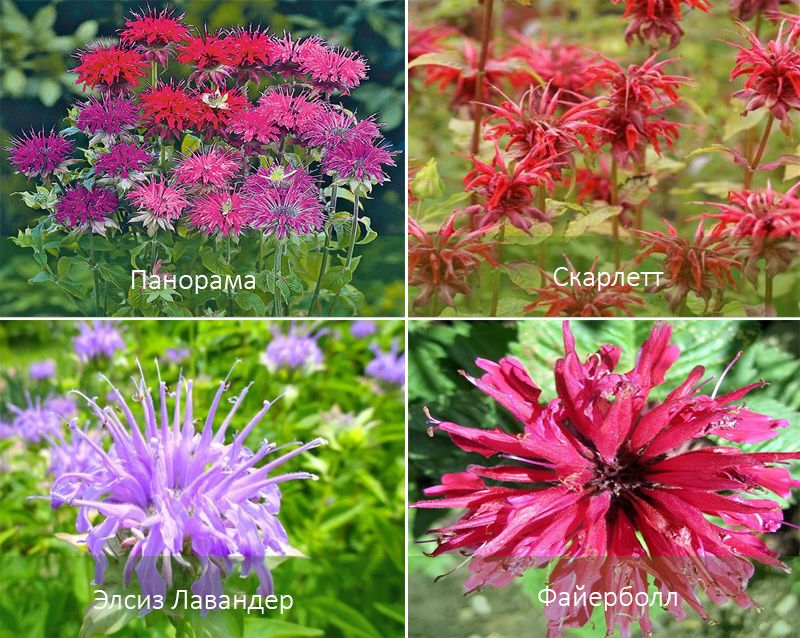
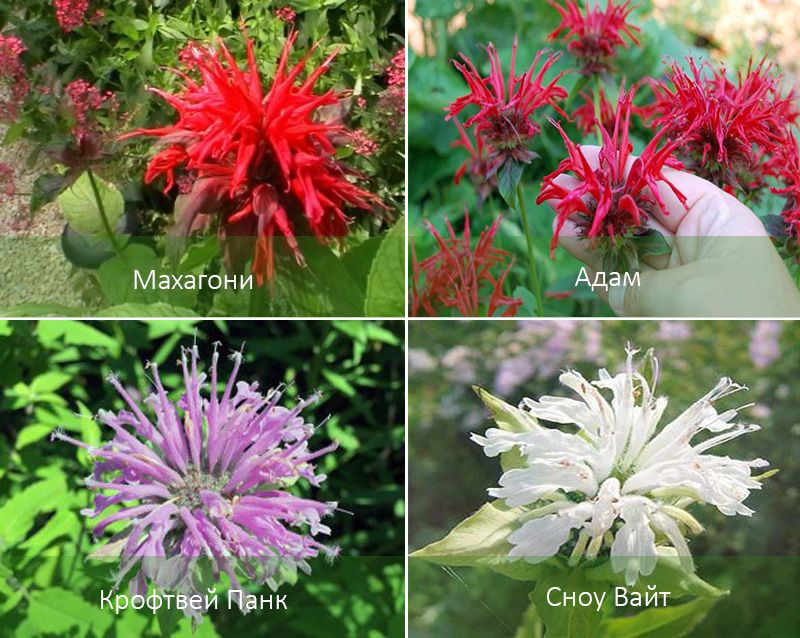
| Mahogany | Medium-sized. Emits a distinct, pleasant aroma. | Burgundy, petals curled at the tips. Blooms in early June. |
| Adam | Compact in size. Grows well in both sun and partial shade. | Large, scarlet. |
| Croftway Punk | It also grows well in the shade. | Lilac-pink. |
| Snow White | Tall, yet compact. | Snow-white. |
| Panorama | To preserve the variety of colors of buds, it is preferable to grow from seeds. | Pink, dark lilac, crimson, white, scarlet, purple. |
| Scarlett | Up to 0.9 m. | Pinkish, fiery red, purple. Bloom in the second ten days of summer. |
| Elsie Lavender | Up to a meter. | Numerous, lavender-colored. |
| Fireball | Up to 40 cm, with thick stems. | Lush, rounded, burgundy tone. |
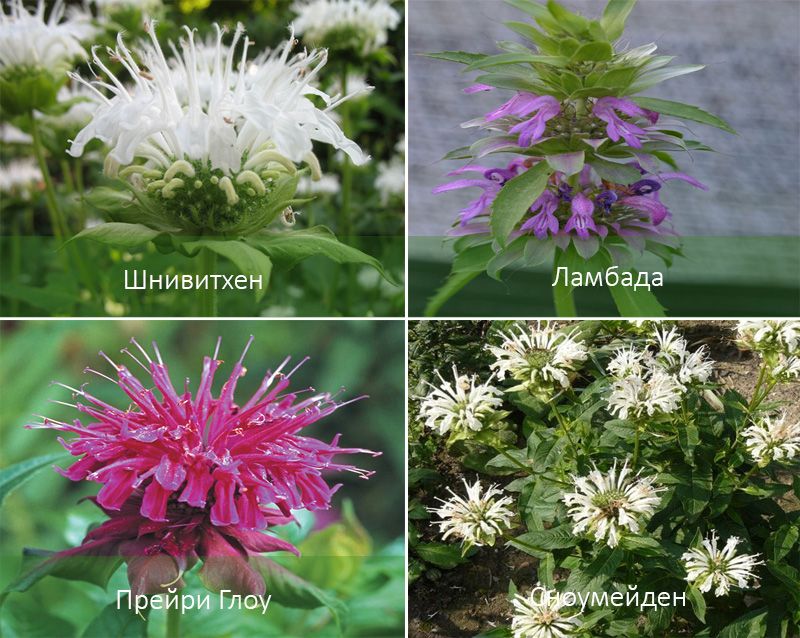
| Schnivitchen | Up to 1.5 m. | Spherical, white. |
| Lambada | A branched subshrub up to 90 cm. | Pink or violet. They emit a lemon scent. |
| Preili Glou | A profusely branching shrub with straight shoots. | Reddish-blue, collected in inflorescences-baskets. |
| Snowmaiden | Medium size, greenish in color, with straight, long stems. | Impeccably snow-white. The petals are sparse and spaced widely apart. |
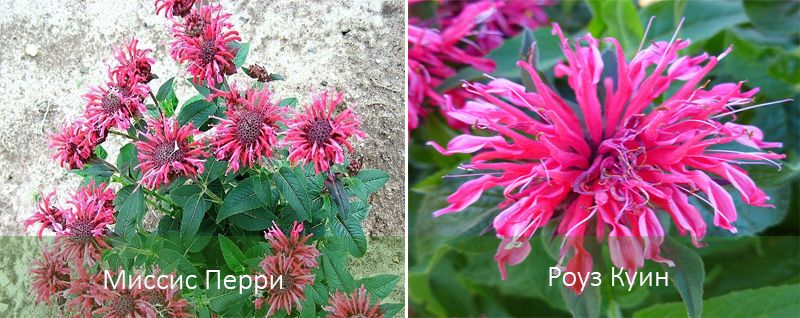
| Mrs. Perry | Up to a meter. | Large, deep pink. |
| Rose Quinn | Up to 88 cm. | Pink, blooms in July-August. |
Growing monarda from seeds at home
In warm climates (for example, in the south of Russia), in the last month of winter, when the weather is clear, the seeds are immediately placed in the soil in the garden area:
- If the snow has not melted, clear the area of snowdrifts.
- Cover the soil with film to warm it up.
- Loosen the soil by adding sand.
- Add sand to the seeds (1 to 4).
- Deepen by 25 mm.
- Sprinkle with sand.
The seeds will undergo cold stratification until April. The first shoots will appear in mid-spring. Sowing can also be done in the fall, after the seeds have been harvested. However, the seedlings grow very slowly then.
Seeds can be sown in containers for seedlings. This is done in the second half of winter to allow the shoots to strengthen before the growing season:
- Fill the pots with vegetable soil mixture.
- Deepen the planting material by 20-30 mm.
- Place at a temperature of +20 °C.
- Seedlings can be seen after 3 weeks.
- After 20 days, transplant 3*3, 4*4.
Planting monarda in open ground
Choose a location with good light and protection from cold air currents. However, monarda also grows well in shade. There are no special soil requirements, but for best growth, it's best to choose airy, lime-rich soil. Garden bergamot will not thrive in highly waterlogged soil with a high pH.
In autumn it is necessary to prepare the site:
- Dig over and clear away weeds.
- Add 2-3 kg of peat and manure, 40-50 g of phosphorus, 20-30 g of easily soluble salt, and 40 g of lime per square meter.
Planting should be done in spring:
- Add 20-30 g of nitrogen-containing mixture per square meter.
- Plant seedlings with 3 pairs of true leaves at a distance of 60 cm.
- Water generously.
A distinctive feature is winter hardiness (-25°C). If the temperature drops below this, they should be covered with plastic to create greenhouse conditions. Flowering can be observed within a year. Some varieties can form buds in the same season with proper care.
Caring for monarda
Bergamot is easy to care for. Even inexperienced gardeners can plant and care for it outdoors. During the growing season, regular watering and nitrogen-rich fertilizers every 10-14 days are sufficient to promote rapid growth.
In the fall, fertilize with long-acting potassium- and phosphorus-containing fertilizers. Place solid granules at the base of the plant; they will gradually dissolve during watering. By spring, a significant accumulation of nutrients will occur. Monarda will begin to actively grow and bloom profusely. In the fall, it is recommended to prune the above-ground portions to prevent the shoots from freezing.
Diseases and pests
This is a very strong and healthy plant, resistant to various types of damage. In rare cases, with improper care, the bush may be affected by the following diseases:
| Disease | Cause | Signs | Elimination measures |
| Powdery mildew | Insect pests: aphids, thrips, scale insects, whiteflies, mealybugs. Presence of spores in irrigation water. Spread from infected specimens through the air, through contact with humans. High humidity 60-65%. Excess nitrogen. Close planting of bushes. |
Powdery spots on the above-ground parts, secreting a dew-like liquid. Arrest in development. Early petal fall. |
Stop applying nitrogen fertilizers and replace them with phosphorus and potassium. Treat with 1% Bordeaux mixture, Alietta or Acrobat preparations. |
| Rust | Infection from plant debris. Airborne spores from affected bushes. |
Formation of reddish pustules on the leaves. When they crack, an orange-colored powder is visible. Cessation of growth. Early yellowing and dying of greenery. |
Remove fallen leaves and other dead material from outside the area. Weed out the weeds. Treat with colloidal sulfur, fungicides Abiga-Peak, Kumulus, Poliram, Strobi. |
Monarda: medicinal properties and contraindications
Bergamot has found use in alternative medicine because all its components contain vitamins B1, B2, and C, essential oils, and other nutrients. The extract has antiseptic, antioxidant, and anti-anemic properties. It soothes and promotes faster healing of injuries, accelerating tissue regeneration.
Medicinal properties of the plant:
- removes plaque from blood vessels;
- alleviates the course of respiratory infections;
- improves the condition in radiation sickness;
- strengthens the immune system;
- has a supportive effect on the body after chemotherapy.
Helps with:
- inflammation of the bladder walls;
- problems with the gastrointestinal tract;
- headaches;
- oral infections;
- nail and foot fungus;
- inflammatory process in the lungs.
The extract has also found application in cosmetology. It is an ingredient in creams for mature, problematic, and oily skin.
Greens are added to dishes and drinks. They pair beautifully with fish and any vegetables. They are healthy, tasty, and nutritious.
Has contraindications:
- age up to 5 years;
- period of gestation;
- breast-feeding;
- allergic reaction.
Before using folk remedies, consult a qualified specialist. Self-medication may not produce the desired results or may even worsen the condition. If a doctor approves an alternative treatment, monarda should only be used as part of a comprehensive treatment plan, strictly following the instructions. Bergamot can only alleviate the condition and alleviate symptoms, but not eliminate the underlying cause, which is crucial when treating any ailment.