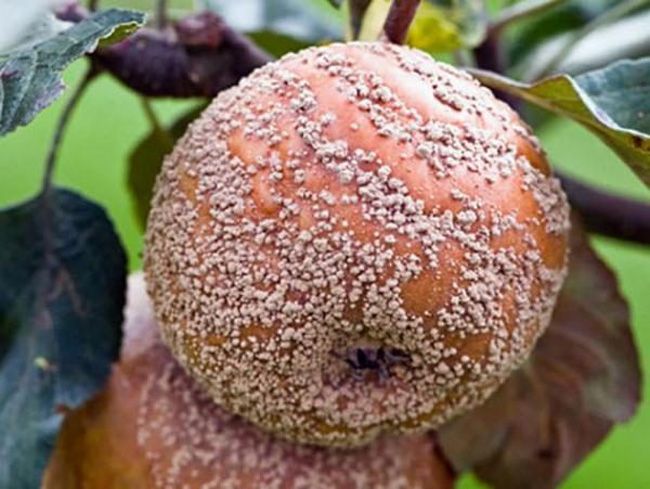
The cause of apple rot is the fungal disease moniliosis, which affects the fruits of fruit trees.
Combating this problem is complex and painstaking. But implementing specific preventative and curative measures can help and preserve the harvest.
Content
The nature of moniliosis
Moniliosis is spread by fungal spores, which are quite frost-resistant and survive the winter. The disease manifests itself not only by fruit rotting but also by the drying out of flowers and branches.
Stages of fungal life
Moniliosis goes through two phases of development:
- Conidial—the active stage. During this period, fungal spores, consisting of conidia (genetic cells that facilitate their dissemination), infect all parts of the tree. They are usually gray in color. The active phase occurs in the spring and summer, with favorable temperatures above 15°C (59°F), and peak activity at 25°C to 28°C (77°F to 82°F), and humidity at 70-90%.
- Sclerotial stage—the dormant stage. During winter, the fungus persists on the tree, typically as mycelium or mummifies within the fruit.
Forms of moniliosis
The disease manifests itself in two forms:
- Fruit rot. It has spread throughout Russia. It is caused by the fungus Monilia fructigena. Its spores enter through damaged fruit. 2-3 mm brown spots appear on apples. Within five days, they become completely soft and brown. High temperatures, wind, and humidity facilitate further spread. If the humidity decreases to less than 60%, the spores die, and the fruit turns black.
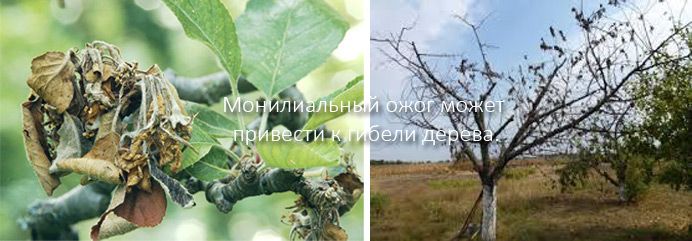
- Monilia blight. Common in the South and the Far East, it is caused by Monilia cinerea. The fungus spreads to flowers, ovaries, and branches, causing them to turn dark brown and dry out.
Causes of infection
Moniliosis of trees occurs for a number of reasons:
- Damaged bark due to pests or careless use of garden tools.
- Diseased trees in the neighborhood, i.e. transmission of infection from other already infected pear or apple trees.
- A weakened state as a consequence of other diseases.
- The apple tree variety is not resistant to infection.
- Failure to comply with agricultural practices, i.e. incorrect planting, watering, and lack of preventative measures.
- Incorrect storage and the chosen location could become breeding grounds for infection.
Prevention of moniliosis
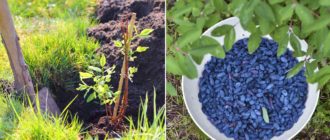
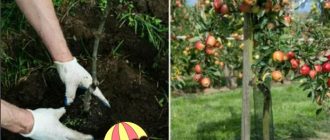
Disease prevention begins with the purchase and planting of a young seedling:
- They buy varieties that are resistant to moniliosis, for example, Idared, Reinette, Jonathan, Pepin Saffron, Slavyanka, Florina, etc.
- Fruit trees are planted approximately 3 m apart, not closer.
Annual measures are carried out in the spring.
- The apple tree is carefully inspected. Dried and damaged branches are removed. The crown is shaped, loose bark and lichen are removed, damaged areas are covered with garden pitch or white paint, and the trunk and thick branches are whitewashed (lime mortar).
- Remove any remaining plant debris from last year and carefully dig around the tree trunk.
- Phosphorus-potassium fertilizers are used. Young seedlings are also treated with rooting stimulants (Kornerost, Heteroauxin).
- Water regularly, maintaining constant soil moisture.
- They are treated with chemicals against pests and other diseases that contribute to the spread of moniliosis (Embrelia, copper sulfate).
Treatment
Symptoms of the disease appear five days after infection. During this period, it's still possible to fight the fungus before its spores spread further. After ten days, this will become more difficult.
Medicines for the treatment of moniliosis
Chemical and folk remedies can help combat this disease.
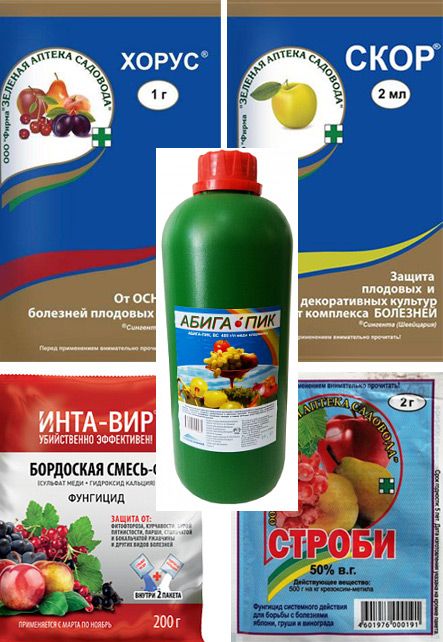
Chemicals
Moniliosis is recommended to be treated with the following medications:
- Bordeaux mixture - 3% before flowering, 1% during, after and then at intervals of two weeks, so that the last treatment also takes place half a month before harvest.
- Horus, Skor - increase the tree's immunity, carry out three treatments, stop during the flowering period and 15 days before harvest.
- Embrelia is a complex product that helps combat not only moniliosis but also other diseases and pests. It can be applied up to three times, at intervals of approximately two weeks. It is rain-resistant.
- Hom - 40 g per 12 liters of water. Apply when the leaves emerge, then after flowering.
- Abiga-Peak - four applications during the growing season, every 20 days.
- Strobe—spray twice, two weeks apart. Stop spraying one month before harvest.
Folk remedies
You shouldn’t neglect folk methods either:
- Copper sulfate - 100 g per 10 liters of water, applied in the fall after harvesting.
- Copper oxychloride (a replacement for Bordeaux mixture) - spray seven days before and after the flowers appear.
- Colloidal sulfur - 100 g per 10 liters of water, used during bud formation.
- A mixture of laundry soap and kerosene: 2 tablespoons of soap, 2 liters of kerosene per 1 liter of water. Then dilute this solution with water 1:2.
Tips for treatment
There are several rules that need to be taken into account when treating apple trees for moniliosis:
- To avoid sunburn and chemical burns of the bark, spraying should be carried out early in the morning, in the evening or in cloudy weather.
- Although there are preparations that are resistant to precipitation, it is not recommended to apply them before or during rain.
- You need to spray very thoroughly, without missing a single area on the tree.
- When diluting the drug, it is important to strictly follow the instructions.