Hellebore (Latin: Helleborus) is a herbaceous perennial plant in the buttercup family. This beautiful flowering plant is a true miracle of nature, as it blooms at a time when other plants cannot.
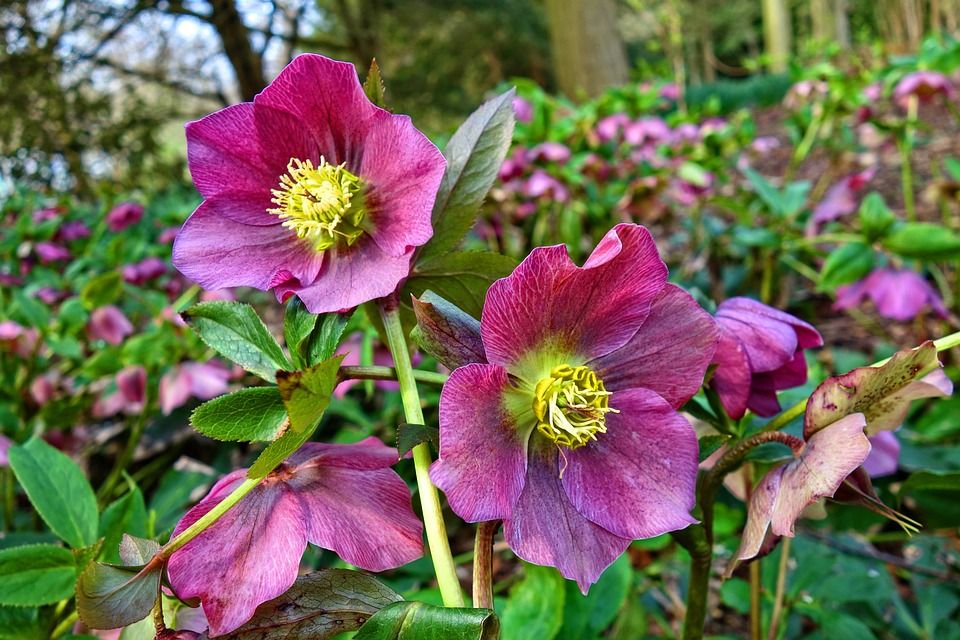
Hellebore can delight you with beautiful buds in November or early April.
Content
Description of hellebore, photo
It is grown as an ornamental and medicinal plant. There are 14 species found in the wild, while other sources say there are 20. The discrepancy in numbers is due to some varieties being classified as separate species.
Hellebore has many other names: frostflower, wintergreen, and helleborus (the Latin name appears on pharmacy packaging). Because of its early flowering (during Easter), it is called the rose of Christ. All varieties are poisonous, as they contain alkaloids with cardiac effects. In moderate doses, they are used medicinally.
Hellebore is native to the Mediterranean region and is primarily found in Eastern European and Asian countries. It most often grows naturally in mountainous areas, preferring shady spots. This plant can withstand any weather, from slush to frost.
Its tough, dense leaves don't fall off even in winter. Its flowers appear at unusual times, making it a very low-maintenance perennial that's easy to grow. Its beautiful, delicate, marble-like blooms will brighten any garden and last a long time in a cut bouquet.
This herbaceous evergreen perennial has leaves on tall petioles. They form a basal rosette. The plant height, depending on the variety, ranges from 30 to 100 cm.
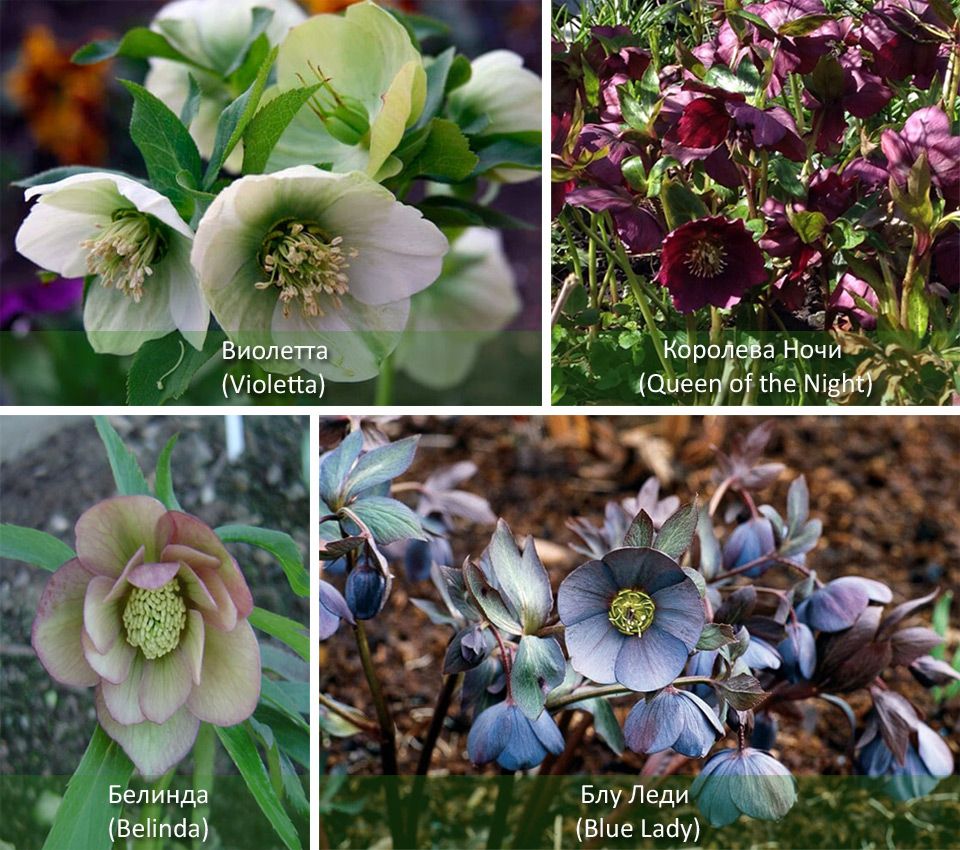
The flowers are bisexual, borne on long stems, and gathered in racemose inflorescences. The large, five-star sepals (5-8 cm in diameter, sometimes up to 12 cm), often mistaken for petals, are white, pink, beige, purple, and, in some varieties, yellowish-green. The petals themselves have changed and are now small nectaries. After the end of insect pollination, when it is no longer necessary to attract insects, the sepals turn greenish and begin to fulfill their primary purpose: synthesizing organic matter.
Types and varieties of hellebore: Caucasian and others
Several species of hellebore are grown in gardens as ornamental plants, from which various cultivars have been developed that differ in colour, shape and size of flowers, height of bushes, and colour of leaves.
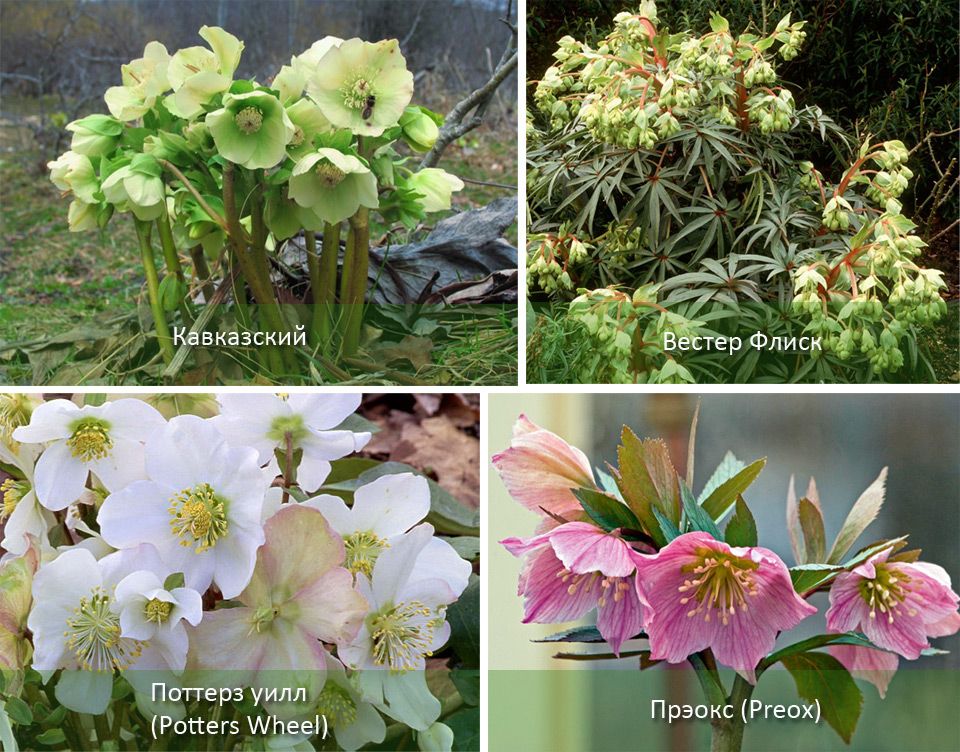
The most common species of ornamental hellebores grown in gardens are:
| View | Description | Leaves | Flowers
Varieties |
| Caucasian | The most poisonous variety is Frost-resistant. | Leathery, hard, 16 cm, divided into large segments. | Yellow-green or white with a brown-green tint, with drooping heads. Flowering from May to July. |
| Smelly | Drought-resistant, evergreen, with a tall peduncle (65 cm) | Wintering, with narrow segments, glossy, rich grassy shade |
Light green in color with a brown edge.
|
| Oriental | The most popular species among gardeners, on the basis of which many varieties have been bred. | Medium-sized, dark green, with a dense, fleshy texture. More susceptible to fungal attack than other species. |
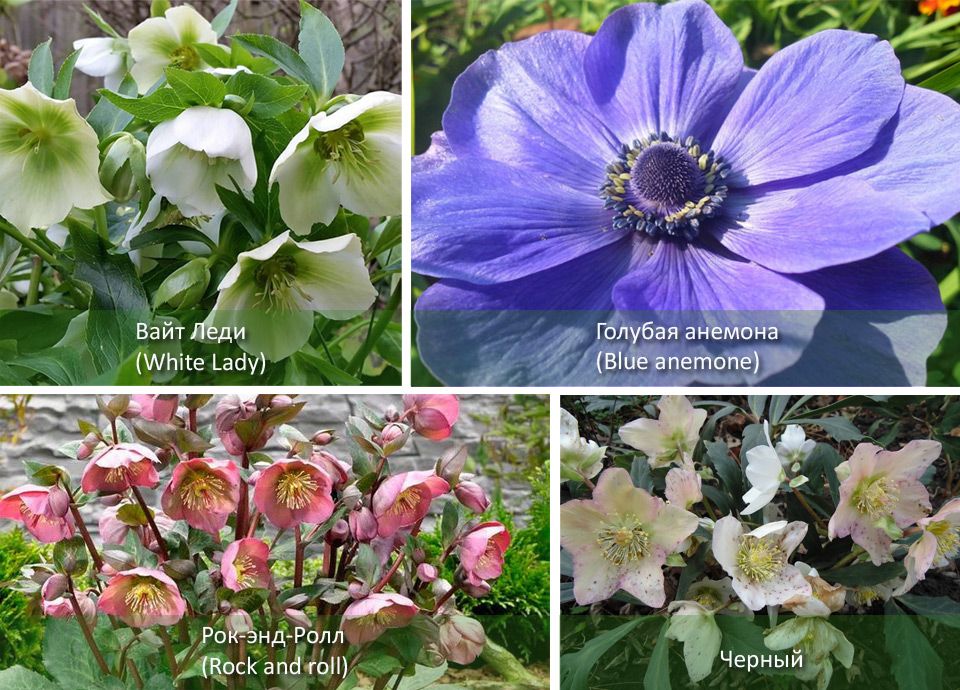
A rich variety of colors from white to very dark, pink, lilac, bluish, cherry, blue-violet, purple, solid and speckled, with double petals in several rows. Popular:
|
| Black | Widely used as a medicinal plant, it has excellent ornamental qualities and is highly frost-resistant. It gets its name from the color of its rhizome. | Dense, dark green. |
Large, single, snow-white inside, light pink on the outside. Varietal varieties reach up to 12 cm in diameter.
|
| Hybrid | A separate species, artificially bred, combining several species. Blooms in April. | Dark green, dense. |
|
Planting and growing hellebore
Hellebore can be planted by dividing the rhizomes or by seeds.
It is easier to plant using rhizomes, the plants begin to bloom earlier, but the difficulty is that they do not take root well with this method.
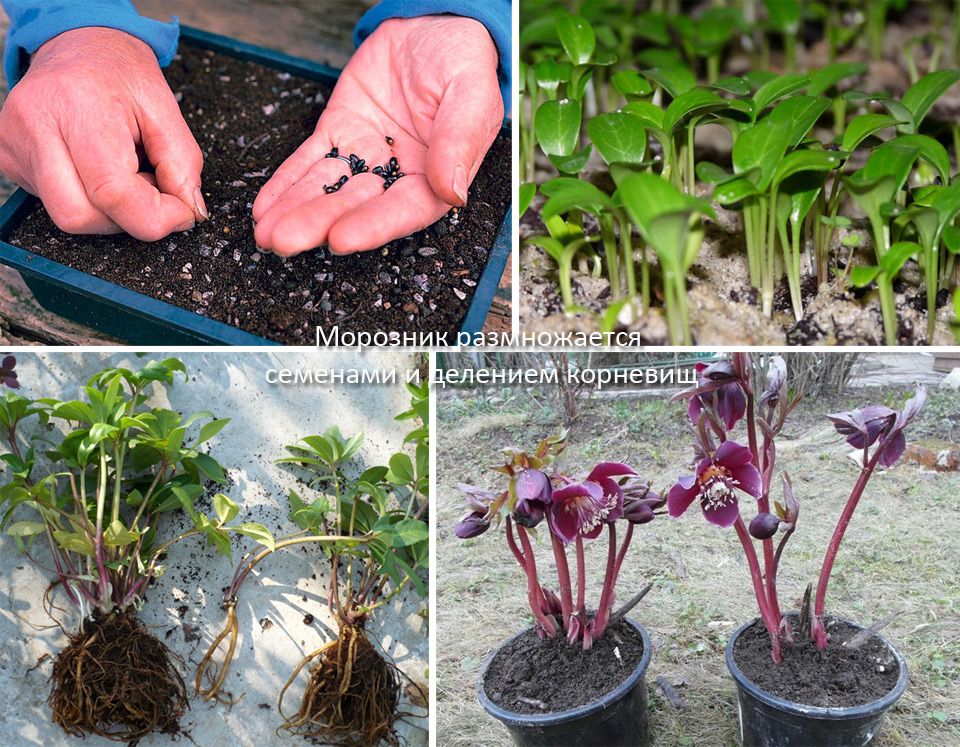
Growing from seed takes longer, and flowering occurs after 3-4 years, but the plants adapt better and bloom better. Only species-specific hellebore (not hybrids) can be grown from seeds collected in your garden. To grow hybrid varieties, seeds should be purchased from specialty stores.
Planting seeds for seedlings
Only freshly harvested seeds are suitable for planting, as last year's seeds have a low germination rate. It's best to sow at the end of June, when they are already ripe and ready for planting.
To prevent the seed material from scattering onto the ground prematurely, the flowers are tied with gauze, from which they are then removed.
To sow seeds for seedlings, choose a shaded location and fertilize the soil with humus, ensuring it's loose and moist. Plant the seeds 1-1.5 cm deep. After planting in June, seedlings will emerge the following spring, in March.
When the seedlings develop one or two pairs of leaves, transplant them to a flowerbed in a shaded area, where they will grow for two years. Then, once they have matured, transplant them to their permanent location. They will bloom only in the third year.
Transplantation and division
If planted correctly, hellebore can grow normally in one place for up to 10 years.
These plants don't like frequent replanting. Therefore, it's best to leave the bushes in one location until they grow significantly.
Then you can dig them up and divide them into several bushes. Once planted in a new location, they take a long time to establish themselves. Therefore, proper care is essential: regular watering and protection from direct sunlight.
Conditions for growing hellebore
Most hellebore species grow best in shade or filtered light. However, this plant is versatile and adapts to many conditions. Several hybrid varieties have been developed that thrive in sunny areas.
Caring for hellebore in open ground
These plants are easy to care for, frost-resistant, and undemanding regarding soil composition. However, some care recommendations should be followed:
- Avoid stagnant water around the rhizomes and allowing the soil to dry out. Therefore, loosen the soil and provide regular watering during dry weather.
- It is advisable to mulch around the plants with peat, compost, and small wood waste.
- They grow worse in acidic soils, so you need to add chalk, lime, and ash to such soil.
- Forest soil is ideal for these plants, as it contains all the necessary substances.
- Hellebore thrives on fertilizer, which should be applied every three months. This will allow it to bloom abundantly. In addition to mulching with compost or humus, mineral fertilizers should be applied during the growing season, as well as bone meal.
Despite the frost resistance of these plants, many varieties, especially hybrids, require insulation in regions with severe frosts, so they are covered with spruce branches for the winter.
Diseases and pests
Hellebore is a poisonous plant and therefore unattractive to pests, though it is highly disease-resistant. However, under certain conditions, it is susceptible to pests:
- the problem arises when there is overwatering, then the plant can be affected by fungi;
- anthracnose - in this case, it is necessary to remove all affected areas of the plant and treat it with a preparation containing copper;
- Ring spot - cut off all affected areas and treat with a fungicide;
- downy mildew - prune and spray with special preparations;
- Dangerous pests include aphids, slugs, snails, mice, and hop weevil caterpillars.
Top.tomathouse.com: The beneficial properties and uses of hellebore
Hellebore is successfully used to treat many ailments. However, it should only be taken in limited quantities, as overdosing can be dangerous. Only a doctor can prescribe this treatment, as there are many contraindications.
The plant's rhizome is used for medicinal purposes. It is freed from damaged areas, thoroughly washed, dried, and crushed. Decoctions, infusions, and ointments are then prepared from it.
Medicinal properties of hellebore
The plant has the following medicinal properties:
- cleanses the body of waste, radionuclides, and toxins;
- improves gastrointestinal motility;
- normalizes cardiac activity;
- improves immunity;
- helps with sinusitis;
- treats skin diseases and wounds;
- helps with urolithiasis;
- improves the condition in the early stages of oncology;
- strengthens the immune system;
- thins mucus;
- promotes the resorption of cysts and nodes;
- normalizes water-salt balance;
- eliminates obesity.
With regular use of this remedy, the gastrointestinal tract is cleansed for the first six months, and then the blood is cleansed.
Contraindications
It is not recommended to use hellebore:
- children under 7 years of age and the elderly;
- during pregnancy and lactation;
- after a heart attack;
- in case of individual intolerance;
- in case of diagnosed ischemia, cholelithiasis, arrhythmia, tachycardia.
It should be remembered that hellebore is a poisonous plant.
An overdose is possible both with a single dose exceeding the recommended dose and with prolonged use of small doses.