An apple orchard shouldn't be neglected. One summer was damp and foggy. Within just a few days, three of the seven apple trees suddenly became ill. First, they became covered in a white dust, then their leaves began curling and turning brown. The tree began dropping unripe fruit. The cause of the crop failure turned out to be simple: powdery mildew.
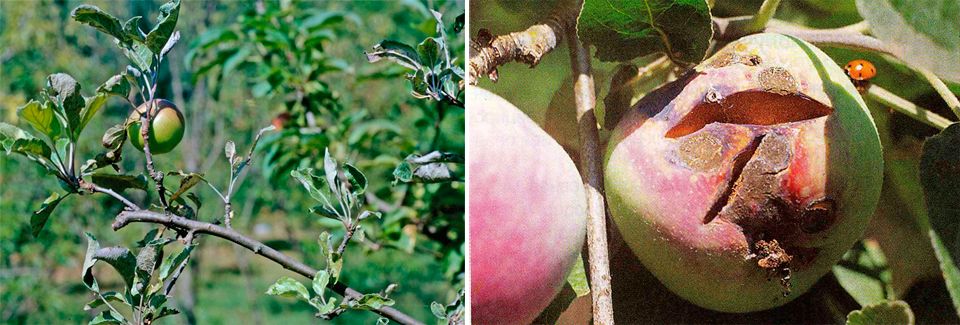
What fungus affects apple trees?
Powdery mildew fungi often attack melons and berry bushes, including gooseberries, currants, acacias, and hawthorns. Erysiphales fungi, including Phyllactinia guttata, of the Erysiphaceae family (class Ascomycetes), infest only apple trees. This fungus does not attack other crops.
The development cycle of fungal infection of apple trees is divided into two stages:
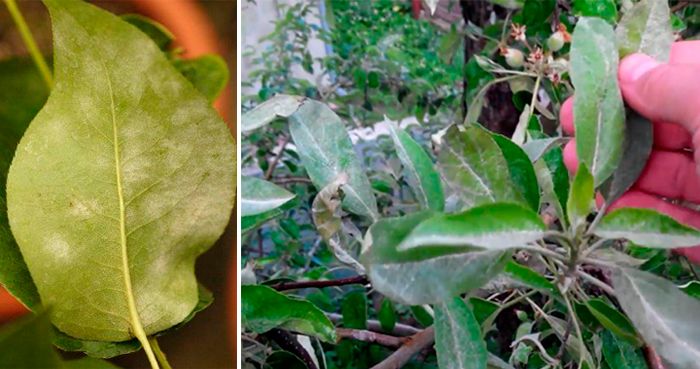
- Candida formation (germinated spores) dies only at -20°C. They appear in the spring as white spots. If examined under a magnifying glass, mycelia—the fungal webs—will be visible. The flour-like coating is the mature spores of the mycelium.
- Marsupial, beginning 30 days after infection. Black fruiting bodies with branched appendages (dark spots on the leaves) appear.
Powdery mildew is a destructive pest. Spores are carried by wind, birds, tools, and clothing. The pathogen inhibits plant growth and photosynthesis.
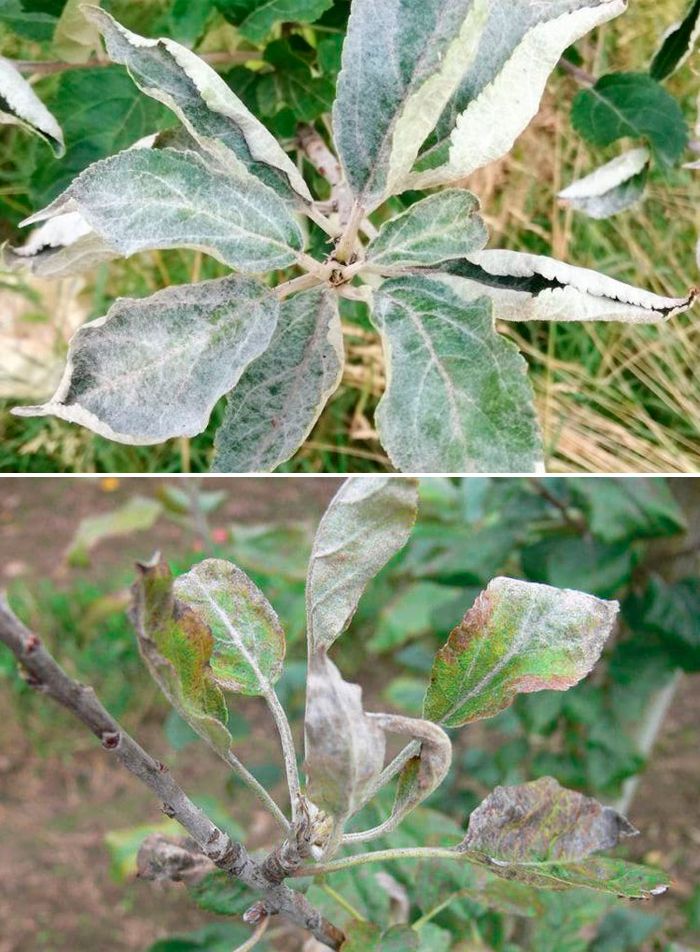
The foliage curls and dries up. Buds and inflorescences are damaged. Yields drop by up to 80%, the tree's winter hardiness deteriorates, and part of the crown must be pruned.
Manifestations and means of control
The infection first appears as a white coating, similar to construction dust, forming on the very tips of branches:
- young leaves;
- kidneys;
- flower petals;
- bark of twigs.
I confess, I didn't immediately notice the powdery shoots. I thought the first rain would wash the coating away. No such luck! The whitish hue turned yellow, and black spots appeared.
The leaves began to dry out; autumn had arrived for the trees – the time for leaf fall.
How to combat powdery mildew on apple trees
Candida is difficult to get rid of; they overwinter quite well. I've noticed that after treating trees at the green cone (when the buds are just beginning to open), there are no signs of attack. I'll explain how to treat it separately. I always carefully inspect the garden when persistent fog appears in the mornings. Apple mushrooms thrive in high humidity and warmth (as do all other types of powdery mildew). Regular sanitary pruning is necessary to ensure good ventilation. Attached mycelia will slow growth if there's insufficient moisture and will lie dormant until better times.
Time of treatment:
- the first is done in early spring, you can use powerful fungicides;
- secondary after two weeks with the same drugs;
- preventative measures are necessary when favorable conditions arise; it is better to use biological preparations that are harmless to insects;
- The final autumn spraying is needed after the harvest, spraying not only the crowns, but also the fallen leaves and soil.
It has been observed that plants are less susceptible to disease if they have sufficient phosphorus, calcium, and potassium. Conversely, with excess nitrogen, the leaves grow loose and the mycelium takes hold more easily.
Preparations for treatment against powdery mildew
Let's look at several drugs with different effects:
Fungicides (chemicals, not safe, but effective):
- Topaz;
- Impact;
- Flint Star;
- Horus;
- Tersel;
- Privent;
- Rubigand;
- Cumulus DF;
- Thiovit-Jet.
Dilute according to the instructions. Maximum frequency of treatment is 3 times, with an interval of 2 weeks.
Don't forget personal protective equipment: gloves, gown, headgear, glasses, protective mask covering your mouth and nose.
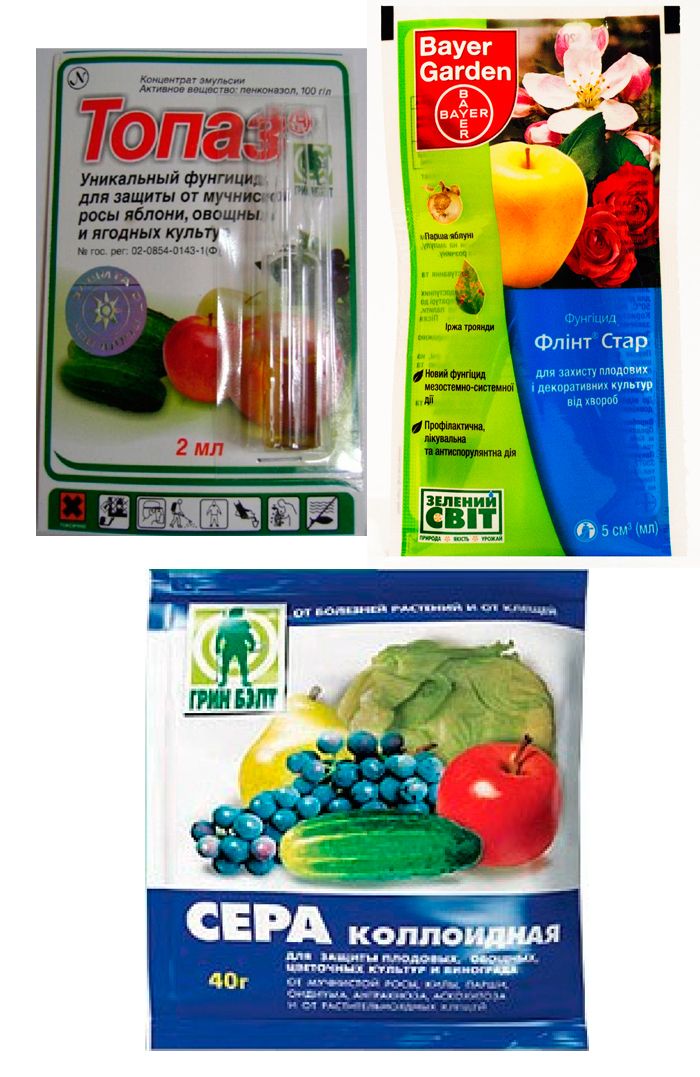
Colloidal sulfur is well suited for treatment. It is diluted at a rate of 20 g per 10 liters of water. The substance is safe for animals and insects. In case of severe infestation, the interval between treatments is reduced to a week. Sulfur is effective at temperatures between 18°C and 20°C. In extreme heat, it can cause leaf burn.
Two more popular remedies:
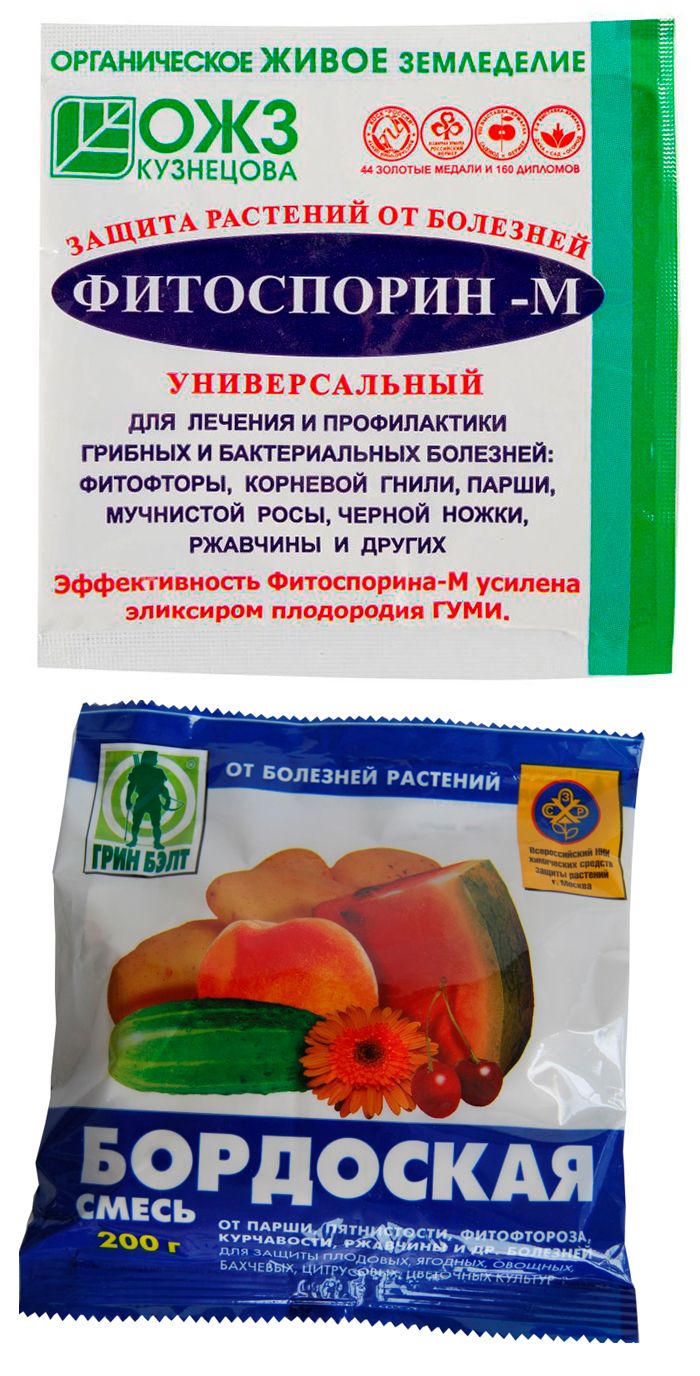
- Fitosporin is a safe biological preparation, active against many fungal diseases.
- Bordeaux mixture is most often used for spring and autumn preventative treatment.
Folk remedies:
- onion peel infusion (the higher the concentration, the better);
- a weak violet solution of manganese is not very effective in cases of severe lesions;
- whey solution (dilute a liter packet in 5 liters of water).
Powdery mildew-resistant apple varieties
Scientists have not yet succeeded in developing hybrids genetically resistant to powdery mildew. However, it has been noted that there are varieties on which powdery mildew appears extremely rarely. There are many of these, and they adapt well to temperate climates:
- Amulet (medium sized red);
- Gloucester (red-green, elongated, tapering towards the tip);
- Mutsu (barrel-shaped, yellowish);
- Ligol (red, elongated);
- Florina (red-green, sweet).
Just in case, I'll list some others: Red Amber, Golden Summer (early ripening), Orion, Talida, Carmen, Talisman. Red Poppy, Argo, Prestige.
When purchasing seedlings, it's best to choose zoned varieties; these are bred from apple trees that overwinter well and are resistant to scab. It has been observed that scab-resistant varieties are much less likely to be affected by powdery mildew.
Wishing everyone a good harvest! Remember, the key is to avoid overcrowding the trees and to feed them with potassium, calcium, and phosphorus regularly, especially when there are contrasting night and day temperatures. Preventative treatments are also helpful.