Murraya (Chinese or Japanese myrtle) is an evergreen shrub native to Japan, Southeast Asia, India, and the Pacific Islands. The shrub gets its name from the botanist D. Murray. Murraya is a misnomer, but it is often encountered in unofficial descriptions.
Content
Description of Murraya and its unique medicinal properties
This plant, a member of the Rutaceae family, resembles a tree-like shrub, very similar to the money tree, but differs in its profuse flowering and the presence of fruit. In the wild, the shrub reaches 1.5 m in height, but with proper care, it can grow to 0.7 m indoors.
The smaller size is due to a lack of light, moisture, and consistent heat. The tree's gray-white bark complements its exquisite emerald leaves.
Rutaceae are very similar in qualities to citrus fruits, so nature has endowed the shrub with a similar aroma in its leaves. This makes murraya a great indoor plant for freshening up a room and a great cooking aid.
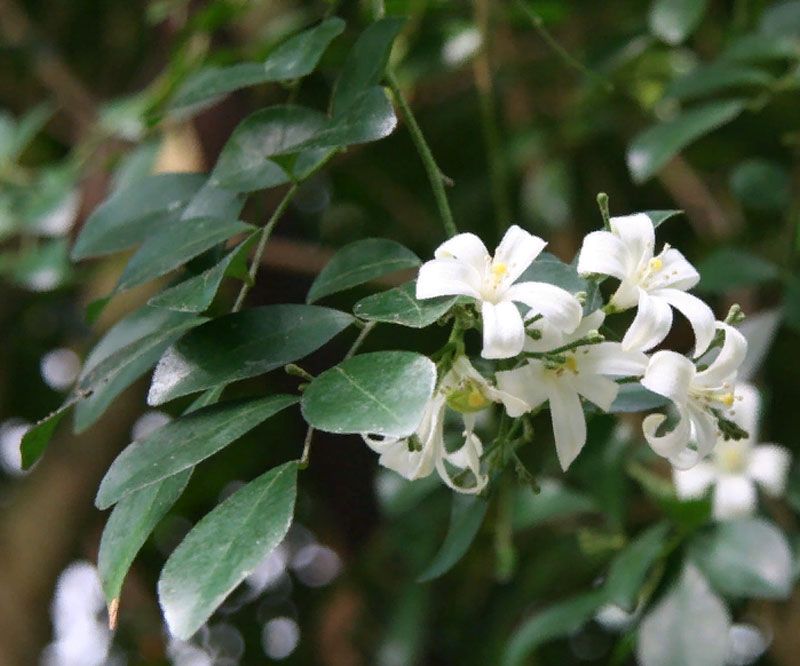
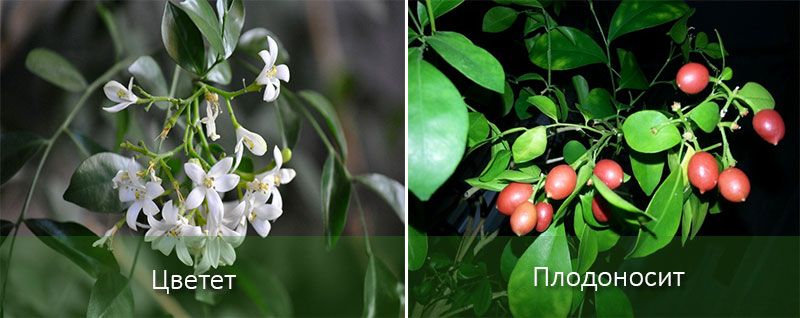
During flowering, the bush is covered with fragrant white flowers, which later give way to deep red berries. During this time, the scent of jasmine fills the room. The fruits are edible and have a pleasant, slightly sweet taste.
Murraya's main medicinal property is its ability to destroy cancer cells. According to traditional healers, taking the leaves can prevent or significantly slow the progression of cancer. However, this treatment is not practiced in conventional medicine.
The murraya flower exudes a migraine-relieving aroma and is ideal for treating weather sensitivity. In medieval Japan, the plant was grown in the emperor's garden; attempting to grow it outside the palace was punishable by death.
There are more than 10 known species of this plant. The black chokeberry and the small paniculate variety have been artificially bred.
What conditions should be created in the house for Murraya?
In the wild, murraya grows in tropical and highland regions. Indoor cultivation provides conditions close to natural ones. This delicate shrub will delight you with its lush yet delicate blooms.
Location and lighting
Murraya thrives in a gentle breeze and natural temperature fluctuations. In summer, it can be placed outdoors in a suitable decorative container. It's important to provide partial shade to protect the crown from the scorching sun.
In an apartment, the plant is placed on one of the well-lit windows, preferably facing east or southeast.
In shaded rooms, this plant will require supplemental lighting, especially in winter when daylight hours are short. For this purpose, 4000-5000 Kelvin bulbs are used.
Temperature conditions
The temperature should be at least 17°C. If this temperature drops, the shrub will become diseased and stop forming buds and flowering. The optimal temperature range is 18–25°C.
Watering and air humidity
Murraya prefers fairly generous but infrequent watering. Water it as soon as the soil has formed a dry crust. The plant can be lightly misted or a fountain or aquarium can be placed nearby.
During summer, moderate misting is permitted. For this purpose, use settled water at room temperature. If the water quality is poor, it's best to boil it.
Soil and fertilizers
The key to lush flowering is regular fertilizing, which is done twice a month. A complete citrus fertilizer is used for this purpose. Experienced gardeners recommend additionally using fertilizer sticks in the fall.
When replanting and renewing the soil, buy a substrate for citrus fruits and add crushed bark or wood ash to it in equal proportions up to 20% of the total volume.
Pruning and crown shaping
Trimming the upper branches to shape the Murraya is only for decorative purposes. This is especially popular among bonsai enthusiasts.
The tree is excellent at forming a beautiful crown on its own.
Young plants can be trained and pruned to achieve the desired shape. This involves pinching active shoots and removing internal shoots that are excessively crowding the foliage.
Flowering and fruiting
Proper care of the murraya ensures its year-round flowering. To improve fruit set, the opened buds are pollinated with a brush. Each new flower blooms for approximately 1-2 days, and the fruits ripen within 4 months.
How to transplant a murraya at home
The most difficult process in indoor cultivation, and one that murraya is particularly demanding, is repotting. It's best to do this every 2-3 years. The plant is transported by transshipment, lightly compacting the soil, and leaving the root collar above ground. Improper repotting will result in the cessation of flowering.
Afterwards, the plant is moved to a semi-dark room. A north-facing room is ideal. It is returned to its original location when new shoots appear.
Reproduction of Murraya
Unlike other species, propagating murraya by cuttings isn't always successful. Experienced gardeners use purchased seeds for this purpose, especially since they have a long germination period. In nature, the tree reproduces well by seed.
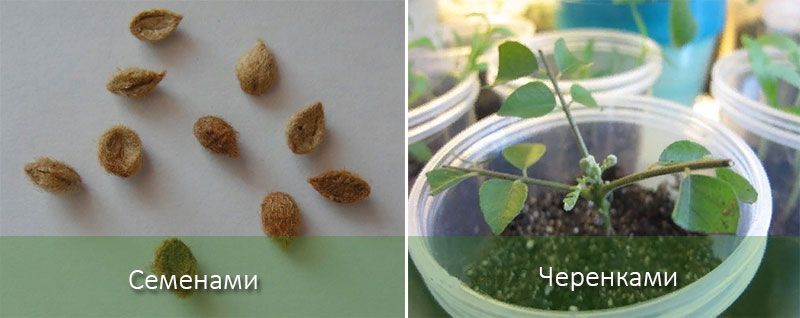
The procedure for cuttings (carried out in autumn or in the second half of summer):
- A cutting is cut from a woody stem.
- The leaves of the shoots are cut in half.
- The trunk cuttings are placed in water, covering the container with film. It is advisable to heat the greenhouse from below using a bottle of hot water, which acts as a heating pad.
- Once the cutting has rooted, it's replanted in a nutritious citrus soil. You can prepare the soil yourself using equal parts peat and sand.
- The soil is kept moist, with a temperature of +26…+30 °C.
- Rooting is considered successful after the first leaves appear.
Cuttings root well in peat pellets. Perlite is also used for this purpose. Murraya requires attention; care for cuttings is the same as for an adult plant, but more thorough.
Difficulties in growing murrayas: diseases and pests
Any damage (infectious or parasitic) to Japanese jasmine is caused solely by improper care. This worsens conditions and weakens the plant's immunity, leading to infection and the appearance of parasites.
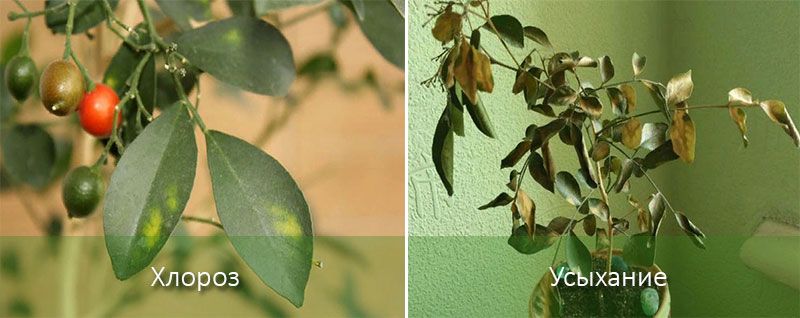
Symptoms of Murraya diseases:
- poor soil substrate, mineral deficiency manifests itself as yellowing of leaves;
- high soil pH may cause leaves to turn yellow;
- sunburn is possible, manifested in the form of drying out areas along the edges and in the center;
- dry air in the room harms the crown, the buds fall off without blooming;
- cobwebby coating and black dots on the back of the leaf;
- dark plaques on the back of the leaf and sticky coating;
- whitish spots and midges on the leaves.
To prevent and treat scale insects and spider mites, it's a good idea to give the plant a warm shower periodically. Washing with soapy water and spraying with an Aktara solution will also be helpful. This is usually enough to prevent infestation. Treatments should be carried out once a week until the parasites disappear.
Top.tomathouse.com: Interesting Facts About Murraya
In the home, murraya is a natural flavoring and a source of natural spices. As a culinary ingredient, it is used in India, typically as a spice for meat. The leaves are pre-fried and preserved in oil; this seasoning goes well with all meat and vegetable dishes.
The cold-fighting properties of murraya have been known since the time of Alexander the Great. An infusion of the leaves can quickly relieve symptoms of the disease; chewing fresh leaves is also beneficial. Chewing helps relieve mouth ulcers and stomatitis.
In Egypt, the plant was grown to make a special drink, referenced in manuscripts. The leaves, flowers, and berries were used. Egyptian physicians referred to it as the elixir of life. The details of its preparation have not survived.
This plant is recommended for people suffering from cardiovascular and pulmonary diseases. The aroma of the flowers normalizes respiratory processes and promotes good sleep.
The medicinal properties of murraya, its benefits and harms, are currently being studied by many research centers. This foreign wonder flower can be grown for medicinal purposes, but allergy sufferers should be aware of the contraindications.