The medlar, or loquat tree, is prized for its beauty, the beneficial properties of all its parts, and the taste of its fruit, which is rich in vitamins and microelements. This undemanding plant is native to Central Asia but has adapted well to Crimea and the Caucasus. It is commonly found in garden plots in the Central Urals, Siberia, and the Moscow region. It tolerates temperatures down to -35°C. The loquat tree is a true gem for any dacha and produces abundant fruit if proper cultivation practices are followed.
Content
Description of medlar
In natural conditions, the height of this wild deciduous tree reaches 8 m. The trunk is curved, the bark has shallow cracks.
Medlar leaves are large, up to 10 cm long and 6 cm wide. They are dense, leathery, slightly wrinkled, and slightly concave toward the center. Smooth on top, covered with velvety down on the underside.
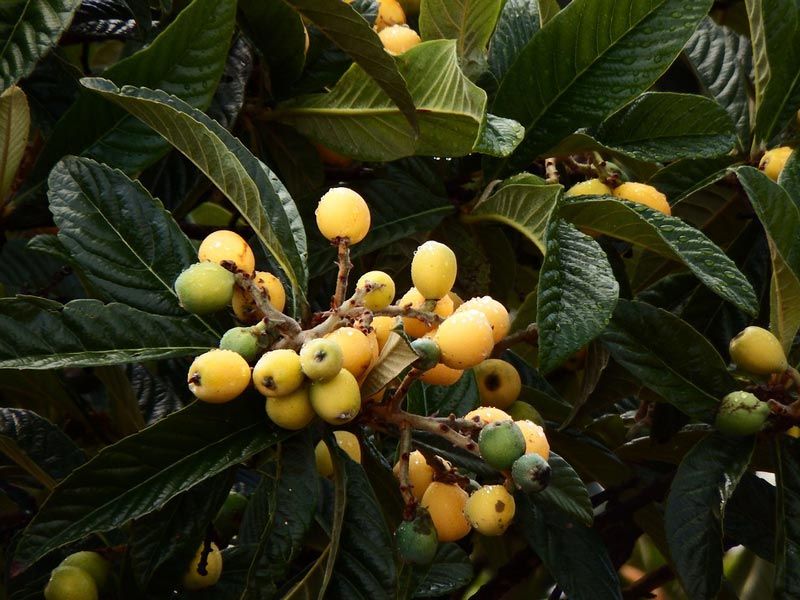
Blooms profusely. Small flowers are gathered in clusters; they are white or cream-colored, have a light almond aroma, and are honey-rich. The fruits are yellow-orange or reddish-brown, 3 to 8 cm in diameter, and come in round, flattened, oval, or pear-shaped forms. The flesh is tart and dense, becoming sweet and soft after freezing and fermentation. The fruits contain one to three seeds, sometimes more, up to eight.
Types and varieties of garden medlar
Of the three species of medlar, two are the most widespread: the German (Caucasian) medlar and the Japanese (loquat). They are successfully cultivated in temperate climates, and there are up to 30 varieties. A low-growing variety with a crown diameter of up to 3 meters has been bred for temperate climates. It grows well in Russia.
The Caucasian medlar blooms in spring, in May-June, and the growing season lasts until the onset of cold weather. Annual shoots are often susceptible to frost. In temperate climates, both seedless and seeded varieties are cultivated.
| Varieties of German medlar | Fruit characteristics | Presence of seeds |
| Apyrene | Yellow with orange splash, round, medium. | No |
| Goytkhskaya | Yellow-brown, small. | There is |
| Enormous Evreinova | Pear-shaped, large. | No |
| Monstrous d Evreinov | Yellow-orange, pear-shaped, large. | There is |
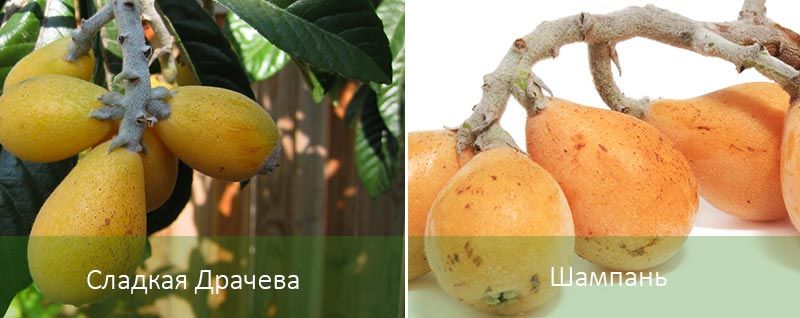
| Sweet Dracheva | Yellow with brown splashes, plum-shaped. | There is |
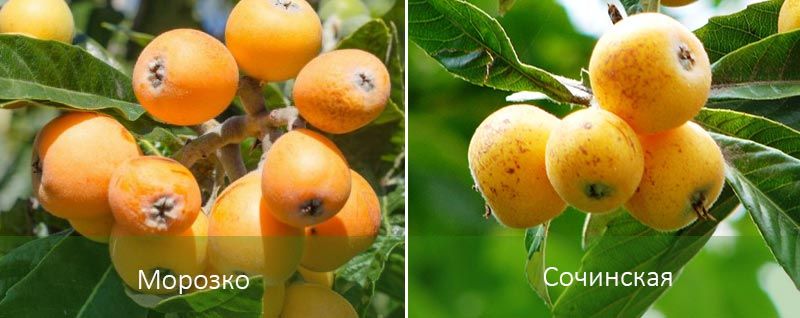
| Sochi | Bright yellow, small. | No |
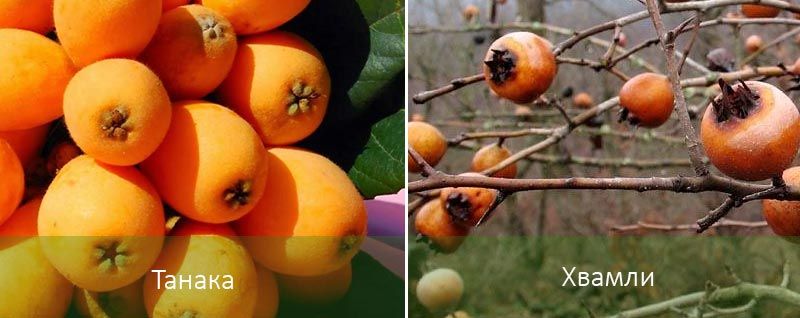
| Khvamli | Round, brownish, medium sized. | There is |
The Japanese medlar blooms in autumn, the fruits remain on the branches throughout the winter, ripening in early summer – in June. The ovaries do not fall off in winter only in southern and temperate latitudes. In other regions, this medlar is grown in apartments, greenhouses, and winter gardens.
| Varieties of Japanese medlar | Fruit characteristics |
| Commun | Light yellow, round, large. |
| Frost | Red-brown, medium. |
| Prime Minister | Yellow-orange, large. |
| Silas | Bright yellow, oval, large. |
| Tanaka | Orange, pear-shaped, medium. |
| Champagne | Yellow, pear-shaped, large. |
Loquat placement in the garden
Loquat is a sun-loving plant, so choose the sunniest spot in the garden for growing it. Given the size of its crown, maintain a distance of up to 1.5 meters between plantings. For full fruiting, plant two or three trees nearby. It thrives alongside currants.
Moderate humidity is essential; loquat doesn't like high water tables and is prone to root rot. The distance to the aquifer should be at least 1 meter. When choosing soil, neutral and slightly acidic soils are preferred; podzolic soils won't produce a large harvest.
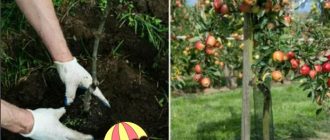
Proper planting and care in open ground is the key to a good harvest.
Planting a seedling
To grow seedlings, select seeds from fresh, ripe fruits; germination rates decrease significantly during storage. Only mature seedlings up to 30 cm tall are transplanted into the ground.
Landing algorithm:
- a month before planting, prepare a planting hole up to 50 cm deep;
- the extracted soil is well loosened, cleared of weeds, and then returned to the planting hole;
- Before planting, dig small holes that are 1/3 larger in volume than the pot in which the seedling grew;
- prepare a soil mixture: humus, sand, peat, compost substrate are taken in equal proportions or purchase packaged soil for tomatoes;
- water generously, press down to prevent voids from forming, and install a support;
- The next day, the tree trunk circle is loosened and mulched with humus.
Features of caring for medlar in open ground
Medlars are drought-intolerant and require regular feeding. Non-standard varieties require crown training.
Watering
During the period of massive branch growth, the loquat tree needs regular watering for the first four years, preventing the soil around the trunk from drying out. During the hot season, such as the flowering period, the soil should be kept constantly moist. To achieve this, the area around the trunk is mulched or covered with straw.
Top dressing
The first time organic fertilizers are applied one year after planting, root feeding during the growing season is carried out during the active growth phase every 3 weeks, mature trees are fed 2-3 times per season. Use:
- fresh mullein is diluted 1:8 and left to infuse for a week;
- phosphate mineral fertilizers, applied according to instructions;
- potassium fertilizer 1 tablespoon per 10 liters of water;
- wood ash during the ripening period up to 5 tbsp per 1 m2.
During the growth period, foliar feeding is carried out with phosphate nitrate, first diluted according to the instructions, before spraying, diluted with water 1:1.
Trimming
Sanitary pruning is carried out every spring after the buds have awakened. The following are removed:
- frozen shoots;
- growing perpendicular to the trunk;
- strongly curved;
- growing close to the main fruit-bearing branches.
Pests and diseases of medlar
To control insects, use insecticides designed for apple and pear trees, diluted according to the instructions. Copper-containing fungicides are used to combat fungal infections. During prolonged rainfall, treat the soil with Fitosporin to prevent root rot.
Propagation of medlar
When planting cultivated varieties from seeds, the best traits are not always inherited.
The most effective propagation method is cuttings. Strong, two-year-old shoots are cut into 12-cm-long sections, each with two to three buds. The cuttings are grown in tropical conditions (humidity up to 80%, temperature not below 30°C).
Air layering is achieved by tying containers filled with moist soil to branches. The bark is then removed where the branches touch. Grafting is done on quince, pear, hawthorn, or rowan.