In this article, we'll tell you how to grow nasturtium from seeds and when to plant seedlings. But first, a few words about the plant itself.
Nasturtium is a beautiful herbaceous perennial, often grown as an annual. Around 90 species have been bred, including low-growing shrubs ranging from 25 to 50 cm tall, trailing varieties, and vines that grow up to 3.5–4 meters. The hood-like, five-petaled flowers last up to a week.
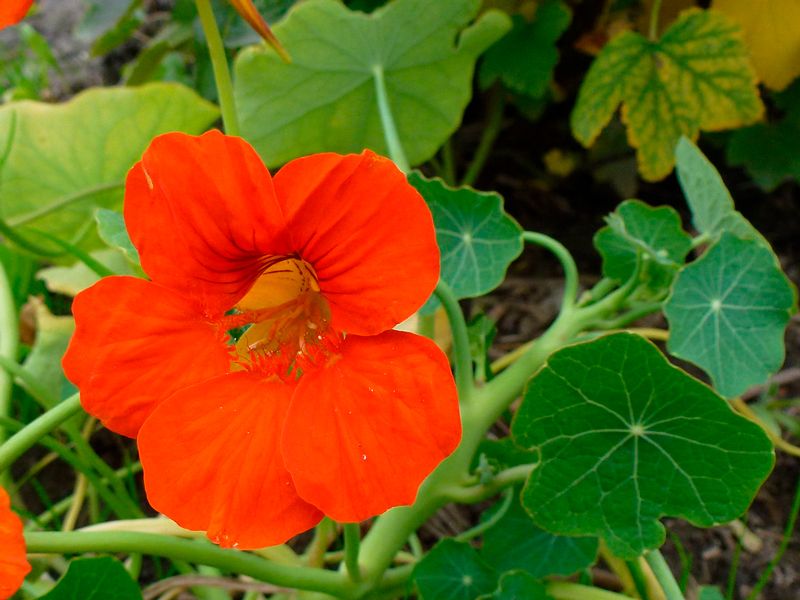
Varieties with yellow, orange, salmon, red, yellow-red, and orange-yellow petals have been bred. Bushes or vines are very decorative, and nasturtiums are used in garden design and landscapes.
Content
Growing nasturtium from seeds
Seeds are sown in open ground or for seedlings. Nasturtiums, or capuchin plants, bloom 7–8 weeks after planting, delighting with abundant blooms. Growers choose the growing method based on the region's climate.
Nasturtium seed pods are large and easy to plant at the desired spacing. They germinate in 4 to 10 days. Nasturtium roots are very delicate and fragile, and the seedlings do not like frequent transplanting. They are pricked out with great care. When transplanting, it is important not to damage the top, especially for vines.
Nasturtium planting dates by region
When planting, adhere to the dates of possible return frosts.
| Name of the region | Sowing seeds for seedlings | Sowing seeds in open ground |
| Hot climate zones, subtropics | The last days of March – beginning of April. | The month of May. |
| Moscow region, central regions of Russia | End of April – first week of May. | The last days of May. |
| Risky farming zones in Siberia and the Urals | Middle ten days of May. | The second week of June, when the threat of frost has passed. |
For growing capuchins on glazed loggias and balconies, sowing begins in the second ten days of March.
Planting dates according to the 2019 lunar calendar
Many rely on the lunar calendar; it's advisable to sow seeds and plant seedlings in open ground on favorable days for flower crops in 2019. Unfavorable days are indicated in parentheses:
- March 10, 12, 15 (not allowed from 21 to 31);
- April 7, 11, 18 (undesirable from 1 to 5, from 20 to 30);
- May 9, 10, 15, 17 (not recommended from 1 to 5, from 19 to 31).
Growing nasturtium seedlings
Growing capuchin lilies is simple, and future flowering largely depends on the quality of the seedlings. They should have a strong root system and a dense stem. An overly elongated, stunted plant will become ill for a long time, and flowering will be delayed for up to a week. For seedlings, prepare a soil mixture of turf, sand, and peat in a 1:1 ratio. You can buy a ready-made all-purpose soil or a tomato-specific soil. As a preventative measure, water the soil with a potassium permanganate solution.
Preparing seeds for sowing
Home-collected seeds are sorted beforehand; store-bought seeds are ready for planting. Some prefer to germinate them on a damp cloth, while others plant them dry in moist soil. To disinfect, soak the seeds in a pink solution of manganese or wood ash (3 tablespoons per liter of water). You can soak the seeds for 2-3 hours in homemade growth stimulants:
- Aloe or Kalanchoe juice is diluted in 5 volumes of water, pre-cut leaves are kept in the refrigerator for a week;
- A teaspoon of honey is dissolved in a glass of warm water; the microelements and amino acids contained in the solution are absorbed into the skin.
Selecting and preparing a container for sowing
Nasturtiums are planted in peat pellets, biocontainers (compressed humus), or pots. Large pots, boxes, or flowerpots are used for balcony plantings. To ensure germination, sow two seeds in each container. Egg cages are used to conserve planting material. The holes are filled with potting mix. After the seedlings emerge, the root ball is scooped out with a spoon and transferred to another container.
Paper cups are a convenient option: fold old newspapers into four layers and wrap the resulting strip around a bottle of the desired diameter. Secure the top edge of the paper with a paper clip. Place the cups tightly next to each other in a tall container, then fill with potting mix.
Some useful tips:
- when using tablets or biocontainers, they are pre-soaked in water, the reinforcing mesh is not removed, and the soil swells within 2–3 hours;
- Before planting, egg cardboard cages are doused with boiling water, then dried, plastic containers are washed well;
- It is advisable to place drainage material at the bottom of peat pots and paper cups to prevent water from stagnating.
Sowing for seedlings
To grow flowers on a balcony or loggia, nasturtiums are sown directly into containers in which they will remain during the growing period.
For planting in open ground, use small pots or peat pellets. Place two dry seeds or one sprouted seed (preserved in a growth stimulator) in each. It's best to plant two seeds per pellet. They are buried 2-3 cm deep in the soil and watered with a watering can or a spray bottle. This watering method prevents soil erosion, and the seedlings stay in place. Place them in a large container.
When planting in large containers, use cardboard dividers to prevent roots from becoming tangled as the seedlings grow. Choose a sunny spot in the apartment for growing plants.
Caring for seedlings
For the first two weeks, the plants require warmth; the planting containers are placed on windowsills where the temperature is at least 22°C. After two weeks, the nasturtiums begin to adapt to temperate conditions, lowering the temperature to 18°C.
Nasturtiums are provided with supplemental lighting to prevent them from stretching too much, and daylight hours are extended to 12–15 hours during the dark hours. Regular, moderate watering is necessary, every three days. Spray the shoots once a week in the evening.
It's convenient to grow seedlings in trays: add water directly to the roots. Remove excess shoots after a week of growth, leaving the strongest shoot in each pot or tablet. To stimulate growth, add a general-purpose fertilizer for houseplants to the watering water, using a ¼ of the required amount. Fertilize no more than once a week.
Planting seedlings in the ground
If the seedlings begin to stretch and frosts persist, they are moved to temporary shelters where it is cooler than the house. Nasturtiums are planted outdoors after warm nights arrive, when the temperature is at least 8°C.
The root system is not damaged during transplantation. The peat or paper pot is torn apart without damaging the root ball.
The holes are dug 2–3 cm deeper than the planting containers. The seedlings can be covered with soil up to the first leaves, which will encourage additional roots to form from the stems. The distance between plants should be 20 to 50 cm, depending on the nasturtium variety. The flowers adapt quickly to the new conditions. They should be shaded from the scorching sun for the first three days. It is recommended to water the soil in the planting holes with a solution of potassium permanganate or phytosporin. This prevents fungal diseases. The plants should be thoroughly watered with warm water.
Planting nasturtium seeds in open ground
Many gardeners consider nasturtiums as a fall garden addition. Seeds are planted next to early-flowering bulbous and shrubby perennials, spaced 30–40 cm apart. When planted this way, nasturtiums will not interfere with resting daffodils and irises.
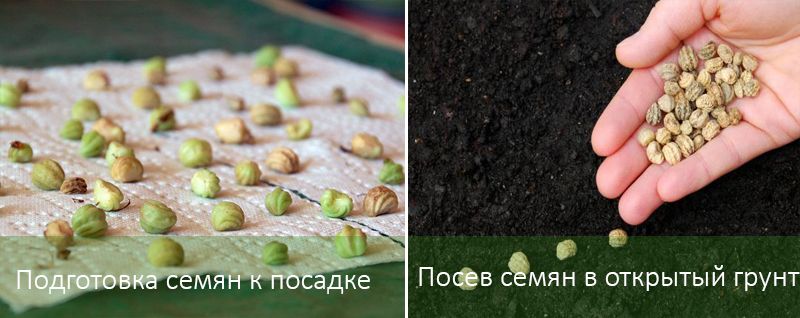
It is recommended to plant seeds directly into the ground; there is no need to waste time and effort on growing seedlings.
Advantages and disadvantages of sowing nasturtium seeds in open ground
Plants grow well in soil saturated with melt water, adapt more easily to cool nights, and are not subject to stress.
By covering seedlings at night, you can protect them from subsequent frosts. The ideal planting option is to sow seed pods in temporary plastic covers, stretching the covering material or film over arches. Disadvantages of planting in open ground:
- In risky farming areas, seedlings may be killed by a light frost.
- If there is a lot of rainfall, young roots may rot and the plant will begin to bloom later.
- Young seedlings require nutritious, loose soil; it is not always possible to create ideal conditions for the sprouts on the site.
Each gardener decides for themselves how to plant nasturtium; much depends on the climatic characteristics of the region and the composition of the soil.
Step-by-step instructions for sowing seeds in open ground
Nasturtiums delight with their flowers until the first hard frost. For fall blooms, they are planted outdoors. The step-by-step process is as follows:
- In a garden bed or flowerbed, the soil is thoroughly loosened, phosphorus and potassium fertilizers are added to poor soil, and sand is added to heavy soil.
- Furrows or holes are made 20–30 cm apart, 3 cm deep, and the planting holes are watered. Trailing varieties are planted closer together, while bush varieties are planted further apart.
- The seeds are laid out in a row at a distance of 10 cm, and two seed pods are dropped into each hole.
The planting holes are filled with loose soil or humus. - The seedlings are watered and covered with plastic film. Care must be taken to prevent overheating; the ideal temperature is 25°C.
- After 4 days, remove the film, water, and loosen the soil, especially if the soil is clayey. It is recommended to insulate the plantings with a covering material at night. On cooler days, it can be left on during the day.
- Seedlings in open ground appear in a couple of weeks, the first buds – in 40–45 days.
Top.tomathouse.com recommends: methods for planting nasturtium seeds for seedlings
In addition to the traditional method of planting seeds for seedlings, there are other, more economical and convenient options. Soaking and germinating nasturtiums in sawdust speeds up germination.
Planting in sawdust
Sawdust from deciduous trees is used as a planting mix. Conifers have a high resin content.
They are thoroughly dried and aired. Then, they are moistened with water. For indoor seedling growing, it's convenient to use granulated pressed sawdust sprinkled into the cat litter box. It retains moisture well and has been cleaned.
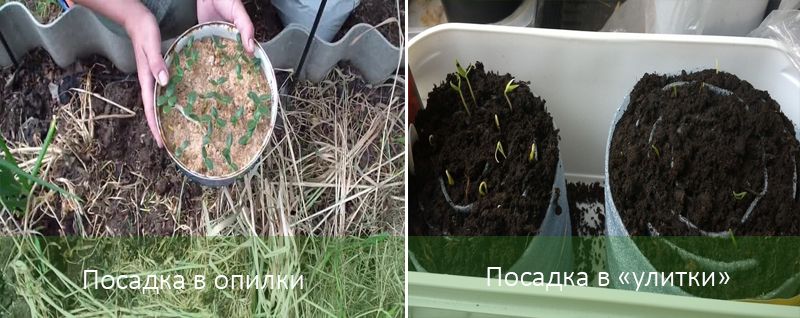
Pour boiling water over the granules and let them swell. Avoid adding too much water; the potting mix should be loose. It is poured into a container no more than 3.5 cm thick, leaving at least 5 cm of space at the edge. This is sufficient for nasturtium seeds. They are not pre-soaked; they are spread on dry sawdust at a distance of 4 to 6 cm, covered with a centimeter-thick layer of plastic. After this, the container is tightly covered with plastic wrap and stored in a warm place for 4 to 5 days – creating tropical conditions. The seeds do not require sunlight; they germinate well in a dark place. The main factors are high humidity and temperature. Under these sowing conditions, sprouts appear on average within five days. The plastic wrap is removed, the seedlings are moistened, and transferred to a bright location. After the third full leaf appears, they are transferred to pots with soil, without damaging the roots. The young plants quickly adapt to the new conditions. In loose sawdust, the roots are not damaged and the seedlings are easily removed.
Landing in a "snail"
For germinating large seeds, thick plastic wrap and toilet paper are often used. You'll need a 10 cm wide strip; the length of the planting "snail" depends on the number of seeds. Place a strip of 3-ply toilet paper (regular napkins will do) on the film. Use a dilute solution of epin to moisten the film; add just 3 drops per liter of water. Place dried nasturtium seed pods along the entire strip, 1.5 cm from the edge, at intervals of 4-5 cm. Leave up to 15 cm of space at the end of the strip. Carefully roll the strip so that the seeds don't shift too much. Secure the roll with a rubber band or string. Place the finished "snail" vertically in a container with a small amount of water. Then place the entire thing in a plastic bag to create a "tropical" environment. After the sprouts appear, remove the film and place the seedlings in a bright location. The seedling with three leaves is transplanted into a permanent container. Once the "snail" unfolds, there is no need to divide the seeds; all roots remain intact.