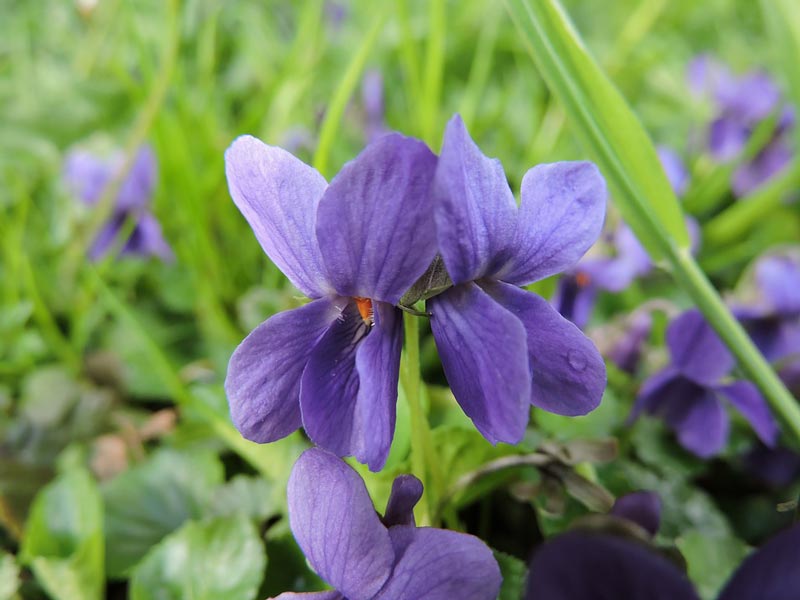
The violet is a popular houseplant, boasting a wide variety of species and forms. It's considered an easy-to-grow flower, but even with proper care, some challenges arise.
Content
Reasons why violets do not bloom
Saintpaulias are sought after for their long blooming period and variety of colors. The most common is the African violet.
With proper care, a lush crown of flowers will delight its owner 10 months a year. Only in the summer, during the intense heat, does the plant take a "vacation."
It's difficult to say definitively what to do if flowering has stopped and doesn't resume. There could be several causes, and they need to be considered together.
Experienced gardeners recommend fertilizing the plant first. If the situation persists, and the violet has many leaves but no flowers, it's time to check all the components of proper care.
Factors affecting the health of Saintpaulia:
- the pot size is not suitable;
- the acidity or composition of the soil is disturbed;
- incorrect lighting;
- unsuccessful transplant;
- shifting the feeding regime;
- no break in flowering;
- excessive dryness of air;
- pest infestation;
- violations of the gene pool.
Each of the listed reasons can cause violet disease, so the solution to the problem must be prompt and correct.
Capacity
The right pot is important for proper development and lush flowering. If the pot is too large, the Saintpaulia will grow roots. The underground part of the plant should completely fill the container, so the plant will have the strength to bloom.
If it's too small, it needs to be repotted. A sign that the violet is overcrowded is the formation of additional "bushes" in the center, while the large side leaves die off.
Substrate
Soil composition for violets requires a specific composition. Even universal soil isn't always beneficial for the plant.
The components of the correct mixture are combined in equal proportions:
- Earth;
- water;
- air.
The soil must be light, so special soil loosening agents are added. Botanists use perlite and vermiculite, either alone or in combination. They are added to the soil to make it more breathable.
Houseplant enthusiasts can test the quality of their potting soil by sticking their finger into the flower pot. The correct composition should allow you to touch the bottom of the container. This consistency should remain consistent; if the soil hardens over time, it needs to be replaced.
Before planting, check the soil's pH. The optimal pH for violets is 6.5—a slightly acidic medium. This is done using special pH testers, which can be purchased at any flower shop. Mix the prepared soil with distilled water at a ratio of 1:10 and dip the tester into the mixture.
Lighting
The right lighting for Saintpaulias should be bright and diffused, avoiding direct sunlight. Don't expect flowering in a north-facing window.
Houseplant lovers are advised to create additional light sources. Fluorescent lamps can be installed.
Violets need 10 hours to bloom; the rest of the time the equipment can be turned off.
Fertilizer
Saintpaulias grow actively throughout the year, so they require regular fertilization. To avoid missing fertilization, experts recommend diluting nutrients in the water used for irrigation.
Plants with wick irrigation are fertilized with a nutrient solution prepared in advance. For regular irrigation, add one-fifth of the monthly water requirement.
For violets, it's important to protect their roots, so it's recommended to use nutrient mixtures high in phosphorus. These strengthen the underground roots, promoting lush flowering.
Incorrect transplant
To ensure the plant's health, it's important to follow the repotting guidelines. Mature violets are moved to a new container twice a year, as needed, in spring or summer. When repotting, it's important to keep the root system intact.
When removing a flower from an old pot, do not damage the root ball.
It is not recommended to touch or pull the delicate lateral roots with your hands.
Insufficient air humidity
In southern countries, rooms become quite hot during the day during the summer. Dry air is detrimental to Saintpaulias, and at temperatures above 22°C, additional humidification is necessary.
The plant should be misted regularly. You can place the pot on a tray of damp pebbles and regularly top up the container with water without adding nutrients.
Genetic component
The diversity of varieties is due to the work of geneticists. Some violets bloom during a strictly defined period, others produce several large blooms once a month, and some remain adorned with a lush cap for most of the year. These are characteristics of the species that you should be aware of or check when purchasing.
But they all require proper care. If the rules are followed, the plant will delight you with its beauty. There are cases where even ideal conditions don't produce results; this is a genetic disorder that cannot be corrected. Such plants are usually removed.
Insect damage
Even indoor flowers can be damaged by insects and harmful microorganisms. Disease can cause violets to not only stop blooming but also die.
The main pests and methods of controlling them are presented in the table.
|
Pest |
Manifestation |
Treatment |
| Thrips | So small that they can only be seen by disturbing them. The insects hide in the flower's anthers. | They are eliminated by chemical treatment, after thoroughly washing the plant with a soap solution and removing the affected inflorescences. |
| Mealybug | Immediately visible on the stems and leaves, these are small white lumps that look like cotton wool. | The plant should be treated with insecticides, although you can try folk remedies first. As a preventative measure, maintain optimal air humidity. |
| Cyclamen mite | It's not visible without specialized equipment. The disease can be identified by a reduction in size and deformation of the flower, and a thickening of the center of the rosette. | Pest control is difficult, so it's recommended to dispose of affected plants. If the plant is particularly valuable, acaricides or insectoacaricides are used for spraying. |
| Powdery mildew | It looks as if the plant has been dusted with flour. This pest prefers overly wet violets planted in poorly ventilated areas. | The disease is treated with insecticides. |
If any type of pest is detected, the plant must be isolated and quarantined until complete recovery.
Top.tomathouse.com explains: additional reasons why violets don't bloom
Incorrect pruning, poor watering, and infrequent replanting are also reasons for lack of color.
For good root development, light soil with plenty of nutrients is essential. During active plant growth and nutrition, the soil quickly leaches and flowering ceases, so repotting is necessary 2-3 times a year.
In most cases, violet problems arise from several factors. Treatment should begin promptly, and the best approach is to address lighting levels. This is the most common problem.
If flowering is weak and the plant is quickly wilting, pay attention to its location. It may be experiencing drafts or it may have missed fertilizing.