Nematanthus (Hypocyrta) is a genus of vines, shrubs, and subshrubs in the family Gesneriaceae. It is native to the jungles of South America and the tropics of Brazil and Paraguay.
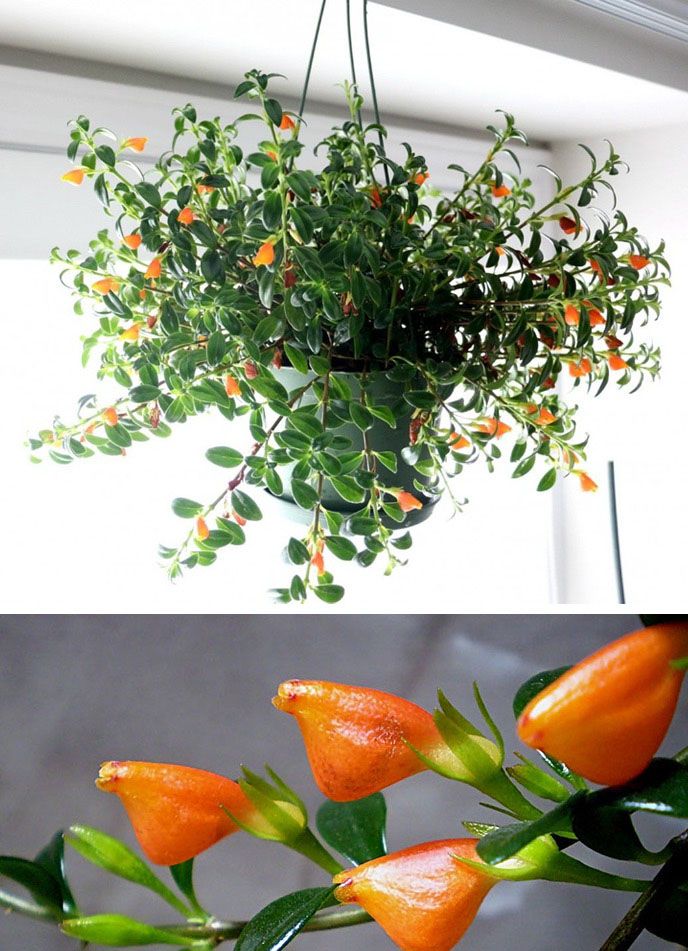
The name is translated from Greek as thread-flower, due to the long peduncle of some varieties.
Content
- 1 Description of Nematanthus
- 2 Types and varieties of goldfish for indoor breeding
- 3 Conditions for keeping nematanthus
- 4 How and when to repot nematanthus
- 5 Stimulating flowering of nematanthus by formative pruning
- 6 Reproduction of nematanthus, obtaining new fish flowers
- 7 Mistakes in caring for nematanthus, pests and diseases
- 8 Nematanthus (Hypocyrta) - the flower of luck
Description of Nematanthus
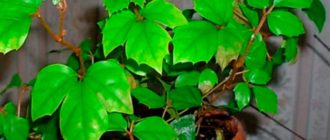
Epiphytes and hemi-epiphytes have creeping stems with small, thick, shiny, dark green, elliptical leaves.
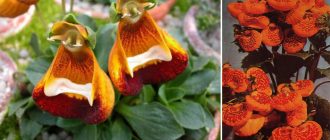
The orange, red, and yellow flowers, about 2 cm in size, resemble small, brightly colored aquarium fish. It's no wonder the plant has earned another name, "goldfish."
Types and varieties of goldfish for indoor breeding
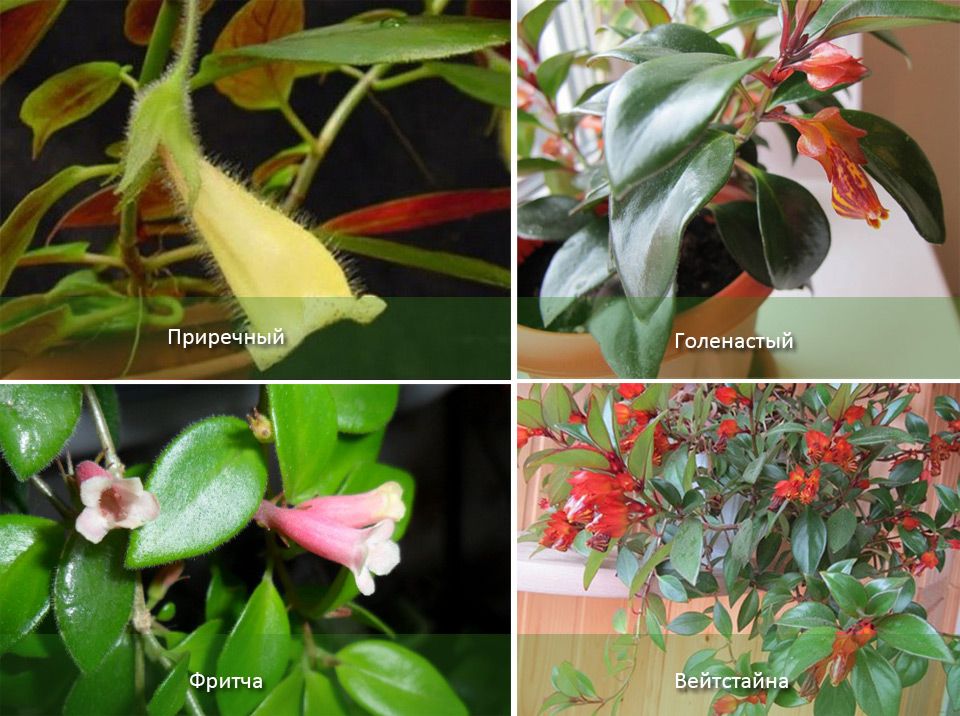
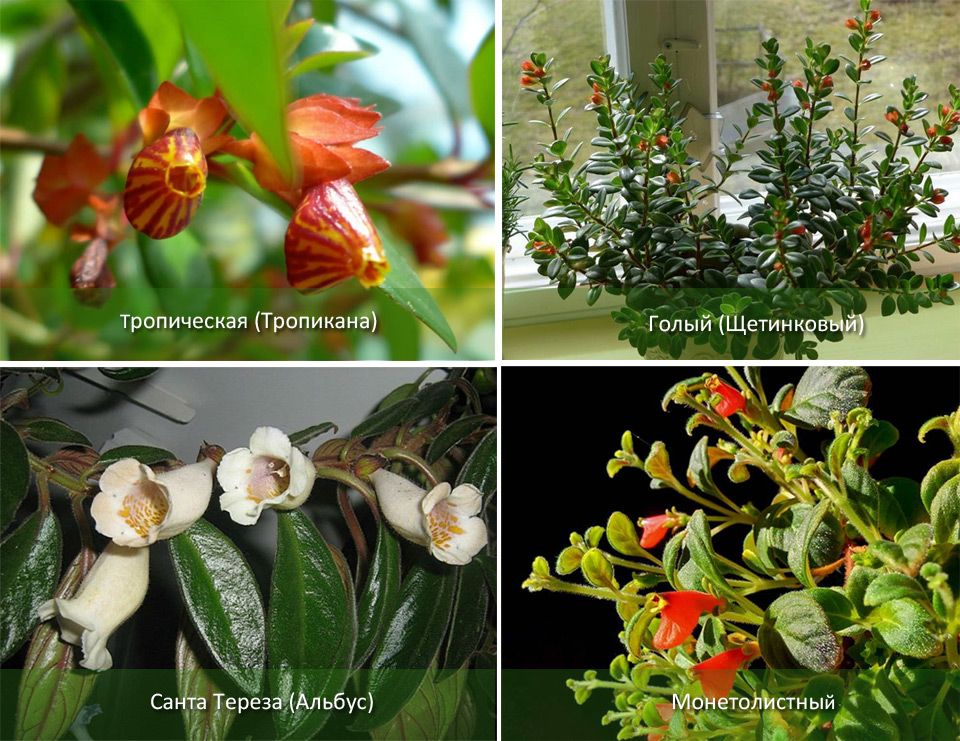
The genus Nematanthus includes about 30 species.
| View | Description | Leaves | Flowers | |
| Prirechny | Creeping epiphyte. | Elliptical shapes with a glossy, fleshy green surface, reddish below. | Lemon. | |
| Fritch | The bush is about 60 cm, bending under the weight of flowers. | Shiny, grassy-burgundy shade. | Hot pink. | |
| Long-legged | A subshrub with drooping stems. | Rounded light gloss. | Coral. | |
| Weitstein | Flexible shoots up to 1 m. | Dark small ones. | Orange. | |
| Tropical (Tropicana) | Ampelous bush. | Oval-pointed. | Sunny, with burgundy stripes. | |
| Coin-leaved | Creeping stems. During the dormant period, it sheds its leaves. | Light green, shaggy and rounded. | Scarlet, with a lemon tint. | |
| Naked (Bristly) | Semi-ampelous. | Small, thick, shiny. | Bright orange. | |
| Santa Teresa (Albus) | Rare. | Elongated green with burgundy bottom. | Mottled, white, fluffy. They have a citrus-olive aroma. | |
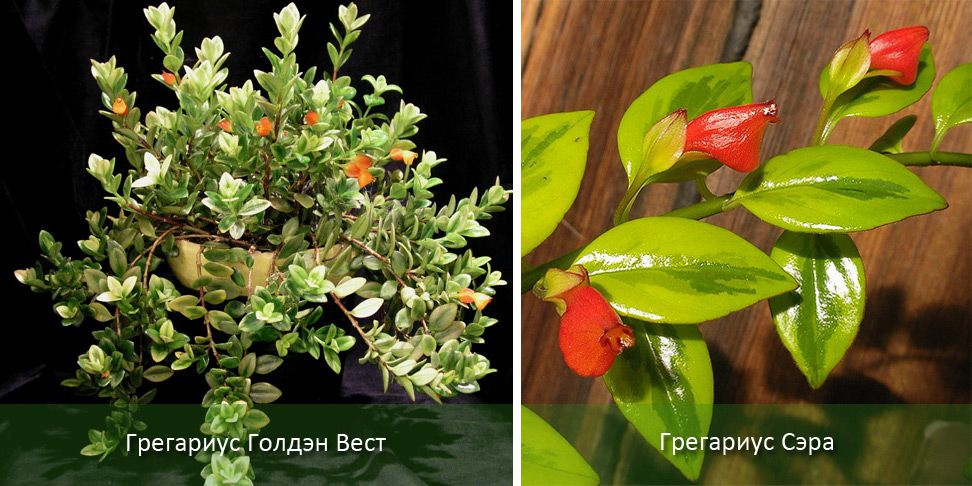
| Gregarius | Varieties | Variegated varieties. This species gave the nematanthus its nickname, "goldfish." | Small, sparkling, rich with a blue tint. | They resemble brightly colored fish. |
| Golden West | With a creamy yellow border. | Deep orange. | ||
| Sir | They are distinguished by a light stripe along the edge. | Fiery. | ||
Conditions for keeping nematanthus
During different seasons, when caring for nematanthus at home, certain maintenance is required.
| Factor | Spring/summer | Autumn/Winter |
| Location/lighting | South-east and south-west, in hot weather place on a protected balcony, shaded from the midday sun. | A south-facing window is best. If there's insufficient light, add supplemental lighting. Provide 12 hours of daylight. |
| Temperature | +20…+25 °C. | +16…+18 °C. Not below +14 °C. |
| Humidity | 50-60%. | |
| Watering | Generous, do not allow the soil to dry out. | Moderate. If the temperature is +14…+16 °C, do not humidify. |
| Use rainwater, melted water at room temperature, settled or filtered. Avoid getting water on the leaves. | ||
| Top dressing | 2-3 times a month with mineral fertilizers for flowers containing phosphorus and potassium. Water beforehand. | Not used. |
How and when to repot nematanthus
Nematanthus is a slow-growing plant. Young plants are repotted only after 2-3 years, while mature plants are repotted when roots emerge from the drainage holes. This is done in the spring.
The container is small, approximately 2 cm wider than the previous one. The following substrate options are used:
- soil for violets:
- leaf, peat, sand (1:1:1) with the addition of crushed bark and moss;
- leaf, humus, peat, sand (2:1:1:1), charcoal crumbs.
The container and soil are disinfected (boiled in a water bath or scalded with boiling water). Drainage is important (expanded clay, pebbles, vermiculite).
Repotting is done by transshipment, taking care not to damage the delicate roots. Afterwards, water the plant with warm water, mist it, and place it in its chosen location.
Stimulating flowering of nematanthus by formative pruning
Every year, before the dormant period in autumn (October), nematanthus is pruned to stimulate flowering during the next active period. If the plant is overwintered in a warm room, the pruning process is postponed until spring. This will improve the health and rejuvenate the goldfish.
Remove diseased, thin stems. Healthy young shoots are shortened by 1/3, and mature shoots by half.
Reproduction of nematanthus, obtaining new fish flowers
Nematanthus is propagated by seeds and cuttings.
Seminal
This method is labor-intensive and time-consuming:
- Prepare a tray and a container with drainage holes, fill it with peat and sand, and moisten it.
- The ripe seed pods are opened, the seeds are poured onto paper, then distributed over the substrate and covered with a transparent material (glass, film).
- Water into the tray and ventilate regularly.
- After the sprouts appear, the cover is removed.
- After 2 weeks they are transplanted.
- Place 3-4 seedlings in one pot. Young nematanthus will bloom the following year.
Cuttings
After pruning, healthy cuttings of approximately 10 cm (4-5 nodes) are rooted in peat, moss, and water.
- The lower leaves are removed and the cuts are treated with Zircon or Epin, immersing the planting material 1 cm into the solution.
- The node of the cutting on which the roots are formed is placed deep into a container for rooting and covered with a glass jar.
- They create +22…+25 °C and light.
- After 2-3 weeks, transplant 3-4 pieces into small pots of approximately 10 cm.
Mistakes in caring for nematanthus, pests and diseases
If grown in the wrong conditions, nematanthus can become diseased and be attacked by insects.
|
Symptoms External manifestations on leaves |
Cause | Elimination measures |
|
Dropping flowers. November. |
Winter period: waterlogged soil, low temperature. Growth and flowering period: lack of moisture in the soil and air. |
Reduce watering. Move to a warmer location. If the damage is severe, repot the plant in new soil. |
|
Yellowing, curling. Appearance of brown spots. |
Excessive direct sunlight. Burns. | Place away from the window. Shade. Spray early in the morning or evening. |
| Withering. | Overfeeding with fertilizers. | Follow the feeding rules. |
| Lack of flowering. | Lack of light, nutrition, dry air, cold. No pruning. | They create the right conditions for keeping. |
| Drying and yellowing. | Heat and dryness. | Increase humidity (place in a tray with wet pebbles, place a container of water and a humidifier nearby). |
| Darkening of flowers, their falling off | Drops of water falling on the buds. | Use only a fine spray, avoiding contact with flowers. |
| The appearance of depressions. | Incorrect watering. | Follow the watering schedule. |
|
Whitish wet coating. Death of leaves. |
Mealybug. | Remove insects with an alcohol wipe. |
| Covered with light yellow spots, web formation. | Spider mite. | Spray with Actellic and Fitoverm. |
|
Slowing growth. Deformation, silver streaks. |
Thrips. | |
| Insects are visible. | Aphid. | Treated with Antitlin, Biotlin |
| Mold. | Gray rot. | Remove affected areas, change the substrate, and use Fundazol. Reduce watering and ventilate the room. |
| Wilting, yellowing and death. | Root rot. | Remove diseased roots, dry the plant, replant, and water with Carbendazim. |
| White coating. | Powdery mildew. | Spots are removed manually or diseased leaves are torn off. Treatment is with Fitosporin. |
Nematanthus (Hypocyrta) - the flower of luck
According to popular superstitions and beliefs, nematanthus brings happiness and family idyll to the home, and success in all endeavors.
If you follow the flower care rules, it will not only decorate your interior, but also purify the air in the room.