Nemesia is a herbaceous plant native to South Africa. It is cultivated as an annual or perennial shrub, and there are 50 species. Its natural habitat is coastal areas and scrubland.

Content
Description and characteristics of nemesia
Nemesia branches with flexible stems along the soil surface, with the shoots slightly raised. The entire shoot is covered with flexible hairs, forming a quadrangle when cut. The rounded leaflets are almost completely devoid of petioles and resemble an egg in shape. The leaf blade is soft and serrated on the sides. The tubular corolla is formed of four parts at several levels. The petal palette is represented by various shades of light (white, blue) and dark (violet) tones.
Flowering begins in midsummer and ends in early autumn. A solitary bush can survive until the first frost. Winter temperatures in mid-latitudes are unsuitable for nemesia, so overwintering it outdoors is out of the question.
Varieties and types of nemesia
Breeders have developed a large number of nemesia varieties to suit every taste. Some specimens blend beautifully into a garden setting, while others are perfect for balconies or terraces.
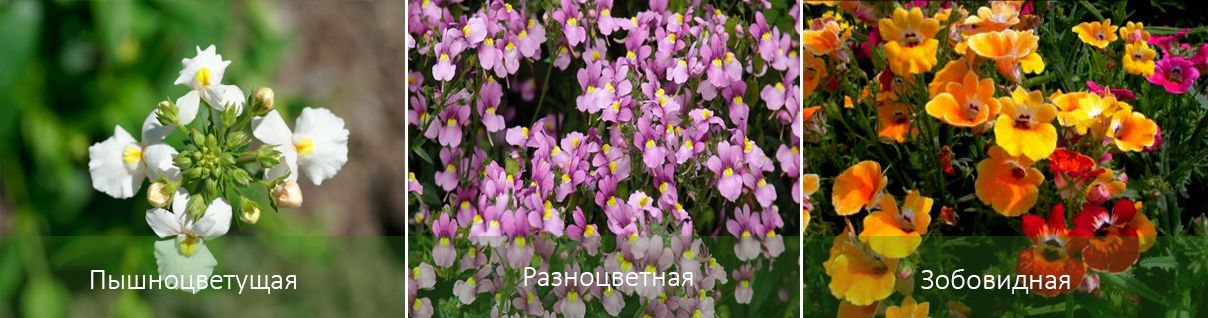
Lushly blooming
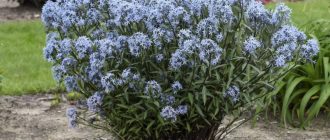
It grows up to 0.4 m in height. The tops of the shoots are adorned with small bluish flowers. This ornamental variety is popular among gardeners and is grown outdoors.
Multicolored
The slender stems branch laterally and reach a height of up to 0.25 m. This species is notable for its small flowers and the fact that many hybrid varieties have been developed from it, such as:
| Variety | Description |
| Blue Bird. | The bright blue inflorescence is decorated with a light spot on the lip. |
| Edelblau. | The flowers are soft blue. |
Goiter
The plant is branched and reaches a height of 0.4 m. The leaf shape varies depending on its position: rounded leaves grow at the base, while elongated leaves grow at the top. The flowers are uniquely shaped and lack spurs, with a drooping throat. The diameter of an individual flower is approximately 2.5 cm. The color palette is varied: pink, red, yellow, and orange. It has been cultivated since the late 19th century. The most common varieties are:
| Variety | Description |
| Aurora. | The low bush is decorated with large white flowers. |
| Fanfair. | Notable for its cream color. |
| Sparklers. | The inflorescences are presented in several tones. |
| Fire King. | A low bush with fiery-colored flowers. |
| Nashinel Ensign. | A common variety with white and red flowers. |
Hybrid
Created by crossing the variegated Nemesia with the goiter-like Nemesia. The bush is relatively tall, reaching 0.6 m. The leaves are elongated. Small flowers, 2 cm in diameter, have a bilabiate corolla. This species is found primarily in mixed varieties and is notable primarily for its variable size.
| Variety | Description |
| Triumph. | The tops of the stems, growing up to 15 cm, are decorated with flowers of various colors. |
| Carnival. | The height of the bush varies from 18 cm to 20 cm. The inflorescences are presented in a wide range of colors. |
| Star Trek. | A low-growing plant with buds of various colours. |
Planting and propagation of nemesia
Annual specimens can be propagated by seeds, while perennials can be propagated by cuttings. To ensure the nemesia's blooming period coincides with early summer, plant it in midwinter. Favorable days for planting nemesia can be found in the lunar calendar.
The shrub will thrive in any soil, as long as it's first amended with compost and sand. Soil intended for flowering plants is also suitable. To properly plant the seeds, follow these steps:
- The tiny nemesia seeds should be mixed with sand to distribute them evenly.
- Place the seeds into the soil to a depth of 0.5 cm;
- Leave the container in a warm, lighted place for 7 days;
- Repot the plants into individual containers. It's important to remember that the taproot will be damaged if repotting is not completed promptly.
- It is preferable to water young shoots using a spray bottle.
Direct planting in open ground is possible, but it's best to do this in late spring, as frosts may return earlier. The seeds are placed in a hole, preferably several at a time, so that the strongest seedlings can be selected later. This planting method means the plant won't bloom until August.
Seedlings can be planted only in late May or early summer, once they have developed buds. When planting, it's important to maintain a distance of 0.2 m between bushes.
You can plant seedlings in a pot earlier and bring them indoors during cold weather.
Growing conditions in open ground
This unpretentious plant will delight the gardener with timely flowering if several rules and recommendations are followed.
| Factor | Condition |
| Temperature | Nemesia tolerates light drafts, but gusts of wind can break the stems, so the bush requires additional support. The plant is heat-loving, so it is recommended to grow it at temperatures no lower than 20°C. In autumn, the perennial practically stops growing, and its shoots begin to dry out. |
| Watering | The plant does not tolerate dry soil well, so it requires regular and abundant watering. However, it is worth considering that stagnant water at the roots will provoke diseases such as root rot. |
| Top dressing | When planting, the soil should be fertilized, and then fertilized once a month. Mineral and organic fertilizers are ideal for this purpose. |
| Crown formation. | Pinching young plants encourages them to branch out. Excessively long shoots should be trimmed throughout the growing season. |
Caring for Nemesia in the Open Ground
Nemesia does not require special care; regular watering is sufficient, especially during dry periods, as well as timely weeding and loosening of the soil.
Diseases and pests
Spider mites. Their presence can only be noticed when small webs appear on the nemesia's leaves and stems.
The mite is no larger than 0.05 cm. The red or green pest feeds exclusively on the sap of the shrub, so this cohabitation will cause the leaves to lose their color and the plant to wilt. It's important to begin exterminating the mite immediately after its detection, as this insect reproduces rapidly, which is greatly facilitated by dry periods. The most effective method is treating the shrub with products such as Fitoverm, Actellik, and Akarin.
It's recommended to treat not only the leaves and stems but also the surrounding soil twice a month. The solution will last longer on the shrub's surface if you add a little soap or powder to it.
Root rot. Develops with excess moisture, impairing plant growth and depriving the roots of nutrients. This disease is curable only in its early stages.
Top.tomathouse.com recommends: Nemesia in landscape design
The rich tones of nemesia can brighten both flowerbeds and borders. This trailing plant is often placed on balconies, terraces, and verandas. It can easily be planted in containers or pots in the garden. This moisture-loving shrub can liven up ponds or fountains. Nemesia looks wonderful as a standalone plant or in a composition with petunias, pansies, or marigolds.