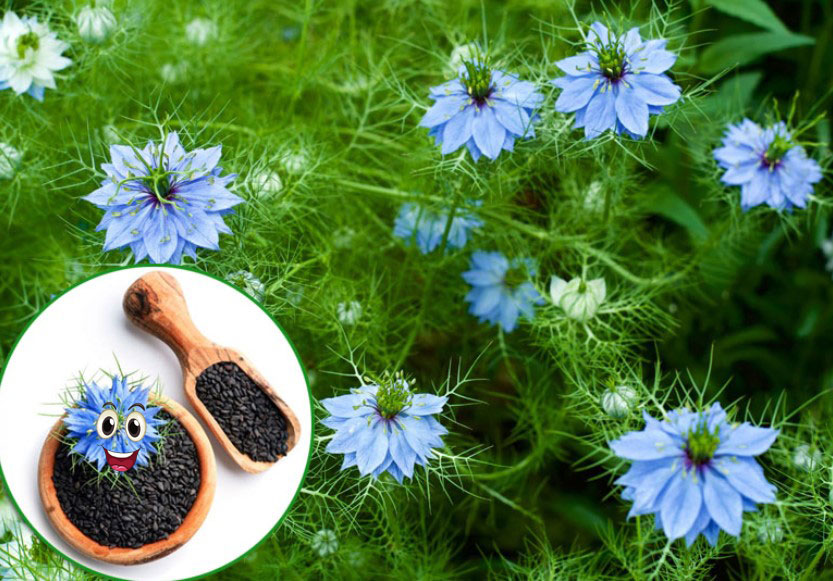
Nigella can be recognized from thousands of other plants by its distinctive stem and dill-like leaves. This annual will grace any flowerbed with its delicate flowers in a variety of shades. In this article, we'll cover the varieties of nigella and how to grow them in more detail.
Content
- 1 Description of Nigella
- 2 Types and varieties of nigella
- 2.1 Field black cumin
- 2.2 Black cumin, or black cumin, or sedana, or Roman coriander (Nigēlla satīva)
- 2.3 Nigella damáscena
- 2.4 Eastern black cumin (Nigélla orientális)
- 2.5 Bukhara nigella (Nigella bucharica)
- 2.6 Spanish nigella (Nigella hispanica)
- 2.7 Nigella glandulifera
- 2.8 Nigella integrifolia
- 2.9 Nigella oxypetala (Nigella oxypetala)
- 2.10 Nigella segetalis (Nigella segetalis)
- 3 Nigella planting and care chart
- 4 Nigella from seeds
- 5 Caring for Nigella in the Open Ground
- 6 Reproduction of Nigella
- 7 Pests and diseases of nigella
- 8 Collecting Nigella Seeds
- 9 Nigella in the landscape
- 10 Uses of Nigella
- 11 Recipes with Nigella
- 12 Contraindications for the use of nigella
- 13 Gardeners' Reviews of Nigella
Description of Nigella
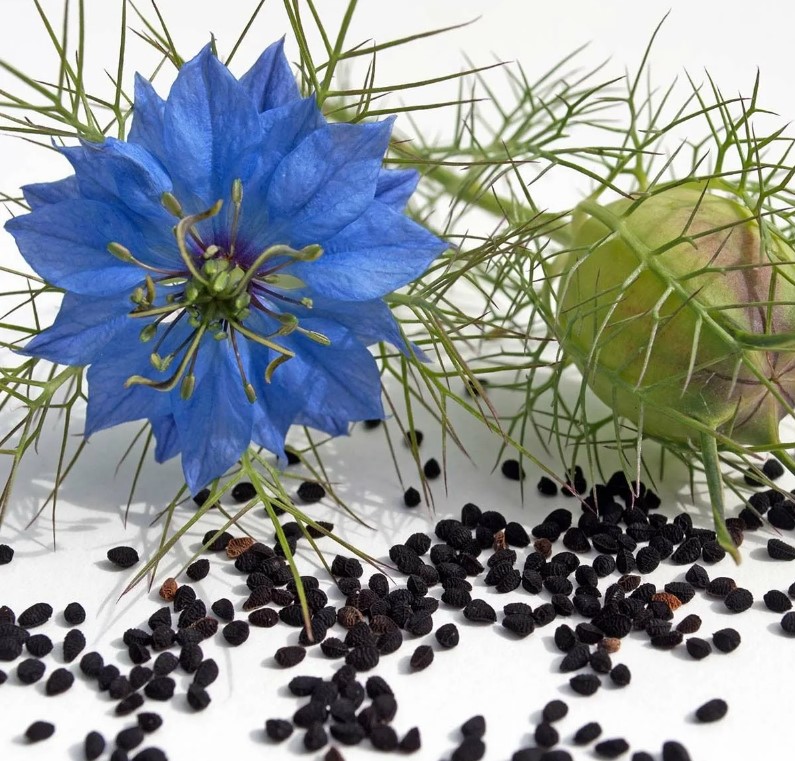
Nigella belongs to the genus Ranunculaceae. It is also commonly known as nigella (black cumin) due to the deep black color of its seeds. Only 10 varieties of this plant are found in Russia, while there are approximately 26 worldwide.
The following features of the flower can be highlighted:
- The length of the shoots is about 40 cm.
- Taproot system.
- The leaf blades are filiform, the leaves are thrice or twice pinnately dissected.
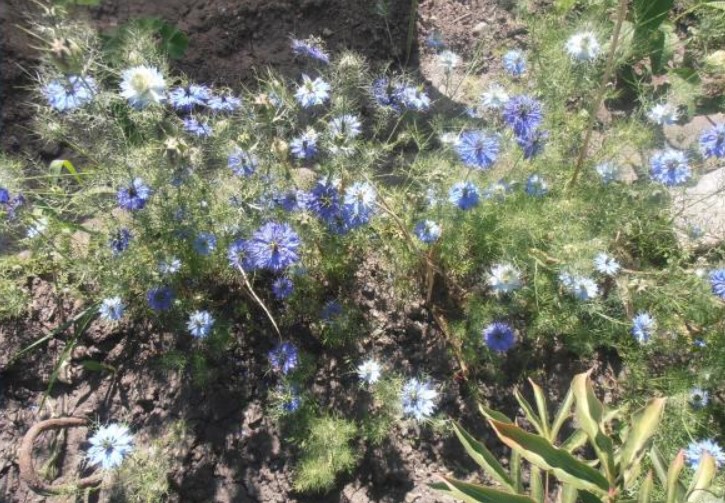
- Flowers are usually borne singly, but sometimes several may cluster at the top of the shoots. They come in shades of blue, white, pinkish, and, rarely, yellow.
- The fruits are multi-leaflets with black seeds, which in some species can be used as a spice.
Types and varieties of nigella
Below we will discuss the varieties of nigella in more detail.
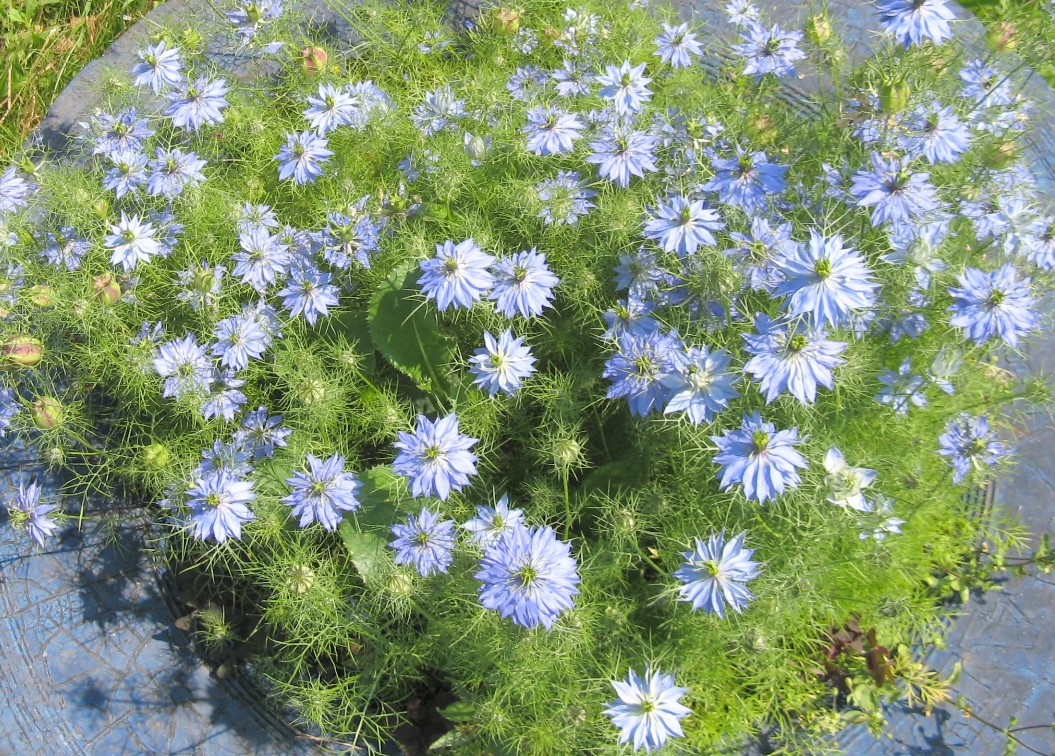
Field black cumin
An annual plant belonging to the genus Nigella. It features white or bluish flowers.
| Botanical name | Nigella arvеnsis |
| Description | The stem grows up to 50 cm tall, straight and branched. The leaves are narrow, 2 to 4 cm long. The flowers are large, up to 4 cm in diameter, and bluish or white in color. The fruit consists of an oblong leaflet with triangular black seeds. |
| Spreading | It is found in the Caucasus, Europe, Western Asia and North Africa. |
| Flowering time | June-July |
| Economic purpose | The seeds are used as a seasoning for dishes. |
| Fruiting | August |
Black cumin, or black cumin, or sedana, or Roman coriander (Nigēlla satīva)
A highly valuable plant from both medicinal and culinary perspectives, the oil and seeds are extracted from it. Black cumin oil is particularly prized today for its excellent healing properties.
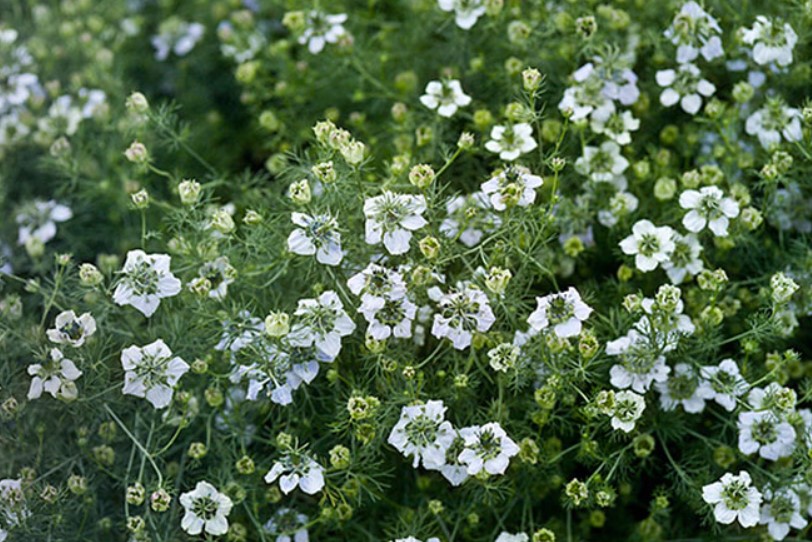
| Botanical name | Roman coriander, black cumin, sedana, kalonji, nigella sativa. |
| Description | Erect stems range from 10 to 40 cm in height with extensive branching. Leaves are linear, up to 3 cm long. Flowers are solitary, up to 3 cm in diameter, and bluish or white. Fruits are large, multi-leaflet-shaped. Seeds are tuberculate, triangular, and similar to onion seeds. |
| Spreading | Mediterranean, Southwest Asia, Balkan Peninsula, Crimea, Caucasus. |
| Flowering time | May-August |
| Economic purpose | It is considered a very valuable plant due to its high content of vitamin C and other useful substances. Preparation of essential oils, spices, seasonings, pickling spices, leaves and oil are used for medicinal purposes. |
| Fruiting | August |
Nigella damáscena
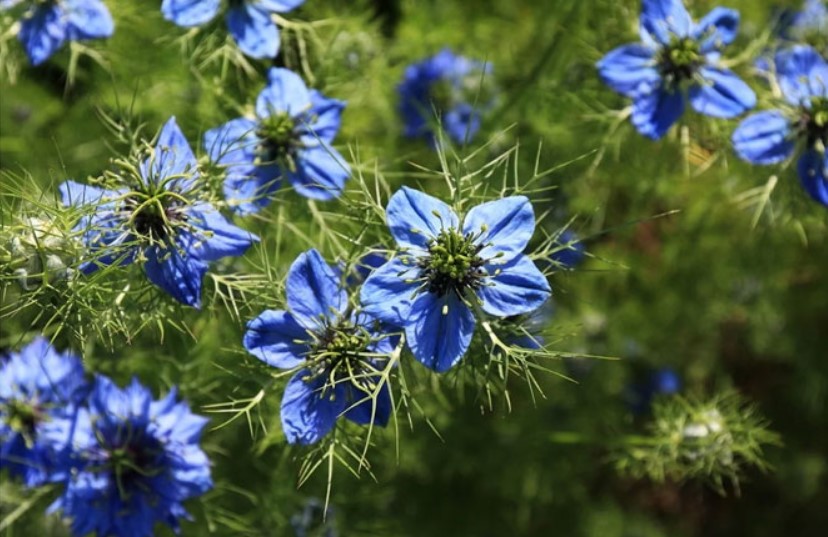
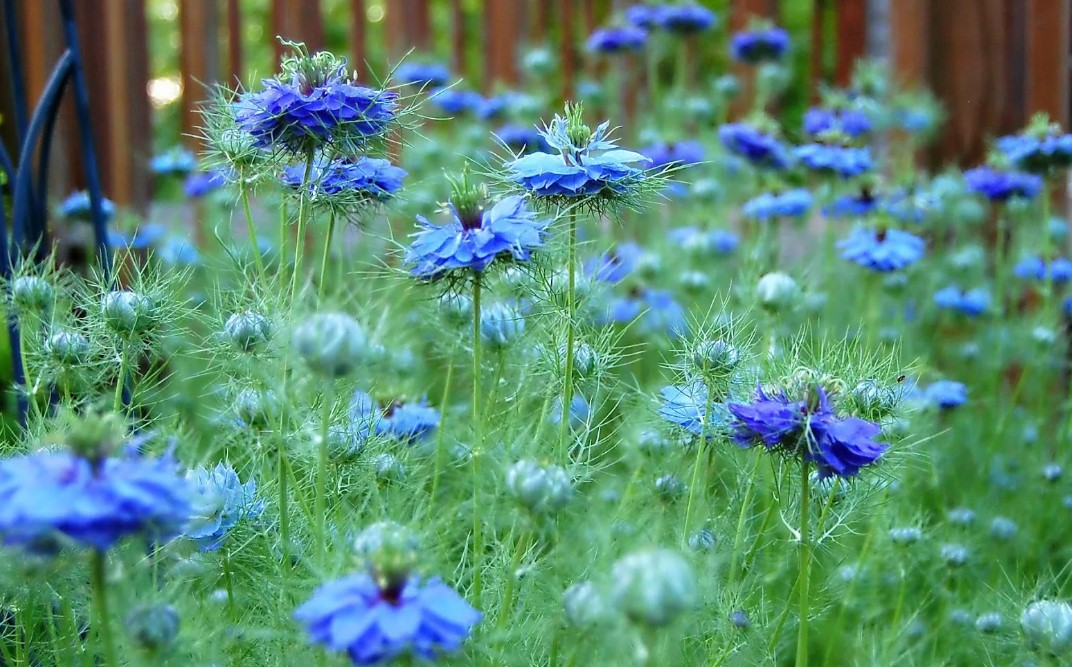
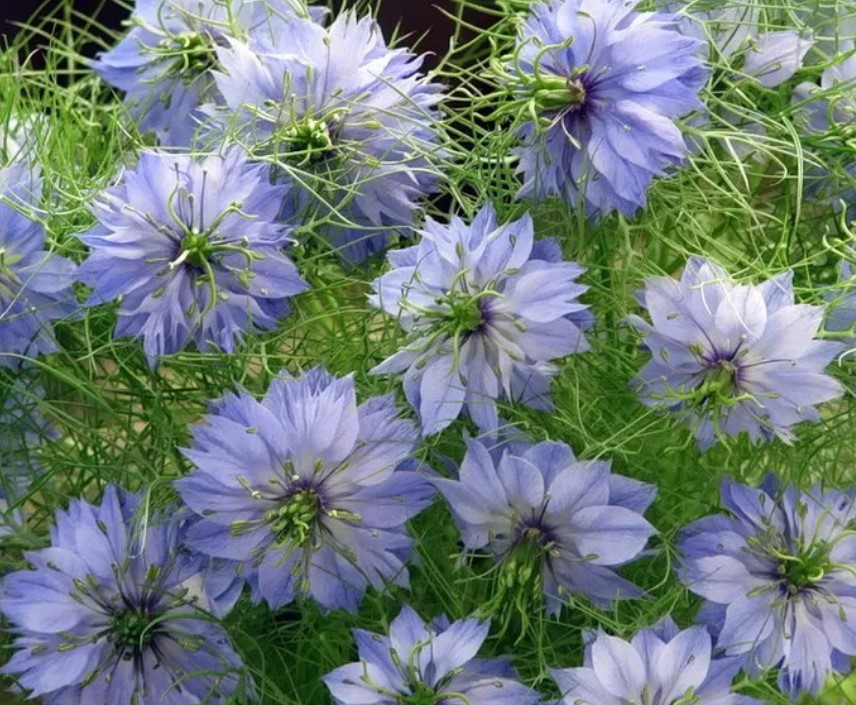
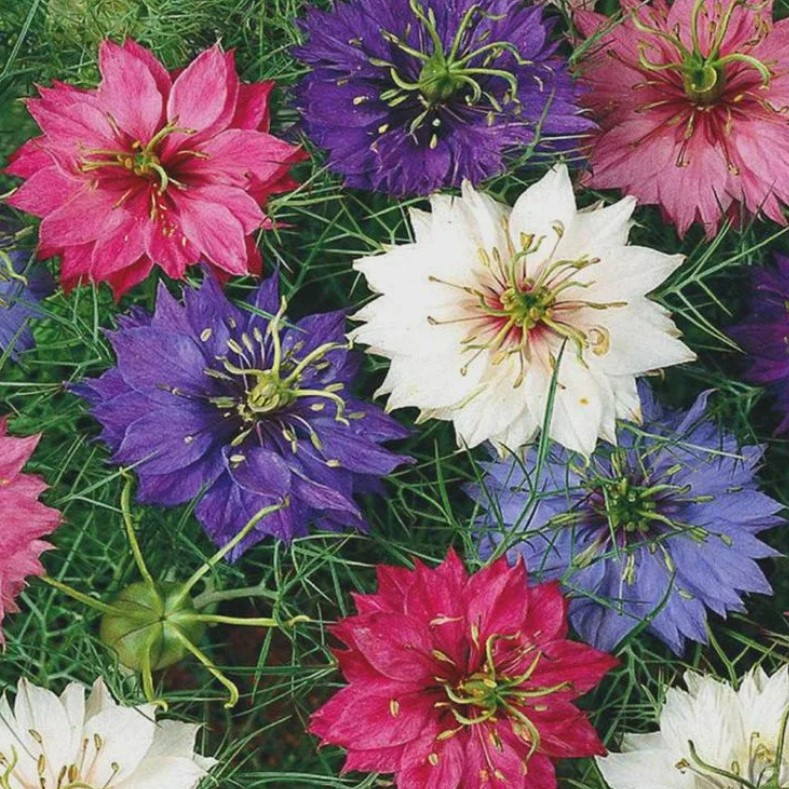
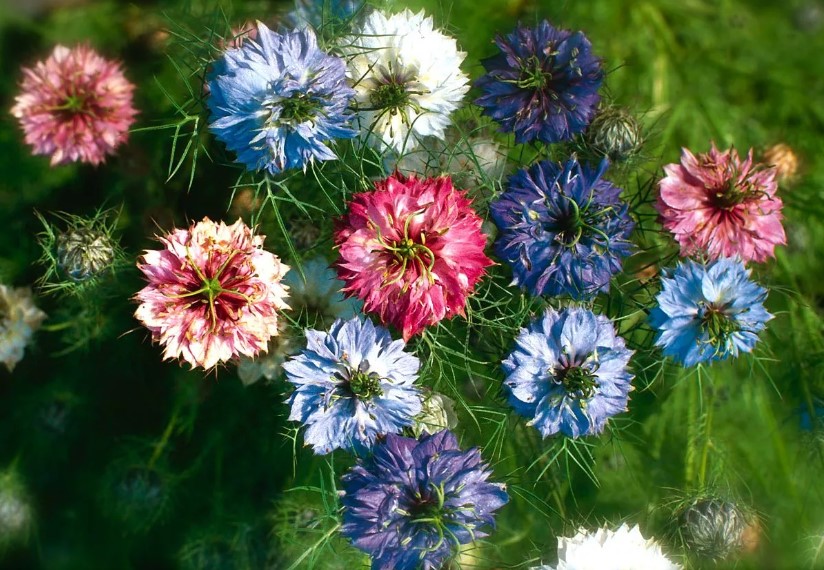
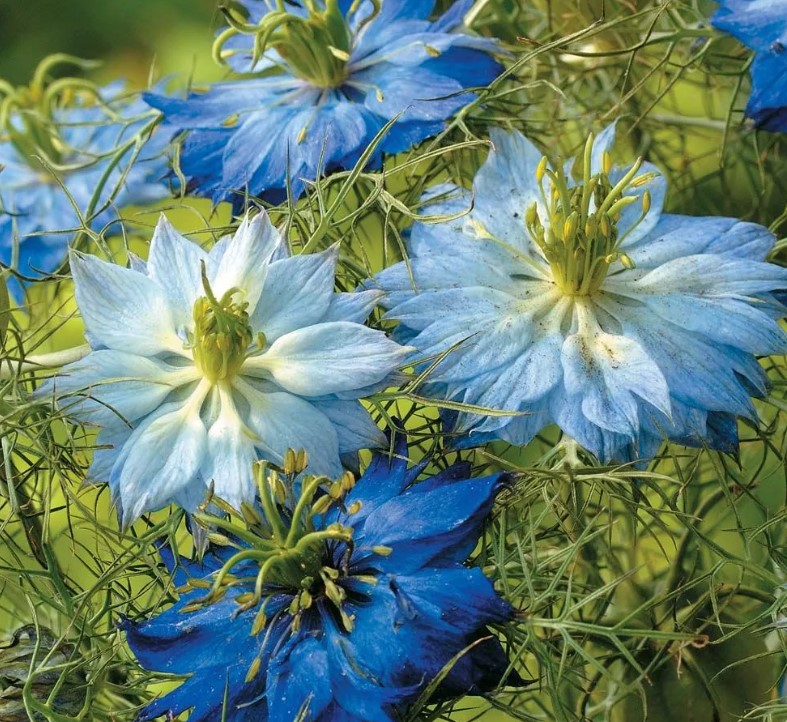
A very beautiful flower in various shades of blue, purple, and pink. Petal shape may vary depending on the variety. This plant makes a great addition to garden beds and mixed borders, offering a decorative appearance.
| Botanical name | Nigella damascena, Nigélla damáscena |
| Description | The appearance of the flower depends on the variety, the height of the shoots varies from 15 to 50 cm, the leaves are pinnately dissected, the color of the petals is pinkish, blue, lilac, and the edging of the petals can be smooth or double. |
| Spreading | Caucasus, Crimea, Mediterranean, Asia. |
| Flowering time | June-July |
| Varieties | Cambridge Blue – blue semi-double flowers and shoots up to 90 cm high.
Miss Jekyll – flowers can be white, pink, blue, shoot height 50 cm.
Persian Jewels – pink, blue, purple or white decorative flowers. Dwarf Judy Blue – plant height from 15 to 20 cm. Flowers are blue.
|
| Economic purpose | Flowerbed decoration, floral arrangements |
| Fruiting | August |
Eastern black cumin (Nigélla orientális)
The plant is not very decorative, so it is rarely seen in flower beds.
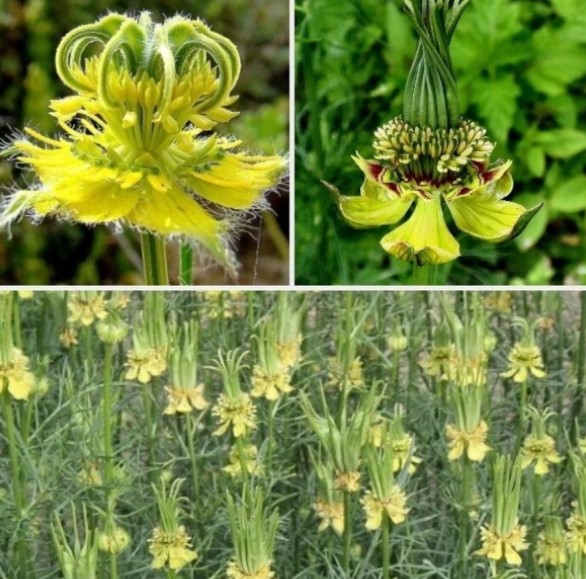
| Botanical name | Eastern nigella, Nigulla orientalis |
| Description | The stem is tall and bare, with sharply defined edges. The leaves are about 1.5 cm long. The flowers are predominantly yellowish, the fruits are flattened leaflets, greenish-yellow, and the seeds are ovoid. |
| Spreading | Caucasus, Asia Minor |
| Flowering time | June-July |
| Varieties | Transformer – small yellow flowers with a whimsical seed pod. They have a very decorative appearance. |
| Economic purpose | Flowerbed decoration |
| Fruiting | August |
Bukhara nigella (Nigella bucharica)
An endemic plant not found in our country, it grows only on the slopes of the Pamir-Alai Mountains in Central Asia.
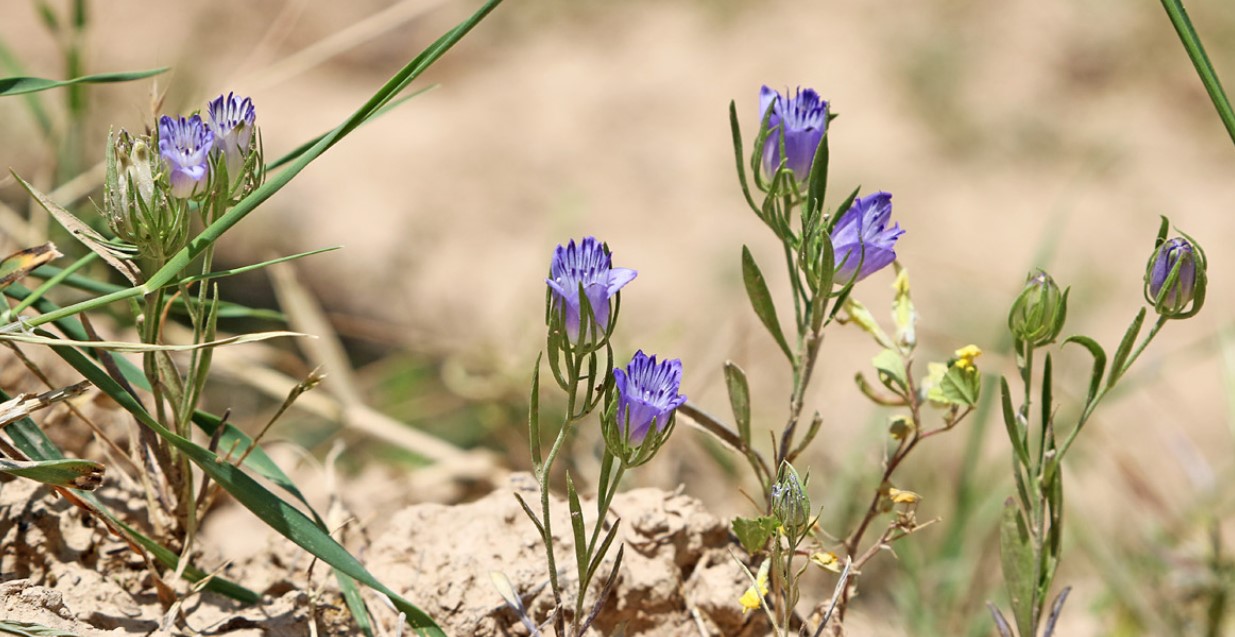
| Botanical name | Nigella bucharica |
| Description | The stem is simple and fairly tall, with entire lower leaves and palmately dissected upper leaves. The flowers are bluish, about 1 cm in diameter. The fruits are linear-oblong leaflets with brown seeds. |
| Spreading | Pamir-Alai |
| Flowering time | June-July |
| Economic purpose | Not used in the household |
| Fruiting | August |
Spanish nigella (Nigella hispanica)
Not the most popular type of nigella, it is distinguished by its spectacular flowers with bright, long stamens.
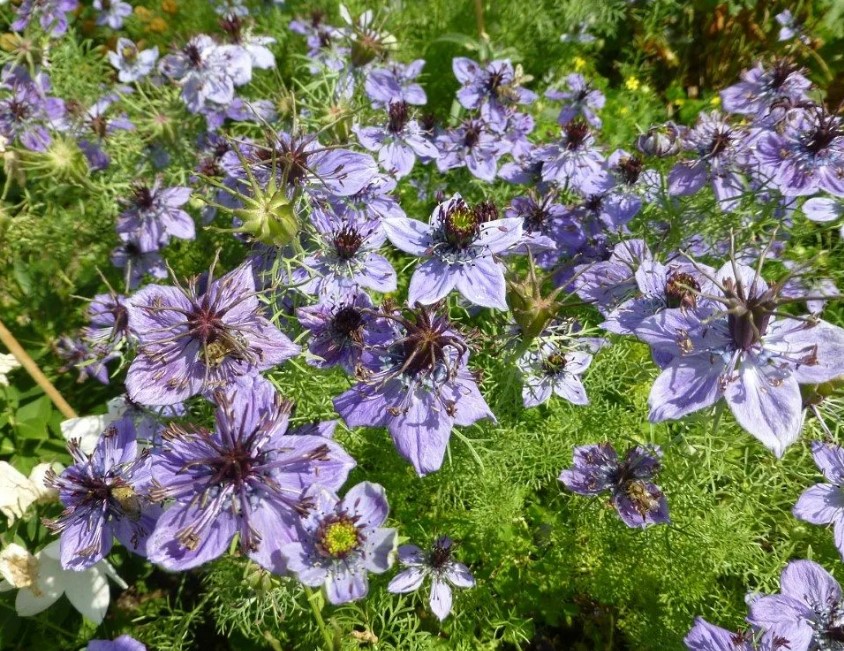
| Botanical name | Nigella bucharica |
| Description | The stem is simple and fairly tall, with entire lower leaves and palmately dissected upper leaves. The flowers are yellowish-white, approximately 1 cm in diameter. The leaflets are linear-oblong in shape and contain brown seeds. |
| Spreading | Southern Spain, Northern Africa |
| Flowering time | June-September |
| Economic purpose | It is planted in flowerbeds, along borders, and used for making bouquets. |
| Fruiting | August-September |
Nigella glandulifera
An endemic plant found in Turkmenistan and grown there in gardens to decorate plots.
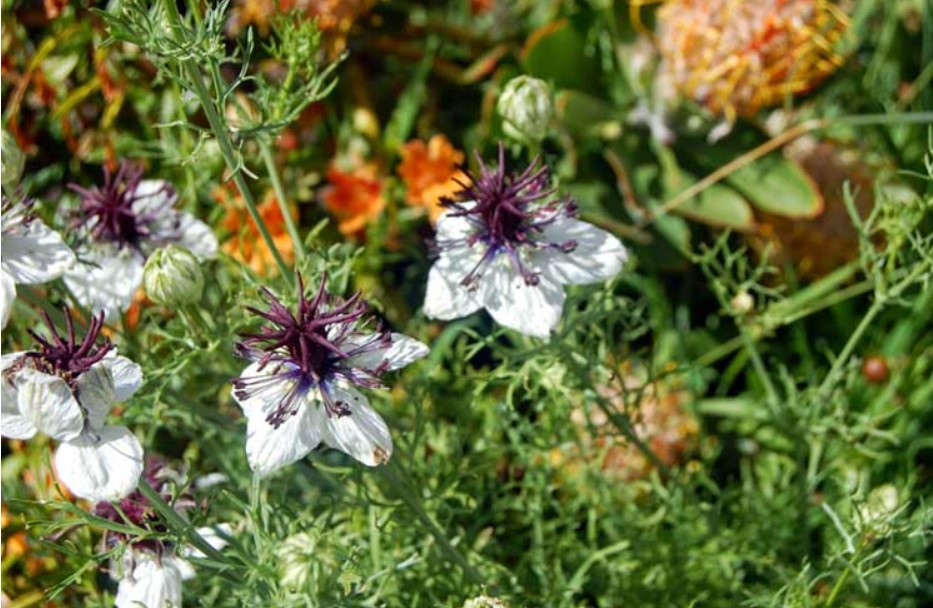
| Botanical name | Nigella glandulifera |
| Description | The green stem is 20 to 40 cm tall, with sparse branching but pronounced ribbing. The leaves are pinnately dissected, and the flowers are small and bluish. The fruits are swollen. The seeds are almost smooth. |
| Spreading | Turkmenistan |
| Flowering time | June-July |
| Economic purpose | Flowerbed decoration |
| Fruiting | August-September |
Nigella integrifolia
It grows as a weed in rocky areas and in the steppes of Iran and Central Asia. It has no ornamental value.
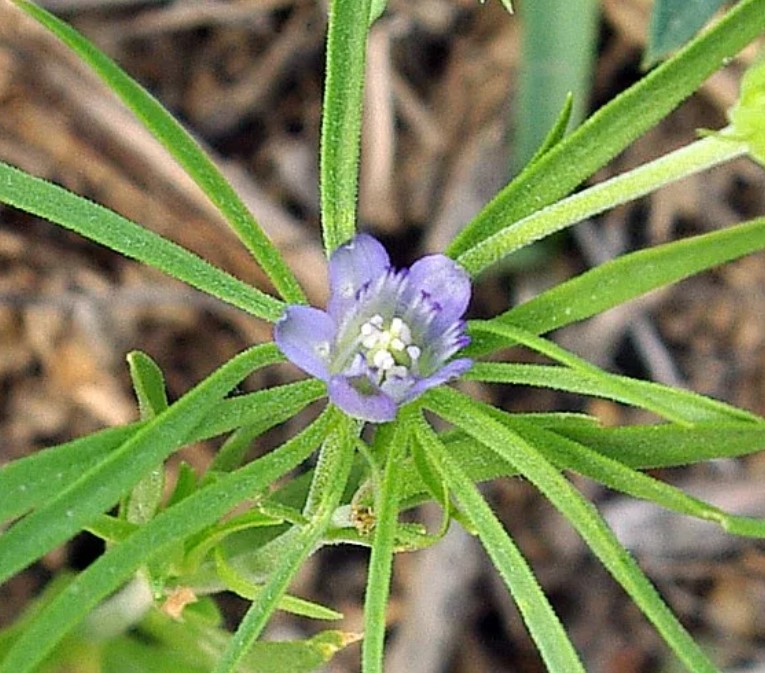
| Botanical name | Nigella integrifolia |
| Description | The stems are branched or simple, up to 25 cm tall. The flowers are small and bluish. The fruits are up to 6 mm tall with triangular-flattened seeds. |
| Spreading | Iran, Central Asia |
| Flowering time | June-August |
| Economic purpose | No |
| Fruiting | August-September |
Nigella oxypetala (Nigella oxypetala)
This variety has no ornamental or other value. It grows as a weed on the steppe slopes of Crimea, the Caucasus, Turkey, Libya, Iraq, Iran, and Syria.
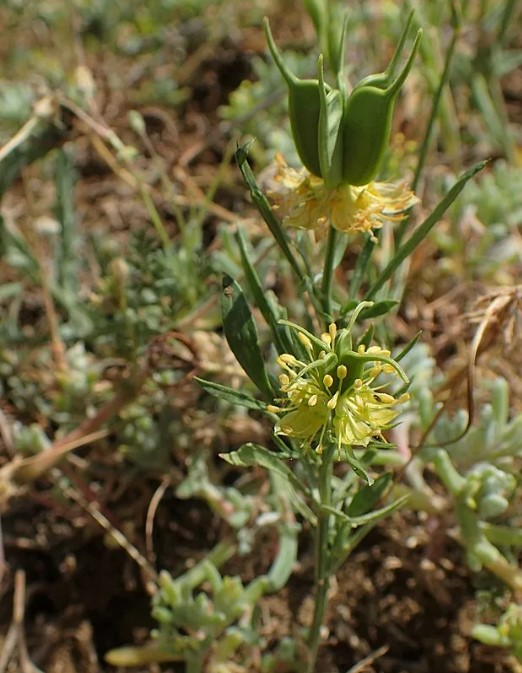
| Botanical name | Nigella oxypetala |
| Description | The stems are heavily ribbed, medium-height, and not very foliated. The leaves are pinnately dissected. The flowers are small and light-colored. The fruits are flattened leaflets with flattened seeds. |
| Spreading | Crimea, Caucasus, Iran, Iraq, Syria, Türkiye, Libya. |
| Flowering time | June-August |
| Economic purpose | No |
| Fruiting | August-September |
Nigella segetalis (Nigella segetalis)
An annual weed found in Russia only in the Rostov region. It is not used for ornamental purposes due to its rapid spread and small, inconspicuous flowers.
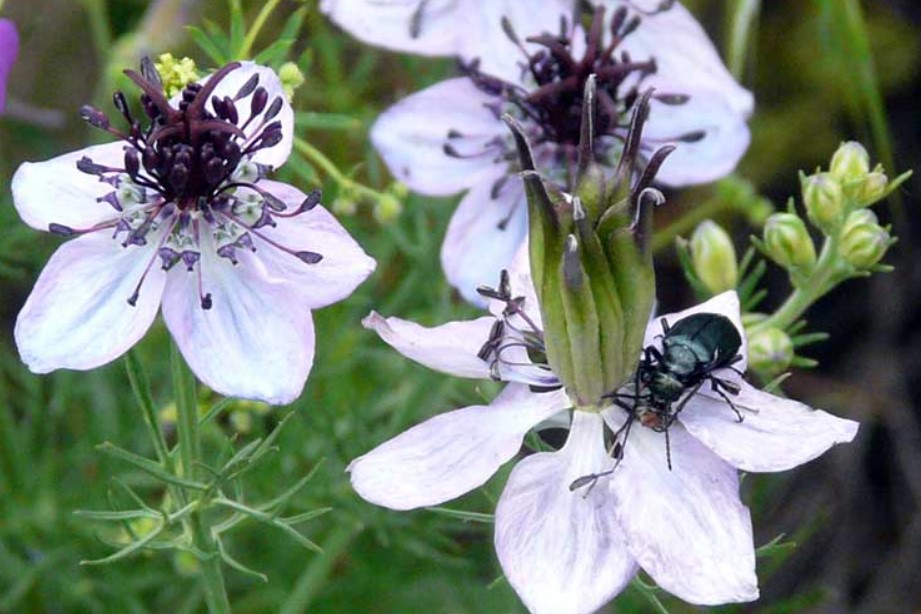
| Botanical name | Nigella segetalis |
| Description | The stems are simple, straight, and virtually devoid of branching. The flowers are small, whitish or bluish, and the leaflets are narrowly cylindrical. |
| Spreading | Crimea, Caucasus, Rostov region (Russia), Türkiye, Iran. |
| Flowering time | June-August |
| Economic purpose | No |
| Fruiting | August-September |
Nigella planting and care chart
Nigella mostly grows as a weed and isn't particularly difficult to cultivate. However, some varieties are more demanding and require more careful soil quality and care, so it's important to understand the specifics of planting nigella.
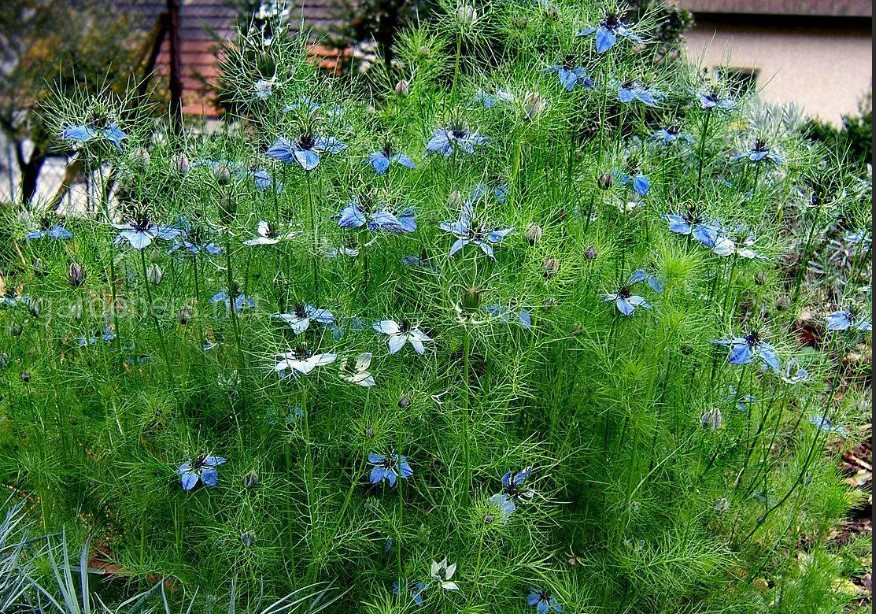
| Landing | Seeds can be sown in the ground before winter or in the spring, in mid-May. Nigella seedlings are sown in March-April for transplanting outdoors in late May. |
| Growing in a pot | Nigella is suitable for pot growing; however, pinching the plants to limit growth is necessary. It's important to monitor watering to ensure the soil in the pot doesn't dry out or become overly soggy. |
| Bloom | It starts in June and lasts until August-September. |
| Lighting | Prefers well-lit flower beds, needs bright light |
| Priming | The soil needs to be light and moderately moist. |
| Watering | Watering is carried out as the soil dries out to a depth of 10 cm; the plant does not like either drought or over-watering. |
| Weeding | Regular |
| Mulching | It is not advisable to mulch the surface of the flower bed. |
| Top dressing | Before planting, organic fertilizers are added; during the flowering period, universal additives or potassium-phosphorus fertilizers are applied. |
| Seed collection | Harvesting is done in August-September; they remain viable for up to three years. Before storing, they must be thoroughly dried to prevent rotting. |
| Reproduction | Seeds |
| Diseases | Powdery mildew |
| Pests | Aphids, spider mites |
Nigella from seeds
Nigella is an annual plant that reproduces by seed. Each season, the plant produces enough seeds to be used for subsequent planting. Nigella is sown differently in different regions—directly into the ground or first as seedlings, depending on weather conditions.
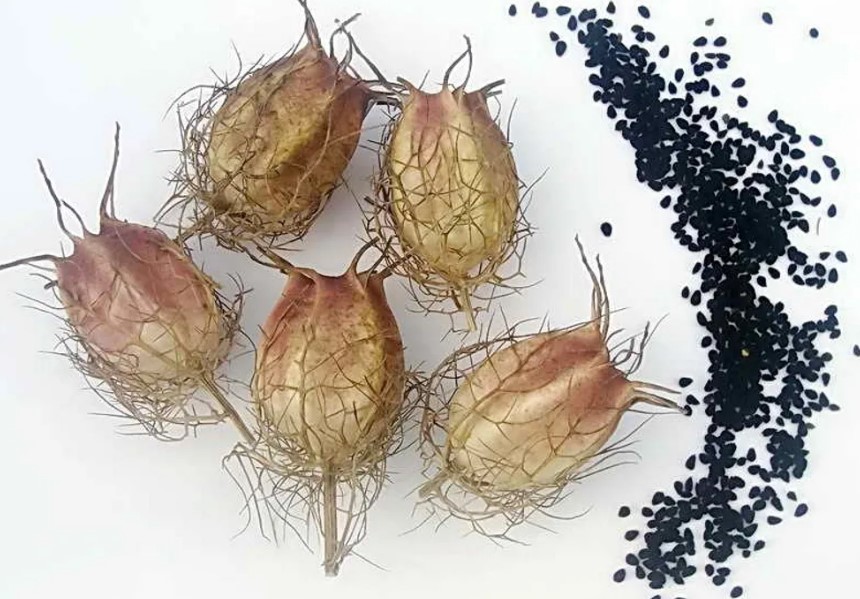
Sowing in open ground
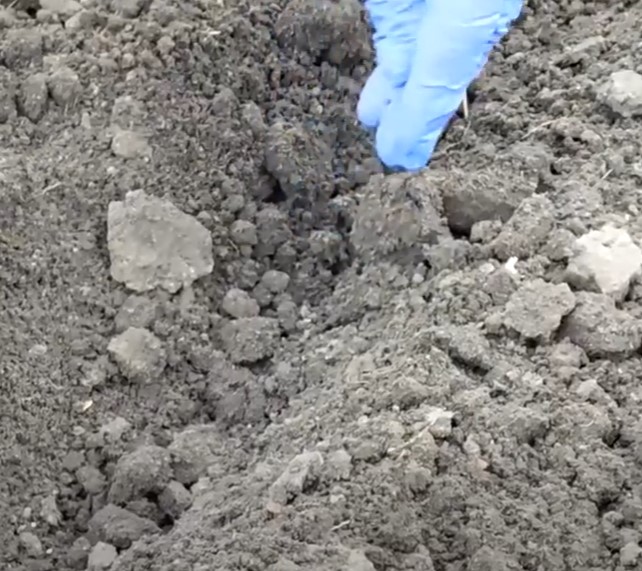
Nigella can be sown in open ground before winter, making furrows 20 mm deep. It's important to avoid a thaw or heavy rain, otherwise, germination will be extremely limited.
In some regions, seeds are sown outdoors in spring, in the second half of May, but the plantings must be covered with plastic at night. It's best to plant nigella directly in its permanent flowerbed, as it doesn't transplant well.
Sowing for seedlings
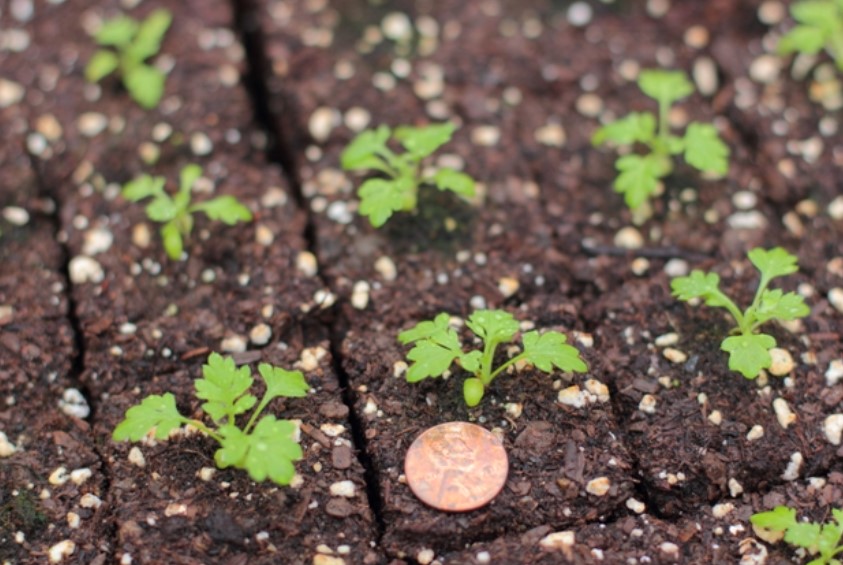
Flower seedlings are sown in March; if the seedlings will be kept in a greenhouse, this can be done in April. Fill the selected container with a good potting mix, place the seeds in furrows 20 mm deep, cover with soil, and water with a spray bottle. Cover the container with plastic wrap until the first shoots appear. Typically, the first seedlings begin to emerge within two weeks, and when they have two true leaves, they can begin transplanting. It's best to transplant nigella into a peat pot so that you can later plant the plant in a permanent flowerbed.
Planting Nigella in open ground
Nigella grows relatively quickly; if you plant the seeds in March, you can plant flowers as early as May. Choose a well-lit area of the garden for the flowers, as they require sunlight. The soil in the flowerbed should be loose, nutritious, dry, and calcareous or neutral in pH.
The soil is dug, making holes slightly larger than the container the seedlings are in. It is recommended to leave a distance of 15-20 cm between the plants. Watering is then carried out, but mulching the bed is not recommended, as nigella does not like it. After about 40 days, you will be able to admire the first flowers.
Caring for Nigella in the Open Ground
Caring for nigella is quite simple and includes standard procedures:
- Watering. Water as the soil dries to a depth of 10 cm; otherwise, the plant will experience excess moisture, increasing the risk of rot. Nigella also does not tolerate drought well, so it's important to ensure the bed is watered regularly, taking into account weather conditions.
- Fertilizers. Flowers prefer well-fertilized soil; it's best to prepare the bed in the fall by adding organic matter. During the active growth season, you can feed the plants with potassium-phosphorus or any other complex fertilizer only during the flowering period; this will be quite sufficient.
- Weeding. Since nigella doesn't like mulched beds due to its root feeding habits, regular weeding is necessary to avoid competing with the flowers for light, water, and oxygen. Furthermore, weeds attract various pests and increase the risk of disease.
Reproduction of Nigella
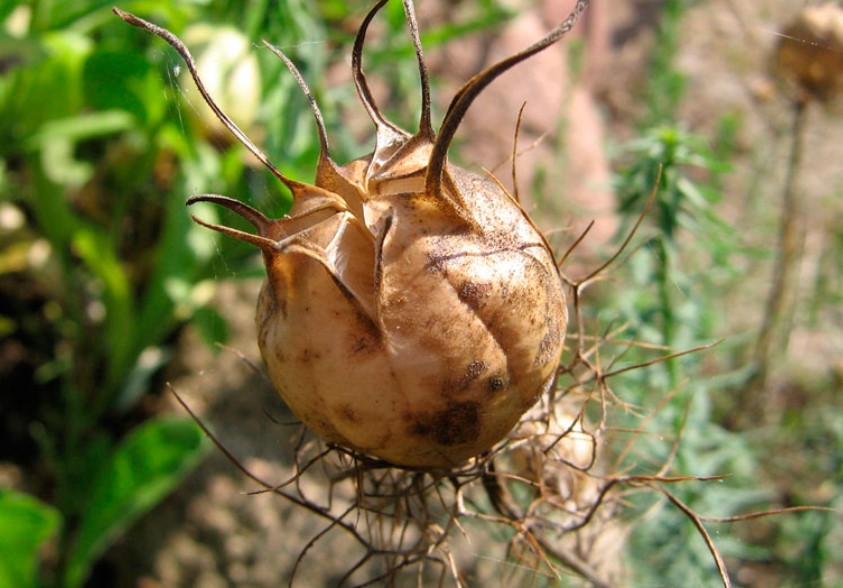
Nigella propagates exclusively generatively, using seeds. The flowers often self-seed, but many gardeners prefer to choose their own planting locations, so at the end of the season they harvest the fruit pods and prepare seeds for the following season. They can be planted using either seedlings or direct seedlings, depending on the region.
Pests and diseases of nigella
Nigella is quite resilient. In many regions and countries, it grows as a weed and is disease-free. However, ornamental varieties can be susceptible to powdery mildew. To prevent this, follow proper watering practices. At the first sign of disease, spray with fungicides at intervals of 7-10 days.
When moisture is insufficient during hot summers, plants are susceptible to spider mite attacks, which suck the cellular sap from shoots and leaves. To combat this pest, you can use products such as Aktarin, Fitover, Actellic, Kleschevit, and others.
Aphids sometimes appear on shoots. This often indicates the presence of an anthill nearby or inadequate weeding. Products such as Biotlin, Aktara, and others can help combat aphids.
Collecting Nigella Seeds
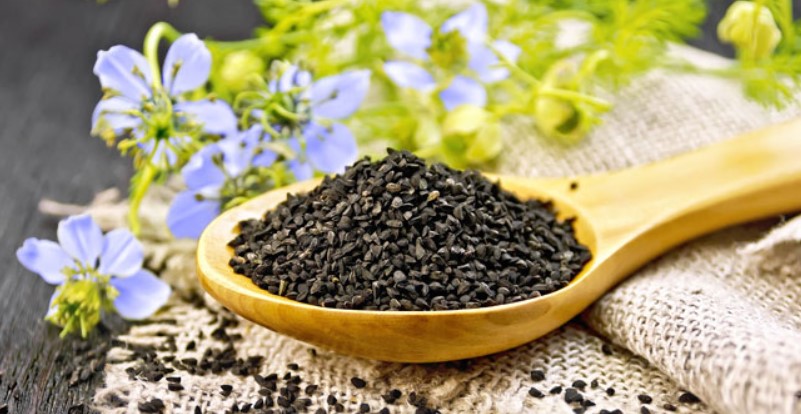
Seed ripening typically occurs in the second half of August to early September. The seed pods are easy to spot: the petals fall off, and the seed pods appear in the place of the flower. When more than half of the pods have formed on all the nigellas in the flowerbed, they are ready to harvest. The stems are cut, tied into bunches, and placed in a dry, well-ventilated area. You can wrap the pods in gauze and hang the plants upside down—every gardener chooses whichever method is most convenient for them. Once the pods are dry, shake them out and place the seeds in canvas bags, or sow them immediately before winter for the current season.
Nigella in the landscape
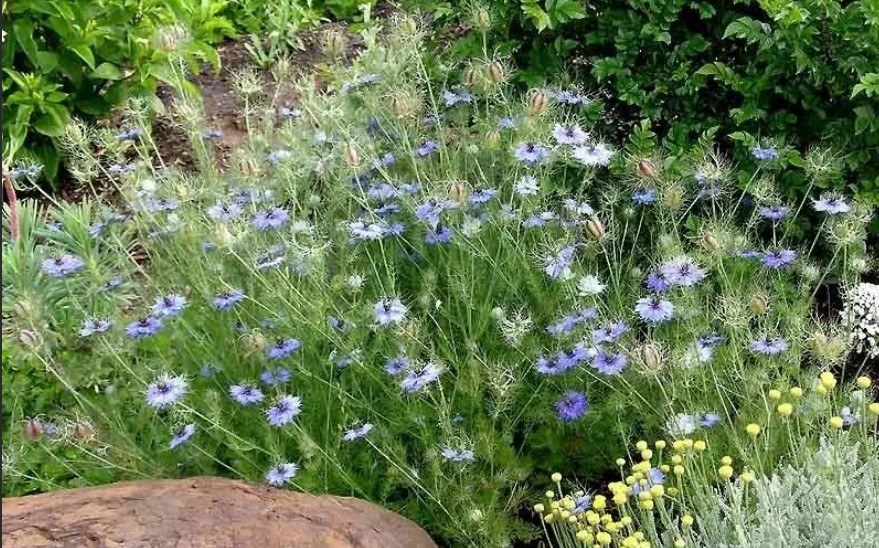
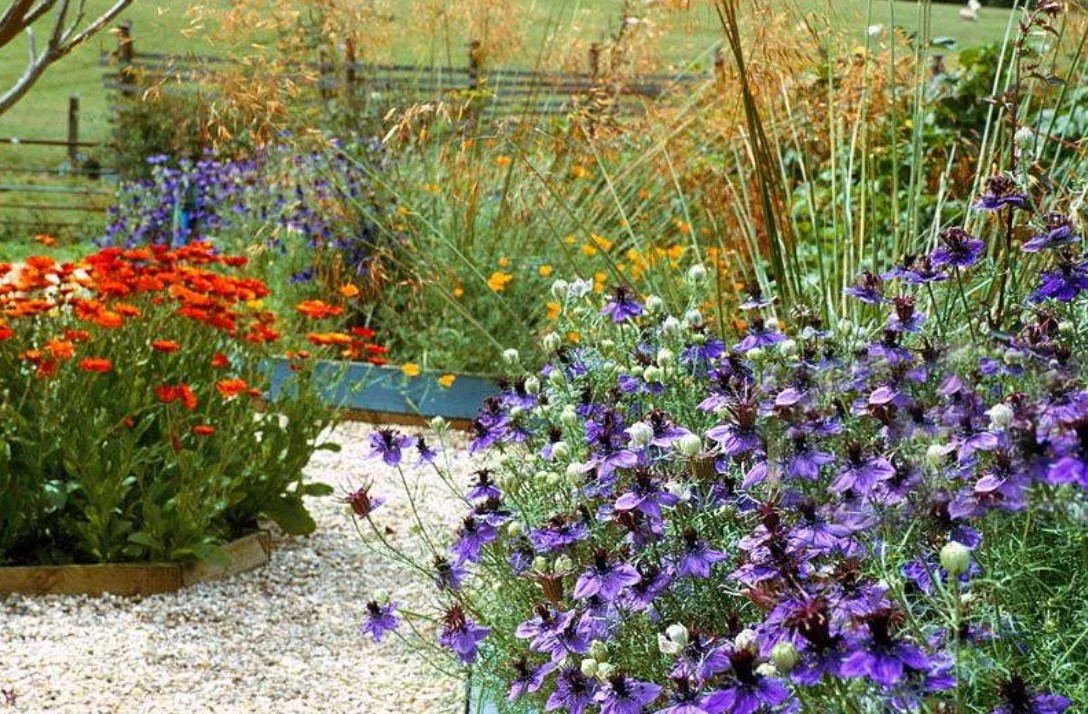
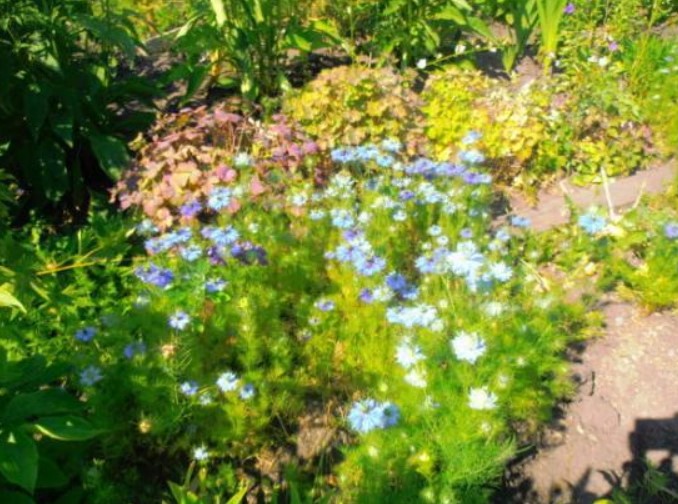
The most common flowerbed plant is the Damask Nigella, whose flowers and leaves create a highly decorative, airy appearance. Nigella looks stunning framed by large rocks, boulders, and stone borders. It complements flower beds with poppies, cornflowers, pansies, geraniums, marigolds, and iberis.
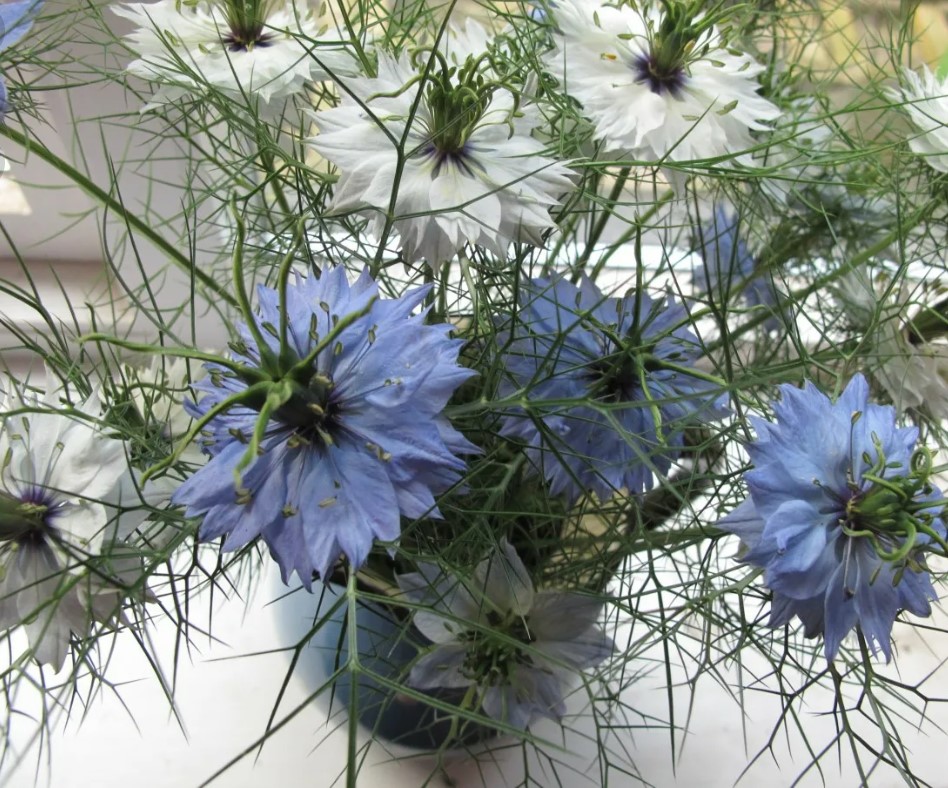
Some varieties and cultivars can be cut and placed in a vase after flowering. Their interesting seed pods make them a perfect addition to any floral arrangement.
Thanks to their ability to self-seed, gardeners do not need to replant their plants every year; the flowers themselves produce sprouts from new seeds every spring.
Uses of Nigella
In addition to its use in landscaping, nigella is widely used in cooking and medicine. Black cumin, the seed of the plant, is credited in folk medicine with numerous properties, including immunomodulatory, fungicidal, antibacterial, and wound-healing.
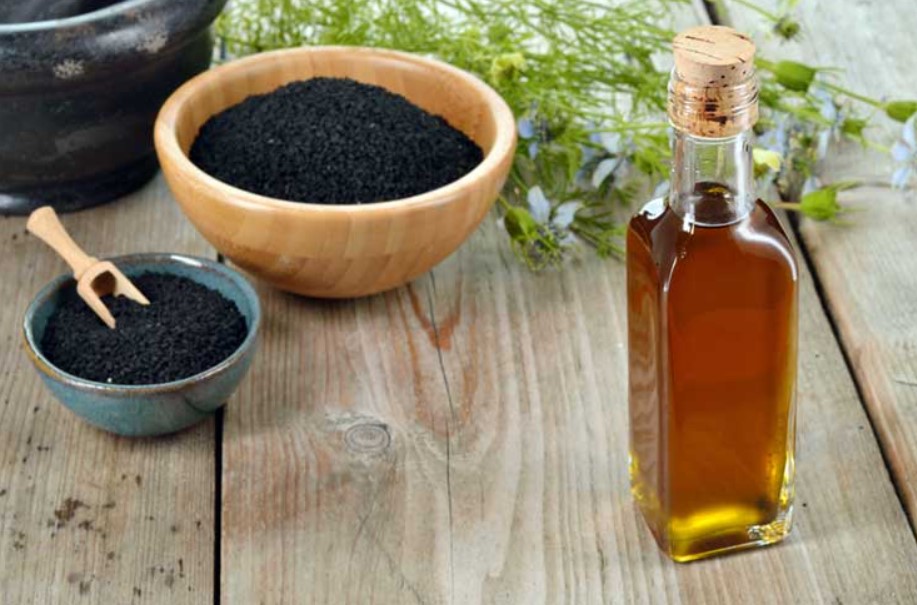
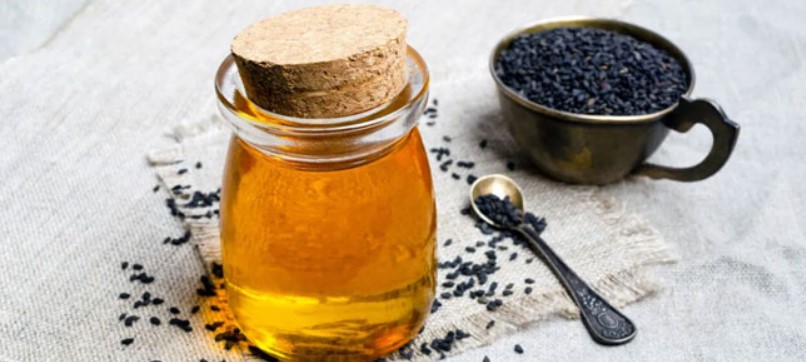
The seeds are pressed to extract oil and used in cooking as a flavoring. The seeds themselves are often used as a seasoning for various dishes.
Caraway can be found in bread, salads, dumplings, soups, baked goods, etc. In some countries, nigella seeds are used as a substitute for black pepper.
 The leaves are also edible and contain a large amount of vitamin C, so they can often be seen in various salads.
Recipes with Nigella
Several healthy drinks and dishes can be prepared from Nigella sativa:
- Tincture. Fresh seeds and vodka are used in a 1:5 ratio. The tincture is stored in a dark place for a week, then refrigerated and used to treat respiratory ailments at a dose of 10-15 drops in the morning with food.
- Tea: Pour 200 ml of boiling water over 1 gram of seeds and let steep for 15 minutes. This drink has a diuretic, laxative, and choleretic effect on the body, so drinking it in large quantities is not recommended. For an antiparasitic effect, drink 2 liters of this tea, followed by spicy foods (radishes, onions, peppers).
- Flatbreads. Mix 150 ml of boiling water and 150 g of flour, form the dough into a ball, and refrigerate for 10 minutes. Then add a tablespoon of caraway seeds, knead the dough thoroughly again, form into flatbreads, and fry them in a small amount of vegetable oil in a frying pan until golden brown.
Contraindications for the use of nigella
Nigella, like any traditional medicine, has contraindications for use:
- Pregnancy and lactation.
- Thrombophlebitis.
- Ischemic heart disease.
- Gallstone disease.
- Acute gastritis.
Black cumin is also prohibited for people who have ever had an internal organ transplant, because nigella activates the body's own immune system, which can begin to reject a foreign object from the body.
Gardeners' Reviews of Nigella
I would never have guessed that these flowers have a completely different official name. I remember from childhood, they grew spontaneously in my grandmother's garden, and we called them "disheveled lady" or "maiden in green." True, the color of the blooms themselves was always the same—light blue or blue.
It was later that I learned that there are many common names for this unusual flower, because anything that comes to mind sticks to it. And indeed, it evokes a variety of associations. In English, it's "love in the mist."
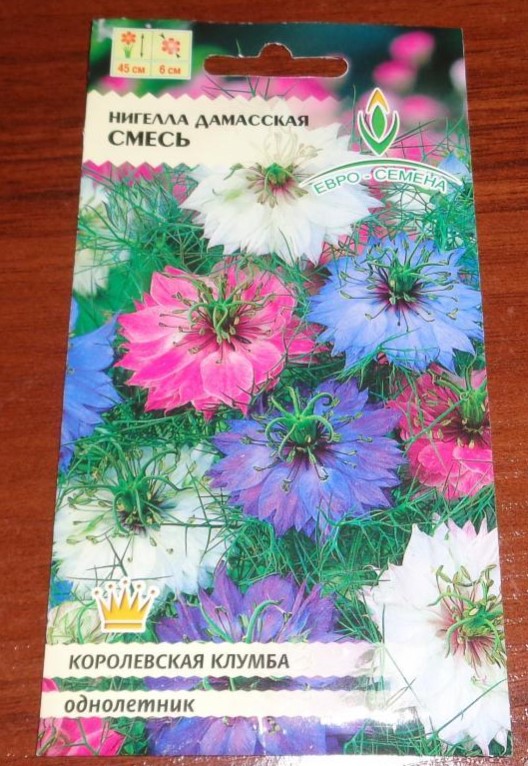
In fact, it's nigella, and its seeds have been available for sale for a long time. We tried sowing "Persian Jewels" from a Russian garden and "Damascus Mix" from Euro-Seeds, but in all those years, we only got one white flower, and never a pink one. Even then, the white ones were very rare; they simply degenerated. But the flowers are unique and will complement any bouquet.
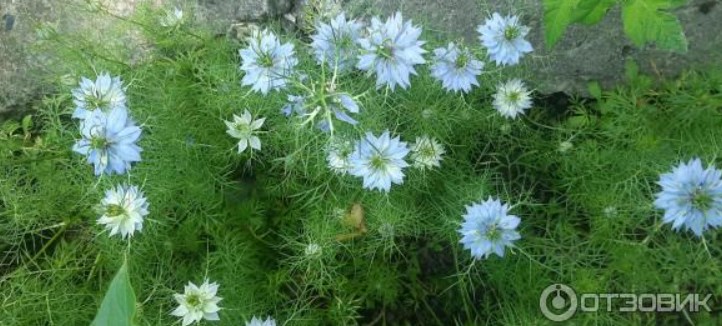
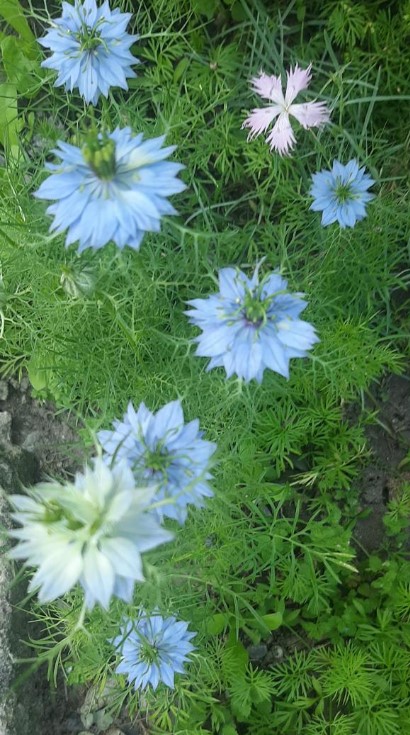
Hello everyone! Today I'd like to tell you more about my royal flowerbeds, which delight me with their tenderness and are called "Nigella." They're also called "nigella" because their seeds are truly black, like onions. I became acquainted with these flowers a long time ago. They're considered annuals, but they ripen and scatter their seeds on their own, and in the spring, they sprout naturally wherever they like. I don't mind, and they grow little by little in every corner of the room, and when combined with other flowers, they look even more beautiful.
Here is the tenderness of summer and I myself gave them the name “Chintz Summer”. Here I planted them in the spring.
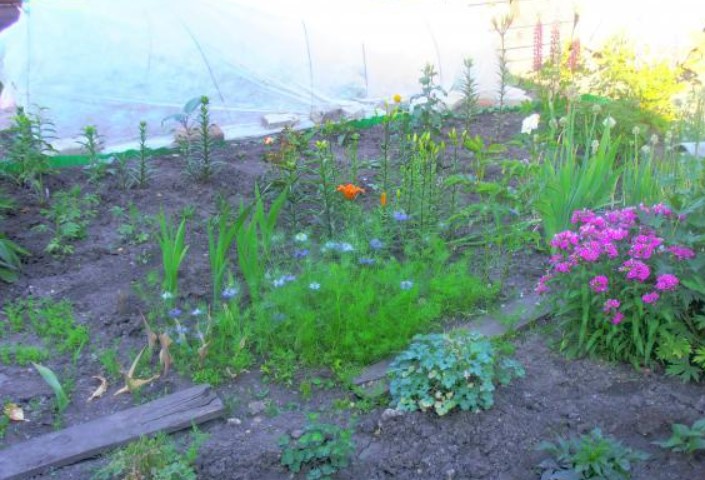
here is a flower bed, here there are already self-seeding gladioli and lilies
This was also planted in the spring. In the garden, only blue and tawny blue ones grow; they thrive in a sunny spot, receive moderate watering, and appreciate fertilizing. They reach a height of 40-45 cm and produce double flowers with patterned edges, 5-6 cm in diameter.
I recently bought a pack of seed mix and there are already red, white, and pale pink ones that will fill my royal flower beds.
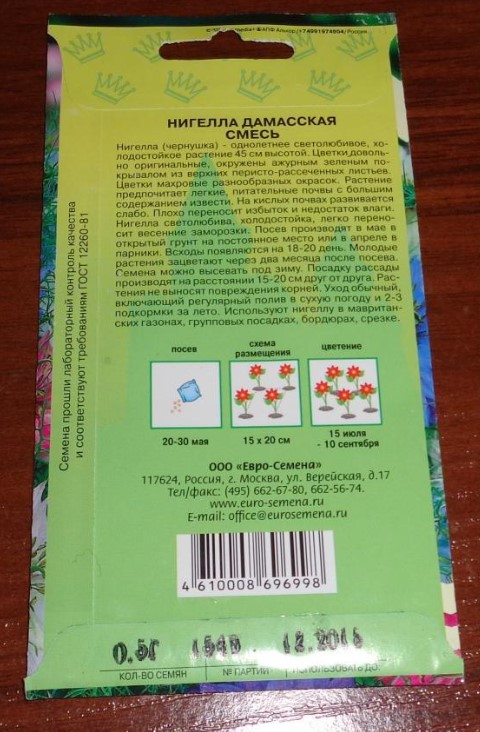
The back of the package with the description says to sow in late May in open ground or in April in a greenhouse. I plant after the snow has melted, so to ensure lush flowering, I need to sow less frequently. They're easy to care for and look beautiful when cut. Nigella seeds are easy to collect; after flowering, capsules appear, and when they rattle, the seeds are ripe. Plant them in your garden; you won't regret it and give yourself and your loved ones a summer of chintz.
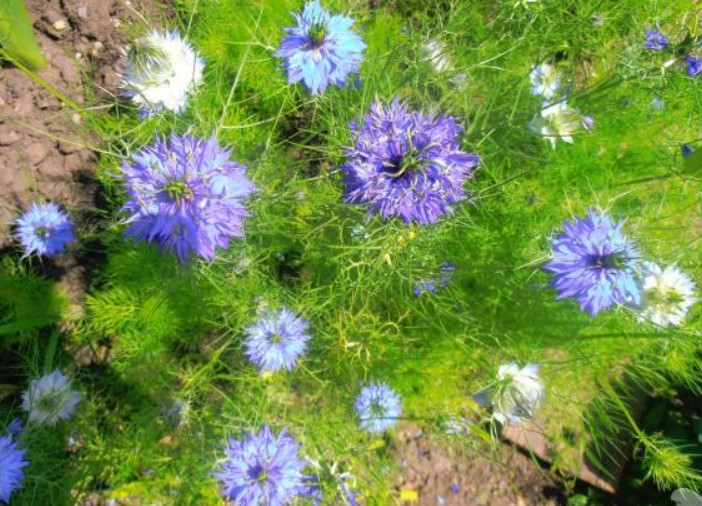
Nigella seeds have a wide variety of culinary uses, but are particularly characteristic of Indian cuisine. They add a piquant and pungent flavor not only to meat (usually lamb) or fish dishes, but also enhance the flavor of vegetarian vegetable dishes of Southern and Northern India. They are used as a seasoning for legume dishes, added to breads and pastries, to flavor jellies, mousses, and ice cream, dipped in batter before deep-frying, and incorporated into a variety of chutneys and masalas. Indian chefs typically fry the seeds in mustard oil, which significantly enhances their aroma and flavor. Nigella seeds are an ingredient in the popular Indian mixture "panch phoron," which is used primarily for meat dishes in West Bengal, Sikkim, and Bangladesh, and for vegetarian dishes in Southern India.
In the Middle East (especially Turkey), nigella is sprinkled on baked goods, like poppy seeds. For example, Sardinian chefs believe that nigella imparts a distinctive flavor to sardines, the fish that gives their native island its name. Nigella is also known in Central Asia, where its seeds are called "sedana." In Kyrgyzstan, nigella flavors flatbreads and tea, in Uzbekistan, cold colostrum soup, and in Russia, its seeds were once used in sauerkraut, pickled cucumbers and watermelons, and were also added to baked goods.
Nigella is used as a spice for pickling cucumbers, watermelons, and cabbage, as well as for flavoring buns, crispbreads, pretzels, and other sweets. The seeds were once used medicinally, especially in the East; they are used to protect woolen clothing from moths. It is a good honey plant.
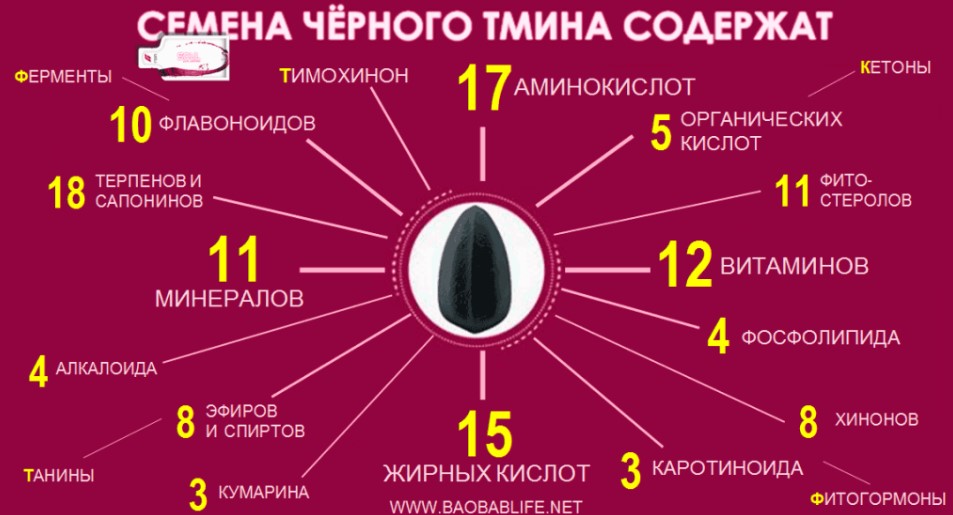
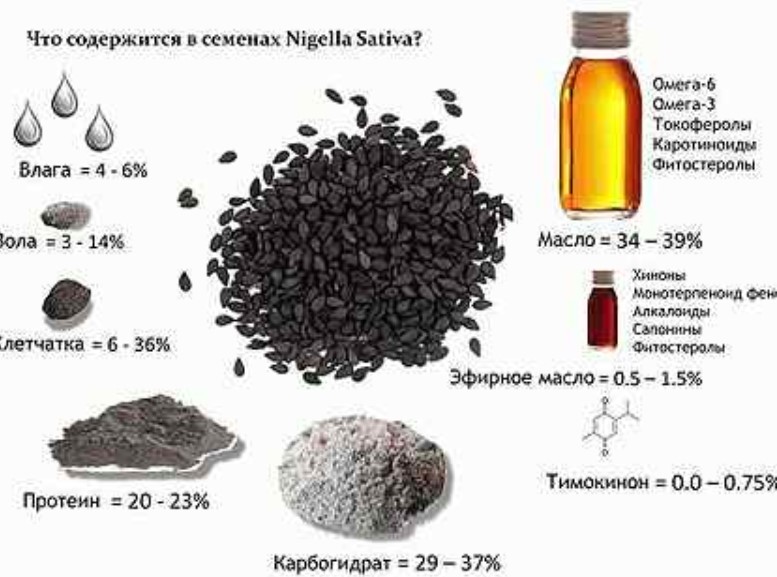
The seeds contain 0.4-1.5% essential oil and up to 40% fatty oil.