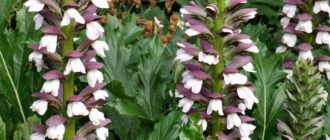
Evening primrose (Hesperis) is a genus of biennial and perennial plants belonging to the Brassicaceae family. These herbaceous plants are native to the Mediterranean, Europe, and Central Asia.
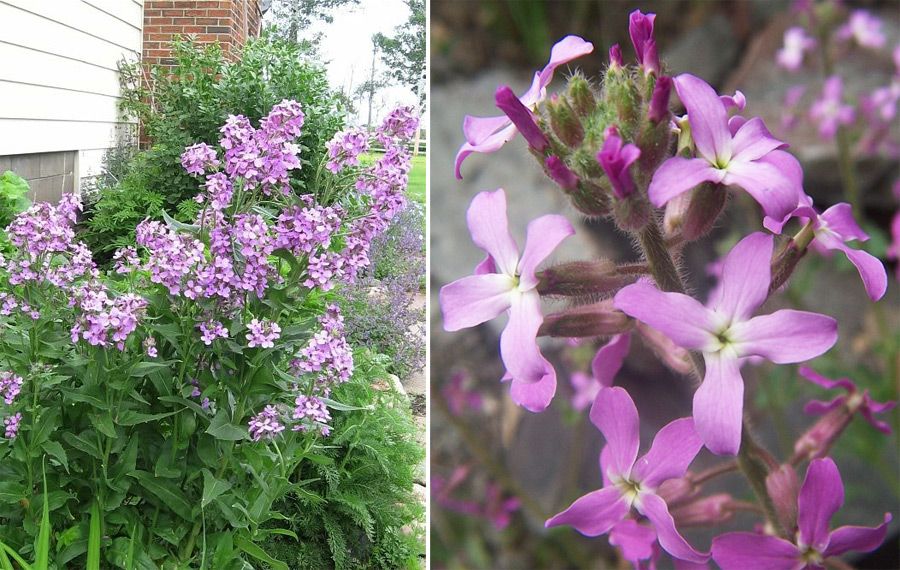
Popular ornamental flowers have a pleasant aroma and several names: night violet, matron's evening primrose.
Description of the Night Violet
The plant resembles phlox with a branched, straight stem about 80 cm long. The foliage is silky-hairy, entire or pinnate.
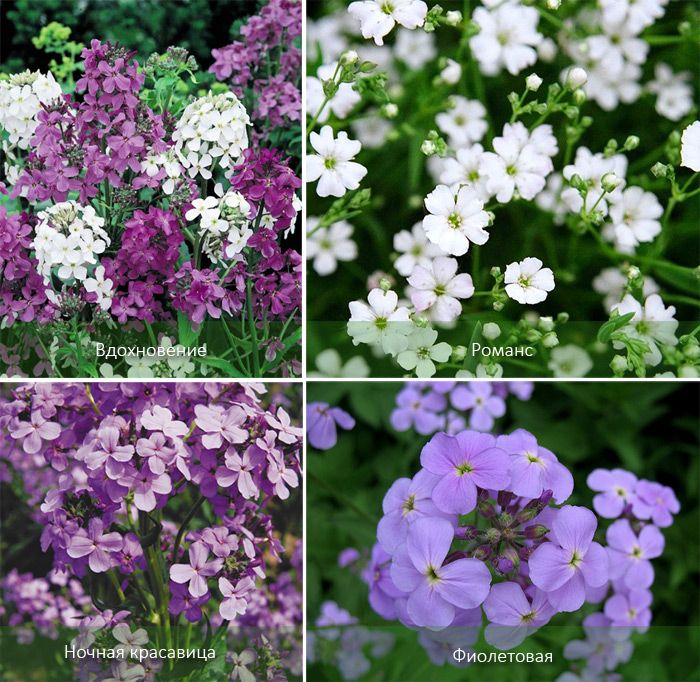
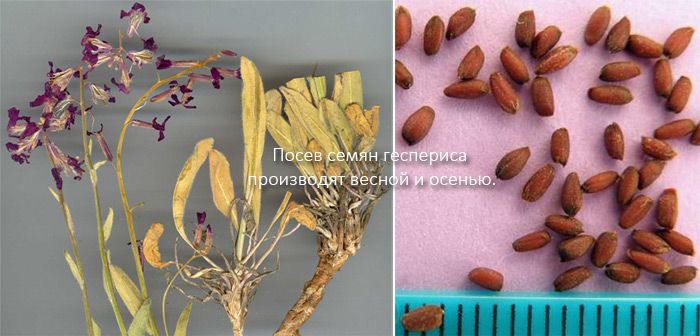
The small, single or double flowers are gathered in a paniculate inflorescence, in shades of lilac, white, and purple. They bloom in late May and last throughout the summer. They then produce a pod-shaped fruit containing brown seeds that remain viable for two years.
Types of vechernitsa
| View | Description | Flowers |
| Purple | Prefers loose soil. Sow directly into the soil. | Purple 2 cm, long lasting aroma. |
| Romance | Biennial. | White, they emit a pleasant smell at night. |
| Inspiration | Branched, blooms the following year after planting from seeds. Grows about 90 cm. Frost-hardy. | Lilac, snow-white, purple. |
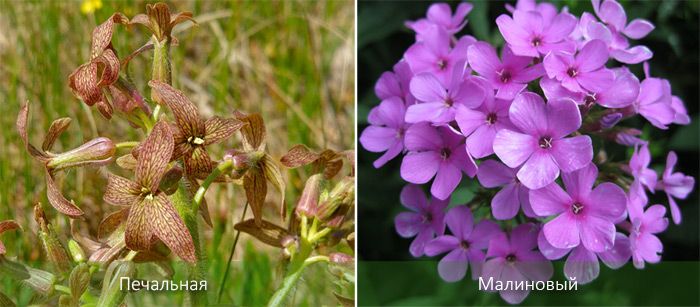
| Raspberry | They reproduce by self-seeding. | Cherry. They emit a fragrant aroma at night. |
| Night beauty | The most fragrant variety. 50-70 cm. Winter-hardy, disease-resistant. Suitable for balcony cultivation. | They appear in the second year. Delicate pink-purple. |
| Sad | Height no more than 50 cm. Loves light, moisture, | Creamy-green with red veins. Petals are elongated with a blunt tip, 3 cm long. |
Planting and propagation of the night violet or evening primrose
Evening primrose is propagated by seeds or by dividing the bush:
- Seeds are sown at the beginning of June.
- The first year a rosette of leaves appears, in the second a stem grows.
- Flowering begins at the end of May.
It can be grown by sowing before winter (in autumn in a permanent place) or by seedlings.
Held in early March:
- The container with planted seeds is covered with film.
- When sprouts appear, it is removed.
- They water and add soil to the roots.
- They are dived after the 3rd leaf appears.
- They undergo a two-week hardening and are planted 25 cm apart when the weather gets warmer.
Such plants will bloom later than those planted in June.
Bushes with double flowers are divided for propagation:
- They are dug up in late summer-early autumn.
- Separate with a knife and dry.
- Plant in a well-watered place.
Caring for the Night Violet or Matron's Evening Violet
| Factor | Conditions |
| Location/lighting | Well-lit or partial shade. Do not plant in lowlands. |
| Soil | Slightly alkaline, neutral. Not suitable for peat soils. Loosen the soil after each watering and weed. |
| Watering | In the morning, once every 7 days. Avoid stagnant moisture. |
| Top dressing | Apply complex mineral fertilizers before flowering. Then apply wood ash monthly. |
Hesperis is frost-resistant down to -20 °C; in harsher winters, it is covered with non-woven material.
Diseases and pests of Hesperis
Evening primrose is disease-resistant. Preventative measures against pests include dusting with wood ash and tobacco dust mixed in equal parts.
Hesperis in the landscape
Night violets are placed near gazebos, verandas, and benches because of their pleasant aroma.