Garlic is a very healthy and relatively easy-to-grow crop. But even if planted and cared for improperly, it can yield a poor harvest.
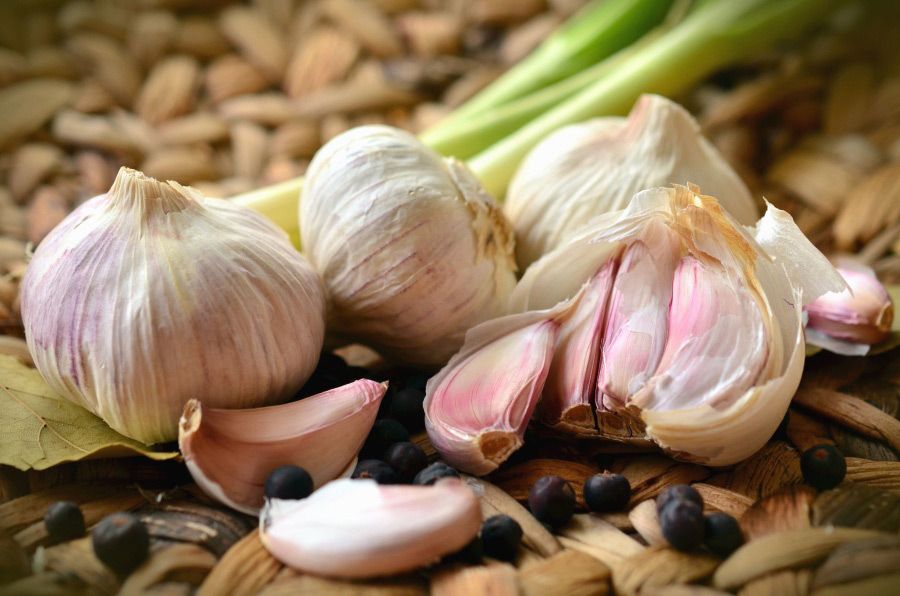
If the planting material is not treated correctly before planting in the fall, the following year the cloves will be small and quickly rot, even after good drying.
Do garlic cloves need to be peeled?
Each garlic clove is covered in a peel, which is Mother Nature's natural protection against pests and diseases. Therefore, removing this peel can have negative consequences. This procedure also damages the root base.
Need for processing
Treating planting material, especially before winter, is necessary to protect it from various pathogenic bacteria, which are the main cause of vegetable rot. Garlic rot is particularly common in the central part of the country. Therefore, treating garlic before fall planting is essential.
However, there's a risk of damaging the material if you use the wrong concentration of disinfectant solution or leave the cloves in it for too long. Therefore, knowing the correct step-by-step procedure is crucial.
Disinfectants
The solutions used for disinfection purposes are the following:
- potassium permanganate;
- copper sulfate;
- table salt;
- ash.
Also used are preparations that can be purchased at a gardening store:
- Fitosporin;
- Maxim.
Potassium permanganate (potassium permanganate)
Manganese is a very strong antiseptic that inhibits most fungal diseases, destroys harmful microflora, and saturates the skin of the cloves with potassium, which the plant needs for full development.
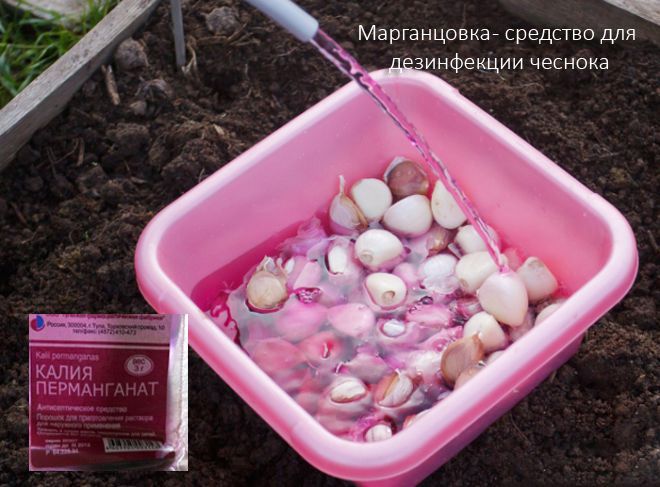
For soaking, use a weak solution, thoroughly mixed. It should not contain any undissolved crystals, otherwise the planting material may burn. Immediately before planting, add the garlic to the solution. If you are sure the garlic is not infected with garlic rot, wait an hour. Otherwise, wait at least 10.
Ash lye
This solution is made from wood ash. It disinfects and, by penetrating deep into the garlic cloves, has a beneficial effect on their development.
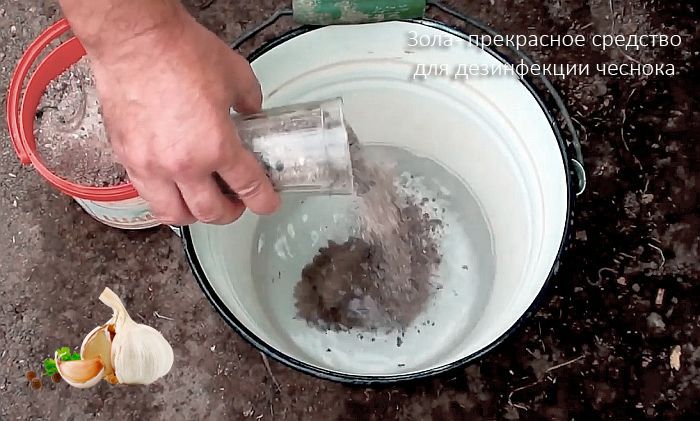
Dissolve a cup of ash powder in a liter of hot water and let it steep until it cools and separates. Place the planting material in the settled water for about an hour.
Two-step processing
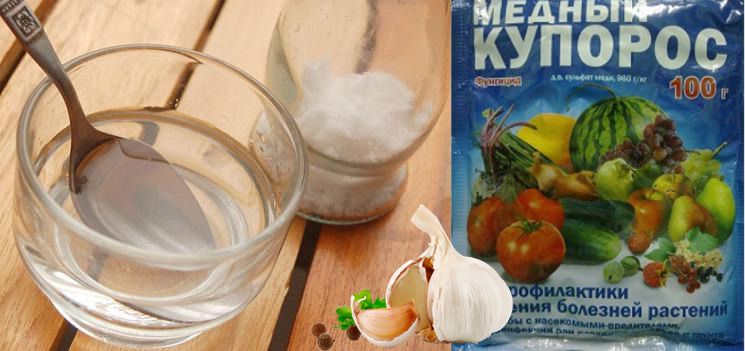
A saline solution (water - 10 l, salt (table) - 6 tbsp.) is a good remedy in the fight against pathogenic bacteria and fungi.
Important: Do not keep the cloves in this solution for more than two minutes.
After a salt bath, it is good to treat the garlic with the following solution: water - 10 liters, copper sulfate powder (copper sulfate) - 1 teaspoon.
Fitosporin-M
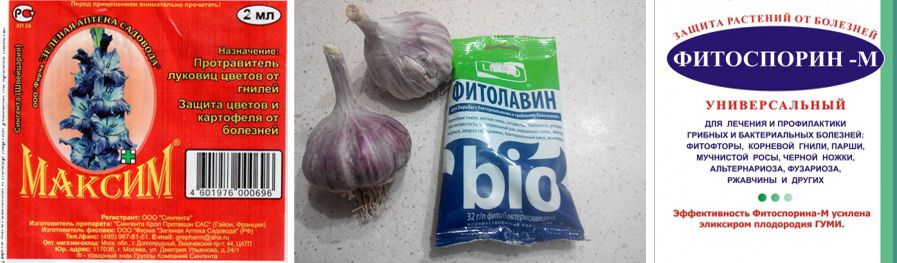
The preparation is used to treat planting material and soil, and is destructive to various fungi and bacteria. It prevents diseases such as late blight, root rot, scab, powdery mildew, rust, and others, and promotes accelerated growth. Prepare it according to the instructions, soaking the garlic in it for about an hour.
Fungicidal powder - Maxim
This is a special product for combating various fungal diseases. It is sold in liquid form in ampoules. Its action is similar to Fitosporin. It is prepared according to the instructions; typically, one ampoule is dissolved in a liter of water, and the cloves are soaked in it for half an hour. This solution is also suitable for treating the soil before planting.
Fitolavin
Another good treatment for putrefactive bacteria, bacteriosis, and other garlic diseases is the fungicide Fitolavin. It should be used strictly according to the instructions.
Proper use of disinfectants for winter planting will allow you to get a rich harvest next year.