Comfrey is considered a weed; few gardeners deliberately grow it in their gardens; it usually appears there naturally. However, there are interesting cultivars and varieties of this flower that can be used to decorate garden beds. Furthermore, there are medicinal species of the plant that are widely used in folk medicine.
Content
- 1 Description of comfrey
- 2 Features of comfrey
- 3 8 types of comfrey with descriptions in tables and photos
- 3.1 Comfrey, rough, rough, foreign (Symphytum asperum)
- 3.2 Caucasian comfrey (Symphytum caucasicum)
- 3.3 Comfrey (Symphytum officinale)
- 3.4 Comfrey (Symphytum uplandicum)
- 3.5 Comfrey (Symphytum cordatum)
- 3.6 Comfrey, large-flowered, Iberian, large (Symphytum grandiflorum)
- 3.7 Eastern comfrey (Symphytum orientale)
- 3.8 Comfrey (Symphytum tuberosum)
- 4 Hybrids and ornamental varieties of comfrey
- 5 Growing comfrey step by step
- 6 Caring for comfrey
- 7 Propagation of comfrey
- 8 Diseases and pests of comfrey
- 9 Using comfrey in the garden
- 10 Application in landscape
- 11 Medicinal properties of comfrey
- 12 Comfrey Reviews
Description of comfrey
Comfrey belongs to the Boracciaceae family and is a perennial herbaceous plant with more than 25 varieties.
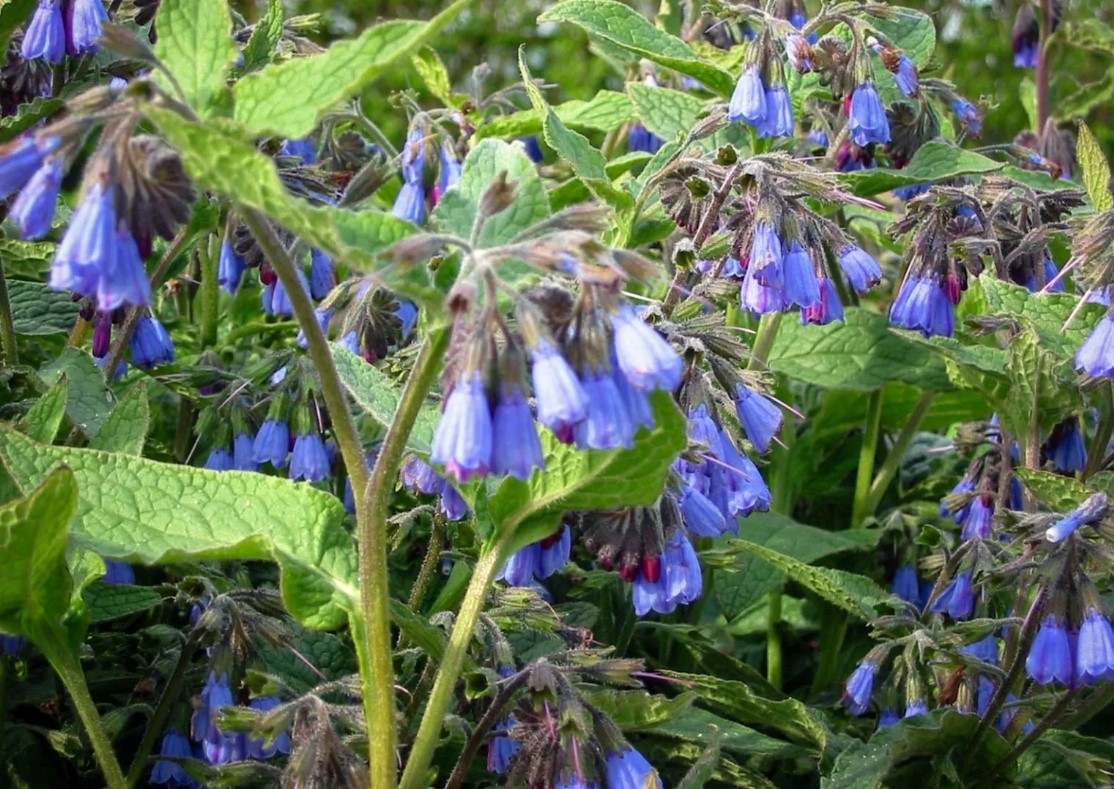
The height of the shoots reaches 1 meter, the stems are erect, branched, thick, the shoots are spreading, with a rough surface from numerous hairs.
The roots are powerful, the main root is dense, black in color, but the roots inside are white and oily.
The leaves are arranged alternately, large, oblong-ovate, with a pointed tip and soft pubescence. The lower leaves have a small petiole, while the upper leaves practically sit on the stem.
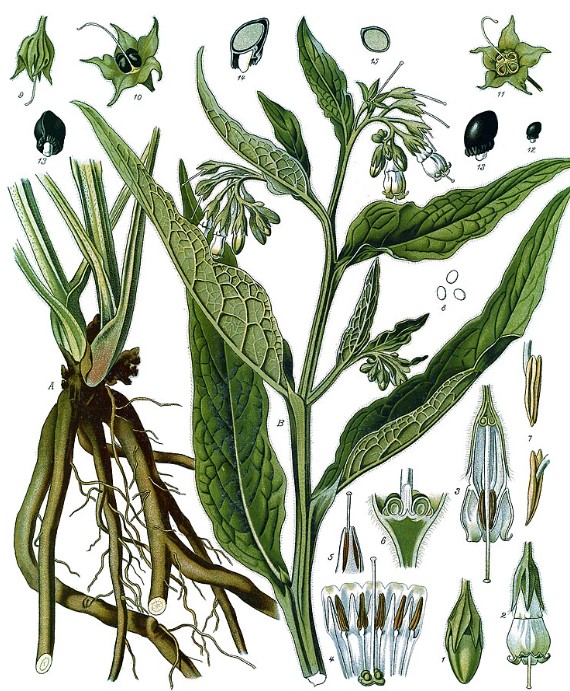
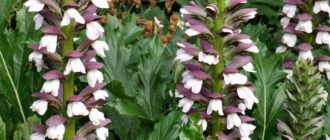
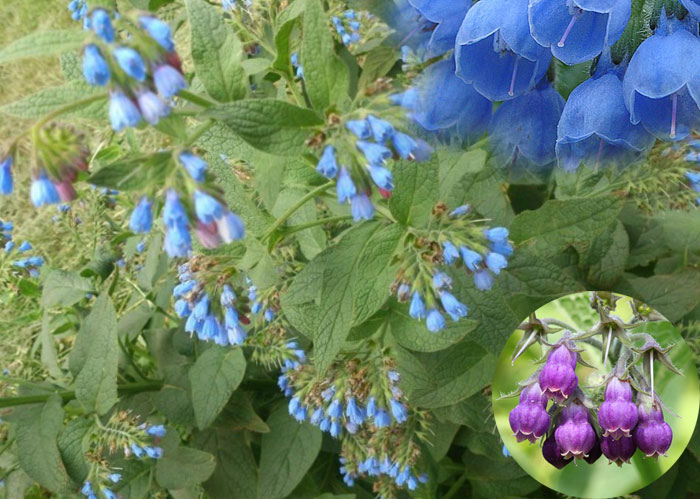
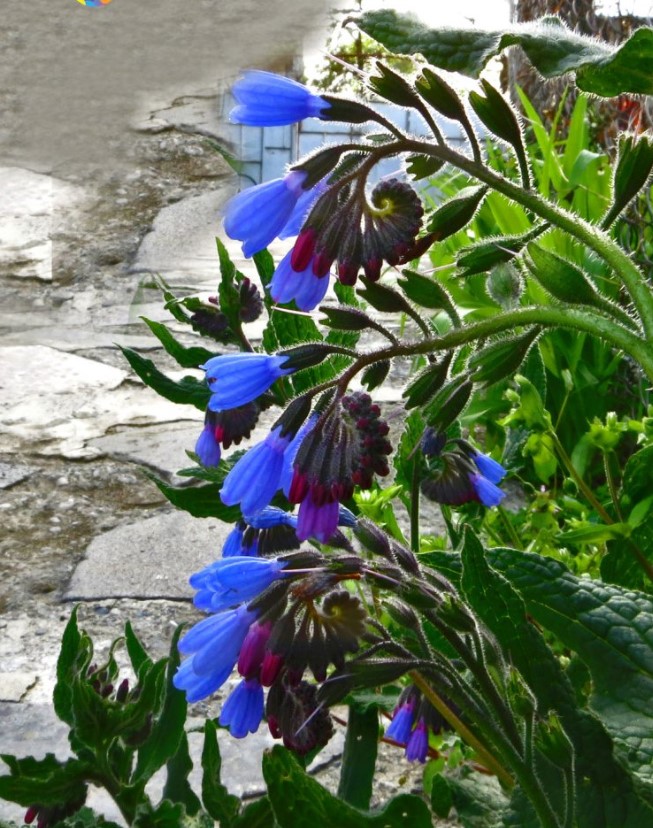
At the top of the stem and at the end of the side shoots, a small, drooping inflorescence forms. Before it opens, it forms a snail-shaped whorl. Later, it opens, revealing small, club-shaped flowers in shades of red, lilac, or purple.
At the end of flowering, fruits are formed in the form of dry pods, which then break down into 4 smooth, single-seeded nuts.
Features of comfrey
The plant blooms in May-June, and the seeds ripen between July and September. It is most often found in areas with moist, nutritious soil, in damp meadows, and along streams and rivers.
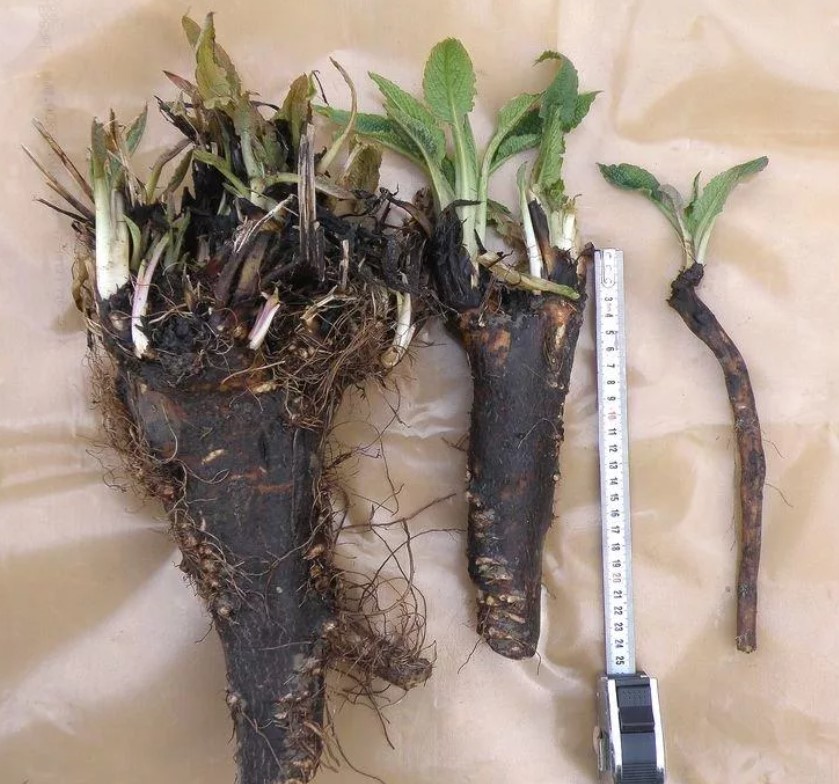
The plant contains many nutrients used in folk medicine. Their highest concentrations are found in the roots during winter.
8 types of comfrey with descriptions in tables and photos
Gardeners most often use comfrey to make liquid fertilizer from weeds or cut it into compost to nourish crops and flowers. Some varieties can be grown for medicinal purposes, and hybrid cultivars are sometimes used to decorate garden beds.
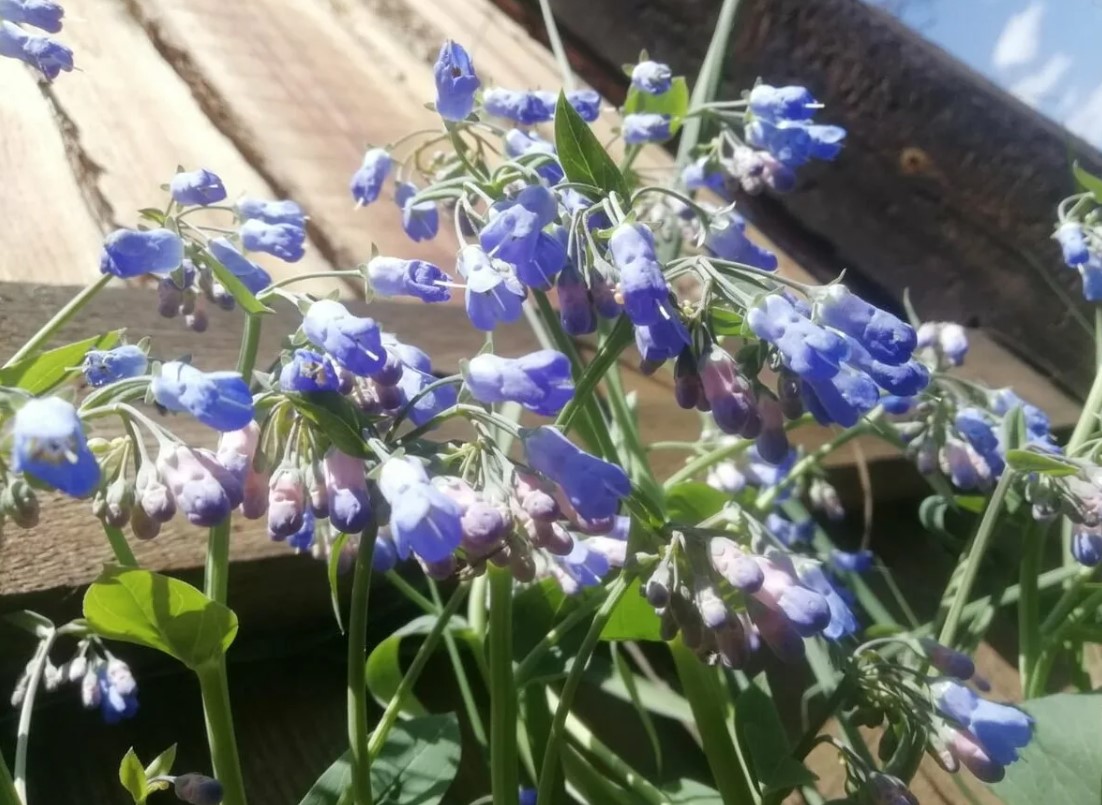
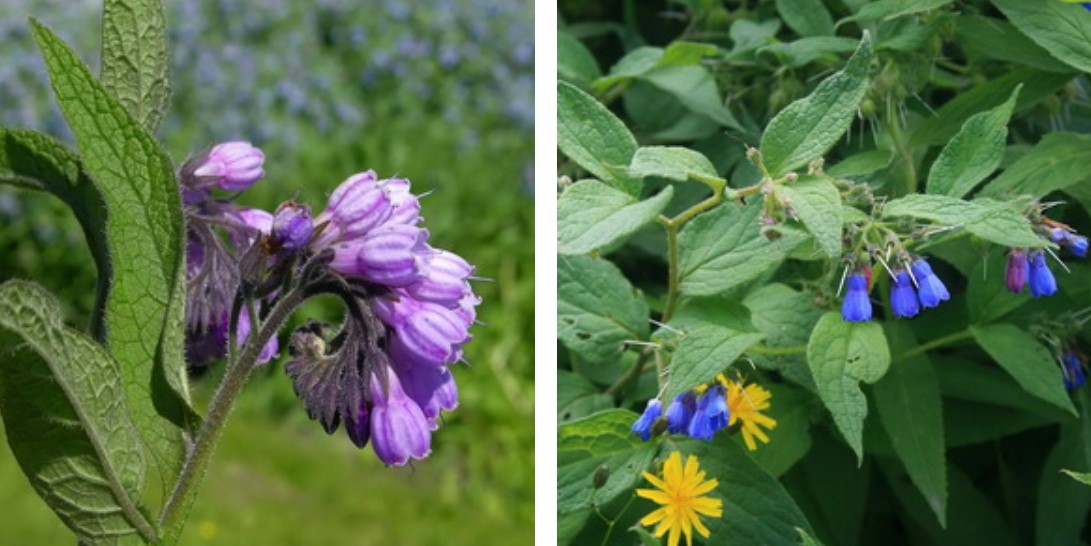
Comfrey, rough, rough, foreign (Symphytum asperum)
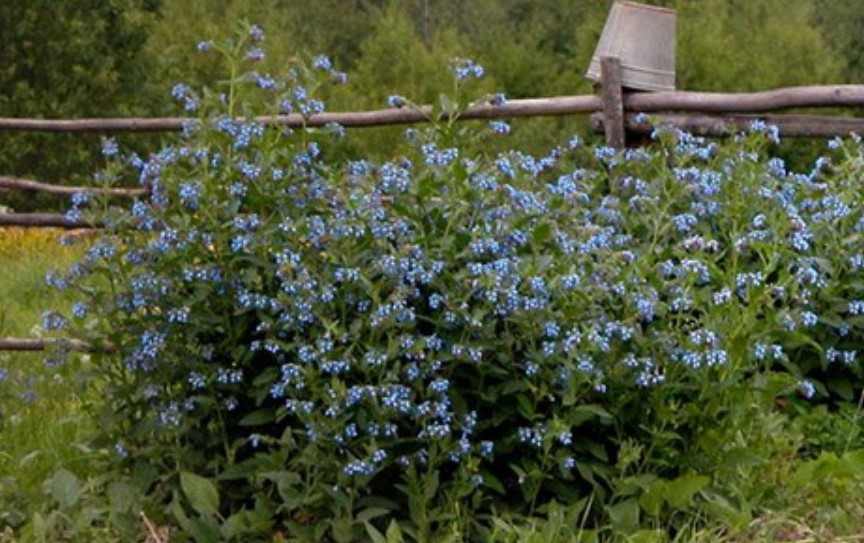
| Description | Spreading | Reproduction | Application |
| A perennial with shoots up to 150 cm tall. The leaves are heart-shaped or oval, up to 25 cm long. The entire vegetative surface is covered with dense bristles. The flowers are initially light purple, later turning blue.
|
It grows throughout Europe, and is found in meadows and wastelands. | By seeds and division of roots. | The leaves are used as livestock feed, and the dried root is used to make tinctures that help with ulcers, thrombophlebitis, and wounds. The flowers attract bees and can serve as a source of nectar, after which they are mown and composted. |
Caucasian comfrey (Symphytum caucasicum)
| Description | Spreading | Reproduction | Application |
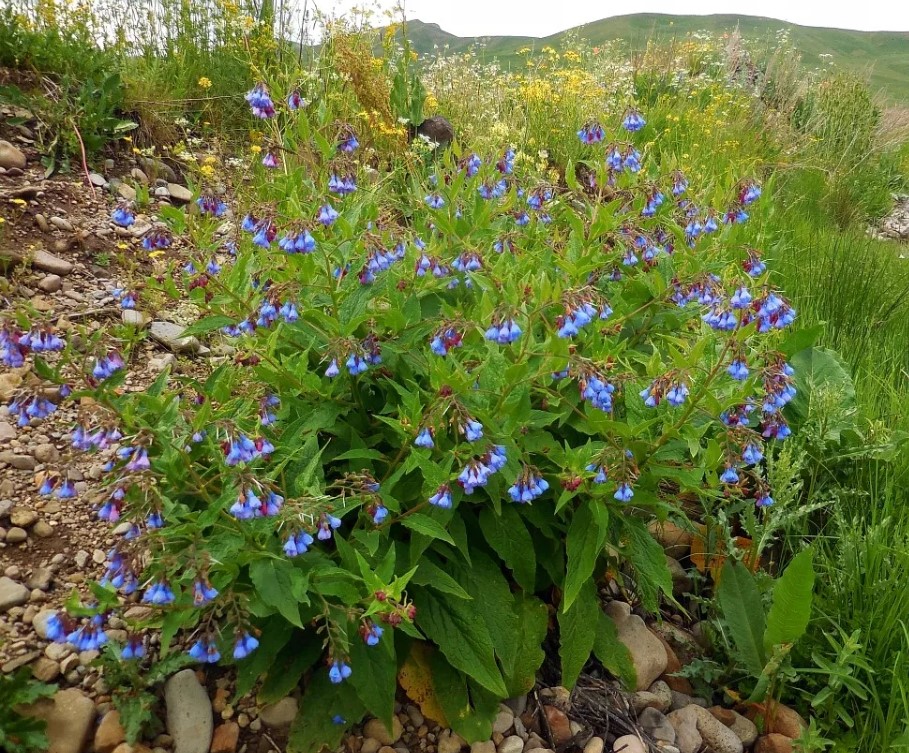
| The stems are erect, 100 to 150 cm tall. The pubescence is grayish, stiff, and simple. The upper leaves, unlike the lower ones, are petiole-less. They are oval and lanceolate in shape, up to 20 cm long. The inflorescence consists of several bell-shaped flowers. Initially pink, they later turn blue, and are distinguished by five teeth and a club-shaped form. 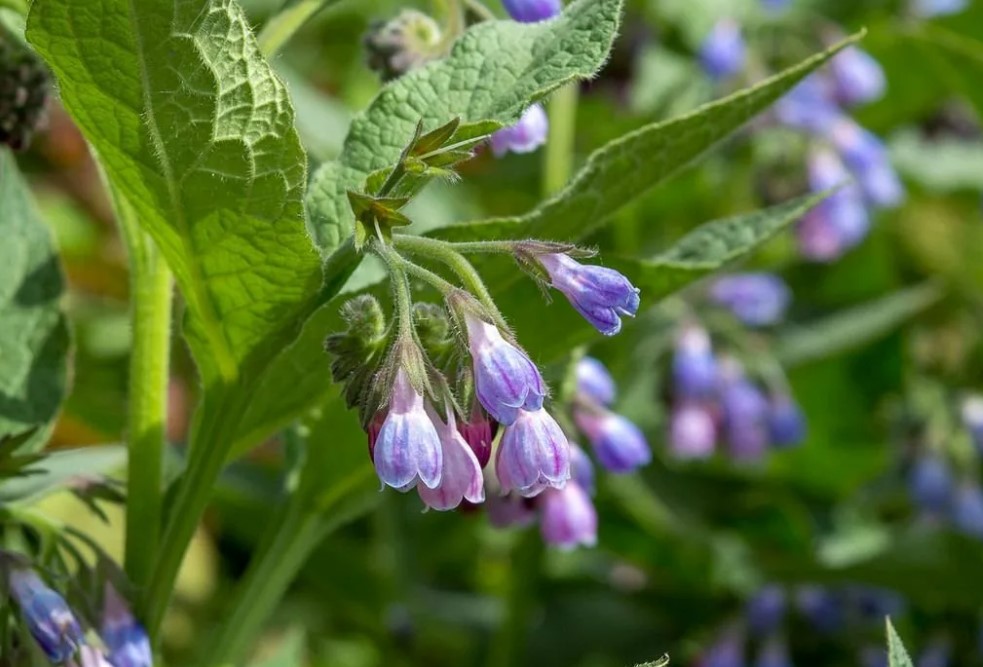 |
Distributed in Eastern Europe. In the Caucasus, it is most often found along streams and rivers, as well as on forest edges. | It reproduces very actively by seeds and vegetatively. | A weed, an invasive species listed in the Black Book of Central Russia. It can provide honey to bees and is mown down for compost. |
Comfrey (Symphytum officinale)
| Description | Spreading | Reproduction | Application |
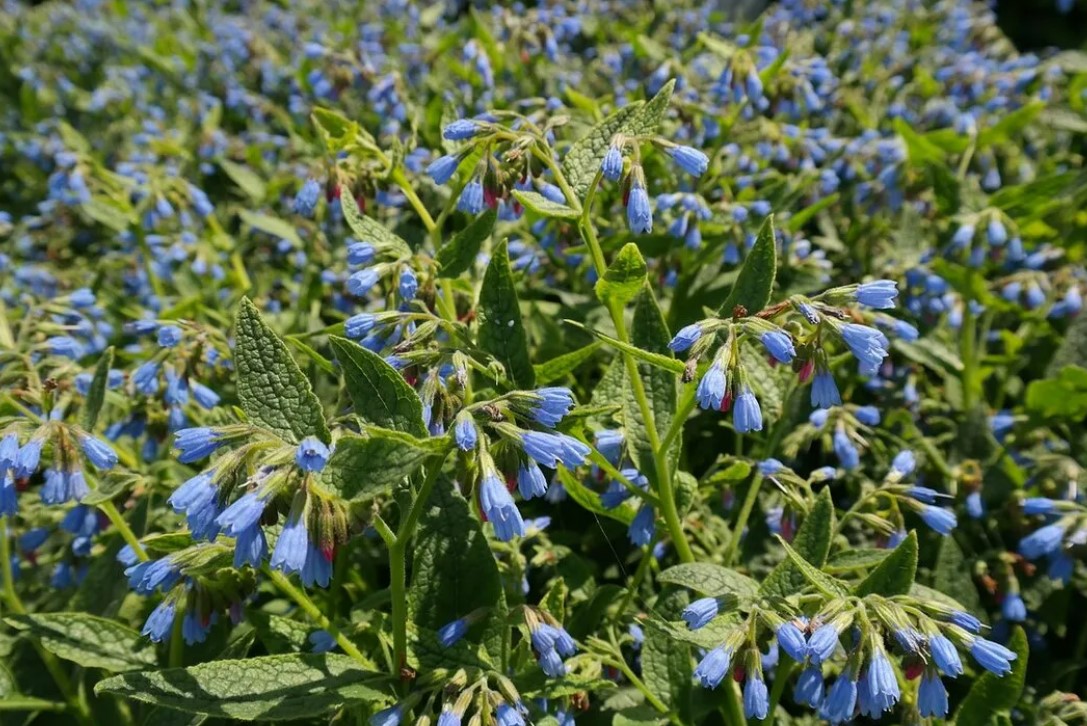
| The plant reaches 1 m in height. The rhizome is short. The stems are erect, covered with stiff hairs. The leaves are oblong-lanceolate, and the upper leaves lack petioles. The flowers are pale pink and purple, appearing from May to October. | It grows in the steppes and forests of European Russia, excluding the Far North, and is found in the Caucasus, Western Siberia, the Carpathians, Central Asia, and Eastern Kazakhstan. It prefers damp meadows, shrub thickets, and areas along streams and ditches. | By seeds or vegetatively. | The root is used medicinally to prepare decoctions and infusions, which have astringent, anti-inflammatory, hemostatic, enveloping, and antimicrobial properties. Root extract is used for skin and hair care. |
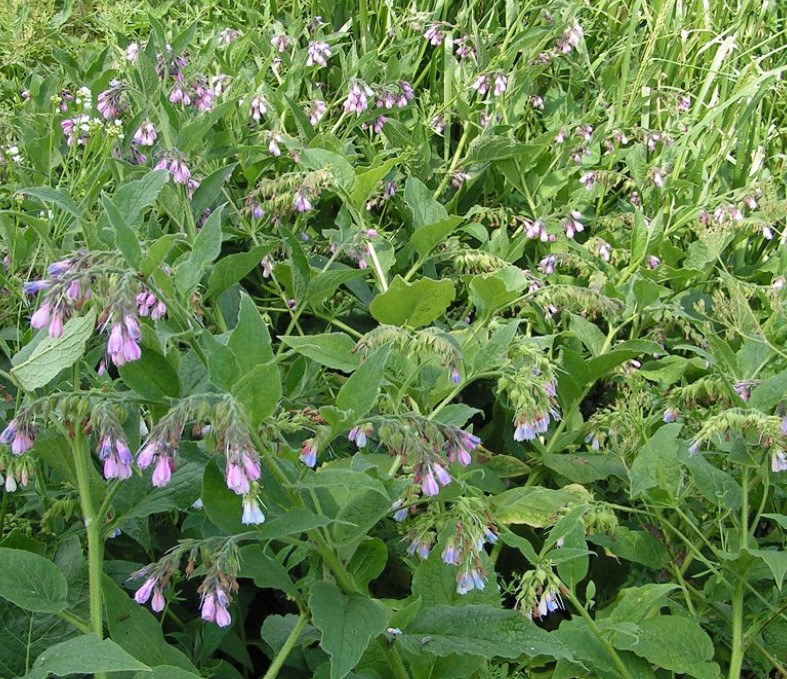
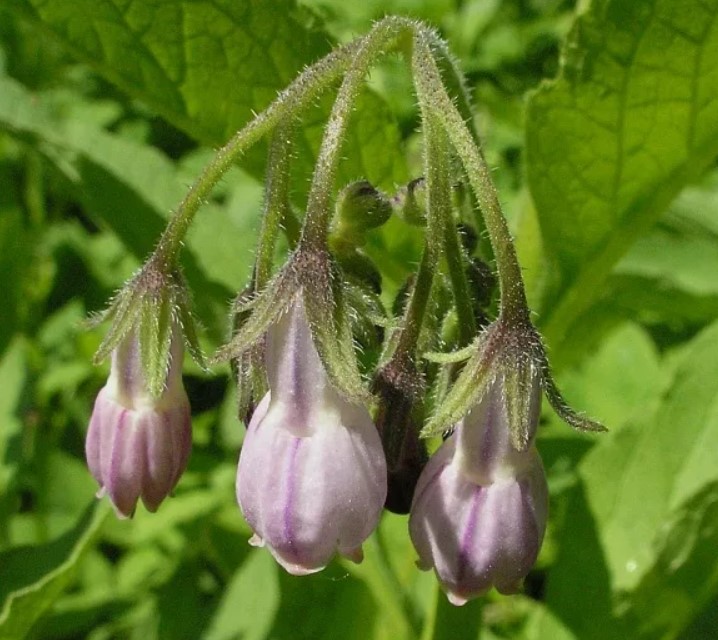
Comfrey (Symphytum uplandicum)
| Description | Spreading | Reproduction | Application |
| A perennial plant growing up to 140 cm tall, when young it is covered with stiff bristles with thickened bases, which fall off or become soft with age. The leaves are elliptical-lanceolate, 15 to 30 cm long and up to 6 cm wide. The upper surface of the leaf blade is covered with stiff bristles, which fall off with age. The flowers are up to 5.5 cm long, and their color changes from purple to pink, red-violet, or blue-violet as they open.
|
It grows in Europe and North America. | Seeds and roots. | The roots can be used to prepare infusions for external use, the vegetative part is mown down into compost heaps. |
Comfrey (Symphytum cordatum)
| Description | Spreading | Reproduction | Application |
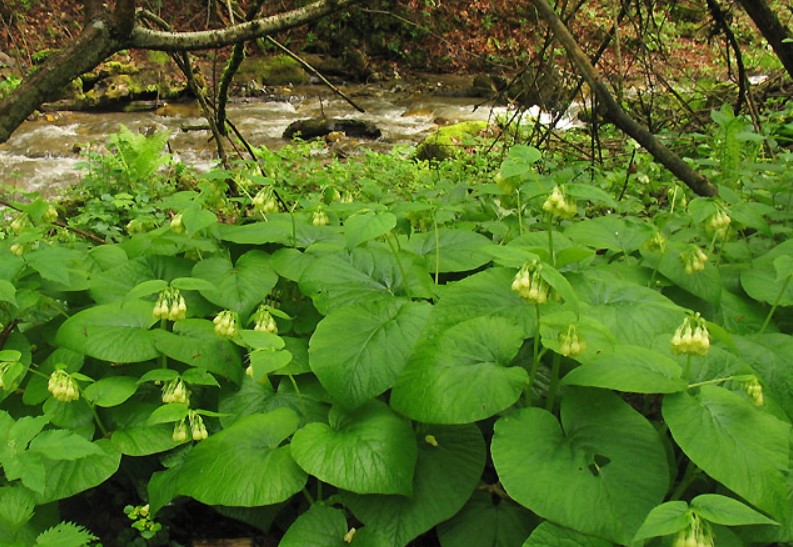
| It is distinguished by small shoots, 20 to 40 cm tall, that are hairless. The lower stem leaves are heart-shaped and attached by petioles, while the upper leaves have virtually no petiole and are oblong or ovoid in shape. The flowers are yellowish-white.
|
Found throughout virtually all of Russia and the former Soviet Union, it prefers broadleaf and beech forests. | Seed and vegetative. | Used as cattle feed and for compost. |
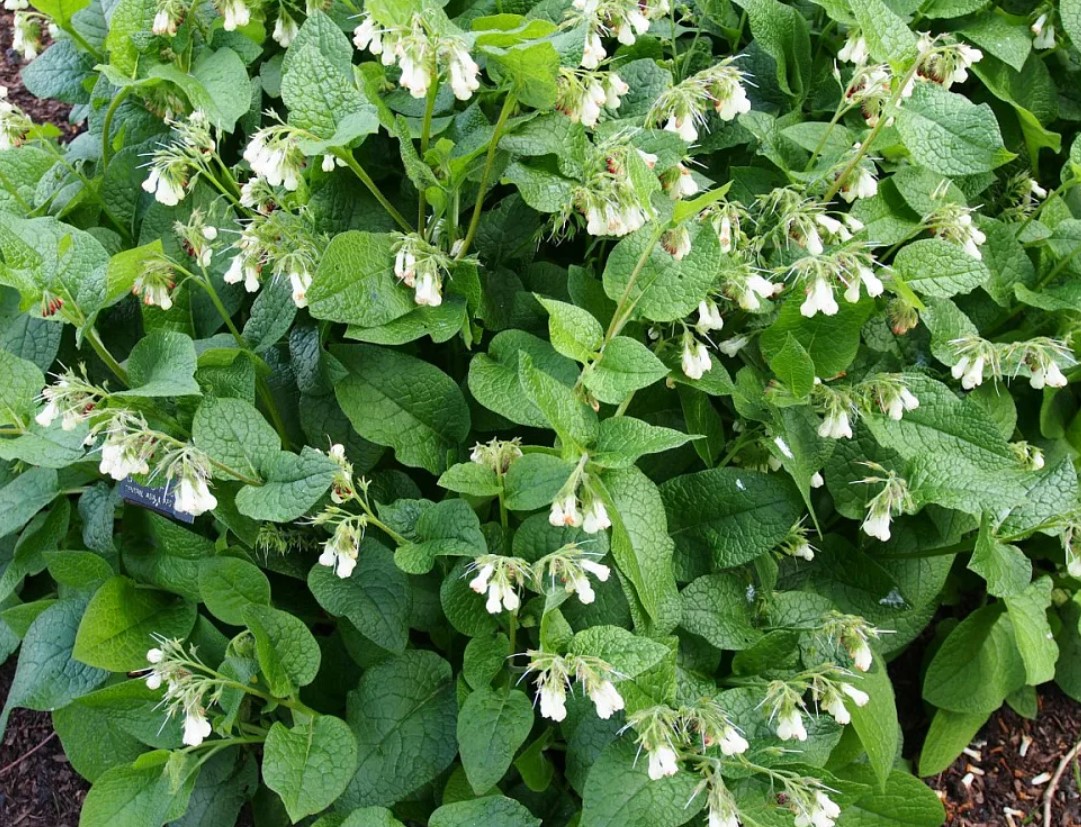
Comfrey, large-flowered, Iberian, large (Symphytum grandiflorum)
| Description | Spreading | Reproduction | Application |
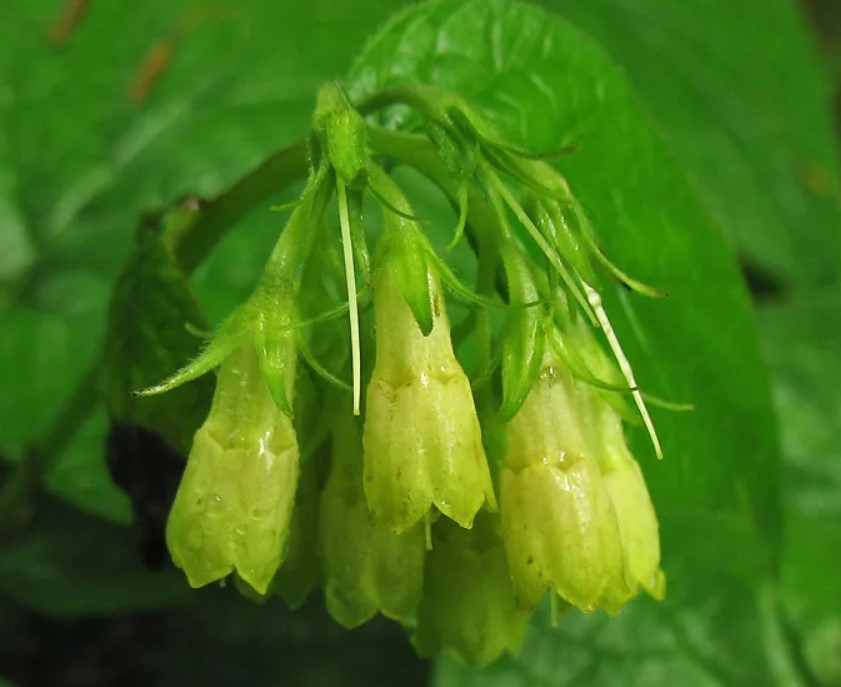
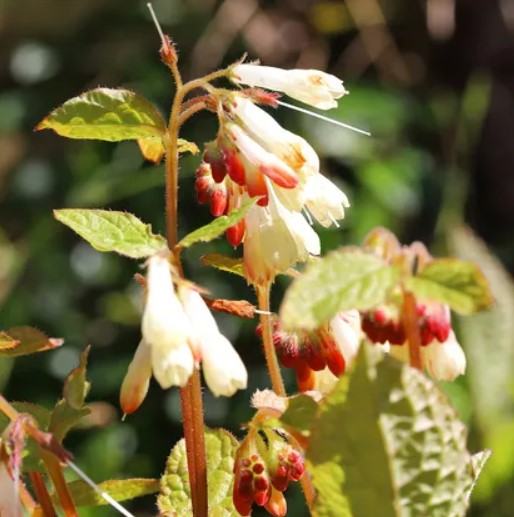
| The rhizome is spreading and branched. The stem is semi-recumbent and capable of additional rooting. The leaves are broad and ovoid. The buds are reddish, and the flowers are pale yellow, cream, or blue.
|
It grows on the banks of water bodies and in damp meadows. It was originally distributed in northeastern Turkey and the Caucasus. | Mainly by seeds. | Used to decorate shady areas of the garden, but requires strict growth control. |
Eastern comfrey (Symphytum orientale)
| Description | Spreading | Reproduction | Application |
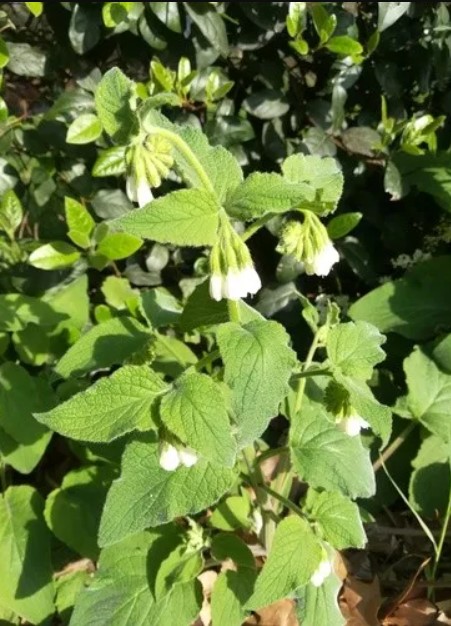
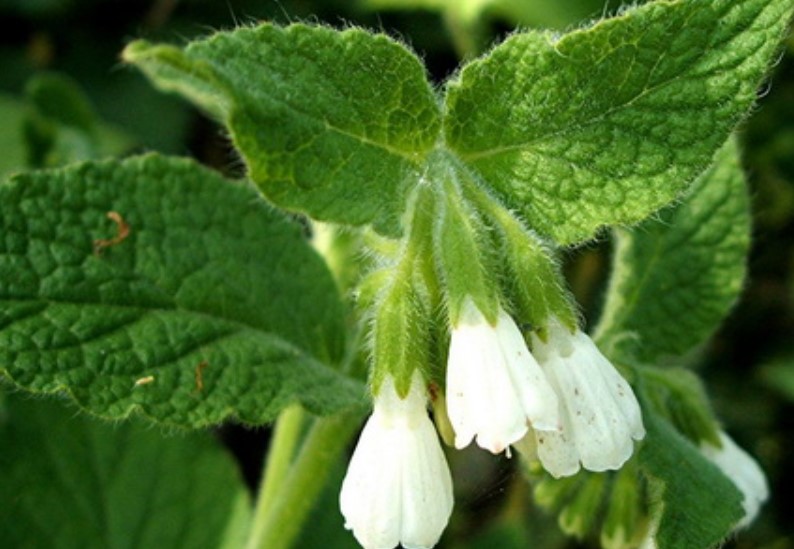
| The plant grows to 60 cm tall, with leaves up to 25 cm long and a matte green color. The leaf blades are heart-shaped or oval. The flowers are white, numerous, and borne in drooping racemes.
|
Distributed throughout Russia, it is distinguished by its increased frost resistance. | By seeds or vegetatively. | Flowerbed decoration with strict control of spread. |
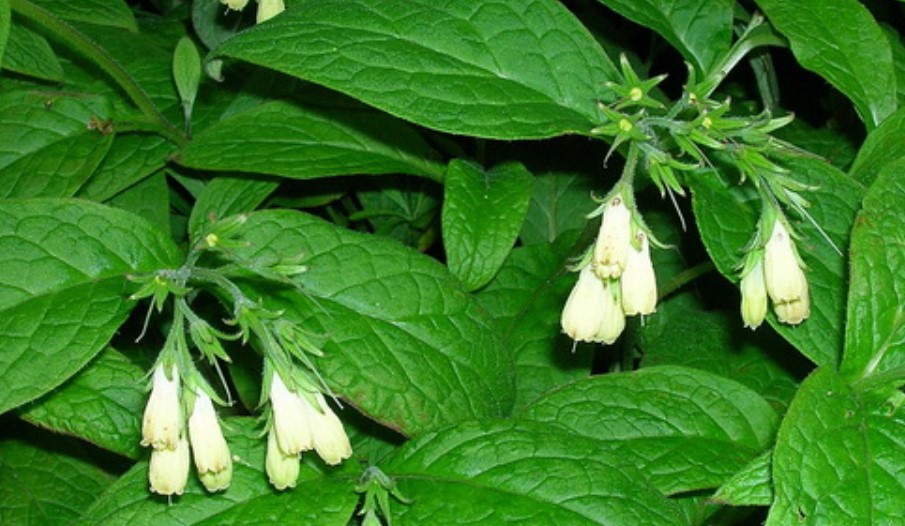
Comfrey (Symphytum tuberosum)
| Description | Spreading | Reproduction | Application |
| The plant grows to 50 cm tall. The bush is spherical in shape, with roots that have thickenings that make them resemble tubers. The flowers are bright yellow.
|
It grows almost throughout the entire territory of Russia. | By seeds or by dividing the root. | Decorative. |
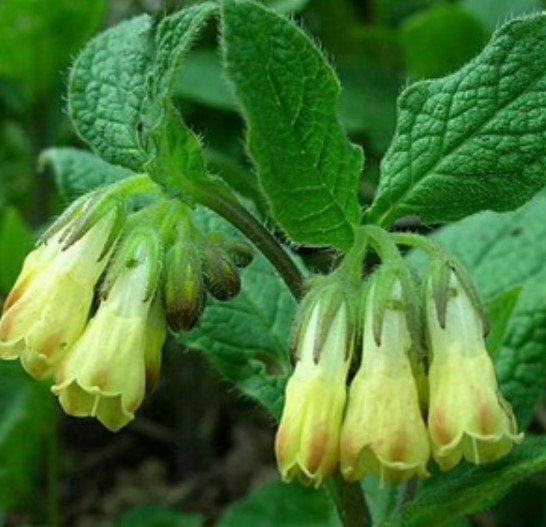
Hybrids and ornamental varieties of comfrey
Comfrey hybrids are very difficult for specialists to classify because different species have been growing side by side for a long time, resulting in new varieties that cannot be identified.
The table below lists the main studied ornamental and hybrid varieties of comfrey.
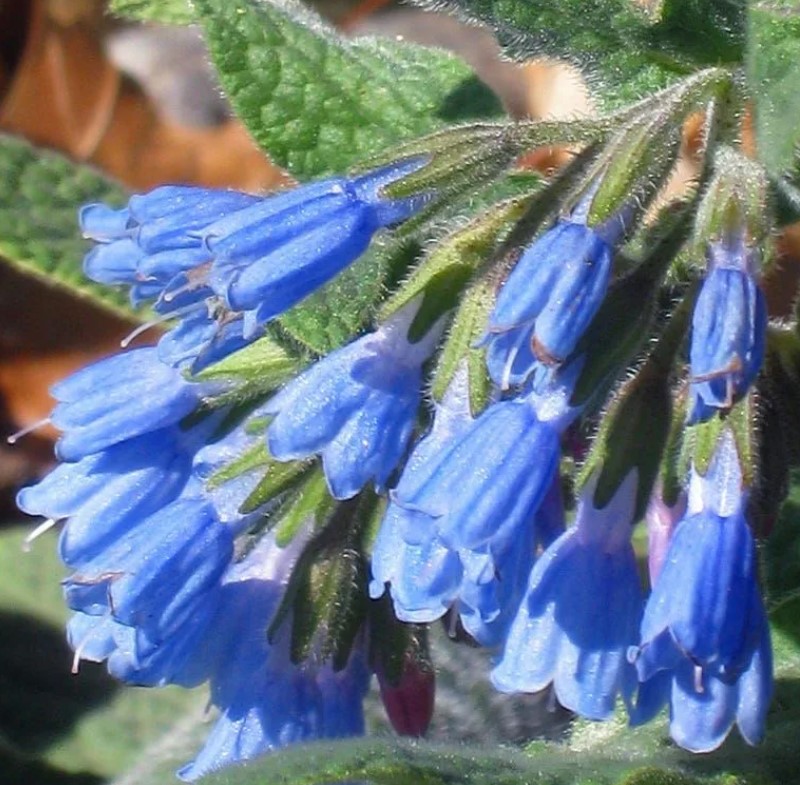
Hidcote Blue
| Variety | Description | Flowering period |
| Hidcote Blue | A shade-tolerant plant. It grows up to 60 cm tall, with purple buds and white flowers. Propagated by root division. | May-June. |
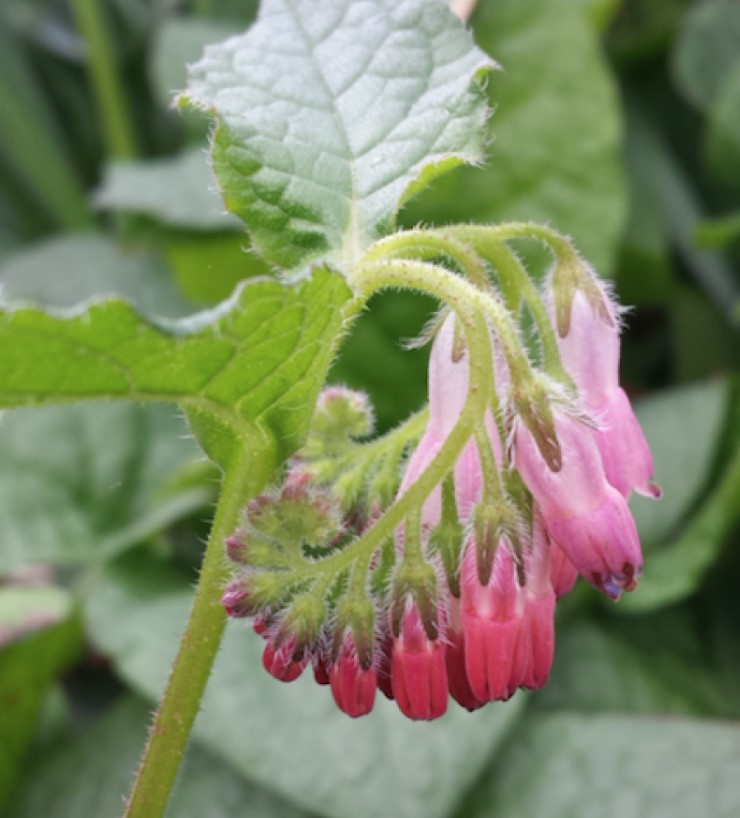
Hidcote Pink
| Variety | Description | Flowering period |
| Hidcote Pink | A herbaceous perennial up to 30 cm tall with large, pubescent, elongated-ovate leaves. The flowers are tubular, white and pink. | May-June |
Roseum
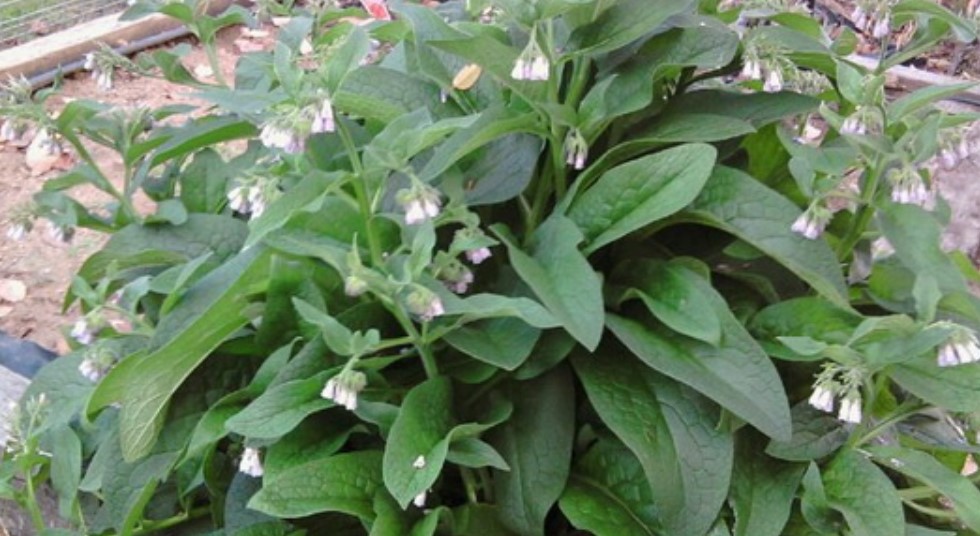
| Variety | Description | Flowering period |
| Roseum | The height of the bush reaches 60 cm, the buds are white, the flowers are pink. | May-June |
Langthorns Pink
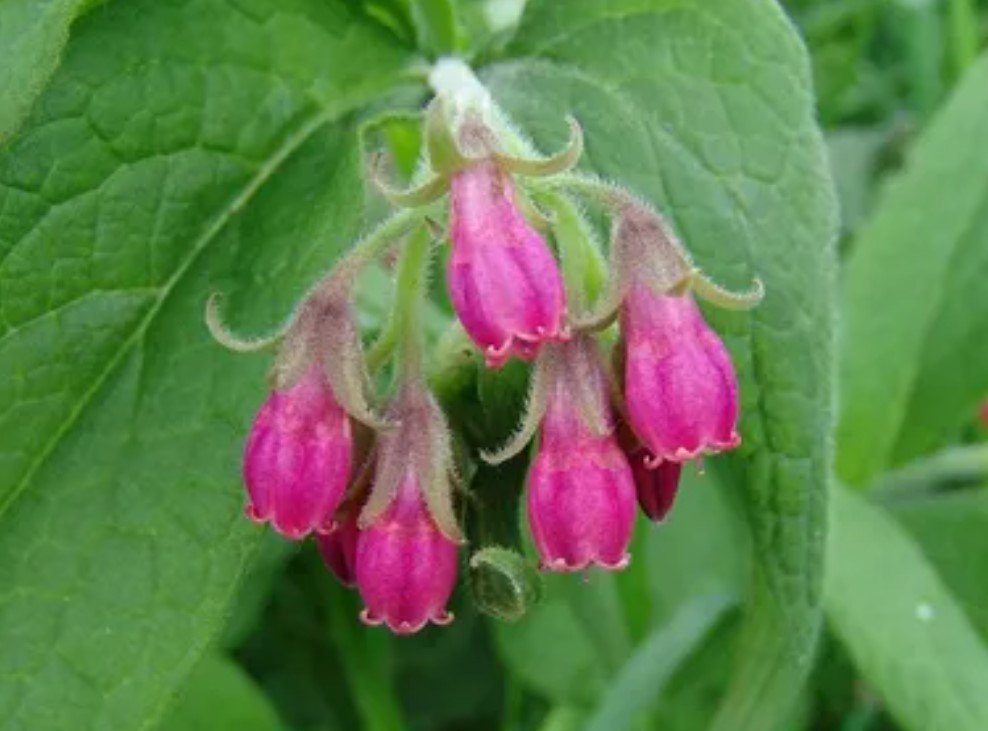
| Variety | Description | Flowering period |
| Langthorns Pink | A tall bush, with shoots reaching 120 cm in length. Leaves up to 20 cm long, dark green, and stiff. Oval or lanceolate shape, with a pointed tip. Flowers are bright pink. | June-August. |
Blue Bells
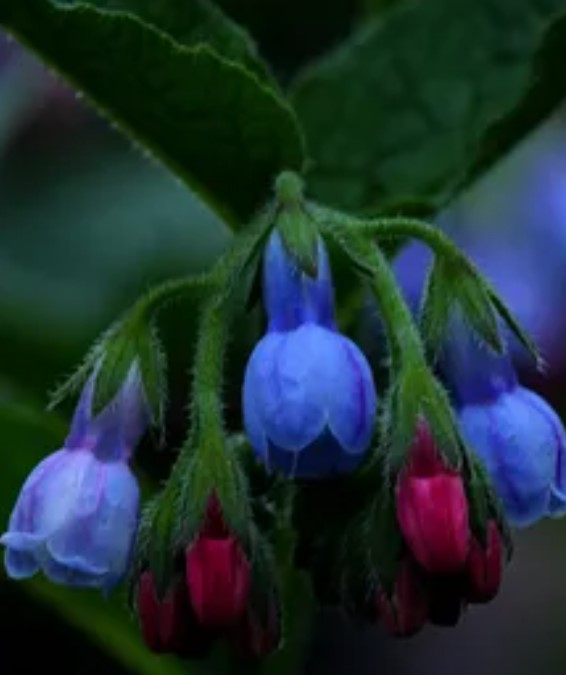
| Variety | Description | Flowering period |
| Blue Bells | A medium-sized bush, distinguished by flowers with a blue corolla and a reddish calyx. | May-July. |
Rubrum
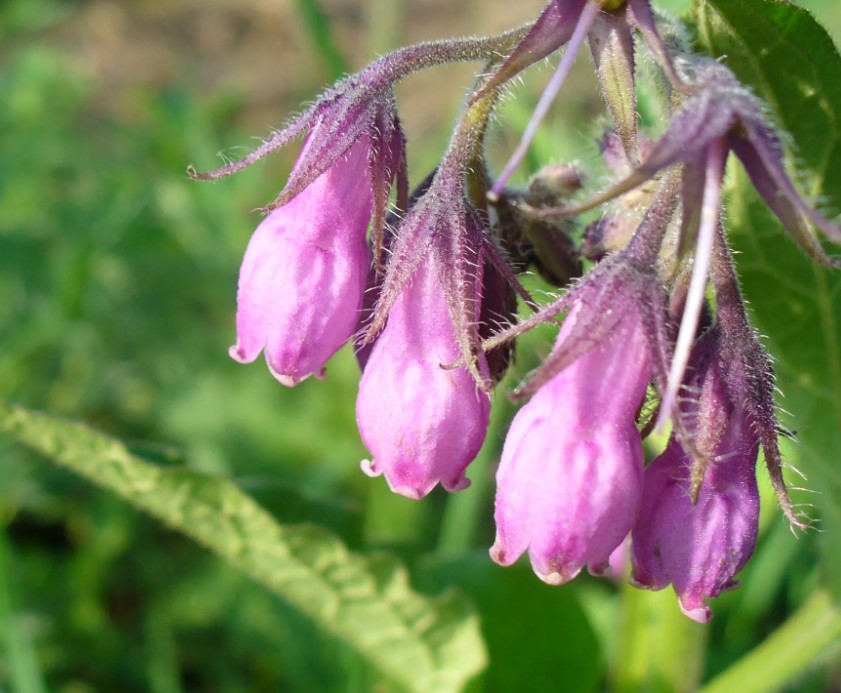
| Variety | Description | Flowering period |
| Rubrum | A medium-sized bush with pinkish flowers. | May-July. |
Eminence
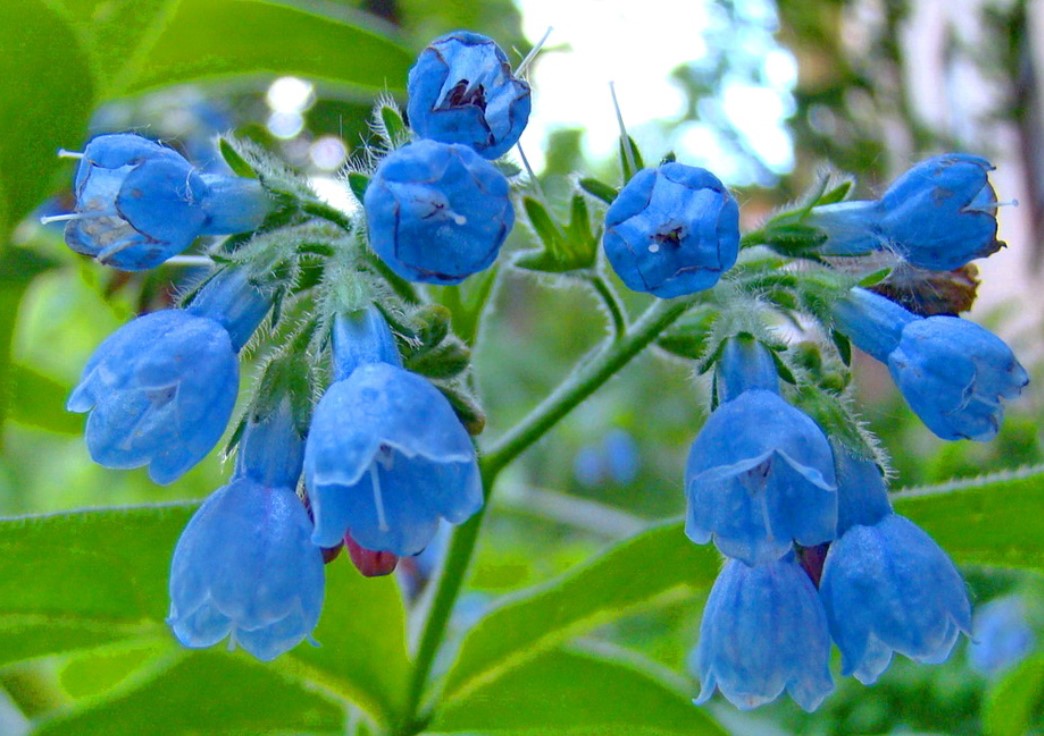
| Variety | Description | Flowering period |
| Eminence | The bush grows to 50 cm tall, with dark green, pubescent leaves. The inflorescences are short and blue. | May-July. |
Goldsmith (Hidcote Variegatum)
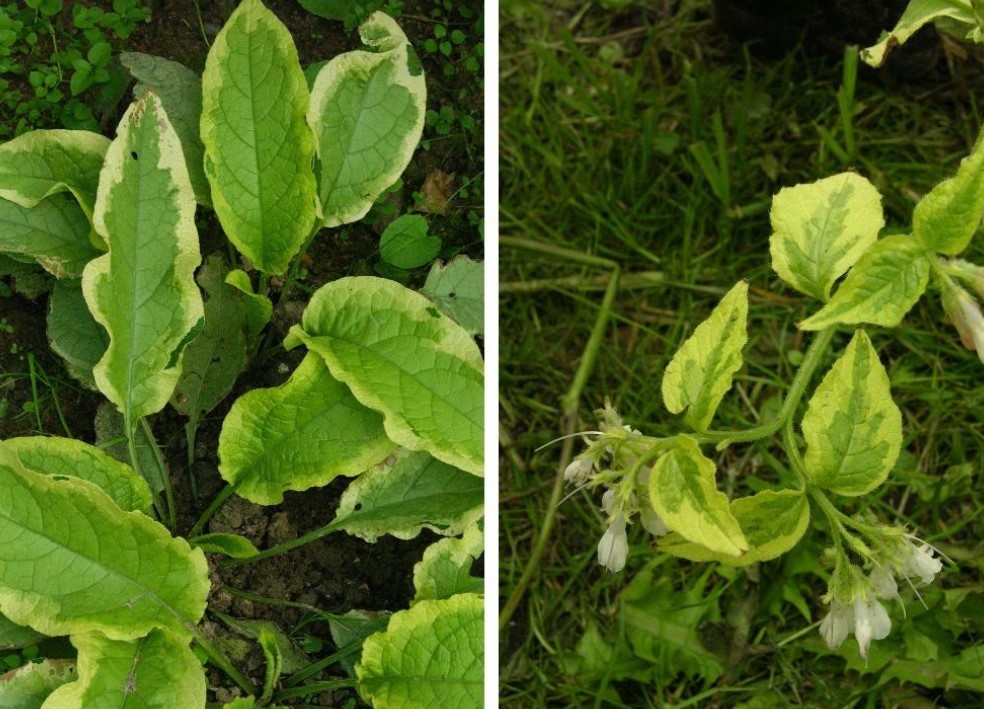
| Variety | Description | Flowering period |
| Goldsmith (Hidcote Variegatum) | A medium-sized bush with semi-recumbent shoots. The leaves are ovate, green with cream-colored spots, primarily located along the edges. The flowers are a soft lilac. | May-July. |
Variegatum
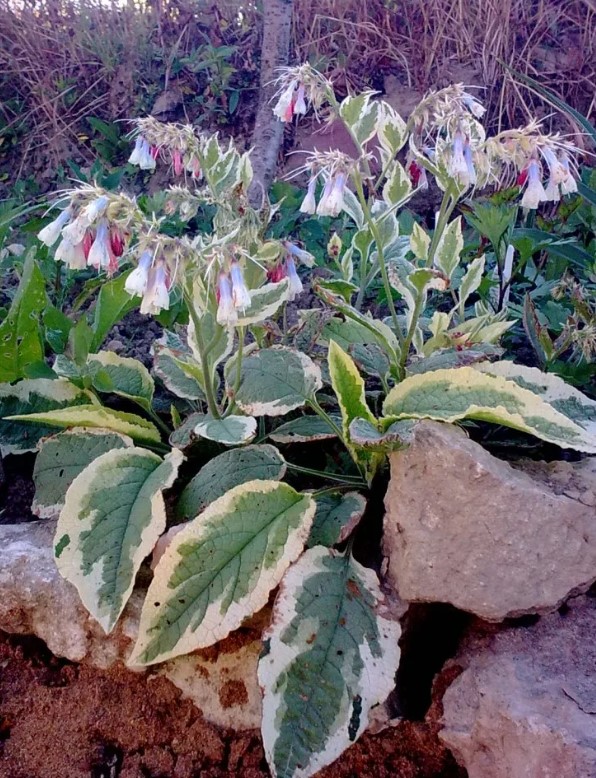
| Variety | Description | Flowering period |
| Variegatum | The shoots are erect, the leaves are lanceolate, narrow, and stiff, with a cream-colored border along the edges. The flowers are lilac. | May-July. |
Axminster Gold
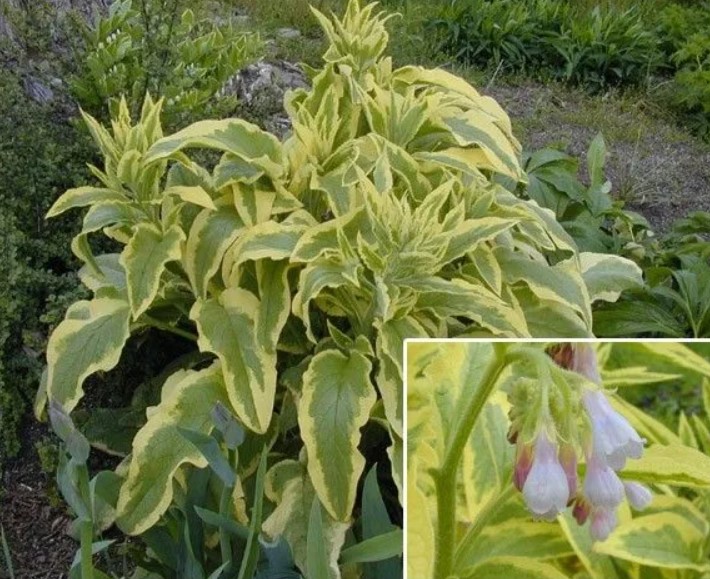
| Variety | Description | Flowering period |
| Axminster Gold | The bush is upright, the flowers are lilac, the leaves are almost lanceolate, with a yellow border. | May-August. |
Allgold
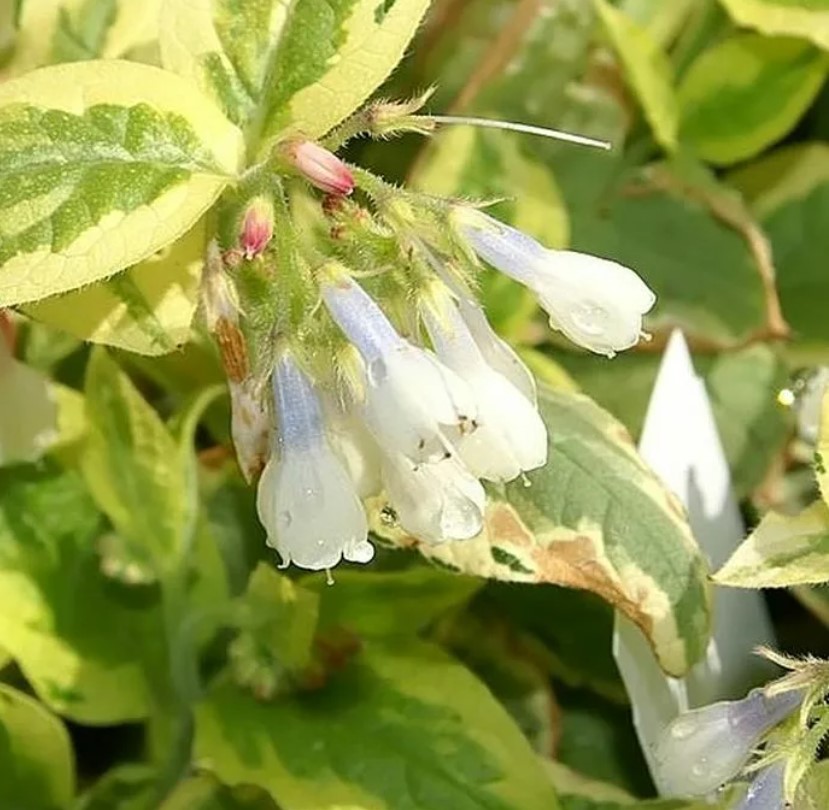
| Variety | Description | Flowering period |
| Allgold | The leaves are primrose-yellow and can grow up to 60 cm, turning green as they grow. The flowers are large and light-colored. | May-July. |
Lambrooke Sunrise
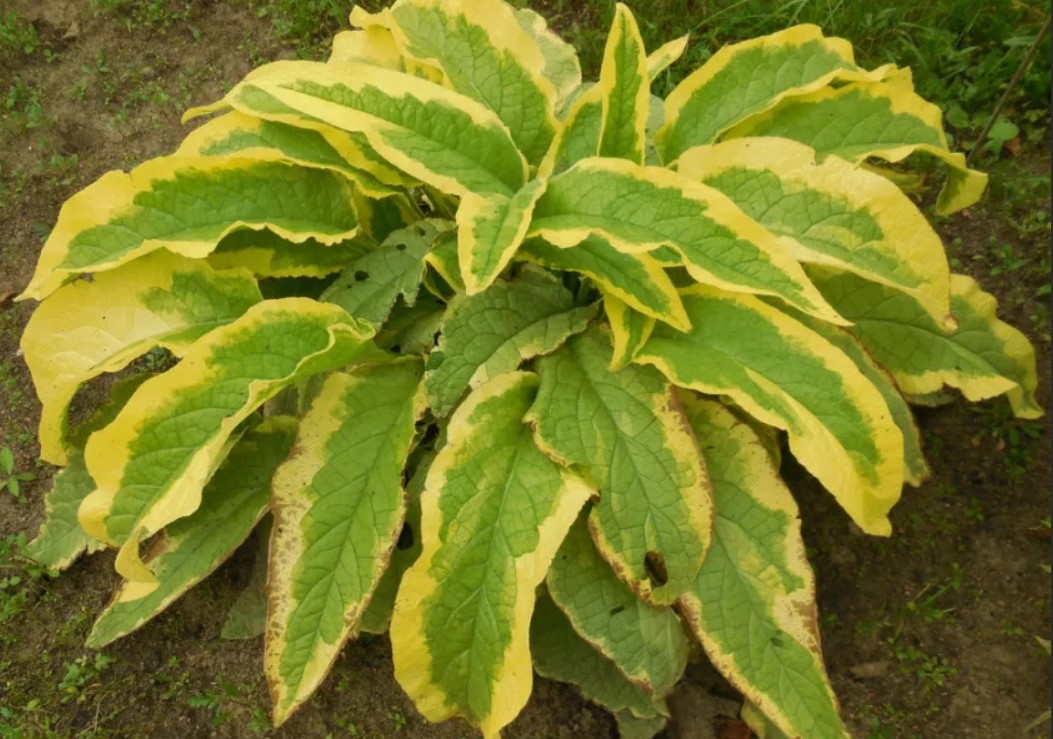
| Variety | Description | Flowering period |
| Lambrooke Sunrise | A medium-sized variety, the leaves are golden at first, later turning green. The flowers are creamy. | May-July. |
Belsay Gold
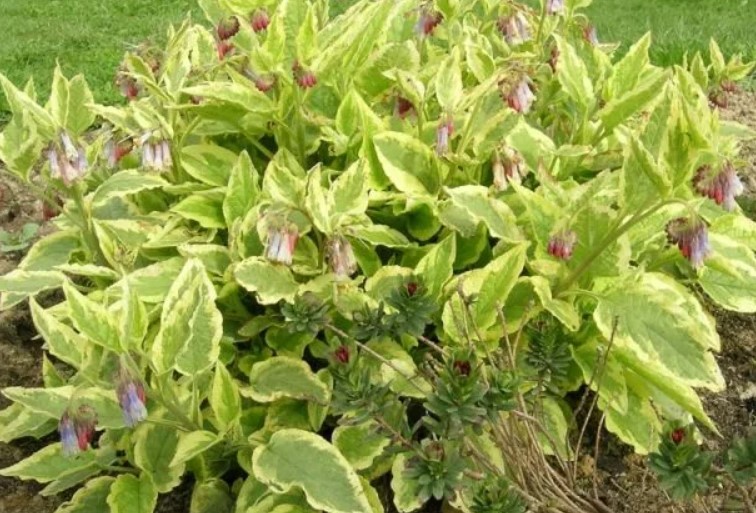
| Variety | Description | Flowering period |
| Belsay Gold | It is distinguished by its golden leaves, which barely turn green as they grow. | June-August. |
Growing comfrey step by step
Comfrey is considered a fairly unpretentious plant, but to achieve beautiful and lush flowering, it is necessary to choose the right planting location and provide the necessary care.
Location
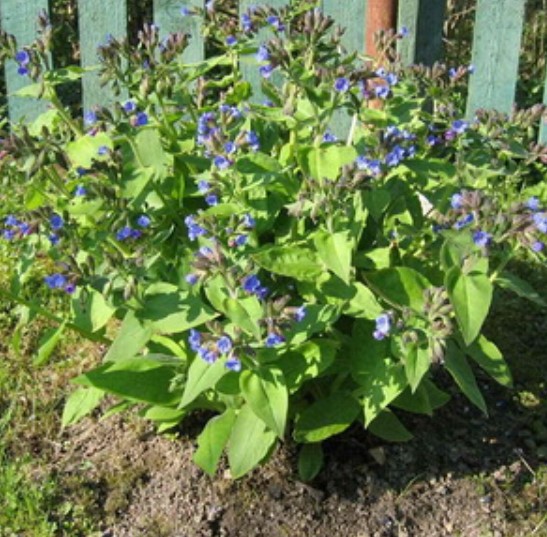
The planting site for comfrey should be slightly shaded. In bright sunlight, the plant will wither, and in the shade, it will not fully display its decorative qualities. Furthermore, direct sunlight will burn the foliage and flowers, especially in hybrid and large-flowered varieties.
Priming
Comfrey prefers loose, well-drained soil with good water and air permeability. The soil should be clay-like and the pH neutral. If the soil is too dense, heavy, and acidic, the plant will grow very slowly. If the soil is extremely low in nutrients, the flowering will not be abundant and lush.
Landing
Before planting comfrey, the soil is dug over and organic fertilizer (humus or peat) is added at a rate of 5-6 kg per square meter. Next, the surface is leveled with a rake, and furrows are made no more than 1 cm deep.
Sowing is done in the spring after the soil has warmed, or in late autumn. It's important to remember that comfrey seeds don't store well; it's best to use them within one year of harvesting.
Before spring planting, stratification is carried out: the seeds are mixed with sand and placed in the refrigerator for 6-8 weeks.
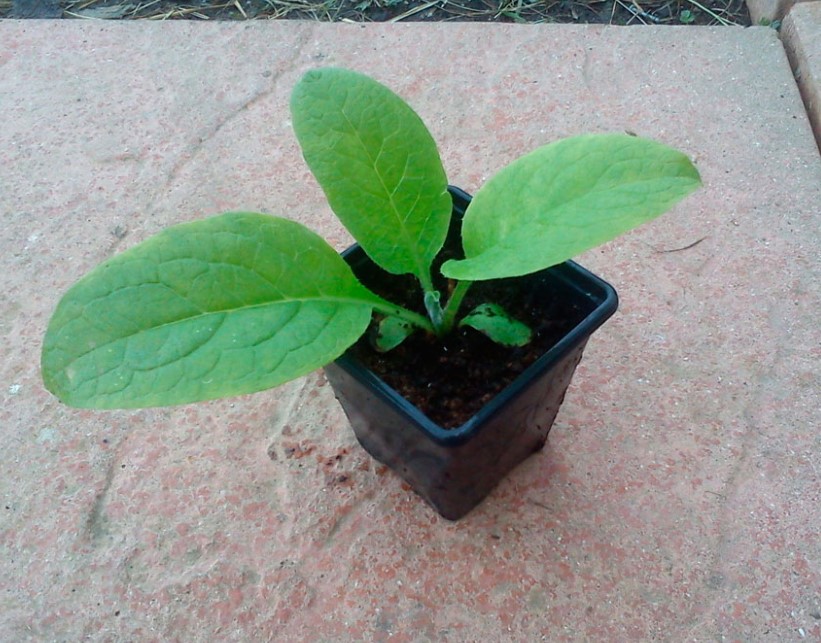
After spring sowing, the first shoots appear within 2-3 weeks. During the first season, comfrey develops a basal rosette of leaves, and flowering and fruiting occur only in the second year.
The plant can remain in the same place for 4 years, after which its decorative value decreases.
Caring for comfrey
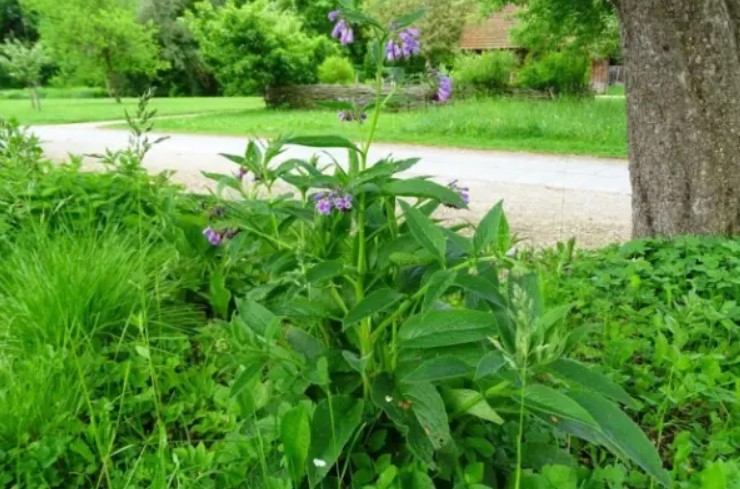
Comfrey is an unpretentious plant that does not require much effort to care for.
Watering
Water as the soil dries out. The plant doesn't like excess moisture at the roots, but still prefers moist soil. Avoid allowing the soil to dry out too much.
Top dressing
If the soil was sufficiently fertilized at planting, the plant can go without fertilizing for one or two seasons. If the soil is poor, add organic fertilizer in the spring, such as a solution of mullein or bird droppings.
Limiting Comfrey Growth
When growing comfrey, remember that it grows very quickly. To prevent it from taking over the entire area and interfering with neighboring plantings, it's important to limit its growth with appropriate barriers, such as screens, borders, and the like.
Some gardeners manually cut off the above-ground part of the comfrey that begins to extend beyond the designated area and sprinkle the cut area with a thick layer of salt.
Wintering
Most comfrey varieties are frost-resistant, so there's no need to cover the plants for the winter. The exception is large-flowered and hybrid varieties, which can withstand temperatures as low as -23°C (-23°F); lower temperatures can damage them. However, if the frosts are short-lived, the plant quickly recovers in the spring.
Propagation of comfrey
Comfrey is propagated by seed or root division. Seeds are sown in the soil in late fall or early spring. If desired, they can be stratified in the spring for 6-8 weeks to improve germination, but this procedure is not necessary.
After the fruits ripen, comfrey reproduces well by self-seeding; if young plants are not removed, they can be used as seedlings.
Root division is done in early spring during active growth. The plant is dug out of the ground and divided into sections, each with its own roots. These sections are either planted immediately or left in water until September.
Diseases and pests of comfrey
Comfrey is highly resistant to diseases and pests. However, if growing conditions are unfavorable, such as prolonged standing water near the roots, rust may develop. If the roots are harvested for medicinal purposes, fungicides should not be used to control rust.
The bushes can be sprayed with a solution of the following components:
- 4 liters of water.
- 1 tsp liquid soap.
- 1 aspirin tablet.
- 1 tbsp of soda.
- 1 tbsp vegetable oil.
Treatment is carried out once every 10 days; in case of severe damage, the bushes are dug up and destroyed.
Using comfrey in the garden
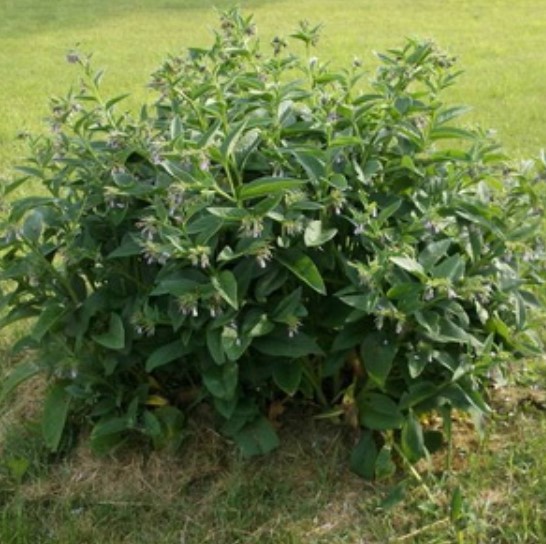
Some varieties of comfrey make excellent additions to flowerbeds and shaded areas of the garden. Due to the high nutrient content of its vegetative mass, comfrey is ideal for making liquid green manure.
When mulching
The plant's leaves and stems are used as mulch for other plantings. The above-ground portion is mown before the fruit appears and laid over the crop bed. After a few weeks, another layer of mulch can be applied. Exposure to water and sun will cause the comfrey to rot, releasing all its nutrients into the soil.
Fertilizer
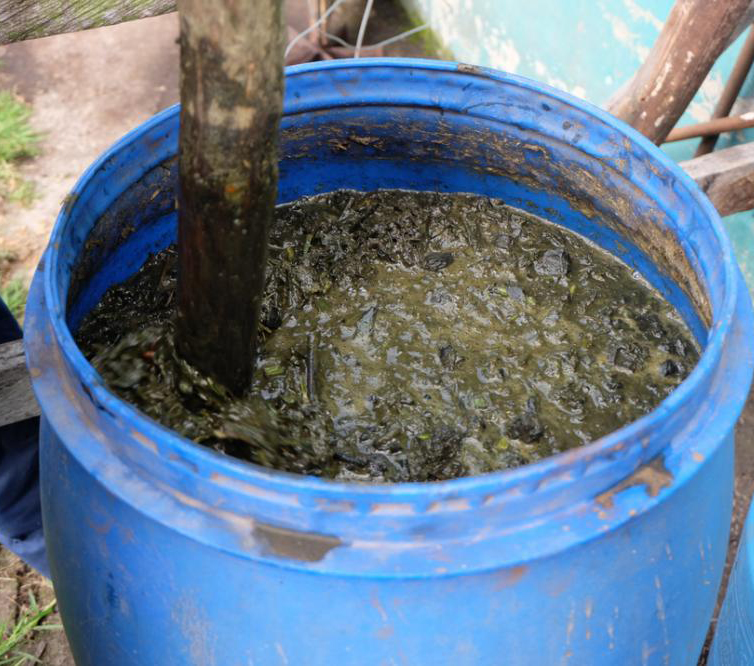
To prepare a green infusion used to feed various crops, 800 grams of crushed comfrey leaves are poured into 10 liters of water and left to ferment in the sun. The concentrate is diluted 1:10 and can be used to fertilize plants by watering them at the roots after the main watering. Many gardeners also use this infusion for foliar application. Nettle, chamomile, and dandelion can also be added to the comfrey.
Compost
Grass is also excellent for composting, which will later serve as organic fertilizer. It's important to add soil to the compost pile, about 10% of the total volume. The green mass is periodically turned and moistened, and in cool weather, it is covered with perforated plastic.
Application in landscape
In landscape design, comfrey is used to create mixed borders, which look great in the background of a composition. The plant can also be used as a decorative element for borders, walls, and fences. It is sometimes planted around the trunks of garden trees and shrubs.
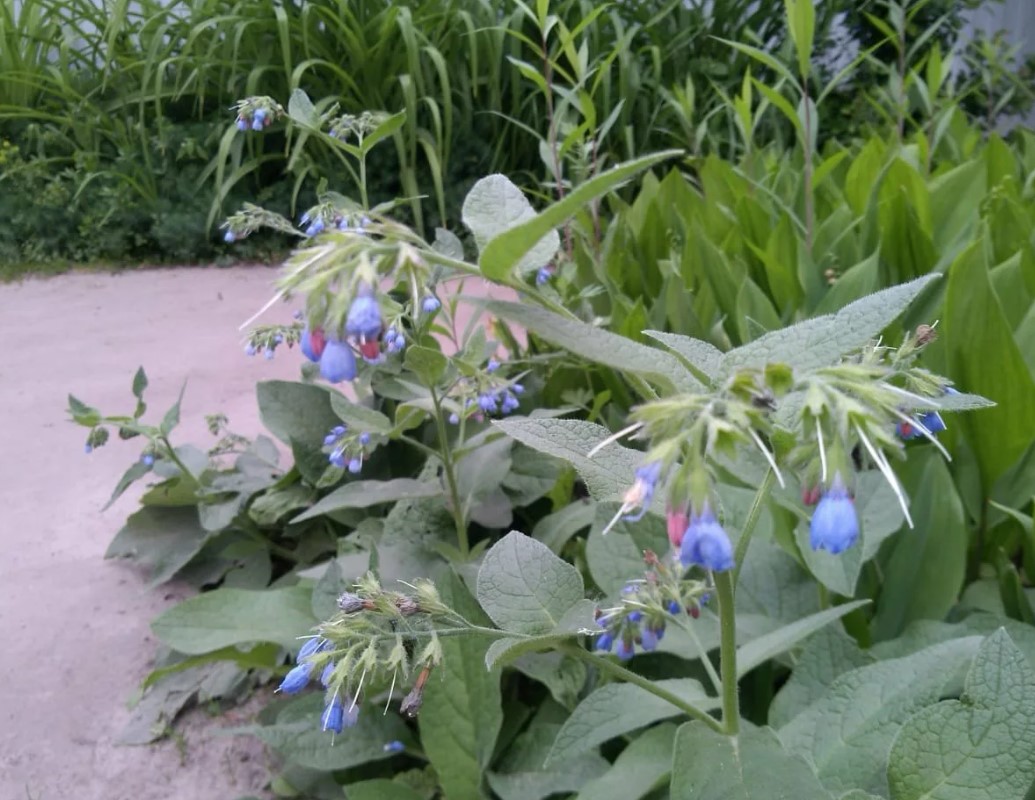
The area is given a decorative touch by singly planted comfrey bushes, framed with boulders or pebbles.
Low-growing groundcover varieties can form the green base of any flowerbed; they will not only delight you with their blooms, but also prevent numerous weeds from growing.
Medicinal properties of comfrey
The roots are considered the most beneficial part of comfrey. They are harvested in early spring or fall. Their medicinal properties stem from their rich composition, which includes gums, tannins, resins, alkaloids, allantoin, and mucilage, all beneficial to the human body.
Tinctures and decoctions of the root have antimicrobial, hemostatic, anti-inflammatory, and astringent properties. They are used in the treatment of arthrosis, gout, arthritis, bone tuberculosis, and periostitis.
In folk medicine, comfrey roots are also used to prepare ointments and alcohol tinctures, which are effective against skin conditions. A milk-based tincture of the roots is used for inflammation of the oral mucosa, kidney disease, and lung disease.
Contraindications for the use of comfrey
Extreme caution should be exercised when using comfrey medicinally, as it contains substances hazardous to humans. Improper use can result in severe poisoning or an allergic reaction. Pregnant and breastfeeding women, as well as those with known intolerances to any of the ingredients, should avoid using the plant.
Comfrey Reviews
Good day to you! I inherited comfrey along with the plot as a weed. I fought it long and hard until I found—I can hardly remember where—information about its usefulness as a green manure. Indeed, during the not-so-long Baltic summer, I mow it at least 3-4 times, chop it up, and use it as needed: either I lay it in the bed as is, or I prepare it using green manure technology; when I'm really short on time, I just add it to the compost pile.
I inherited this too. It loves low-lying, damp places. We usually collect it, cut it, dry it, and then infuse it in vodka. It's an excellent remedy for joint and bone pain. Especially after a lot of plowing at the dacha.
As for its attractiveness as a plant, it's best to plant it in full sun. At the very least, it's a huge, beautiful bush with clusters of lilac-pink flowers. It's very easy to grow. And it's used to treat not only joint and muscle pain, but also skin ulcers. The only thing is, it should be consumed with extreme caution. It's generally considered poisonous.
Good afternoon
This is my first year growing a comfrey hybrid. And this is my first year using comfrey fertilizer.
The result is amazing. I ran out of strawberries in mid-June, and canned the cucumbers in early July.
The flowers are taller than a person. I'm already using potatoes, too—the minimum size is 8 cm in diameter.
I make a salad from the leaves and get an extract.
In general, as the ancients said, Comfrey is the “garden’s pantry.”