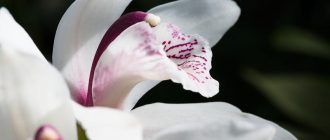
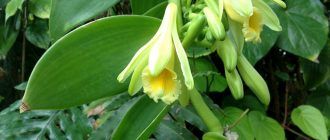
Oncidium is a genus of herbaceous perennials in the orchid family. It is native to Central and South America, southern Florida, and the Antilles.
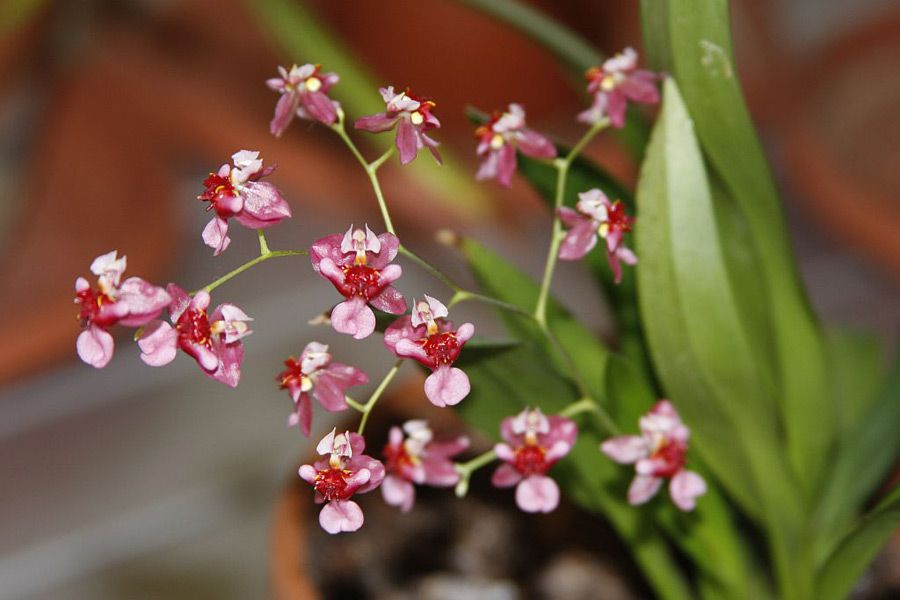
Members of this genus are epiphytes, but there are also lithophyte and terrestrial varieties. The flowers resemble butterflies emerging from their chrysalises. For this reason, Oncidium is also known as dancing chrysalises.
Oncidium varieties and their care features
There are more than 700 species of oncidium orchids, not counting hybrid varieties.
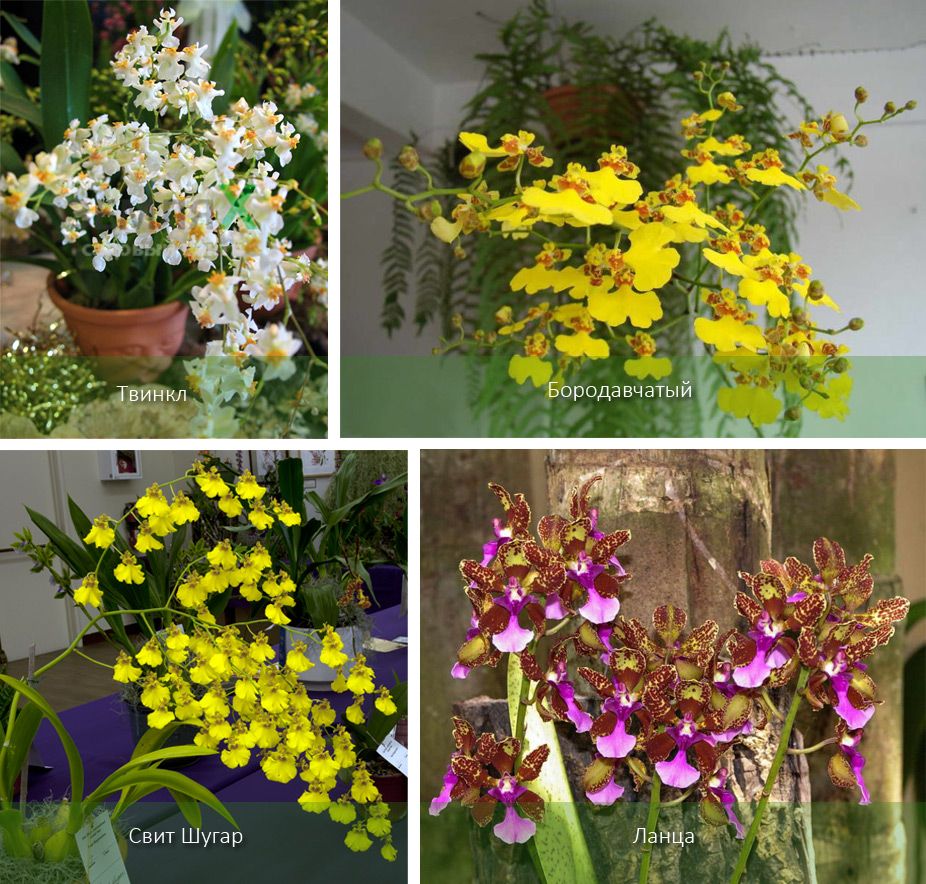
They differ in the color of the flowers and the time of their formation, the temperature at which they are kept, and a number of other features.
| View | Description | Flowers, their blooming period | Temperature of content | |
| Summer | Winter | |||
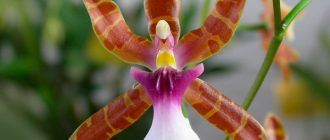
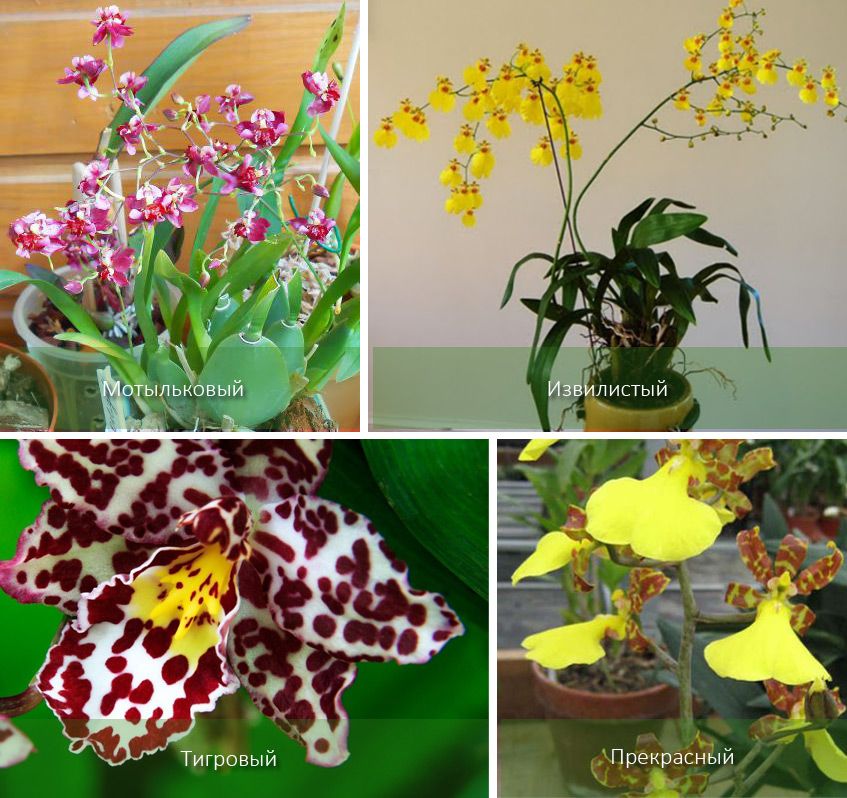
| Papilionaceous | Yellow-green leaves with a marbled pattern. The pseudobulb produces a single flower stalk for several years. | Reddish-brown, lemon-colored spots, yellow lip with brown streaks. Striking butterfly-like antennae. August - September. 2-3 weeks. |
+25…+30 °C | +15…+19 °C |
| Lanza | Hard, fleshy leaves, light green, with small coffee-colored dots along the edges. | Olive-green, with small brownish-purple spots (5 cm), white-pink lip. Pleasant aroma.
September – beginning of October. |
||
| Tiger | Grows up to 1 m. 2-3 leathery leaves. | Red-brown, with a large yellow lip.
In September - December for a month. |
+20…+25 °C | +12…+16 °C |
| Beautiful | Tall (up to 1.5 m). The leaves grow from a single bulb, are straight and stiff. The color is rich green with a purple tint. | Bright yellow (8 cm). November - December. |
||
| Winding | Long, spreading, rich green leaves. | Small yellow ones.
September – beginning of October. |
Up to +22 °C | +7…+10 °C |
| Warty | Tall (up to 1.5 m). Narrow light green leaves. Multi-flowered (up to 100 pcs). | Canary yellow with red-brown speckles.
August - September. |
||
| Sweet Sugar | Compact. No more than two bright green leaves emerge from the tightly packed bulbs. | Golden (3 cm).
January - December. Twice for 2 weeks. |
+14…+25 °C Feels great outdoors. |
+10…+22 °C |
| Twinkle | Compact. Multi-flowered (more than 100). | White, light yellow, pink, dark red (1.5 cm). Pleasant vanilla aroma.
January – December. Twice a year. |
||
General conditions for growing oncidium
Caring for an oncidium orchid involves creating an environment for it that is as close to natural as possible.
| Parameter | Conditions |
| Location | South or southeast-facing windows. Regular ventilation of the room. Outdoor placement in summer. |
| Lighting | Bright, diffused light. Protect from direct sunlight. 10-12 hours a day, year-round. In winter, use phytolamps. |
| Humidity | 50-70%. On hot days and during winter heating, spray carefully, avoiding contact with flowers. Apply water using special equipment or wet expanded clay in a tray. Stop spraying when the temperature drops below 18°C. |
| Top dressing | During active growth, after the flower stalk appears, apply orchid fertilizer. Reduce the dosage by half for root fertilizers, and by 10 times for foliar fertilizers. Alternate, applying one fertilizer every 2-3 weeks. Stop when the flowers open. |
Features of watering
During active growth, water an adult plant once every 1-2 weeks. During inactive growth, water every 1-2 months (check the substrate for dryness—10 cm).
Process:
- Prepare a container with warm water (slightly more than room temperature).
- The orchid pot is immersed there for an hour.
- They take it out of the water, let it drain and dry it.
Stop watering when a new pseudobulb appears. When the flower stalk forms (after a month), continue watering as usual. Reduce watering after flowering, before the dormant period.
Landing, transplant
Orchids don't like being disturbed. Therefore, repotting is only done in the following cases: when the plant outgrows its pot, when the roots rot, or when the substrate deteriorates. This is usually done every 3-4 years.
- Take soil for orchids or prepare it yourself: small fractions of pine bark, charcoal, peat chips, chopped sphagnum moss (equal proportions).
- To prevent putrefaction, add coarse river sand, crushed chalk, and crushed red brick (10%). Sterilize (steam or oven).
- The orchid is removed and immersed in water for 3 hours.
- Trim off all damaged roots, treat the cuts with activated charcoal, and leave them to dry for a while.
- Take a wide, shallow plastic pot with holes. Fill it 1/3 full with a drainage layer (expanded clay or pebbles) and 3 cm of the prepared substrate.
- The old orchid pseudobulb is placed approximately 2 cm from the edge of the container, and the young one is directed to the center.
- Add soil, leaving a third of the pseudobulbs sticking out, and cover them with moistened moss.
- The plant is not watered for a week.
Reproduction
Oncidium orchids are propagated in two ways: using a bulb or by dividing the bush.
Bulba
If the plant has six or more bulbs, use a sharp knife to cut off three shoots from each side. Sprinkle the cuts with charcoal. Do not water the oncidium before or after (only after 7 days).
Dividing the bush
Three sprouts are separated from each side.
Sometimes the plant itself produces a separate young shoot, which is simply separated from the mother plant.
Errors and their solutions, diseases, pests
An orchid can get sick if you don’t follow basic care rules.
| Manifestations on leaves, etc. | Cause | Solution |
| Rotting. | Overwatering. Excess moisture has accumulated at the growth point and within the leaf walls. | Normalize watering. |
| Formation of brown spots. | Bacterial or fungal infection. | Remove damaged parts and treat cuts with charcoal. Increase the frequency of watering. Ventilate the room. |
| Wrinkling, including bulbs, drying out of the ends. | Lack of watering, dry air. | Creates a more humid existence. |
| The appearance of white spots, also on flowers. | Excess fertilizer. | Adjust the feeding. |
| Yellowing and dropping of flowers. | Bright sun. | They shade. |
| The appearance of mold, brown roots, slime, moisture on the leaves and base. | Root rot. | The affected areas are removed. The cuts are treated. The plant is repotted and periodically watered with Fundazol. |
| Formation of white watery spots, including on new bulbs. | Bacterial rot. | Trim off affected parts and treat with Bordeaux mixture. Repeat after 3 weeks. |
| Covering the bulbs with a waxy coating, cottony white formations. | Mealybug. | Apply a lather of laundry soap for 1 hour. Spray with Akthar and cover the plant with a plastic bag for 3 days. |
| Paleness of the back side, appearance of cobwebs. | Spider mite. | Apply a soap-alcohol solution. After 30 minutes, water and spray generously, then cover with a bag. Treated with Actellic and Aktar. |