There are several possible causes of apple tree drop: disease and pest infestation, poor care, and natural processes (excessive flower buds). To eliminate these negative factors, it's necessary to treat the plant with insecticides and adjust the watering schedule.
Content
Reasons why apples fall prematurely
There are several reasons why apples fall prematurely, which may be due to the negative impact of external factors (diseases, insects, weather conditions) or natural processes (the tree is unable to ensure the ripening of all the fruits and is forced to shed them while they are still green).
Diseases and pests
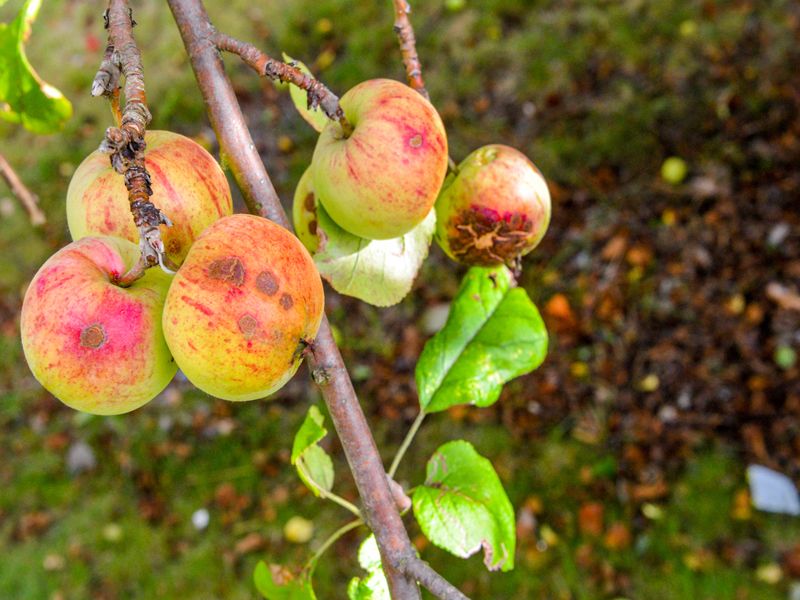
One of the common causes is the development of rot, which is formed as a result of the plant being affected by the codling moth.
This pest is one of the most dangerous and, to identify it, you need to carefully examine fallen apples and cut them with a knife. If worms are present inside, the tree is affected.
Improper care
If the tree appears healthy but the apples are falling off, you should reconsider your plant care; it may be due to a lack or excess of moisture.
If there's not enough water, the leaves draw water from the fruit, causing it to drop. This problem is quite common in trees growing in light soil, grafted, and on dwarf rootstocks (a vegetative propagation method used to grow certain varieties of dwarf apple trees).
Watering
To determine whether an apple tree needs watering, check the soil beneath the crown. If the soil is crumbly, the plant needs to be moistened. It's important to remember that overwatering causes oxygen deficiency, which prevents the roots from moistening the fruit and foliage.
For the tree to grow and develop well, watering three times a day is sufficient, but only if the soil is moist to a depth of at least eighty centimeters. The watering schedule is as follows:
- before flowering;
- during the period of apple setting;
- before frost.
When watering, you need to create a ridge of soil around the perimeter of the crown and pour liquid along its ring.
Falling as a natural process
Apple trees have many flower buds, each capable of producing about five flowers. But only about ten percent of them eventually produce fruit. The rest fall off when they set, or the unripe apples are dropped immediately after flowering.
Sometimes, almost ripe fruits may fall off; this is normal for certain varieties, such as Mayak and Manten. Fallen apples are collected and left to rest.
Other reasons why apples fall off in the garden
- Poor pollination. Since apple trees are cross-pollinated crops, it's important to select varieties that can fertilize each other. Particular attention should be paid to attracting pollen-carrying insects.
- Late frosts. When cold weather arrives after fruit has set, it causes them to fall off.
Signs of starvation
- yellowing of foliage;
- wrinkling of fruits;
- apples falling.
A healthy apple tree requires constant feeding. Specific nutrition is required at each stage of development. For example, from early spring until June, the plant requires nitrogen, so feeding should be done regularly – every 14 days. It's also important to remember that the most active small roots are located at the edge of the tree's crown.
The entire tree trunk area requires fertilization. Create small grooves and pour fertilizer into them. The amount of fertilizer should be determined by following the dosage instructions on the packaging.
Top.tomathouse.com recommends: what to feed to prevent them from falling off?
To reduce the risk of apple tree drop due to external factors, use superphosphate. Apply approximately 20-25 grams of the product per 10 liters of water. Pour the fertilizer into a trench created around the entire periphery of the tree's crown. Apply one bucket per linear meter.
You can prevent fruit drop by using potassium sulfate (if the plant is deficient in this substance). Take 5-10 grams of the product and dilute it in ten liters of water. Using the fertilizer is similar to using superphosphate.
Also, these superphosphate and potassium can be combined, then the risk of apples falling off will be significantly reduced.
Pest control
The codling moth is considered the most damaging insect to apple trees. It can infest up to 700 fruits with its larvae in a single season, causing significant damage to the tree. This pest can be controlled using the following methods:
- cleaning and disinfection of storage facilities and tree trunk circles;
- treating plants with insecticides during the period of active insect flight;
- implementation of pheromone traps;
- use of insect control agents;
- cultivation of varieties that are less susceptible to insect attacks.
It is worth noting that it is necessary to clean not only the circles around the trunk, but also the bark that is prone to peeling, since caterpillars can penetrate into absolutely any cracks.
Insecticides can only control hatched moths, but since their emergence period is prolonged, two treatments, spaced ten days apart, are required. Both chemical and biological agents are used. Among the most effective are Admiral and Insegar.
Butterfly pupae emerge from fallen fruit, so it's essential to collect the fallen fruit and bury it deep in the soil. At the same time, it's a good idea to set up trapping belts to regularly remove caterpillars.
Other measures
Almost all causes of premature apple drop can be neutralized or minimized:
- Acidic soil can be neutralized with an infusion of 5-6 eggshells. It's prepared as follows: place the eggshells in a liter jar, fill with water to the rim, and let steep for 3-5 days until the liquid becomes cloudy and develops a characteristic rotten odor. This solution is then used to water the apple tree until the fruit stops falling.
- The negative impact of frost is neutralized by several methods: the tree is treated with a solution of "Ovary", and the crown is watered with cold water before sunrise.
- You can even combat the tree's age by pruning its branches in a timely manner. However, it's important to remember that improper pruning can actually cause apples to drop.
- If fruit ripening is uneven, with some already falling and others not yet fully ripe, it's worth using growth stimulants. Immunocytophyte and Novosil are considered the most effective.
By following these steps, the likelihood of apple tree drop is significantly reduced. The key is to strictly follow the instructions for various insect control products.