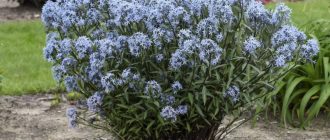
Osteospermum are perennial and annual herbs, shrubs and subshrubs native to South Africa, belonging to the Asteraceae family.
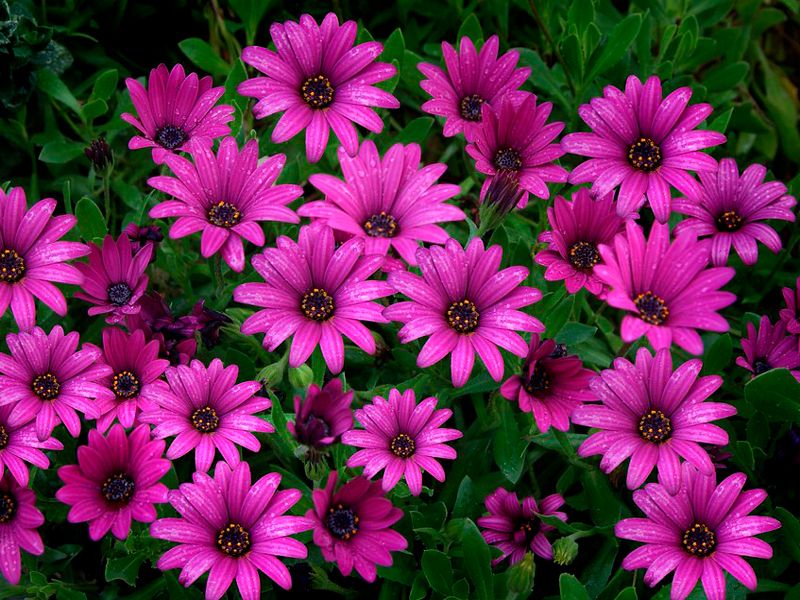
The variety is used primarily for ornamental purposes. Due to its close resemblance to chamomile, the plant is often referred to as African chamomile, Cape chamomile, or blue-eyed chamomile, as well as Cape daisy.
Content
Description and characteristics of osteospermum
Osteospermum is a shrub growing up to 1 m in height, but it rarely reaches this size, and 0.5 m specimens are more common in flower beds. Gardeners typically grow the plant as an annual. Its key feature is the fragrance emitted by the leaves and stems, which are lightly pubescent throughout.
Flowering begins in June and continues until the autumn frosts, characterized by the abundant formation of new buds. The flower resembles a daisy in appearance, but with a wider range of shades, including light, scarlet, and orange.
They range in size from 2.5 to 7.5 cm and are visible open only in sunny weather, protecting their pollen. Osteospermum may slow or even stop growing during the summer heat; however, avoid overwatering or treating the plant. This reaction is natural and will resolve on its own once temperatures return to normal.
Types and varieties of osteospermum
International organizations count about 70 species of the plant and its hybrids.
Eclona
This branched annual plant reaches 1 m in height. Its narrow leaves are tapered to a few teeth at the edges.
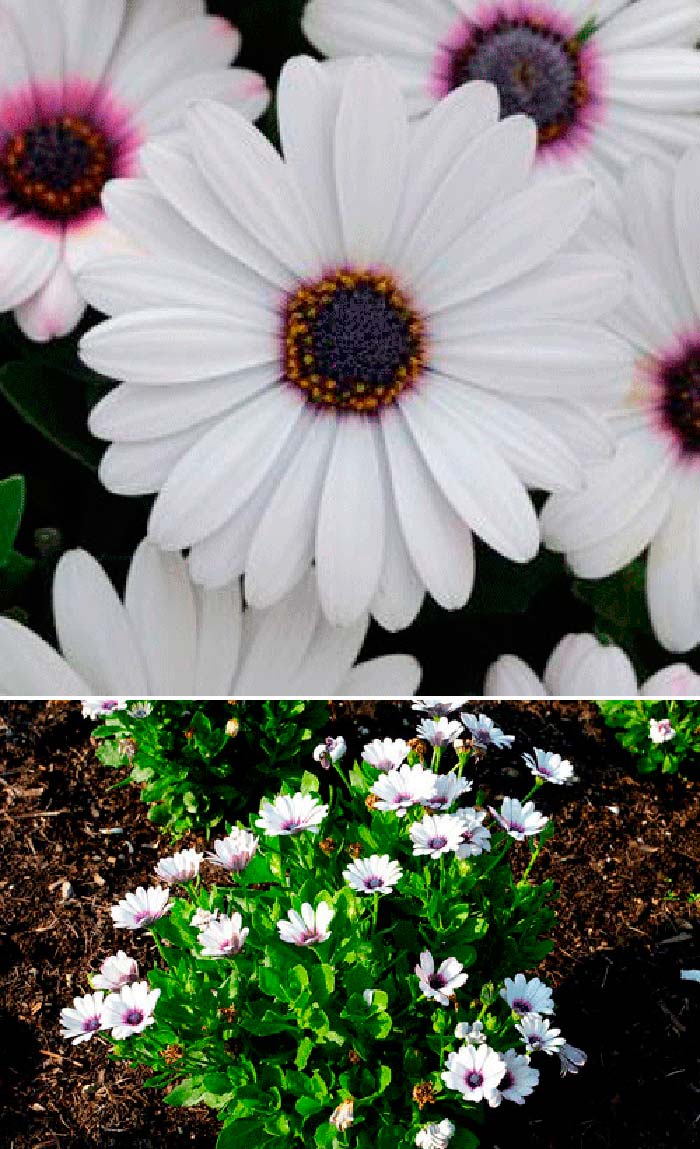
The petals are predominantly white with veins at the base, framing a dark basket.
Hybrid varieties
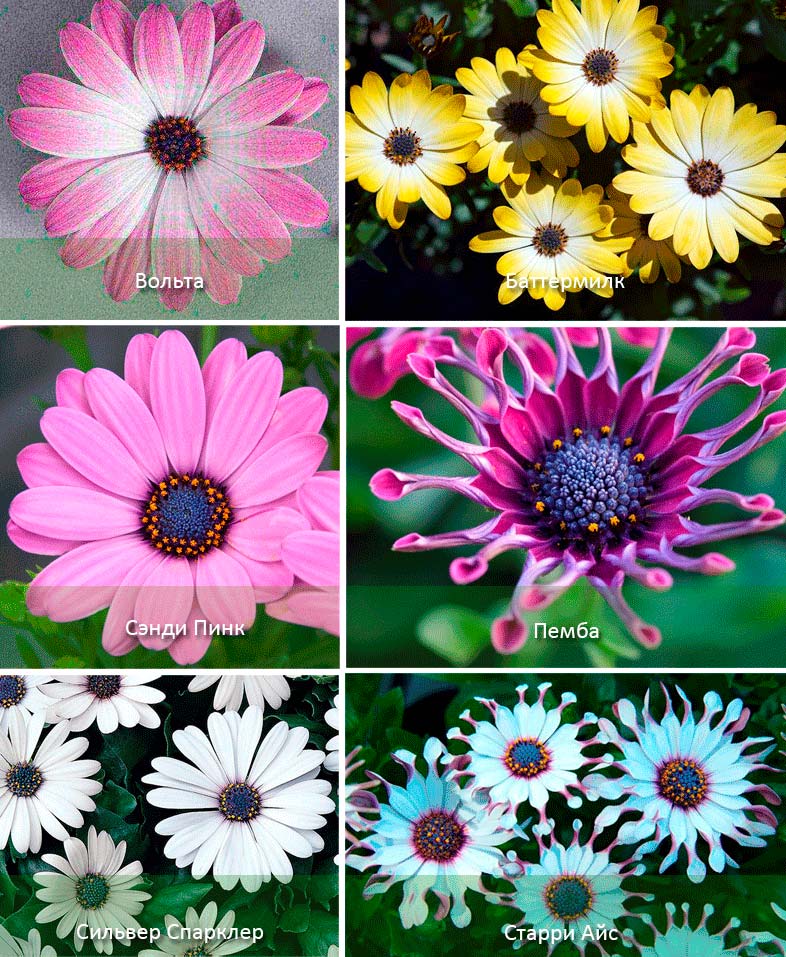
| Varieties | Inflorescences |
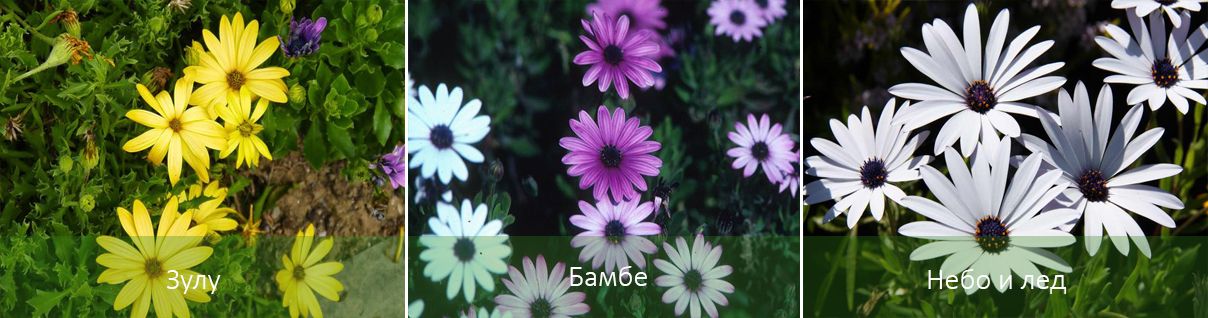
| Zulu | Bright yellow. |
| Bambe | Shades from white to purple. |
| Sky and Ice | White, blue core. |
| Volta | The pink petals turn white as they bloom. |
| Buttermilk | Bright yellow, fading during flowering. |
| Silver Sparkler | White. |
| Congo | Purple, pink. |
| Pemba | Half-collected into a tube. |
| Sandy Pink | Pink. |
| Starry Ice | Blue inside, white outside. Spoon-shaped ligulate inflorescences. |
Noticeable
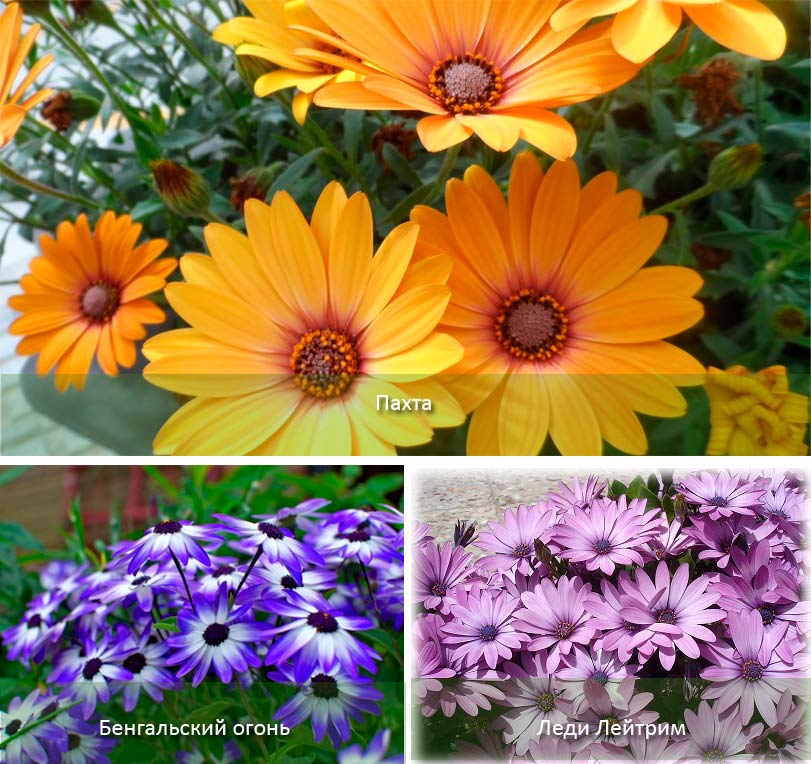
A low-growing annual, reaching 0.5–0.7 m in height. The flowers change color as they open.
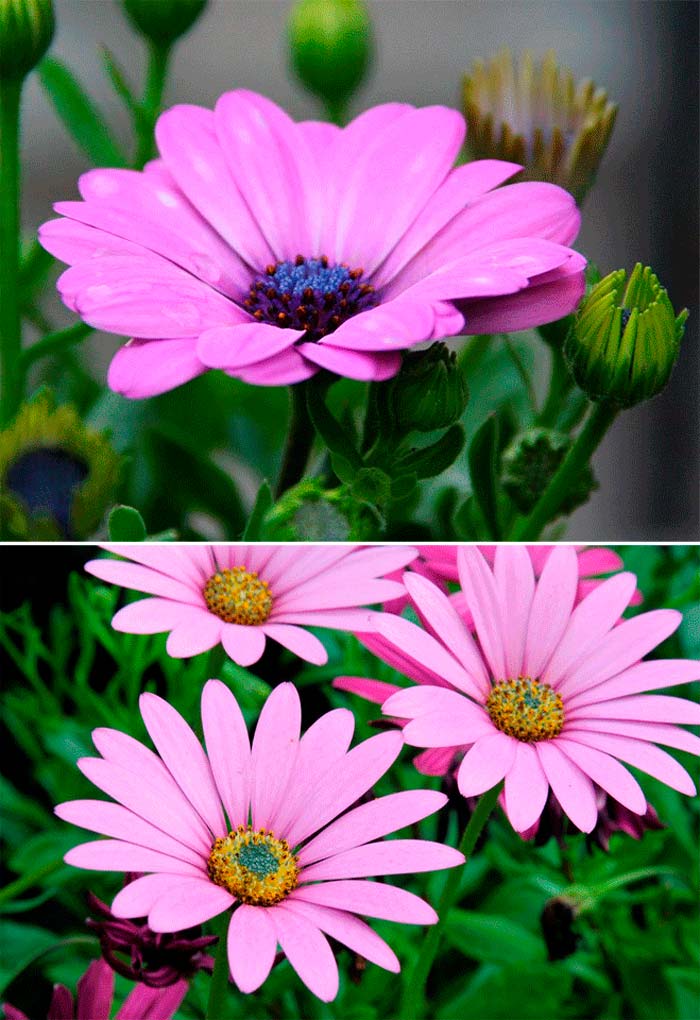
Hybrid varieties
| Varieties | Inflorescences |
| Buttermilk | The yellowish tint changes to bronze on the shadow side. |
| Lady Leitrim | Lilac petals frame a dark colored center. |
| Sparkler | White with blue. |
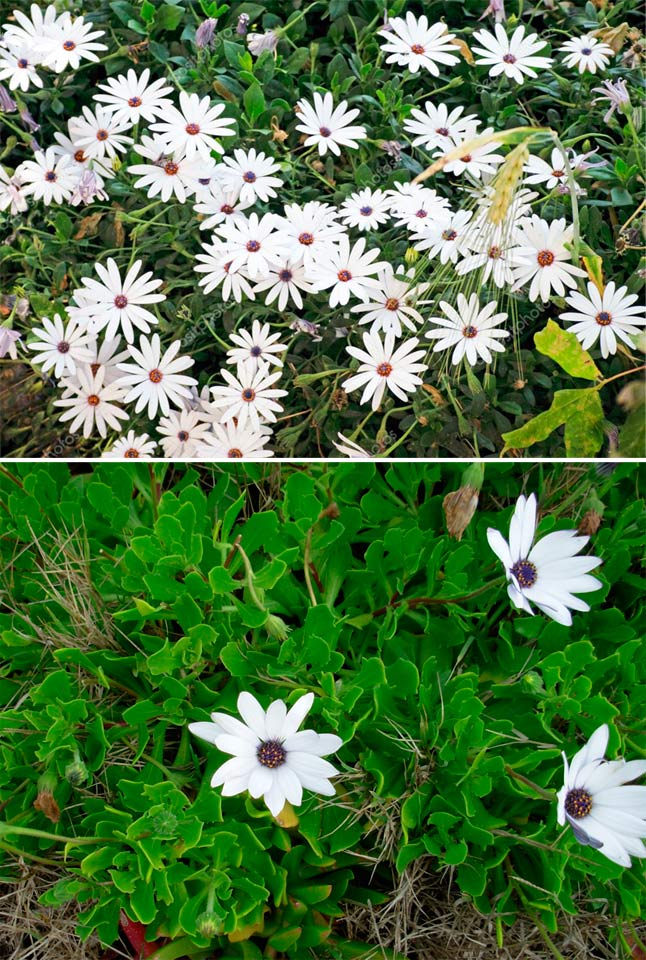
Shrub
The small size is compensated by the high density of flowers on one bush.
Hybrid varieties
| Varieties | Inflorescences |
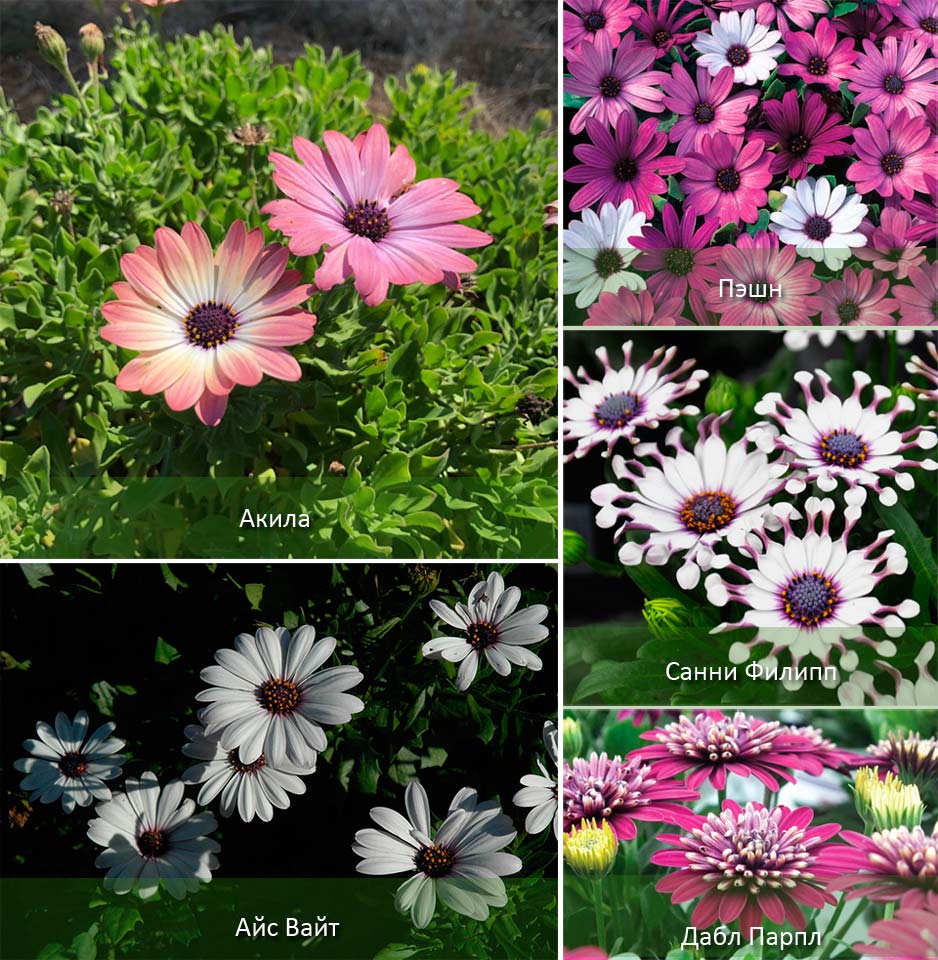
| Akila | They include a varied palette – from white to purple tones. |
| Passion | Inflorescences are simple, lilac, pink or white, about 5 cm. Decorated with longitudinal stripes. |
| Ice White | Distinct white petals frame a dark center interspersed with yellow stamens. |
| Sunny Philip | The purple edges curl up to form a tube shape, the rest of the area is white. |
| Double Purple | Characteristic purple color, petals are tubular in the center. |
Reproduction of osteospermum
It is produced by seed and cuttings, but the latter is only suitable for indoor specimens.
Propagation by seeds
To avoid problems associated with transplanting, large seeds are initially planted in individual cups. The best time for this varies by region. According to the lunar calendar, planting should be in April.
The soil should be loose and well-drained. It should contain:
- Sand;
- Peat;
- Turf soil.
For convenience, you can plant the seeds in peat pellets. This will eliminate the need for additional fertilization, as the soil will already be saturated with all the necessary nutrients. This method ensures the preservation of the roots during transplantation. To properly plant the plant, you must:
- Place the seed in the soil to a depth of no more than 0.5 cm;
- Cover the container with glass or plastic;
- Leave in a warm, dry place for 1 week.
It is noteworthy that the sowing process does not require preliminary soaking of the seeds, due to the characteristics of ostespermum, which is very sensitive to excess moisture.
After a week, place the seedlings on a windowsill; a favorable temperature for them will be around 18°C. The seedlings will begin to stretch if there is insufficient natural light. This can be supplemented by using an additional light source; phytolamps are ideal. It's important to keep in mind that the recommended daylight hours are approximately 14 hours. It's important to provide regular but moderate watering, as stagnant water can cause osteospermum rot.
Harden off the plant 15 days before transplanting it outdoors. To do this, place the seedlings outside for a few minutes, gradually increasing the time spent outdoors. Once the threat of frost has passed and typical May weather returns, transplant the plant outdoors, maintaining a distance of 0.5 meters between seedlings.
When propagating osteospermum from seeds collected in your own garden, you should not expect to obtain similar specimens; this applies especially to double varieties.
Propagation by cuttings
It's best to take cuttings no later than April. Cuttings from the upper portion of a mature plant are suitable for propagation. Trim off any leaves that reach 7 cm in length. Remove lower leaves and recut the stems. Then, tilting the seedlings slightly, place them in a substrate consisting of sand and vermiculite. Create a greenhouse effect by covering the container with plastic and placing it in a well-lit area. Regular ventilation and watering of the cuttings is essential. They will begin to root within two weeks.
Planting and care in open ground
A sun-loving plant prefers an open, well-lit place, although a little shade is also acceptable.
Basic soil requirements:
- Acidity is about 7 pH, slightly acidic is also acceptable;
- Moderate fertility;
- Looseness;
- Water and air permeability.
Before planting, the soil must be dug over to loosen it, leveled, and allowed to settle. The root ball must not be disturbed, so its volume must be taken into account when digging the holes. After planting, lightly compact the soil around the plant and moisten it thoroughly.
The intensity of flowering depends on the regularity of watering during this period, but the rest of the time it is worth watering as needed.
Pinching and fertilizing
The plant's branching depends directly on timely pinching. This primarily affects the shoot tips. Growing the plant also requires applying mineral fertilizers three times per season:
- 15 days after planting in open ground;
- At the stage of bud formation;
- On the eve of autumn.
To maintain a decorative appearance, it is important to promptly remove wilting inflorescences from the plant.
Osteospermum wintering
Osteospermum can successfully overwinter only in relatively warm regions, that is, those where the minimum temperature does not drop below -10°C. In this case, the plant requires additional insulation, for example, by covering it with dry leaves.
If the temperature range does not meet the requirement, the following steps should be taken:
- Carefully remove the bush without damaging its root system;
- Place in a wide container;
- Leave it at a temperature not lower than -10 °C and water occasionally;
- In spring, plant the osteospermum back.
A bush that has overwintered outdoors should have all its stems cut back in the spring.
Diseases and pests
Osteospermum is not susceptible to most insect pests common in temperate climates, and the situation is similar with diseases. Excessive watering can be harmful to the shrub, as it can cause root rot. In this case, treat the shrub with fungicides.
It's not always possible to cure a plant, so it's important to take preventative measures promptly to help keep the shrub healthy. Disease prevention includes:
- Timely weeding;
- Proper storage of seeds;
- Regular monitoring of soil pH; neither too low nor too high acidity levels are acceptable;
- Regular weeding, proper watering;
- Maintaining soil looseness;
- Remove any remaining plant fragments; it is important to prevent them from overwintering in the soil.
In the absence of other food sources, aphids will begin feeding on the osteospermum. Typical symptoms include yellowing and leaf drop. To get rid of the pest, simply spray the bush with insecticides. Folk remedies, such as a soap solution, are also suitable. To make it, take 1-2 cups of ash and pour 10 liters of boiling water with 1/7 of a standard bar of laundry soap, which should be crushed into shavings. Then let the solution sit overnight. Before spraying, sift it through cheesecloth. This is excellent for protecting young plants.
Top.tomathouse.com recommends: Cape chamomile placement ideas in the garden
This plant looks great in both large and small gardens. It can be planted as a border plant, paired with stone arrangements, and is also suitable for mixed flower beds and borders. Its simple appearance makes it versatile, pairing well with a wide range of plant species and varieties.
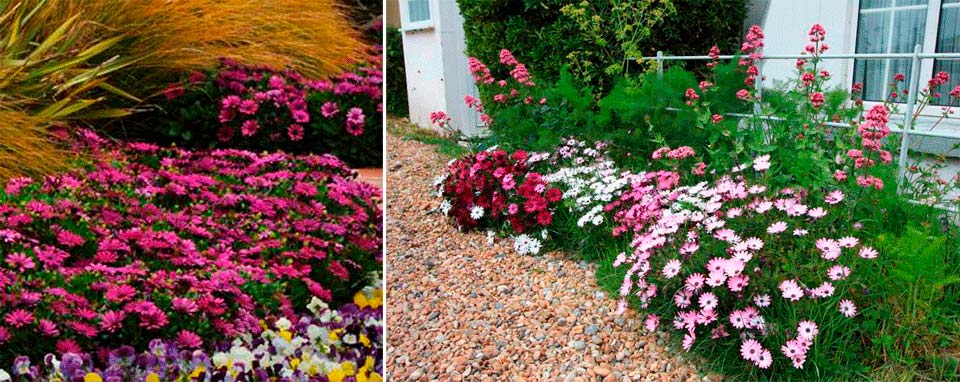
Used to decorate lawns, it can also attract attention as a standalone plant. Compact varieties are suitable for pots, hanging baskets, balconies, and terraces. It's a good idea to tie the stems if the bush becomes too full to maintain its shape. Dwarf varieties can be used as groundcover. White osteospermums create a wonderful composition with lavender, iberis, forget-me-nots, and petunias.