Osteospermum is a shrub plant belonging to the Asteraceae family. In its natural habitat, this evergreen shrub grows in the Cape Province of South Africa and reaches a height of up to a meter. In temperate latitudes, it is cultivated as an annual.
African daisy, blue-eyed daisy, or Cape daisy, is a striking plant that appeared in Russia relatively recently but has already gained popularity among gardeners. Breeders have developed medium-sized and low-growing varieties with striking, unusual colors.
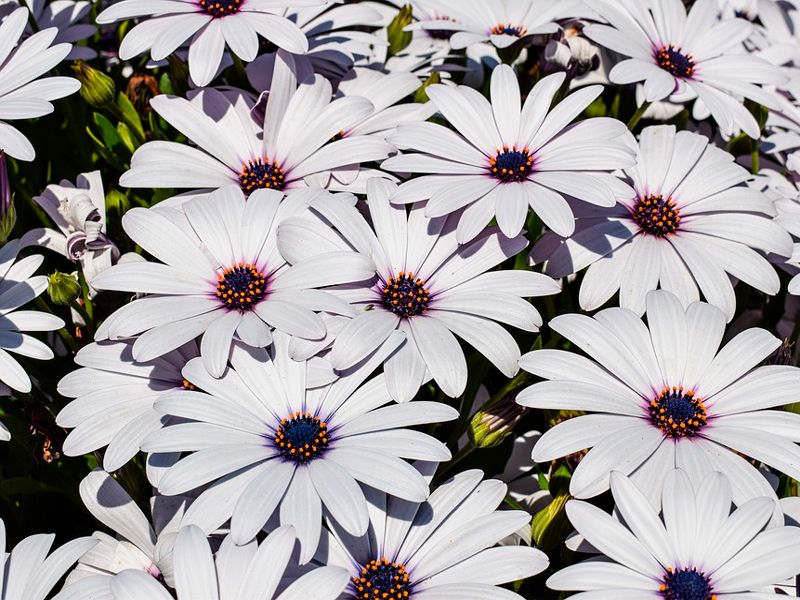
They created a stunning variety of cold-loving flower, "Sky and Ice." Suitable for growing outdoors, on balconies, and in apartments, the plant delights with its long, abundant blooms and unusually colored buds.
Description of osteospermum Sky and Ice
The Sky and Ice variety is a perennial, grown as an annual or biennial in temperate climates, and thrives in pots and flowerbeds. The center of the flower, which grows to 5–6 cm in diameter, is a vibrant dark blue, framed by a yellow-brown corolla along the edge, and resists fading in bright sunlight. The linear petals are snow-white, slightly textured, narrow, with a rounded tip, and curled slightly toward the center at the edges.
The bush grows up to 30 cm tall, branches well, and produces numerous buds. It blooms from late June until early October.
Bred for landscape design, it can survive indoors for several years. It blooms profusely during the first few years of the year, provided proper cultivation practices with dormant periods are followed.
Flower for home cultivation
Flower lovers without land grow African daisies called Sky and Ice indoors. Osteospermum grows from seeds and is propagated by cuttings and division during replanting.
Many gardeners bring potted plants into conservatories or apartments to extend the flowering period. Mature plants tolerate transplanting well if dug up with a large lump of soil. When grown indoors, the plant is moved to balconies or loggias when nighttime temperatures rise to 12°C, allowing it to undergo a short rest period. When the outside air warms to 17–20°C, the osteospermum will once again delight with its blue-eyed daisies.
Growing conditions
Growing osteospermum in pots has been practiced for a relatively short time.
Location
Choose a well-lit, not too warm spot for osteospermum indoors. Direct sunlight is undesirable, as it will heat the soil too much. A windowsill facing east or west is ideal. When growing on a south-facing window, provide shade. In poorly lit areas, the plant will become very leggy, and the number of buds will decrease.
Priming
According to gardeners, the abundance of flowering directly depends on the composition of the soil mixture. Like all asters, osteospermum dislikes excess nitrogen; the roots will rot in humus; the amount should be no more than a quarter. It's essential to add turf, leaf mold, and river sand to prevent water stagnation.
For planting, you can use a general-purpose potting soil for flowers with vermiculite, a moisture-retaining component. Cactus and succulent soil is considered ideal. Be sure to add up to 5 cm of drainage material to the bottom of the pot.
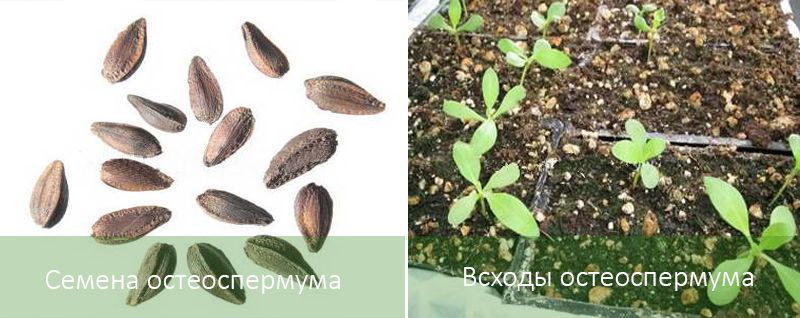
Seeds are planted in the spring, usually in early April. They are planted at a depth of 5 mm. The seeds are pre-germinated and placed in a damp cloth for 2-3 days. If dry seeds are planted in the soil, seedlings will emerge 5-7 days after planting.
If the shoots have become elongated, they are covered with soil up to the level of the sepals. Using soil helps the root system develop faster. When five main leaves appear, pinch the top to encourage active branching of the stem.
Watering
Seedlings are watered every 2-3 days, preventing the top layer of soil from drying out. Watering is then reduced to 1-2 times a week, depending on the humidity in the apartment. Allow the soil to dry out. Osteospermums, like all asters, should not be overwatered; they are drought-resistant and prone to fungal diseases and root rot. If the root system is damaged, the plant begins to wilt, the stems bend, and the plant dies. Applying phytosporin to the soil when repotting will help save the plant.
Darkened soft roots must be removed. Water the plant with a weak solution of potassium permanganate or fungicides. On cloudy days, watering can be replaced with a generous misting.
Top dressing
Fertilize the plant along with watering once a quarter. The plant requires feeding no more than three times a year. Overfeeding will result in excessive leaf formation and reduced bud formation. Phosphate, potassium, and calcium fertilizers are added.
You can use complex potting mixes for indoor plants; when diluting, double the amount of water. When the plant is dormant in winter, reduce watering, ensuring the soil doesn't dry out too much.
With proper care, the Osteospermum "Sky and Ice" will be covered in blue-eyed daisies almost year-round. If desired, this indoor plant can be planted in a flowerbed in late spring and left there until frost sets in. Then, dig it up again and bring it indoors. Deadheading the faded blooms will keep the bush looking beautiful.