The tropical pachira, striking in its understated beauty, has become a favorite among many of our compatriots, but now as a houseplant. Based on its appearance, it's more accurate to call this plant a tree. It is often used to shape beautiful standard trunks, creating the most intricate shapes and adorned with a lush yet delicate crown.
Pachira belongs to the baobab genus, also known as bombaxaceae, in the angiosperm family. Its distinctive feature is its hybrid form and massive trunk.
The plant is quite common in the tropics and has a number of established names, including Malabar and Guiana chestnut or saba nut (Pachira aquatica).
The plant produces distinctive, nut-like fruits. In nature, it tolerates extreme heat well, storing moisture in its lower part. Due to the unique characteristics of its trunk, it has earned another name: the bottle tree. Its symbolism is also known as the money tree.
Content
Origin and appearance of the pachira
Pachira is commonly found in Mexico, the Caribbean, and South America, reaching up to 20 meters in height in the wild. A similar plant, slightly different from the American species, can be found in Asia.
Pachira was recently introduced to Russia and has earned particular attention from collectors for its ornamental qualities, primarily imported from Thailand. Bombaxaceae, according to the highest classification, are classified as malva-ales.
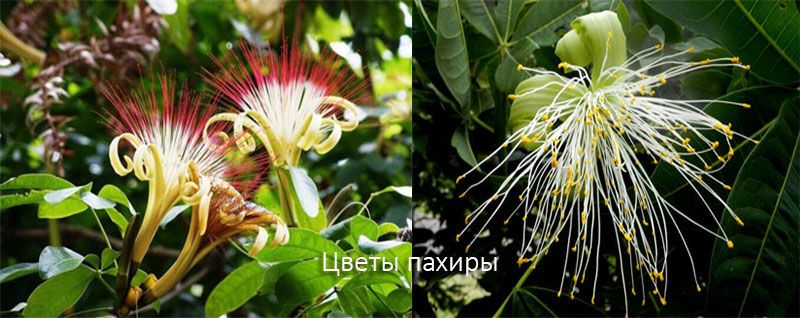
The leaves of this plant grow from a single rosette of five (palmately compound on a petiole about 15 cm long) and are green with a slight emerald hue. The flowers reach 10 cm in length, have a distinct vanilla aroma, and are held on a single panicle, the total diameter of which is about 35 cm.
After flowering, fruits form, which are eaten in the plant's native land, ground into flour, and used in confectionery. They are also used to make refreshing drinks, and in Thailand, the plant's leaves and flowers are added to salads.
In warmer climates, pachira is grown outdoors. With proper care, it blooms profusely from June to November, producing large, mallow-like inflorescences.
Caring for Pachira
Indoors, it doesn't grow taller than 2-3 m. Its branched crown reaches 1.5 m. The tree can be made into a beautiful standard tree, as it begins branching at a height of 2 m.
Flowering can only be achieved under special care conditions, more often in the southern regions of Russia.
Pachira delights with its unique appearance and fragrant, night-time vanilla aroma. There are well-known cultivation methods that allow for year-round flowering.
Window selection
Pachira prefers an east- or west-facing window where it receives morning sunlight. In poorly lit locations, it becomes very leggy and loses its decorative qualities. Provide some shade in a south-facing window during the summer, otherwise the leaves will burn.
Pachira loves “solitude”, but feels great next to a lemon.
Temperature of content
The optimum temperature is +22…+24 °C; in winter, they are given a rest period and kept at +15…+18 °C.
If the room temperature is too low or too high, the root system often rots. Pachira does not tolerate being placed near radiators.
Watering
Very careful, but they follow a number of rules:
- use water at room temperature;
- water through a tray or in a thin stream along the rim of the container;
- spray;
- Water moderately but regularly, adding water in small portions when the soil dries out.
In winter and autumn, watering intervals are longer.
When water gets on the trunk, the wood softens and rots. If the moisture regime is disrupted, the tree sheds its leaves.
Top dressing
Pachira requires a light fertilization with a complex organic fertilizer approximately once a month in spring and summer. For optimal growth, the tree should be fertilized every three weeks. Do not fertilize during the dormant period.
Trimming
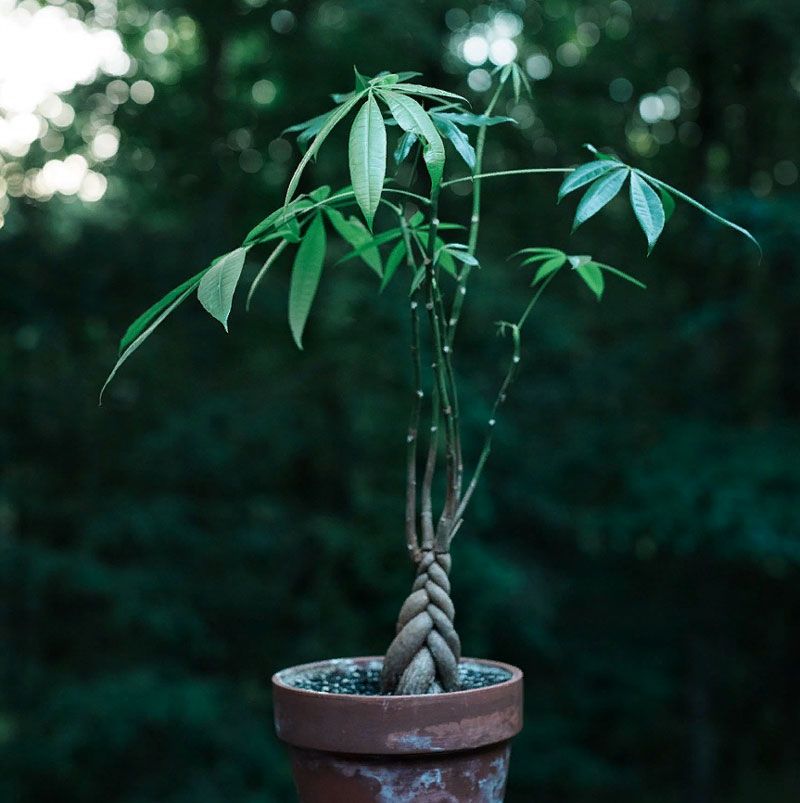
Regular pruning can help achieve a lush crown. Pachira is typically shaped in the spring before the next growing season. Branches are pruned when they are strong, and new shoots are braided, thus forming the trunk. Root shoots are always removed to maintain the standard shape. If they are cut off when they are already grown, a scar will remain.
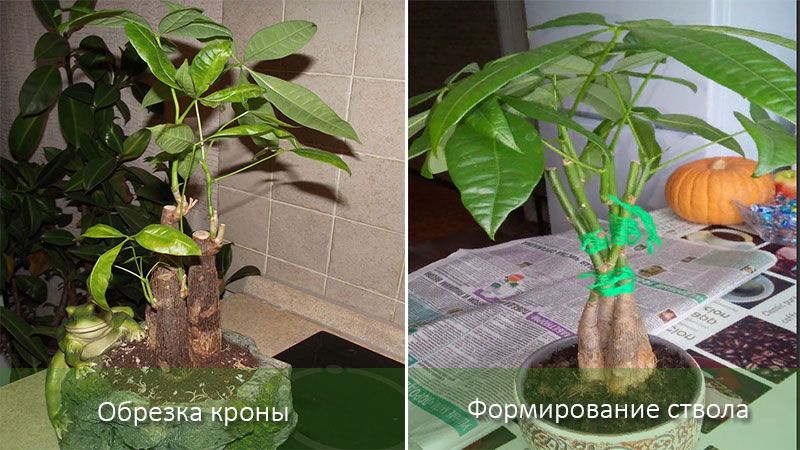
To create a braided tree and a beautiful standard tree, take three shoots and braid them as they grow. At the top of the braid, at the new intersection, use a plastic clamp, being gentle so as not to damage the tree and prevent sap flow along the trunk. You can also remove the bark at the intersection; this will allow the trunks to fuse together, creating a very stylish look. Remove the clamp when the connection has reached the desired shape.
With three shoots, even a young tree looks strong and beautiful. Standard trees can be grown independently, but this will take several years. Such specimens retail for over 14,000 rubles.
Reproduction of Pachira
To grow a young tree, you can use seeds and cuttings.
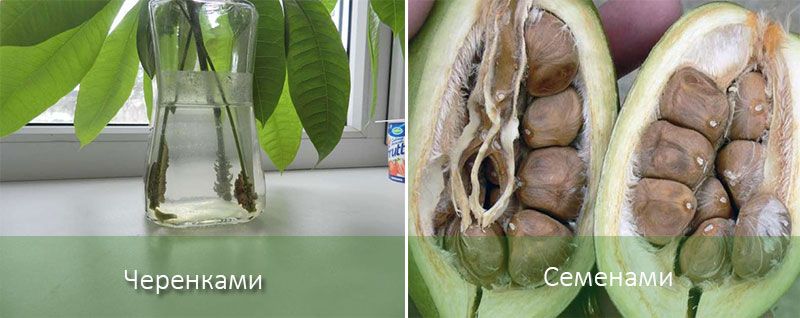
How to propagate by cuttings
Cuttings are taken in August, but at a temperature not lower than +25…+30 °C.
A regular section of stem with buds will do; it's rooted in soil in a greenhouse. For propagation, use a mixture of sand and store-bought processed peat. Cover the boxes with glass or plastic. Maintain high humidity and warm temperatures. In northern regions, this is best done in July. If time is short, cuttings can be obtained for rooting by placing them in water.
How to propagate by seeds
Fresh seeds should be used. Planting instructions correspond to those for rooting cuttings. Seeds are placed for planting at 25–30°C. Maintain a greenhouse temperature of 27°C. The container is opened regularly, ventilated, and lightly watered. Seeds sprout in 20 days. Once established, the shoots are replanted in individual containers. Soil requirements are the same as those described above for propagation by cuttings.
Pachira transplant
After purchase, the tree will need acclimatization for two weeks. During this period, keep the pachira away from other plants. Afterward, move it to a bright, even sunny location.
Transplantation after purchase
After acclimatization, the tree is repotted, after being thoroughly watered. The soil is replaced with palm substrate. To restore the roots, water with Kornevin.
Spring transplant
This is done to renew the root system and soil. The frequency depends on the age of the trees. Young trees are repotted once a year, in the spring. Mature trees are repotted every three years. Each new pot is 5 cm larger than the previous one.
Sequence of work:
- fill a third of the pot with charcoal, ceramic balls or broken bricks;
- For filling, use a not very nutritious soil (for palms, dracaenas) with a slightly acidic reaction;
- Do not bury the trunk in the soil to avoid rotting.
You can prepare the substrate yourself by mixing equal parts of river sand, leaf mold, and turf. A transplanted pachira requires normal care.
Mistakes in caring for pachira and how to correct them
| Sign on leaves and other parts of pachira | Cause | Solution |
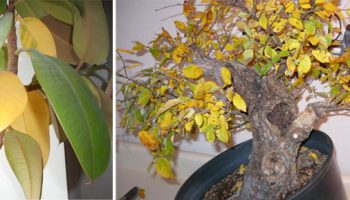
| They turn yellow and fall off. | Insufficient watering. | Water according to the rules. |
| They lose flowers, the bush itself stretches out. | Growing on a north-facing window, insufficient light. | Move to a western or eastern window with sufficient lighting. |
| They curl and lose elasticity. | Temperature fluctuations or low temperatures. | They monitor the temperature of the contents. |
| They are falling off. |
|
|
| The trunk softens and rots. | Excessive watering, risk of rotting. | Restore normal watering. If rotten areas are observed, repot, removing the damaged parts. |
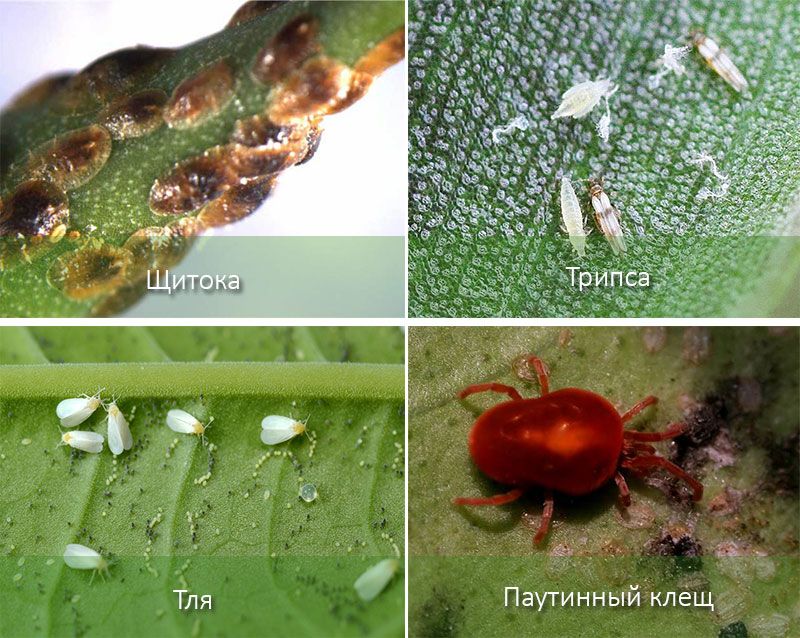
Harm and disease
| Pests | External signs on leaves | Treatment |
| Spider mites | Red insects and cobwebs. | Wash regularly with soap and spray with fungicides. |
| Scale insects | Brown spots that subsequently fall off. | The leaves and stems are washed with a solution of Karbofos or Aktara. |
| Aphid | Small white insects, sticky marks. | They create a "bath" with soapy water and place geraniums nearby. |
| Thrips | Insects with black dots, infection may occur. | Insects are removed manually and sprayed with fungicides. |
Top.tomathouse.com recommends: Pachira – the flower of luck
Florists recommend pachira to attract financial luck. At home, it delights the eye with its understated splendor, especially its standard beauty, which harmonizes with minimalist and urbane interiors.