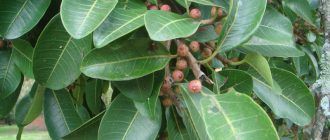
Papaya is a palm tree belonging to the Caricaceae family. It is native to Mexico and central and northern South America. Its current distribution includes all tropical countries, as well as southern Russia and the Caucasus.
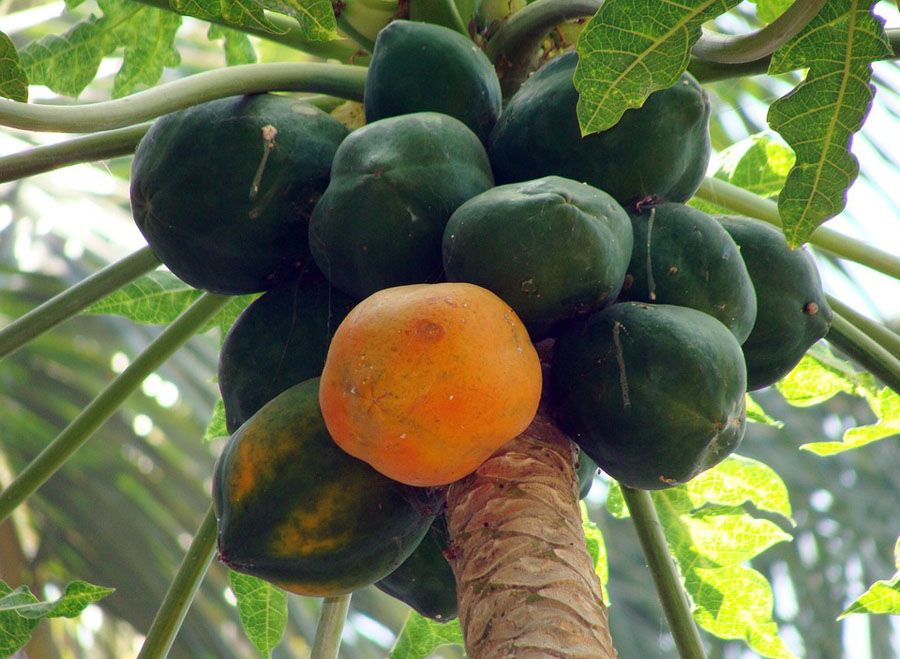
This exotic fruit is also called the melon tree due to the similarity of the fruits.
Content
- 1 Description of papaya
- 2 Varieties and varieties of papaya
- 3 Growing papaya from seeds indoors
- 4 Conditions for further cultivation
- 5 Peculiarities of growing papaya fruits at home
- 6 Storing fruit
- 7 Propagation of papaya by cuttings
- 8 Diseases, pests and their control
- 9 Top.tomathouse.com recommends: the beneficial properties of papaya
Description of papaya
The trunk of this tree-like plant is slender, thin, and branchless, reaching 3-10 meters. At the top, palmately dissected leaves approximately 30-70 cm in diameter are borne on long petioles. A flower appears in their axils, developing into an oval-shaped fruit (10 x 15 cm - 30 x 45 cm). The ripe fruit has amber-yellow, juicy flesh. When ripe, papaya is eaten as is, while unripe papaya is added to side dishes and salads.
Varieties and varieties of papaya
There are three main species of the plant, named for their characteristic fruits, and many hybrid varieties.
- Pink-red - tasty pulp.
- Green small - orange juicy sugary pulp, small in size.
- Red-embossed - rich, sweet red flesh and a textured surface.
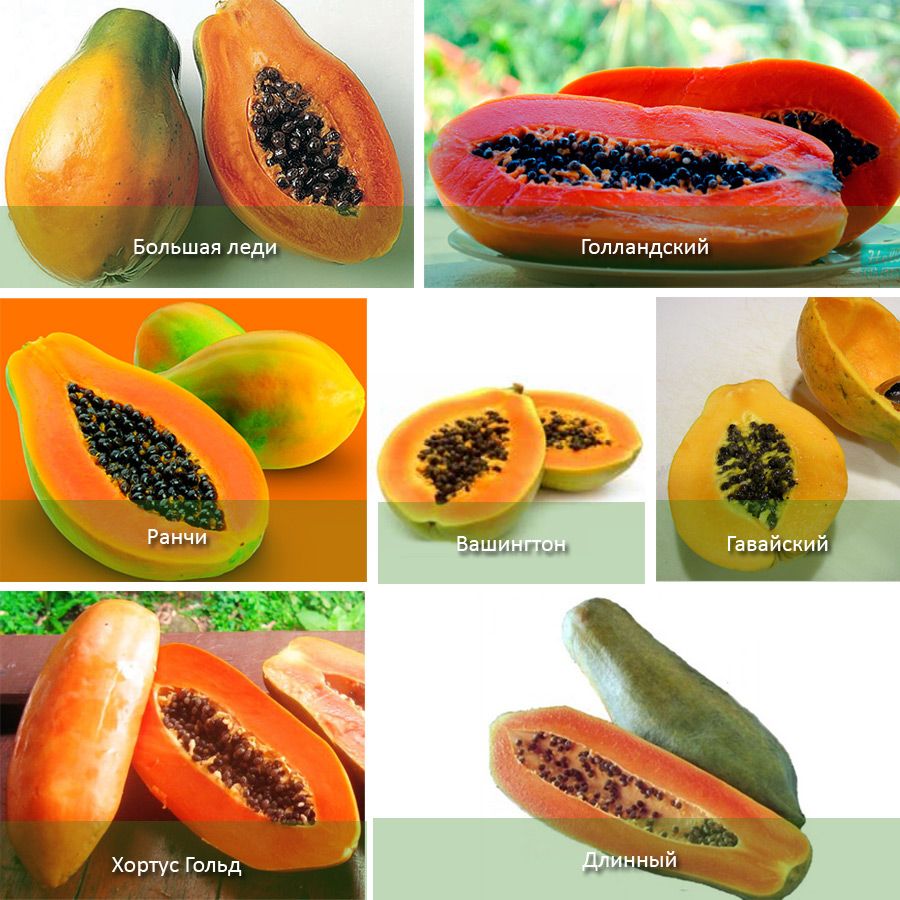
Popular varieties bred through selective breeding:
| Variety | Fruit, pulp |
| Dutch |
|
| Hawaiian |
|
| Big Lady |
|
| Long |
|
| Hortus Gold |
|
| Washington |
|
| Ranchi |
|
Growing papaya from seeds indoors
Papaya can be grown at home. It grows very quickly and, with proper care, can even produce fruit.
Seed preparation
Step by step actions:
- Cut the fresh fruit and remove the seeds.
- Rinse under running warm water.
- Dry for 24 hours.
- Select about 20 large, undamaged seeds.
- Determine the preparation method: place them in a growth stimulator for 12 hours; you can wrap them in damp moss or sand and pack them in film.
Seeds remain viable for several years if stored properly. To do this, use a glass container and keep it cool.
Planting time
This is determined by daylight hours, as the plant requires adequate light. The best time is March.
If it is necessary to plant at a different time, the lack of light is compensated for with additional means.
Soil, container
Soil for ficus with additional sand or a mixed substrate of equal proportions of leaf soil, turf soil, sand and peat.
Capacity: long, shallow with drainage (fine expanded clay, pebbles).
Landing
Space the seeds 1 cm apart, pressing them 2 cm into the soil. Cover with a transparent container. Ventilate once a day for 60 minutes. Sprouts will appear in 2 weeks and need to be transplanted.
Caring for crops
Water frequently in small amounts, keep the soil moist, and prevent rot. Allow the water to settle.
If lighting is insufficient, use artificial lighting. Maintain a temperature of at least +25…+28°C.
Conditions for further cultivation
To grow this exotic fruit from seed, you need to not only prepare it and place it in the right soil, but also replant it on time, maintain it in favorable conditions, and avoid making care mistakes.
| Parameter | Spring | Summer | Autumn/Winter |
| Location/lighting | Good sun exposure. Can be placed on a balcony in summer. | Additional lighting. Avoid drafts. |
|
| Temperature | +24 …+28 °C, but not more than +30 °C. | +14…+16 °C | |
| Watering/humidity | Do not allow the soil to dry out. Provide moderate moisture. | Reduce watering. Stop during the dormant period. | |
| Top dressing | Apply ammonium nitrate once every two weeks. | Potassium and phosphorus fertilizers. Alternate foliar and root feeding. | Do not feed. |
Peculiarities of growing papaya fruits at home
Papaya is a dioecious plant. Both sexes are required to produce fruit, but breeders have now developed self-fertile varieties.
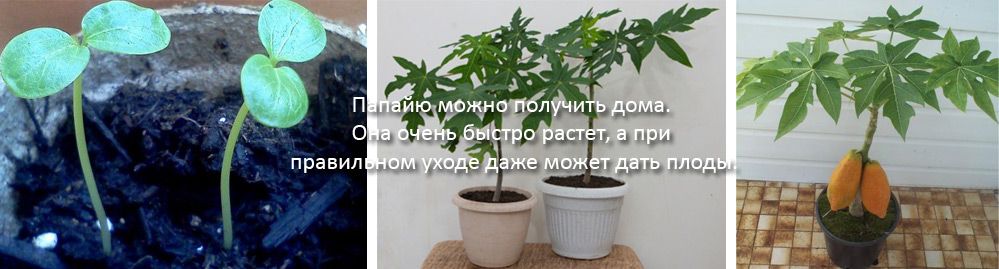
Papaya fruiting occurs in summer and autumn.
Remember that unripe fruits are poisonous due to the presence of milky juice in them.
Storing fruit
Ripe fruit is best stored at a temperature of -10°C and humidity of 85-90%. Under these conditions, it retains its flavor for 2-3 weeks.
It is stored in the refrigerator for a week, no more, and separately from other products, especially bananas, which accelerate ripening.
It is not recommended to freeze papaya, as it loses its properties.
Propagation of papaya by cuttings
In addition to growing from seed, it's possible to propagate the plant by cuttings. This method preserves the characteristics of the mother plant:
- Cut cuttings approximately 12 cm long, no more than 1.5 cm in diameter, at 45°.
- Leave the top two leaves.
- Dry for 3-7 days. Before planting, sprinkle the cut areas with crushed charcoal.
- You can soak it in root solution for 8 hours.
- Place the cuttings 2-3 cm deep into the soil (equal proportions of vermiculite, perlite, sand or peat, or you can use a substrate made from a mixture of sand and peat in equal parts), compact them and water with clean, settled water.
- Place the container in a bright room with diffused light, temperature +25…+28 °C, maintain high humidity.
- Cover the top with a glass or plastic container.
- After the cutting has taken root, transplant it into a new small container, keeping in mind that it should be 2-3 cm larger than the previous one, no more.
Diseases, pests and their control
Papaya can be susceptible to pests and diseases.
| Disease/pest | Cause and manifestation | Elimination measures |
| Powdery mildew | High humidity, lack of heat. Whitish coating. |
Spray with weak solutions of colloidal sulfur or copper sulfate. |
| Spider mite | Infection. Web. |
Treat with a solution of laundry soap, garlic infusion, or yarrow decoction. Of the chemical ones - Actofit. |
| Aphid | Dark spots, insects on closer inspection. |
Top.tomathouse.com recommends: the beneficial properties of papaya
Papaya is a delicious, healthy, and low-calorie fruit. Its medicinal properties have been known since ancient times.
The fruit and its juice are used for digestion, insect bites, pain relief from burns, treatment of ulcers, colitis, bronchial asthma, to normalize blood sugar levels, liver function, and it also cleanses the intestines.
It is also used in cosmetology for the production of exfoliating products; the juice is used to treat skin diseases, remove unwanted hair, and remove freckles.
It is recommended for pregnant women, infants and growing children.
Although this fruit is healthy, eating it unripe is very dangerous. The juice is poisonous.
Contraindicated for people with allergies and intolerances.