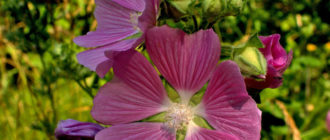
Passionflower is a plant native to Colombia, also found in Brazil and Peru. This member of the Passiflora family has unique medicinal properties, which were used by Native Americans as early as the 16th century.
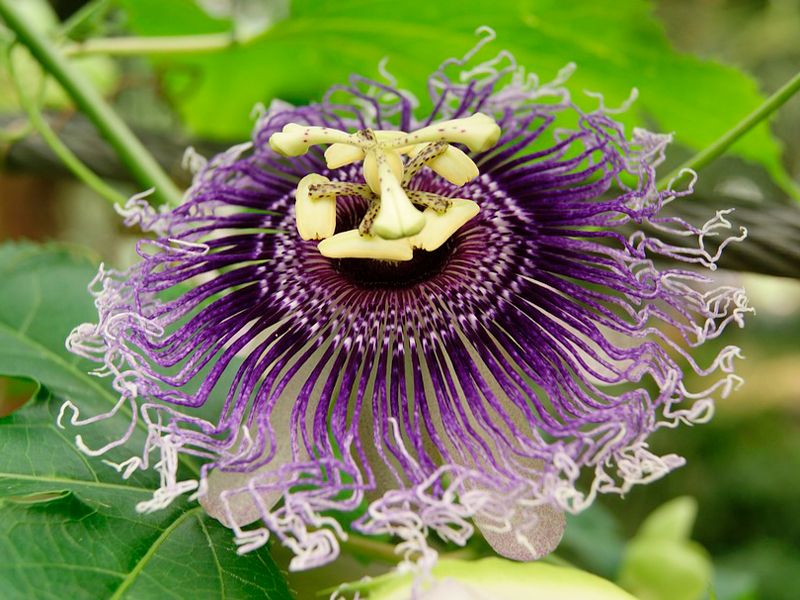
Description of passionflower
Passionflower can be either a shrub or a herbaceous plant with entire or lobed, oval-shaped leaves. Flowers reach 10 cm in diameter and bloom on long, elastic stalks.
There are five petals and sepals, each with a small branch on the midrib. The fruits of the passion flower are called passion fruits, and some, such as the Blue Passion Flower and the Edible Passion Flower, are edible.
Types of passionflower
Wild passionflower includes up to 400 species, but only a few of them are grown as houseplants.
| View | Description | Flowers | Fetus |
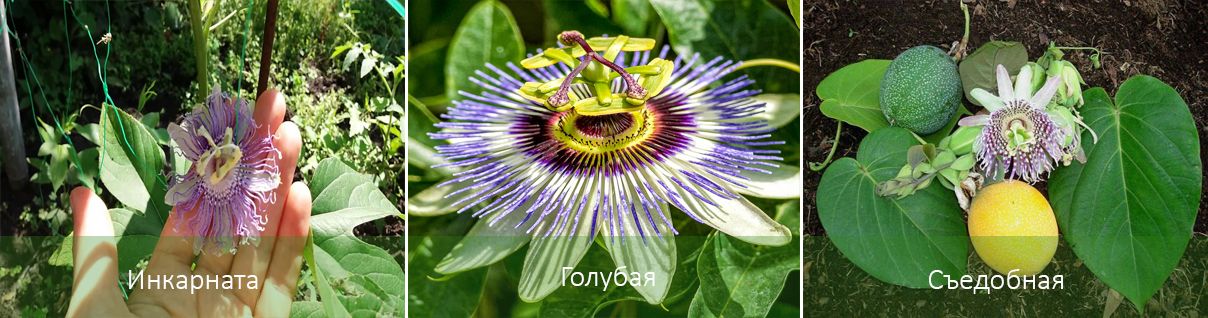
| Incarnate | A medium-length liana with medicinal properties. | Large, purple, lilac or violet-white with a pink tint. | Sweet and sour, medium-sized. Deep yellow. |
| Blue | Up to 900 cm. Evergreen vine, cold-hardy and easy to care for. Common in Latin America. | 10 cm in diameter, white, blue or purple in color. | 3-6 cm long, 4-5 cm in diameter. Elliptical, yellow. Consists of numerous red grains. |
| Edible | 800-1000 cm, dark green vine. Leaves are 10-20 cm long with serrated edges. | 2-3 cm. Purple-white with a green center. | Edible, orange-green, spherical. The juice is used in cosmetology. |
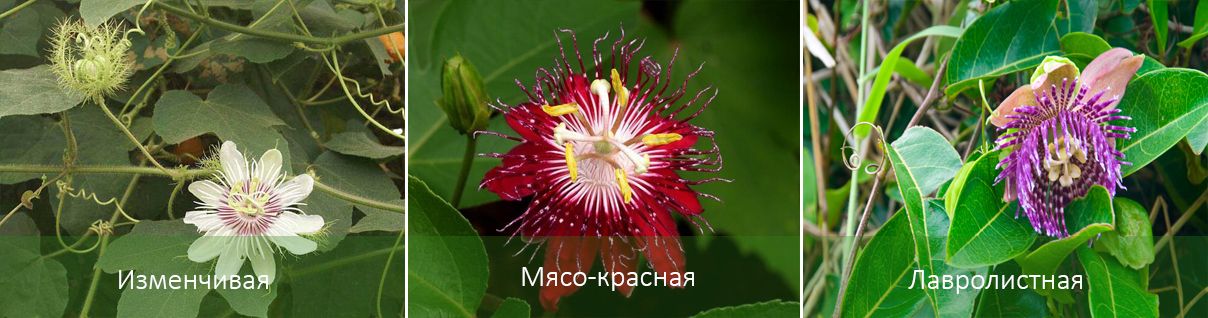
| Changeable | A flowering plant with toxic unripe fruits, widely used in pharmaceuticals. The stem is sinewy and hairy. | 4-6 cm in diameter, grey, white or beige. | Round, orange. Young, it reaches 2-3 cm in diameter. Mature, it is widely eaten. |
| Meat-red | 900 cm, herbaceous, branching vine. Distinguished by its long root system. Leaves up to 20 cm in diameter, rough. | 8-9 cm, the crown is covered with purple fringe. The petals are purple-white. | A green-yellow berry that falls off after ripening. Widely used in food production. |
| Laurel-leaved | A woody vine up to 1000 cm. The oval, pointed leaves are covered with wax, reaching 17-20 cm in length, 5-8 cm in width. | Spherical, white-violet, medium-sized. | Elliptical, 7-8 cm long, 3-6 cm wide. Orange-yellow skin and white, translucent, edible flesh with seeds. |
| Tender | A shrub or vine growing up to 500-700 cm tall. Common in the Andes and New Zealand at altitudes above 3,000 m. | 6-8 cm. White-pink with a reddish tint. Unscented. | Reaches 12 cm in length and 5 cm in width. Contains sweet, burgundy flesh with black seeds. Edible. |
| Lingual | A woody vine 400-500 cm tall at the base. Stems are smooth, leaves are heart-shaped 10-15 cm. | 7-10 cm, lilac-white, pinkish or red with a gray tint. | 6-7 cm in diameter, oval, yellow-red. The skin is smooth, the flesh is transparent with black seeds. |
Caring for passionflower at home
To ensure that a perennial passionflower grows vigorously and delights with its unique flowers, it needs proper care.
| Factor | Spring/summer | Autumn/Winter |
| Location/lighting | Place in the south or west part of the room, avoiding direct sunlight. Can be moved outdoors in warm weather. | Avoid drafts and excessively dry air. It's also important to extend daylight hours using phytolamps or fluorescent lighting. |
| Temperature | Maintain within the range of +22…+25 °C. Maximum temperature is +30 °C, but at this temperature, adequate humidity must be provided. | It needs to be moved to cool air with temperatures of +10…+14 °C; at lower temperatures the plant dies. |
| Humidity | About 70%. Spray passionflower carefully every 2-3 days, avoiding contact with the flowers. | As the temperature decreases, reduce the humidity accordingly to prevent the possibility of disease or rot. |
| Watering | Regularly, but infrequently. Make sure the soil doesn't dry out completely and the expanded clay remains sufficiently moist. | Reduce to once every 10 days. Do not disturb the plant too much. |
| Fertilizer | Use universal foliar feeding once every 1-2 months. Mineral fertilizers and organic fertilizers based on moss, pine needles, peat, and sawdust are also suitable. | Maintain the soil's richness, but do not fertilize unnecessarily. |
Growing passionflower in open ground
Passionflower can also be grown in a garden if the appropriate conditions are met.
| Factor | Spring/summer | Autumn/Winter |
| Location/lighting | Grow in a sunny location, free from overhangs. A south-facing garden location is best. | When temperatures drop to 15°C or below, move the plant container to a cooler room (10°C to 16°C); otherwise, frost will destroy the vines. Blue Passionflower can be overwintered outdoors; its roots are deep and strong enough to withstand the cold. |
| Temperature | April-October is best for growing outdoors; in case of bad weather and sudden frosts, the flower should be moved to a warm room. | +10…+16 °C, if increased, the plant will lose all its leaves and will not bloom. |
| Humidity | Spray daily, removing any drips that fall on the flowers. During dry periods, water twice as often. | It should be reduced to prevent the passionflower from dying. The air should not be dry. |
| Watering | The soil should be kept moist, especially during hot days. This should be done regularly from the moment new shoots emerge (early spring) until late fall. | No more than once a week, otherwise the plant will rot and die. |
| Fertilizer | Standard mineral or organic fertilizers should be used, and the soil should be supplemented with peat pellets, ash, or sand. Use these fertilizers no more than five times during the growing season. | Do not use. |
Transplanting passionflower
An adult passionflower is repotted once every 3-4 years when the pot becomes too small.
- First, you need to prepare a substrate from leaf and turf soil, peat, sand, and ash.
- The container should be 2-3 cm larger than the previous one so that the plant roots feel comfortable.
- Make drainage holes in the bottom of the pot and put in foam, expanded clay or eggshells.
- Using a disinfected knife, separate the root ball from the old container and carefully place it in the new one.
- Add the required amount of soil and water thoroughly.
Passifilora propagation methods
Passionflower is propagated by two methods: by seeds and vegetatively.
It is better to take cuttings in spring.
- Prepare containers with drainage and a substrate based on peat, pine needles and sand.
- Separate shoots with 2-3 healthy leaves using disinfected scissors.
- Treat the cut areas with charcoal chips or cinnamon.
- Place the cuttings in individual prepared containers.
- Create greenhouse conditions: cover with a bag or film, ventilate, place on the sunny side, maintain a comfortable temperature and humidity.
- Once the seedlings have formed a strong root system, they need to be transplanted into standard pots.
Propagation by sowing is much more difficult. This method is best used in the summer.
- First, you need to damage the outer shell of the seed by rubbing it against fine sandpaper.
- Place in water for 24 hours.
- Prepare nutritious soil with peat and spread the seeds on the surface of a common container.
- Press down, but do not bury them in the substrate more than 0.5 cm.
- Create greenhouse conditions: cover with a bag or film, ventilate, place on the sunny side, maintain a comfortable temperature (+22 °C) and humidity.
- After a fairly long period (up to 1 year), the first shoots will appear, then the covering should be removed and the passionflower should be transplanted into an individual container.
Pests, diseases and possible problems of Passifilora
| Symptoms
Manifestation on leaves |
Reasons | Elimination measures |
| The root and stems are covered with a dark, dense coating.
They dry up and fade. |
Bacterial rot. | Immediately cut off infected areas, wipe with thick soap solutions, and disinfect the soil. |
| Dry ends. | Dry air, irregular watering. | Increase soil and air humidity. |
| Small weak shoots.
Sick. |
Depletion of nutrient medium, poor lighting. | Place the flower in a saturated substrate, use phytolamps. |
| The stem is covered with brown stripes. | Viral infection. | Remove the plant from the area, otherwise the infection will spread to other flowers. There is no cure. |
| The sprouts and shoots die, and characteristic spots appear. | Scale insect. | The most effective is Bi 58 or soap solution. |
| Numerous small insects, wrinkled leaves, withering stem. | Aphid. | Lemon peel solution, Actofit. |
| Fine webbing all over the plant. | Spider mite. | Increase the frequency of watering, Neoron, Fitoverm. |
| White veins, stem droops and dies. | Thrips. | Fitoverm, Aktara, Mospilan, Aktellik or Calypso. |