Pelargonium is a herbaceous perennial plant of the Geraniaceae family. There are approximately 350 species. This family also includes Impatiens, Oxalis, and Nasturtium species.
Pelargonium originates from the sunny, hot savannahs of South Africa. Scientists later discovered it in India, Madagascar, and Australia.
Content
Description of pelargonium
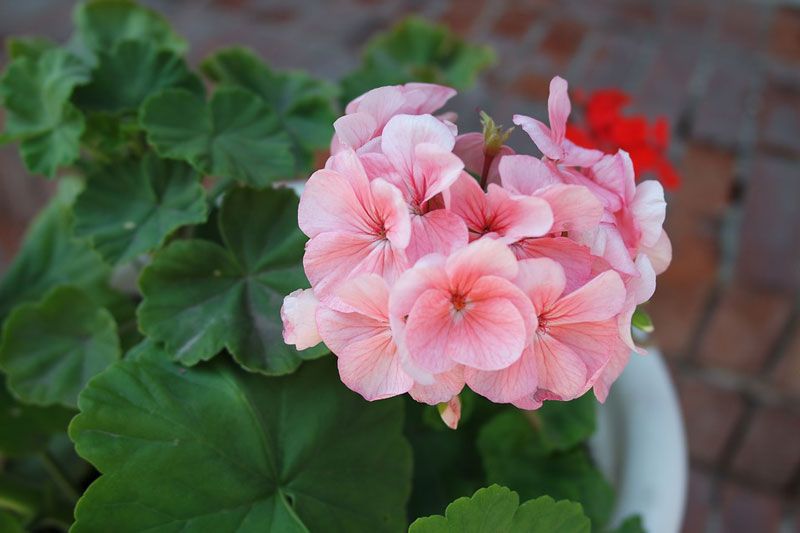
Stems can be erect, branched, or creeping. Leaves are simple, petiolate, dissected, palmate, and covered with small hairs. Due to their high content of essential oils, they have a distinctive, pleasant, spicy aroma. Their color is predominantly green, although decorative variegated varieties are also available.
The flowers are small, gathered in umbels, arranged close together, and most often have five petals of varying sizes. Modern selections offer a variety of colors, with traditional varieties being white, pink, and red.
On one plant, you can simultaneously see unblown buds, lushly blooming clusters, and fading flowers.
The seeds ripen in a capsule-shaped fruit. When it opens, it resembles a stork's beak. This explains the name "pelargonium," which means "stork."
In Russia, it has earned a reputation as a bourgeois flower, while in Europe, on the contrary, it is considered the flower of aristocrats. The plant is very popular in the United States.
It's often used in gardens and urban landscaping, as it's easy to grow and inexpensive. Its wide variety of species and colors allows for the implementation of any design project.
Differences between pelargonium and geranium
The plant is better known as geranium. But this is not the case. Pelargonium is native to the southern hemisphere, while geranium originated in the northern hemisphere. This explains the difference in their cold hardiness. Pelargonium is typically a houseplant, while geranium is a garden plant. Crossing geranium and pelargonium does not produce seeds.
Although these are different species of the same family, they have much in common:
- unpretentious,
- grow quickly – up to 30 cm per year;
- easy to reproduce;
- In indoor conditions they bloom all year round.
Only specialists can distinguish one species from another, but ordinary gardeners do not attach much fundamental importance to their classification.
Types and varieties of pelargonium
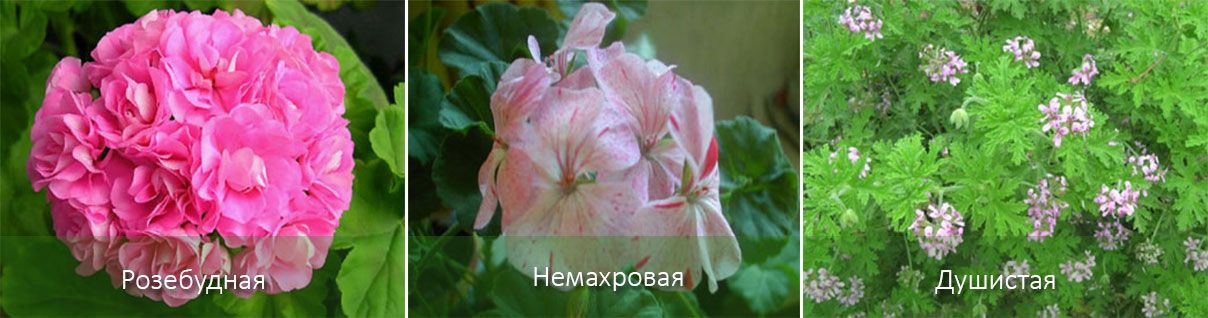
Pelargoniums are well-researched in specialized publications, featuring hundreds of different species and varieties with photos and names. The most popular are:
| View | Description |
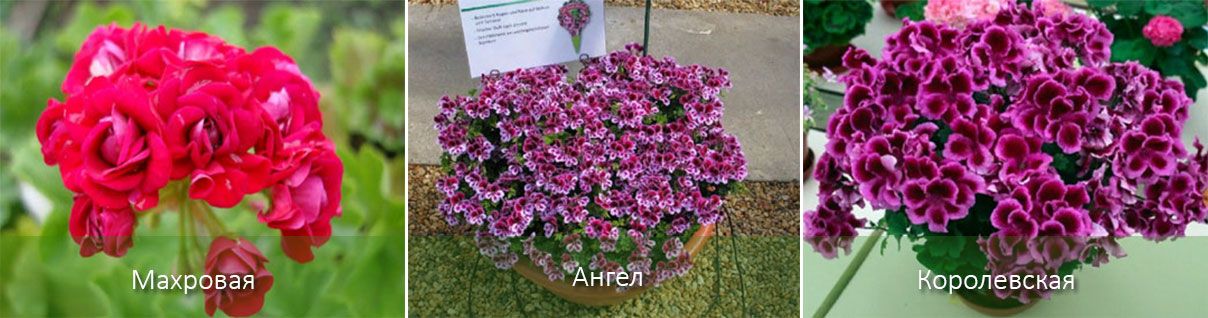
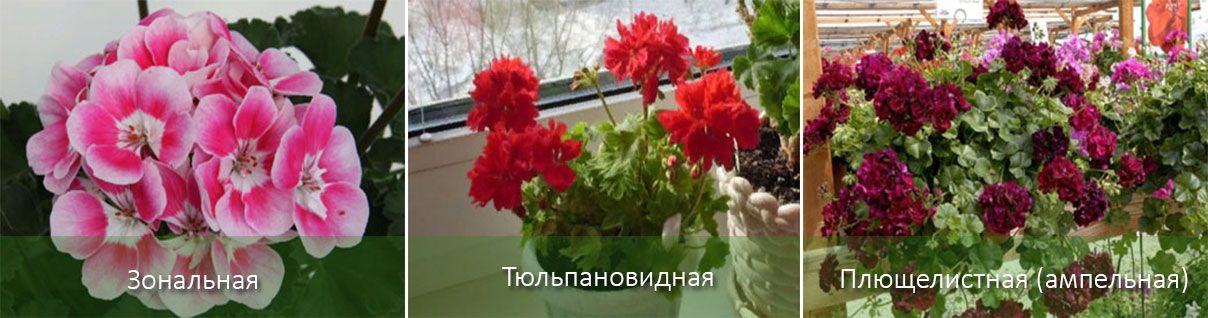
| Zonal | The most widespread. There are over 75,000 varieties. It was the first to be grown indoors. Its name comes from the lighter zone at the base of the leaf. It blooms profusely, producing up to 10 flower stalks at a time. It has a characteristic geranium scent. |
| Rosebudnaya | The flowers resemble rosebuds. They come in all shades of red and pink. Some varieties are colored coral, salmon, peach, and orange. |
| Tulip-shaped | The buds in the half-opened state look like tulips |
| Terry | Each flower has more than 9 petals. |
| Non-terry | The flowers consist of five identical petals and are uniform in color. The leaves are variegated. |
| Fragrant | The leaves are deeply dissected, rounded, up to 5 cm in diameter. It is widely used in pharmaceuticals, home medicine, and perfumery. It improves indoor air quality. |
| Ivy leaf (ampeloid) | The leaves are smooth, the shoots are long and creeping. The overall foliage resembles ivy. The flowers are double or semi-double, two-colored (white and purple), with a green center. |
| Royal | The most beautiful variety. Requires more care than others. It is distinguished by abundant and long-lasting blooms. The flowers are large, ruffled, up to 7 cm wide. The petals are always two-colored, with purple, pink, and scarlet tones predominating. The bushes are robust, up to 50 cm tall, with maple-like foliage. |
| Angel | With small leaves and trailing stems. The flowers are small but very beautiful, with variable-sized petals in white and burgundy. Blooms profusely. Looks great in hanging pots. |
Growing pelargonium at home
The plant is easy to care for and is suitable for beginning gardeners because it grows quickly, blooms beautifully, and is easy to propagate.
Location/lighting
Pelargoniums prefer well-lit areas and tolerate direct sunlight. Ventilation will protect them from overheating, and they also tolerate drafts.
The plant thrives in changing locations. It's recommended to periodically rotate indoor geraniums so that their crowns develop evenly.
Temperature
+20…+25 °C is the optimal temperature for caring for pelargonium at home.
In winter, some varieties, but not all, can be placed on a glazed balcony or veranda, where the air temperature is between 5 and 15°C. It is important to protect the plant from drafts during this time.
Humidity
Pelargoniums prefer dry air to humid air. Therefore, most standard apartment conditions are suitable for them. Plants that require humidifiers are poor neighbors.
Spraying pelargoniums is not recommended. Water droplets remain on the hairs and can cause rot, and if exposed to sunlight, they can act as a lens and cause a thermal burn.
Watering
Pelargonium is drought-resistant; the flower should be watered moderately and only after the soil surface has dried out.
It's easy to check if it's time to water. Just touch the surface of the soil in the pot with your fingers. If the soil doesn't stick to your fingers but falls off, the plant is ready to water.
Top dressing
The plant needs fertile, light, drained soil.
Regular fertilizing once a week will ensure abundant and long-lasting flowering. You can add fertilizer at a minimal concentration (approximately 1:10 of the usual rate) with each watering.
Any liquid concentrates for flowering houseplants are suitable. A passive method is also used: crystalline fertilizers, which are sprinkled dry on top of the soil. Gradually dissolving during watering, they penetrate the soil.
During the winter dormant period, fertilizing is discontinued. In the spring, use fertilizers with increased potassium and nitrogen content to increase green mass.
Transfer
Use a ready-made potting mix, available at flower shops, or make your own. To do this, use 2 parts each of garden soil, peat moss, river sand, and 1 part compost.
To aerate the soil, a drainage layer is placed on the bottom of the container.
After repotting, the plant isn't fed for a month, allowing it time to adapt. The new soil contains enough nutrients for growth.
Bush formation
Geraniums thrive in open spaces. They don't like being crowded with other plants, and they themselves require periodic thinning, pinching, and crown shaping.
As a result, lateral shoots will form, flowering will be more abundant, and the trimmed branches will make excellent planting material.
Pruning can be formative or seasonal.
Crown formation for upright and trailing varieties differs; each time an individual approach is required.
The main part is done in the fall after flowering has finished. This involves removing dried leaves and shortening elongated, weakened, and bare stems. This helps the pelargonium better endure the dormant period and fully recover.
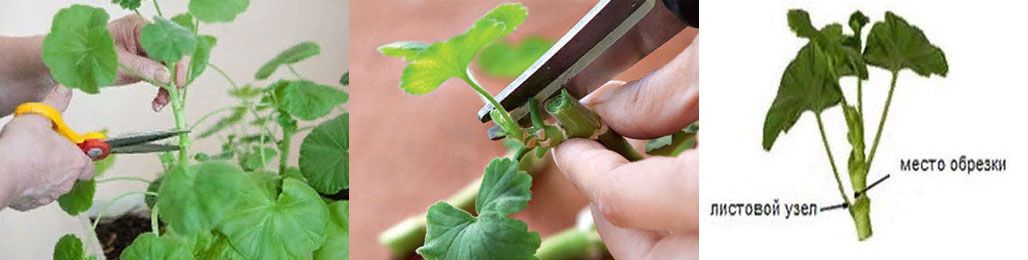
You can take a more drastic approach and simply cut back all the stems to 5-6 cm from the soil surface, leaving only a few healthy buds. By spring, the trunks will be covered with new shoots, a process known as plant rejuvenation.
Seasonal pruning is carried out in the spring if the crown begins to develop unevenly.
Don't use regular scissors, which split the stems; this will make healing longer and more difficult. Branches and leaves are cut with a sharp garden knife or scalpel at an angle above a leaf bud facing outward.
At the end of the procedure, the cuts are sprinkled with crushed charcoal for disinfection.
Reproduction
Pelargonium is propagated at home by cuttings and seeds.
For rooting, take cuttings 6-8 cm long, leaving a few healthy upper leaves. To speed up the growth of the plants, dip them in a growth stimulant (Kornevin) and plant them in seedling pots.
Since pelargoniums dislike humid conditions, the plants are not covered or misted. Only moderate watering is necessary. In two weeks, or a month at most, a full root system will form and they can be repotted in permanent pots with pelargonium soil.
When replanting, the tops of the plants should be pinched to encourage active crown growth. The first flowering occurs within three, or rarely, five months.
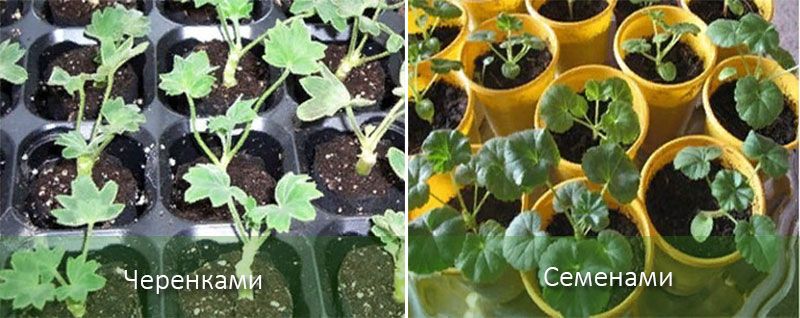
Pelargonium seeds are sown 1-2 at a time in small cups filled with soil or peat pellets. This method of growing eliminates the need for transplanting, and the seedlings will establish themselves more quickly.
Place the seed container in a warm, bright location and mist regularly to prevent a soil crust from forming, which would impede germination. The seeds will germinate as early as five days later.
After the first shoots emerge, replace irrigation with watering. Be sure to turn on the grow lights to prevent the shoots from stretching. Once the shoots grow and become stronger, pinch off the tips above the fifth leaf.
The first flowering will occur in six months.
Problems with growing pelargonium, diseases, pests
| Manifestation on leaves | Cause | Elimination measures |
| The lower leaves turn yellow and fall off, the stem becomes exposed. | Insufficient lighting | Change the location to a lighter one. |
| Brown, ash-colored coating. | Overwatering, which led to fungal diseases such as rust or gray mold. | If the damage is partial, remove the damaged stems and replant. If the damage is severe, the entire plant cannot be saved; you can preserve the appearance by using healthy cuttings for rooting. |
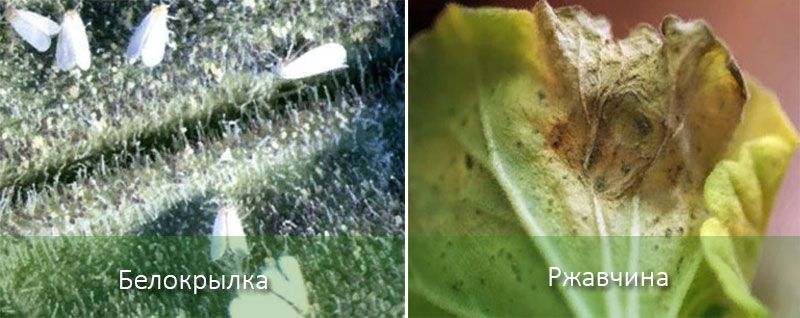
| Insects on leaves and soil, traces of their activity, cobwebs on trunks. | Thrips, whitefly, spider mites, etc. | Remove heavily damaged parts, wash with soapy water, and carry out insecticidal treatment with aerosol preparations such as Actellic. |
Useful properties of pelargonium, contraindications
The green parts of the plant are rich in essential oils. All parts of the pelargonium—the flowers, leaves, and roots—are medicinal. They contain vitamins, trace elements, phytoncides, tannins, sucrose, pectin, flavonoids, and more.
It has antiseptic, anti-inflammatory, hemostatic, wound-healing, diuretic, antiviral and even anti-cancer effects.
Drinking a decoction or tea is beneficial for overall strengthening of the body. The essential oil has absorbed all the plant's healing properties. The oil is taken internally, applied externally, and used in baths and inhalations. Even a simple pelargonium bush on a windowsill can improve the indoor microclimate. It is believed to help maintain harmony in family relationships.