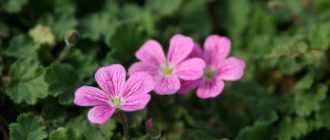
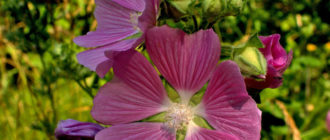
Pennisetum is a herbaceous plant native to North Africa. It belongs to the Poaceae family. It has been used as an ornamental plant in the genus Pennisetum since the late 19th century.
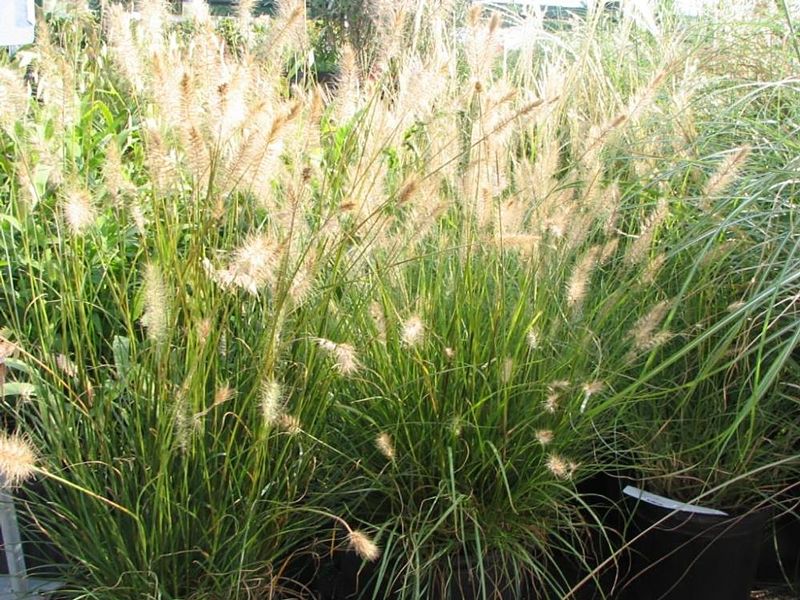
Popular among gardeners due to its unique beauty.
Description of Pennisetum
It grows to a height of approximately 80-200 cm. It has narrow, oblong leaves about 50-60 cm long. The spikes are 6 mm long, each containing a single flower, and are collected in paniculate inflorescences of 3-6 flowers each, reaching 30 cm in length. The spikes are covered with numerous hairs of varying lengths. They come in a variety of colors: pink-purple, burgundy, brown, chestnut, and even green varieties are found. The stems are rough and covered with short hairs. Pennisetum blooms in mid- to late July.
Popular types of pennisetum
The genus includes a wide variety of species forms, each of which is characterized by its own size and color of flowers.
| View | Description, features | Leaves | Spikelets-inflorescences |
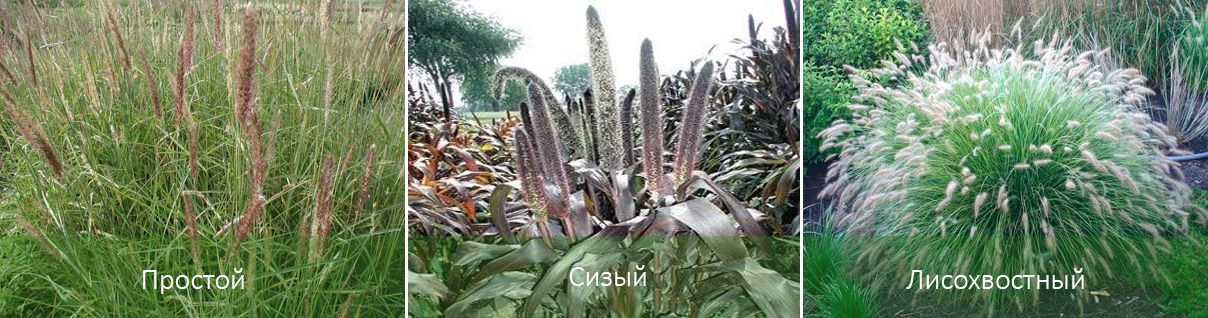
| Simple | 100-120 cm. Long and strong root system, tolerates severe frosts. | Narrow, 50 cm. Gray or pale green. | Large, changing colour during flowering from green to yellow and brown. |
| Blue (African millet) | 120-200 cm. Straight, stable stems. | About 3 cm wide. Burgundy with a bronze tint. | Standard, have a rich brown color. |
| Foxtail | 90-110 cm. Dense stems. Frost-resistant. | Bright green, long, and tapering to a point, they turn yellow in autumn. | Purple, pinkish, burgundy, or whitish with a red tint. Arched in shape. |
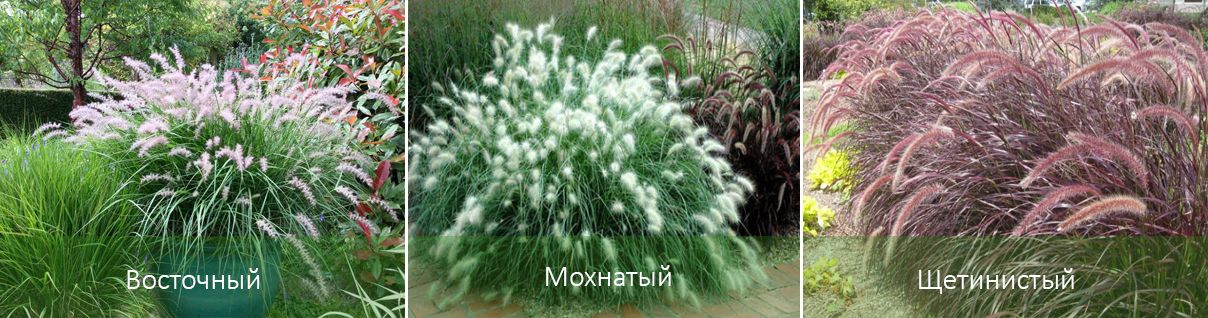
| Oriental | 80-100 cm, common in Central Asia. Stems are thin and strong. Winter-hardy. | Approximately 0.3 cm wide, deep green in color. | 5-12 cm long, purple-pink. Abundantly covered with bristles up to 2.5 cm long. |
| Shaggy | Miniature species: 30-60 cm in height. | Flat, 0.5-1 cm wide. Dark green. | Elliptical inflorescences 3-8 cm. Feathery hairs up to 0.5 cm long. White, grayish, and brownish spikelets. |
| Bristly | 70-130 cm. Heat-loving, roots are resistant to drought. | 0.6-0.8 cm wide. Light green, pointed. | Large, 15-20 cm long. Purple or pink with a silver tint. |
| Hameln (Hameln) | Frost-tolerant. Curved stems 30-60 cm tall. | Rough, narrow. In autumn, the color changes from green to yellow. | 20 cm long, 5 cm wide. Beige, yellow, purple or light orange with a pink tint. |
| Red Head | 40-70 cm. Spherical bush, well-developed root system, withstands cold down to -26°C. | Grey-green, elongated and pointed towards the end, rough. | 10-15 cm. Purple, pinkish or burgundy with a rich gray tint. |
| Viredescens | 70 cm. A winter-hardy species with dense stems and a large bush. | Drooping, dark green, narrow. In autumn, they turn purple. | Purple, standard size, slightly arched in shape. |
Propagation and planting of pennisetum in open ground
Seeds are usually sown in the spring, at the beginning of May, when the weather becomes favorable and warm.
- First, the area for planting is dug up and leveled. This is usually the area along the fence.
- Then the seeds are scattered and buried a little deeper using a rake.
- The resulting flowerbed is watered regularly to prevent stagnation.
- When the first shoots appear, they are removed so that the distance between the bushes is 70-80 cm.
Pennisetum seedlings are prepared in advance in February-March and planted in May.
- Prepare nutritious soil based on peat.
- Drainage holes are made in each individual container and no more than 2 seeds are placed.
- Create greenhouse conditions: spray the soil every day, cover the container with film, maintain bright lighting, room temperature, and ventilate regularly.
- The seedlings emerge in about a week.
- Remove the cover and install additional lighting (phytolamps).
- When the bush reaches 10-15 cm, it is planted in open ground.
Pennisetum is propagated vegetatively. This is done every 5-6 years, ensuring that the air temperature is not too high.
- Young shoots, together with the formed root system, are carefully dug out so as not to damage the plant.
- The soil is loosened and fertilized with peat, sawdust or humus.
- They plant and completely bury the root, leaving only the green part above the ground.
- Water as it dries for 2-3 weeks until the bush takes root.
- The young pennisetum will bloom in 1-2 months, then watering is stopped completely.
It also reproduces by self-seeding and requires no outside intervention. This is common among perennial shrubs.
Caring for Pennisetum in the Garden
In order for the feather grass to grow healthy and delight you with its unusual inflorescences, it needs to be properly cared for.
| Factor | Events |
| Soil | Use universal substrates or add peat moss with ash. Loosen the soil and weed it weekly. |
| Location | Plant in well-lit areas with direct sunlight. Avoid placing mature plants under shelters or greenhouses. Pennisetum thrives along fences, walls, or buildings. When used in landscape design, the shrub's location can be more varied. |
| Temperature | Plant in May, when the air hasn't yet warmed up completely, but there's no chance of frost. The shrub is easy to grow, but doesn't tolerate extreme heat well and requires careful watering. |
| Watering | No additional watering is required. The soil is moistened only during prolonged periods of no rain or extremely hot temperatures (July-August). |
| Fertilizers | Mineral fertilizers containing nitrogen, potassium, or phosphorus are used. Organic fertilizers, such as manure and compost, are also used. Fertilizers include Kristalon, Plantafol, Ammophos, and Kemira. |
| Transfer | It is carried out only in extreme cases (for example, during wintering), since the condition of the bush worsens and it may die. |
| Winter | Perennial species and varieties are covered with a special mat, and the soil around the plant is sprinkled with dry leaves or pine needles to protect the root system. The stems are not pruned—this provides additional protection for the pennisetum. In the spring, when the snow melts, the dried above-ground parts and the winter cover are removed. If the plant is annual, it is planted in a large container in advance and brought indoors when frost sets in. |
Problems with growing pennisetum, diseases and pests
Although pennisetum is resistant to diseases and pests, cases of bush death are still not uncommon, so the plant is carefully monitored and problems are addressed as they arise.
| Symptom | Cause | Methods of elimination |
| The stem rots, the bush withers. | Watering too frequently. | Reduce or stop watering completely before a drought sets in. |
| The leaves turn yellow and fall off. | The soil is dry. | Watering is carried out twice a week for a month, then the standard watering is restored if the bush needs it. |
| The plant does not recover after wintering. | Too cold winter. | The next time, pennisetum is grown in a pot or tub, which is moved indoors at the end of October for the entire winter until the beginning of May. |
| Dark spots on leaves. | Disease: rust. Excessive moisture. | Spray with fungicides. Transplant the bush into new soil. |
| Small voids appear on the leaves and stems. Yellow or red spots appear, and shoots die. | Scale insect. | They use a solution of soap and alcohol, fern tincture and chemical preparations such as Permethrin, Bi 58, Phosphamide, Methyl mercaptophos. |
| Small green insects appear all over the bush. The stems and leaves wilt, and the pennisetum dies. | Aphid. | Increase the frequency of watering and treat the plant with a soap solution or lemon peel infusion. Special intestinal preparations (Intavir, Actofit) are best for pest control. |
| The plant is covered with a fine web, and orange circles can be seen on the back of the leaf. | Spider mite. | Water the shrub generously and cover it with plastic wrap for several days. Treat with Neoron, Omite, and Fitoverm for one month, according to the instructions. |
| Small beige pests on leaves, inflorescences, and stems. White coating and waxy deposits. | Mealybug. | Remove growths and affected parts of the plant. Treat the soil with an alcohol solution to remove the parasites. Aktara, Mospilan, Actellic, and Calypso are excellent options for control. |