Petunias are often used to decorate homes, apartments, offices, and other spaces. They are also a regular fixture in flowerbeds and gardens. This is unsurprising, as they are unfussy and easy to grow. They attract attention with their beautiful flowers and pleasant aroma. However, petunias can sometimes wilt after being repotted or even while growing in the same spot. This can be caused by both harmless causes and serious diseases. In the latter case, immediate action is necessary, otherwise the plant will die.
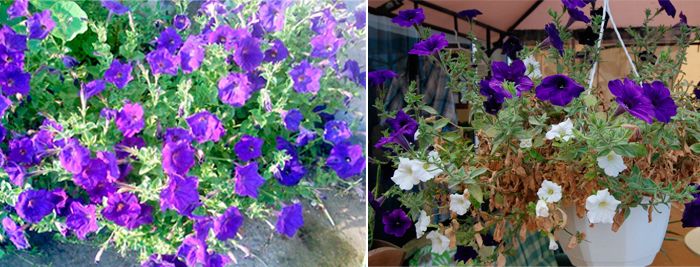
Why is petunia drying out?
Petunia begins to turn yellow and dry out for several reasons.
Mistakes of gardeners
In most cases, drying out and yellowing of petunias is associated with care errors:
- insufficient watering in hot weather;
- excess liquid in the soil on cold days (the roots begin to rot, causing the above-ground part to die off);
- lack of fresh air (in warm weather, daily ventilation of the room is necessary; in summer, it is recommended to take the flower outside);
- sudden change in temperature;
- using hard water for irrigation;
- lack of iron in the soil.
Due to maintenance and care errors, the lower leaves of petunias dry out:
- dryness or high soil moisture;
- lack of fertilizers;
- lack or excess of sun (in the latter case, the stems will begin to stretch).
Diseases
Petunia will dry out due to the following diseases:
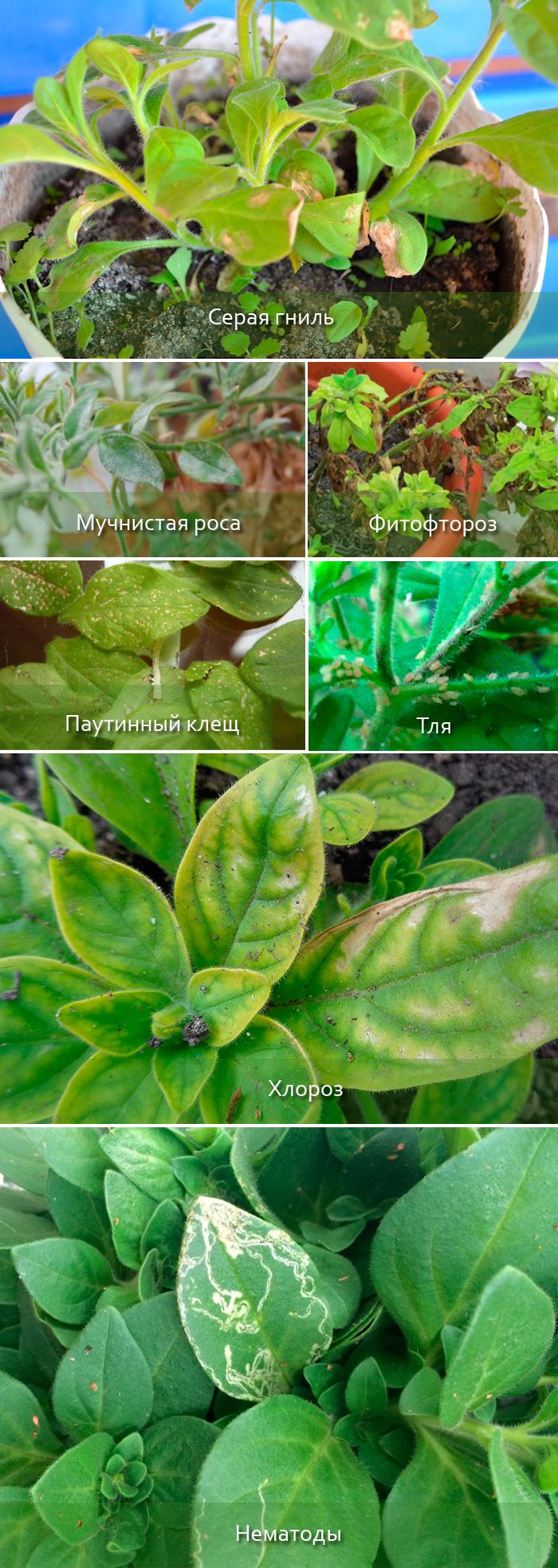
- gray mold;
- chlorosis;
- powdery mildew;
- fusarium.
These are all fungal tracheomycotic infections. Their development mechanisms are identical: the diseases affect the blood vessels in the root zone, preventing nutrients and fluid from reaching the above-ground parts. Due to the deficiency, the leaves curl and turn yellow.
Pests
Petunia wilting can be caused by damage from the following pests:
- Spider mites. They are more common in high humidity. They can be identified by the silvery webbing on leaves and branches.
- Aphids. These are small insects, grayish or green in color. They live on the underside of leaf blades. They feed on flower sap, leaving holes in the foliage. Another sign of the pest is curling of leaf tips.
- Nematodes are small worms that destroy the root system. This causes petunias to wilt and dry out.
Other reasons
Leaf drop from the lower part of a bush can also occur naturally if the plant is more than two months old. This is the plant's way of shedding old leaves. This typically occurs in late August or September.
What to do if petunia dries and wilts, depending on the cause
If the reason for the bush wilting was improper care, it is necessary to correct it.
When a bush dries out due to pests or diseases, serious measures must be taken:
| Cause | Funds | Treatment |
| Root rot | soft water at room temperature (preferably melted or rainwater); new pot; material for the drainage layer. |
Place drainage at the bottom of the new container to prevent liquid from stagnating. Remove the bush from the old pot and remove the affected parts. Plant in a new pot. |
| Gray mold (Fusarium early wilt) | charcoal, ash or chalk; purchased drugs Integral or Skor. |
Adjust care: moderate watering, good lighting, temperature above +25 degrees, humidity from 80%. Remove affected parts. Treat these areas with charcoal, ash or chalk. Use toxic preparations (dosage: Integral - 25 ml per 1 liter of water, Skor - 2 ml per 10 liters). |
| Powdery mildew | copper sulfate, Fitosporin, Fundazol (for mild infestation); Ordan, Proton, Chistotsvet (at an advanced stage of the disease); Bordeaux mixture. |
Destroy affected parts of the plant. Ventilate the room. Treat the soil with Bordeaux mixture. Use medications depending on the severity of the lesion (the dosage is indicated in the instructions on the packaging). |
| Iron chlorosis or iron deficiency in soil | citric acid; copper sulfate; boiled water. |
Prepare a solution of citric acid and copper sulfate (½ teaspoon per 0.5 liters of water). Pour at the roots after regular watering 2-3 times a day (until the symptoms disappear). |
| Aphid | Aktara (1 g per 1 liter of water); Decis or Confidor (0.5 ml per 1 l); Fufanon (1 ml per 1 l). |
If there are only a small number of pests, collect them manually (for example, with a vacuum cleaner) and treat them with a weak solution of the indicated preparations. In case of severe damage, immediately use chemicals in the specified dosage. |
| Spider mite | Neoron (1-2 ml per 1 liter of water); Apollo (0.5 ml per 1 l). |
Treat the entire bush with solutions, especially the lower part of the leaf blades. |
| Nematodes | Narcissus (0.5 ml per 1 liter of water). | If the drug does not help, transplant the plant into a new pot with hardened soil. |
Resuscitation of a diseased flower
If the petunia has dried out, but at least one living part remains, the flower can be saved:
- Cut off all dry parts.
- Place the entire bush in warm, clean water for 3 hours (some people on flower growers' forums advise leaving the plant for 24 hours).
- If cuttings begin to appear, it means that the petunia has been revived.
After planting the rescued flower seedlings in a new pot, it is important to follow all maintenance and care instructions to prevent further drying out.
How to avoid petunia death
To prevent the plant from drying out and wilting, it is important to provide it with comfortable conditions for development.
Petunia does not like dampness (especially large drops of water falling on the leaves and flowers), shade and partial shade, drafts and strong winds.
It is important to water the flower correctly:
- when growing indoors, this should be done 2-3 times a week;
- when planted outdoors - once every 2 days, in dry weather - daily.
Under no circumstances should the substrate become acidic or become waterlogged. This could cause the plant to die.
The plant is not very demanding in terms of fertilizers.
Any fertilizer except manure can be used for top dressing.
Petunias are a fairly easy-to-grow plant. They don't require any special growing conditions and are easy to care for. The most important thing is to follow watering guidelines and provide comfortable temperatures, humidity, and light. If you follow the simple recommendations above, the plant will not dry out and will delight you with its beautiful, lush blooms for many months.