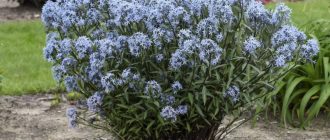
The tree peony is a perennial plant, considered the only genus in the Paeoniaceae family. It is native to China, Europe, and the Americas.
Content
- 1 Characteristics of tree peonies
- 2 The difference between a tree peony and a herbaceous peony
- 3 Types and varieties of tree peonies with photos
- 4 Tree peony varieties for the Moscow region
- 5 Selection of seedlings
- 6 Tree peony – planting, care and cultivation in open ground
- 7 Planting tree peonies in spring
- 8 Caring for a tree peony
- 9 Growing tree peony from seeds
- 10 Methods of propagation of tree peony
- 11 Tree peony diseases
- 12 Features of tree peony flowering
- 13 The main mistakes that cause no flowering
- 14 Growing flowers at home
Characteristics of tree peonies
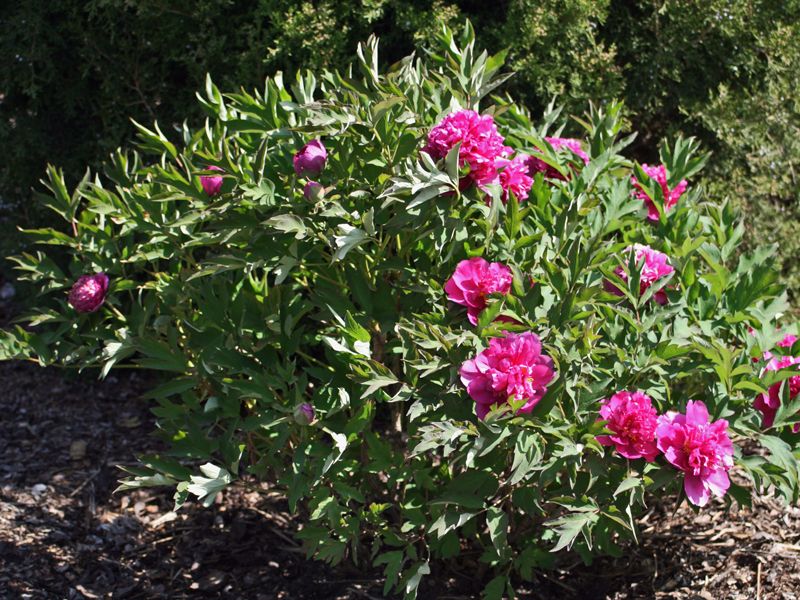
A perennial tree-like plant with a superficial root system.
The foliage is pinnately divided or trifoliate, with broad or narrow lobes. The color ranges from dark green to deep purple.
The buds range from 15 to 25 cm in diameter. Petals range in shades from white to red. Flowering lasts from May to June.
The difference between a tree peony and a herbaceous peony
In biology, a distinction is made between herbaceous and tree peonies, which differ from each other in a number of ways:
| Parameter | Tree peony | Herbaceous peony |
| Similarity | There are hybrid varieties that combine herbaceous and tree peonies. They are frost-resistant. | |
| The difference | The trunk is hard, woody, and classified as a shrub. | The stem is soft, herbaceous, and is not considered a bush. |
| Height – from 1.5 to 2 m. | Grows up to 1 m. | |
| To stimulate foliage growth, the first flowers are not cut off. | To improve leaf growth, remove the first buds. | |
| The size of the buds is from 25 to 30 cm. | The flowers are about 20 cm in diameter. | |
| There are more than 4664 varietal variations. | The number of varieties is about 500. | |
Types and varieties of tree peonies with photos
Tree peonies are divided into three main groups, which are considered the founders of many varieties:
| Group | Varieties | Description | Flowers |
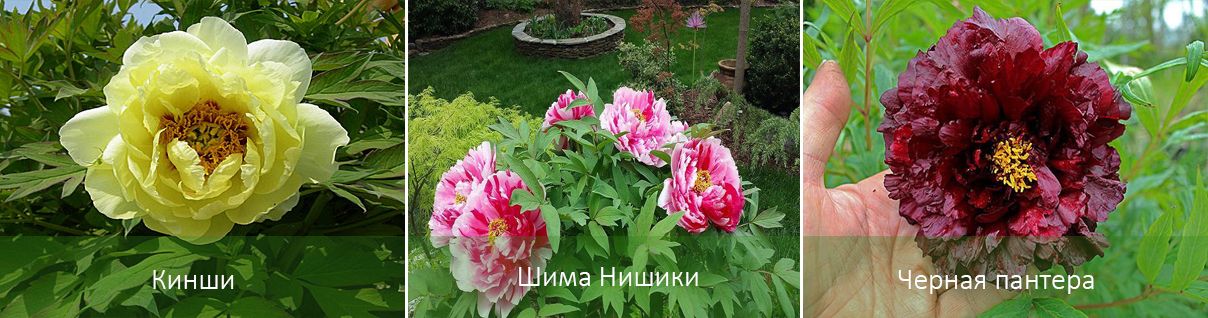
| Japanese | Kinshi. | The trunk height ranges from 0.8 to 1.2 m. It has a rich lemon aroma. The leaves are dense. Flowering begins in late spring. | Large, double-flowered flowers. Yellow-orange, edged in carmine. |
| Shima Nishiki. | The shoots are strong, growing up to 100 cm. The scent is pleasant, but barely noticeable. In cold weather, cover with spruce branches, and choose a planting site sheltered from the wind. | White and red. Shape – cup-shaped. Core – golden. | |
| Black panther. | Strong vertical trunks, up to 100 cm in height, diameter – about 150 cm. | Terry, soft to the touch. Color: rich purple with a chocolate tint. Center: golden. | |
| Species | Gold placer. | Large, terry type. | Large, double-flowered flowers. Buds are salmon-yellow. |
| Golden domes. | The trunk reaches 100 cm. The crown is strong. Flowering lasts about 3 weeks, starting in May. | Milky white, with a slight yellowish tint. Double, up to 16 cm in size. | |
| Gentle voice. | Strong shoots, up to 150 cm. | Golden with snow-white edges. Buds up to 17 cm in size. | |
| Malachite box. | The trunk height is about 1 m. It has a strong crown. | Light green, spherical in shape, slightly curled at the end. Medium, up to 12 cm in diameter. | |
| Blue lotus. | The stems reach 1 m. The flowering period lasts 21-25 days, starting in May. | Double-flowered, pinkish-blue. The buds are about 25-30 cm in size. | |
| Sino-European | Giant (Hu hong). | It has a short, thick trunk. Flowering period is from June to July. | Crown-shaped, red. Size: 18 to 19 cm. Point upward and in different directions. |
| Red lotus. | A perennial plant reaching a height of 1.2 m. The foliage is large and glossy. The flowering period lasts 21 days. | Crowned, burgundy. There are about 70 of them on a bush at any one time. | |
| Coral island. | Widely used in landscaping. | Coral-red. Bud diameter is about 15 cm. Double type. | |
| Transparent dew. | The stems are tall. The foliage is bright green and dense. | Bright pink, edges slightly lighter. | |
| The Kiao sisters. | The bush grows up to 1 m. The foliage is large. | Two-tone. Color - red and white. Terry type. | |
| Pink powder. | The shoots reach 100 cm. During flowering, support is installed. | Large, pink. The center is golden. Semi-double. | |
| Firebird. | A compact bush, growing from 1.5 to 1.8 m in height. Flowering is late but abundant. | Large. Colour – bright crimson. Densely double. | |
| Scarlet Sails. | A frost-hardy variety, virtually disease-free. The foliage is dissected and green. Flowering lasts for two weeks. | Deep red. Yellow center. Double. | |
| Purple Night. | The bush grows up to 1-1.2 m. The foliage is large, green, and has a glossy sheen. | Purple with a reddish tint. | |
| Pink lu (Lu fen). | The shoots are fast-growing. The bush is compact, reaching 1.5 m. | Dense, double. Color – pale pink. | |
| Twins. | Native to China, it has a rich aroma. It's recommended to plant it in full sun, away from drafts. | Semi-double, size – up to 14 cm. Pink. | |
| Rainbow Light (Purple Dawn). | The trunk is strong. The foliage is bright green. | Densely double, reminiscent of chrysanthemums, about 18 cm in size, dark purple. | |
| The Giant of Hemosa | Shoots grow up to 200 cm. | Pink. There are about 40-70 flowers per bush. Double type. |
Tree peony varieties for the Moscow region
The following tree peony varieties are suitable for cultivation in the Moscow region:
| Variety | Description | Flowers |
| Vesuvius | Grows up to 0.7 m. | Large, double-flowered flowers. Crimson red, with a pale yellow center. |
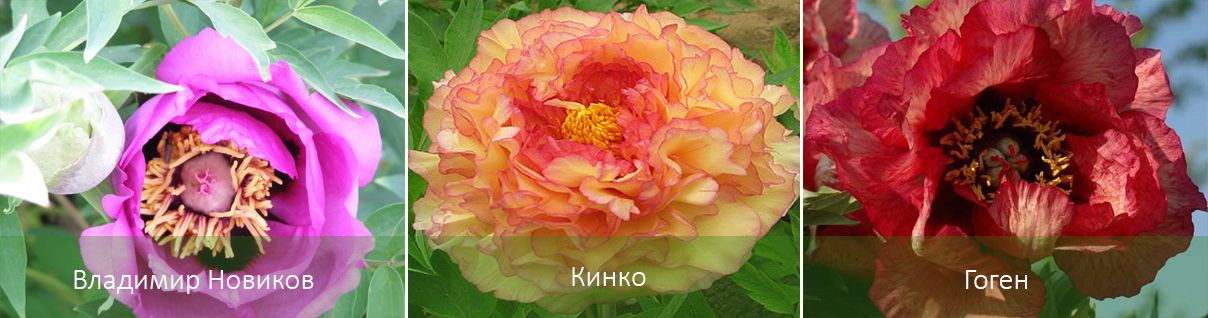
| Vladimir Novikov | The trunk grows up to 130-150 cm. The bush is spreading. | Beetroot-red-fuchsia. Edges are wavy. |
| Kinko's | The trunk height is about 2 m. This frost-resistant variety has large, rich green foliage. | Crowned. Color: golden with a reddish border. |
| Gauguin | Reaches 120 cm in height. | Large, raspberry-red. Fuchsia-colored edges. |
| Coral | A hybrid variety. The trunk is over 100 cm. | Single. Color: red-purple. |
| Sapphire | Grows up to 2 m. Leaves are large, rich green. | Light pink. Diameter: 17-18 cm. |
| Peter the Great | The spreading bush has several stems ranging from 130 to 150 cm in height. | Semi-double, size – 20-25 cm. Color – lilac-beetroot, veins – purple. |
| Stephen | A low-stemmed, spreading plant, from 90 cm to 1 m in height. | Non-double, size – about 18-20 cm. Color – raspberry with lilac veins. |
| Vadim Tikhomirov | A multi-stemmed species growing up to 150 cm. The foliage is dark green. | The buds range from 11 to 15 cm in diameter. They are single-flowered. The flowers are pink with small dark crimson spots and wavy edges. |
| Hoffman | Stem – up to 150 cm. Leaves – rich green. | Pale pink. The core is white. |
Selection of seedlings
When selecting planting material, examine its root system, dividing it into open and closed. If the rhizome is exposed or enclosed in a bag of soil when purchased from a gardening store, it's the former. If the flower is presented in a container and has several buds, it's the latter.
This plant is also inspected for grafts. If present, the roots are dark and thick, about 4-5 cm in diameter. These shrubs flower the following year after planting.
A seedling from a layering has a light, thin rhizome. In this case, buds are not expected to appear for at least four years.
Tree peony – planting, care and cultivation in open ground
Proper planting and care are the key to obtaining a strong and healthy flower.
Planting in autumn
If the groundwater level is far from the surface, a cone-shaped pit is dug. The diameter of the hole is approximately 0.7 m, and the depth is the same. A drainage layer of approximately 25-30 cm thick, consisting of gravel, brick chips, and sand, is placed at the bottom of the trench. In acidic soil, 200-300 g of bone meal is added.
Next, pour soil into the hole and place the peony. Add water to loosen the rhizome. After the moisture has been absorbed, add enough soil to level the root collar. Space the plants approximately 150-200 cm apart.
Soil preparation
Care and cultivation of this flower involves preliminary soil preparation. These flowers prefer loamy soil. Sandy soil is made suitable by adding humus, turf, clay, and peat.
Planting tree peonies in spring
Seedlings are sold as early as February or March, but since there's still snow on the ground at this time, planting is postponed until April. Until then, the plant is kept in a cool room.
Features of spring planting
Choose a sunny, elevated site. Space the shrubs 150 cm apart. Dig a hole 50-70 cm deep and add up to 25 cm of drainage material to the bottom. Add humus and compost to the soil and water thoroughly.
Spring care
Dry shoots are pruned for sanitary purposes. Water once every 14 days, using 6-7 liters of water per bush. Mulch the soil with compost. Weeds are removed after the snow melts.
Caring for a tree peony
For normal flower growth, it is necessary to provide it with high-quality care.
Watering
Water generously, but no more than once every two weeks. Stagnant water causes rapid root rot.
Fertilizers
These plants require phosphorus and nitrogen, so they need to be fertilized quite frequently. Potassium is also added during inflorescence formation.
Both single-component fertilizers and complex products are used. Wood ash is considered beneficial.
Winter protection
The tree peony is considered a winter-hardy plant, thriving in temperatures down to -40°C. However, varieties growing in temperate climates require additional insulation.
The bush is tied slightly with rope, reducing its size, and covered with spruce branches. The top is covered with burlap.
Pruning tree peony
Pruning is done in the spring before intensive growth begins. All dead stems are removed. Old shoots are cut back to about 10 cm.
Transplanting a tree peony
The plant doesn't respond well to repotting, as it has difficulty recovering. Extreme care should be taken during the process; the bush is dug up along with the root ball, which is then rinsed under running water.
The rhizome is inspected, rotten sections are removed, and long sections are trimmed. The cut areas are treated with potassium permanganate and sprinkled with powdered charcoal.
Growing tree peony from seeds
The seeds are sown in November, at a depth of 3 cm. The location is marked and the seeds are expected to germinate in 2-3 years, and to flower in 4 years.
This planting material has a good germination rate, but the first buds will take a long time to appear. Seeds for further propagation are collected after the fruits have turned dark brown.
Methods of propagation of tree peony
To propagate the plant, cuttings, layering, and grafting onto a herbaceous peony are used.
Cuttings
This is done from late spring to June. Select shoots with leaves and buds, cut them, and soak them in Kornevin diluted with water for 2-3 hours. The cuttings are transported in containers containing equal parts peat and sand, covered with plastic wrap.
Plant in open ground next spring. Flowering is expected no sooner than five years later.
Layering
Layering is done in late spring, before flowering begins. For this, select the shoot closest to the soil.
A cut is made at the bottom and treated with Kornevin. The cutting is then placed on the ground and covered with a 10-cm layer of soil. In mid-September, this section is separated from the mature bush and transported to its permanent location.
Grafting onto a herbaceous peony
The most labor-intensive and time-consuming propagation method. A wedge is sharpened into the scion, and a notch of the desired shape is created in the rootstock. The graft is often made from the side. The two parts are then joined and securely fastened with electrical tape. Fusion occurs within a month.
Tree peony diseases
During the growing process, the flower is affected by the following diseases:
- Gray mold causes plant death. Treat the shrub with a solution of potassium permanganate or copper sulfate. Carefully cut off and burn affected shoots.
- Brown spot. Infected leaves are picked off and destroyed. The plant is sprayed with Bordeaux mixture.
Features of tree peony flowering
To ensure normal flowering of the peony, it is necessary to adhere to a number of rules and avoid serious mistakes in care.
The main mistakes that cause no flowering
A tree peony may not bloom for a number of reasons:
- excessive penetration into the soil;
- use a lot of nitrogenous substances;
- lack of lighting;
- young age;
- lack of distance between bushes;
- transfer;
- pruning shoots.
Growing flowers at home
To grow a tree peony in an apartment, follow these steps:
- choose the right pot;
- the plant is planted in a container in March;
- half filled with peat-based soil;
- add compost;
- The flower is placed in moist soil, with the buds facing up.
If you follow this plan, growing a peony in an apartment will not be difficult at all.