Pyracantha is an ornamental shrub native to the southern regions of Europe and Asia. It is prized in landscape design for its decorative qualities and abundant flowering. It produces clusters of bright red, orange, or yellow fruits. Frost-resistant varieties, which can withstand temperatures as low as -20°C, are cultivated in the Moscow region.
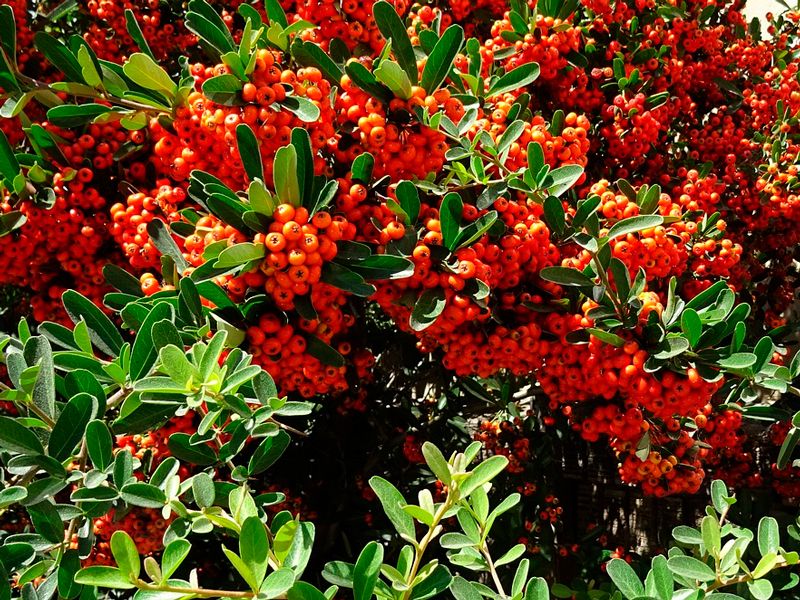
They are used as hedges. Their wide, spreading crowns with thorns provide excellent protection against unwanted visitors. Pyracantha is grown singly or in groups. In homes and winter gardens, heat-loving varieties are used to create cascading or single-stem bonsai.
Content
- 1 Description of the pyracantha shrub
- 2 Types and varieties
- 3 Caring for and growing pyracantha in the garden
- 4 Planting pyracantha in open ground
- 5 Caring for Pyracantha in the Garden
- 6 Pyracantha propagation
- 7 Diseases and pests
- 8 Top.tomathouse.com informs: growing pyracantha at home, using the bonsai technique
Description of the pyracantha shrub
A thorny shrub from the rose family, it resembles the cotoneaster in appearance. In temperate latitudes, it is compared to the rowan tree, producing similar clusters of fruit. The berries are more like small apples. Because of this, the spirea plant was initially classified as a subspecies of the apple family. The bitter but non-poisonous berries are edible. In Cyprus, they are used to make medicinal jams and liqueurs. However, pyracantha is most often eaten by birds, especially parrots.
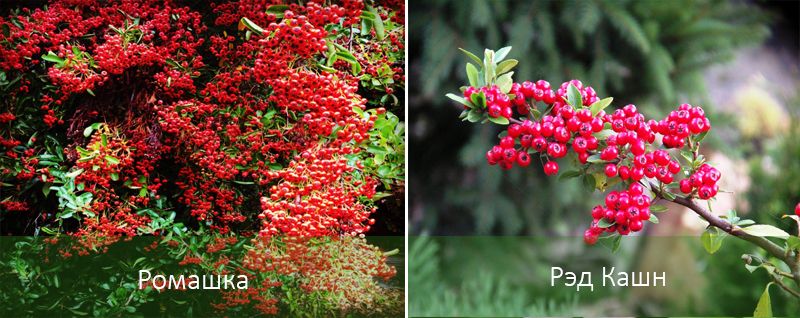
The shrub's spreading or straight branches are thorny, with rare stem spines reaching 25 mm in length. This is why the plant is called "fire thorn" or "fire thorn" in many countries. In warm climates, plants reach 6 meters in height. Cold-hardy varieties cultivated in Russia are much shorter. Pyracantha leaves are small, leathery, elongated, with a pointed or rounded tip, and a rich green color. Young foliage is pubescent above. They do not fall until late autumn. The white caps of the corymbose inflorescences attract bees and other insects, and they remain decorative for up to two weeks.
Types and varieties
In the temperate climate of the Moscow region, two varieties of pyracantha survive: narrow-leaved and bright red. Only cold-hardy varieties are cultivated in garden plots. In conservatories and apartments, low-growing varieties are grown: crenate and scarlet pyracantha. These species are not known for their winter hardiness and often freeze to death.
Pyracantha angustifolia
This evergreen shrub is native to southwestern China. There, it grows up to 4 meters tall. Its narrow leaves, up to 5 cm long, have a serrated and oval tip. The pubescence is grayish, resembling a bloom. The inflorescence caps reach 8 cm in diameter. The berries are flattened, red or yellowish, dense, and very bitter. Frost-resistant varieties of Pyracantha angustifolia are listed in the table.
| Name of the variety | Bush height, m | Description of berries |
| Orange Glow | 2.5 | Round, bright orange in color, up to 7 mm in diameter. |
| Golden Charmer | 3 | Flattened, orange, up to 1 cm. |

Bright red pyracantha
A spreading shrub with creeping branches native to the subtropical forests of Asia Minor. It reaches 2 meters in height. The elliptical, elongated leaves, 4 cm long, change color from rich green to bright red in autumn. The inflorescences are white or creamy pink. The fruits are coral or red and edible.
| Name of the variety | Bush height, m | Description of berries |
| Red Column | 3 | Red, flattened, up to 6 mm in diameter. |
| Red Cushion | 2 | Bright red, with a blunt tip, 4-6 cm in size. |
Caring for and growing pyracantha in the garden
The cultivation techniques are simple, and the shrub is undemanding regarding soil composition. Growing and caring for pyracantha requires little time. Pyracantha thrives in semi-shaded, open areas:
- due to lack of light the plant blooms worse;
- Under direct rays the leaves become dry and brittle.
This is a drought-resistant crop; if groundwater is close, it withers and develops poorly.
Planting pyracantha in open ground
Seedlings tolerate mild frosts. Planting in open ground occurs in early spring, immediately after the ground thaws. The planting hole should be twice the size of the pot. The soil is enriched with humus in a 1:1 ratio. In heavy, moist clay soils, drainage is placed under the seedling's root ball. The bush is covered up to the root collar, watered thoroughly, and the soil is compacted around the roots. During the first few years, the branches require support. Once the trunks become rough, the staking stake is removed.
Caring for Pyracantha in the Garden
Watering is necessary during the first year of growth to allow the root system to develop. Mature shrubs are drought-resistant. Water them when the leaves begin to wilt. Loosening the soil is done during the budding stage. To promote abundant flowering and fruiting, apply fertilizers containing phosphorus, potassium, and calcium. Excess nitrogen will lead to excessive leaf production and fewer ovaries.
Mature pyracanthas don't like repotting; the bush is refreshed by pruning. Removing up to ¼ of the crown at a time during shaping is permissible. Old shoots are cut back to the root, leaving no stump. Formative pruning is done in the fall during bud formation. Sanitary pruning is performed in early spring, removing frozen shoots. For the winter, the shrub's root system is insulated with a thick layer of mulch, humus, or other loose material.
Pyracantha propagation
In nature, the bush propagates by seeds; in temperate climates, cuttings are more common. Seeds are not suitable for selective hybrids, as they are unable to inherit all the species' characteristics. A 20-centimeter cutting is taken from a two-year-old shoot, in the upper third. It is kept in water until roots form, then transplanted into the ground. The first year, the seedling is grown indoors or in a greenhouse; the roots may not survive freezing.
For propagation, shoots are made from mature bushes: a young shoot is pinned to the ground. It is well insulated for the winter. After a year, it is separated.
Diseases and pests
The only insects that nest on pyracantha are aphids. They are usually brought in by ants. Any insecticide can be used against them.
Bacterial burns are incurable. When purchasing seedlings, carefully inspect the trunks. In wet soils and during rainy weather, fungal infections such as scab, late blight, and rust are possible. Chemical or bacterial fungicides are used for treatment as solutions prepared according to the instructions. Soap is added to improve adhesion. Spraying is done in the evening to prevent leaf burn.
Top.tomathouse.com informs: growing pyracantha at home, using the bonsai technique
When growing a bonsai tree, the characteristics of the shrub are taken into account. Young shoots can be:
- to weave, to make braids out of them;
- trim the bark and tie them together to form a thick trunk;
- adult shoots are cut and young shoots are pulled through them.
The shoots become flexible within an hour of watering. Pyracantha can be shaped into a wide variety of forms. The bush is capable of "remembering" its own geometry. Pyracantha makes a beautiful addition to any winter garden, home, apartment, or office.
At home, the plant requires light during the darker months and regular ventilation. Regular but moderate watering is essential. Fertilizer should be applied no more than once a year using the sprinkler method. Fertilizer should be diluted according to the instructions, then the water volume should be doubled. It's best to plant the bush directly in a larger container; it doesn't like being repotted.