Platycodon (Greek "platys" - "wide" and "kodon" - "bell") is the only genus of the Campanulaceae family, which includes Platycodon grandiflora.
Content
- 1 Description
- 2 Platycodon grandiflora: known varieties with descriptions
- 3 Planting Platycodon in a garden plot
- 4 Caring for Platycodon in a summer cottage
- 5 Preparing for winter after flowering
- 6 Growing at home
- 7 Reproduction
- 8 Diseases and pests of Platycodon
- 9 Top.tomathouse.com recommends: use in landscape design
Description
This perennial grows in rocky soils in Korea, in clearings in Eastern Siberia, in the Land of the Rising Sun, and in China. Its flowers are large, bell-shaped, hence the name. It has been known since the mid-19th century, but its popularity only increased in the early 20th century.
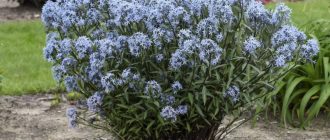
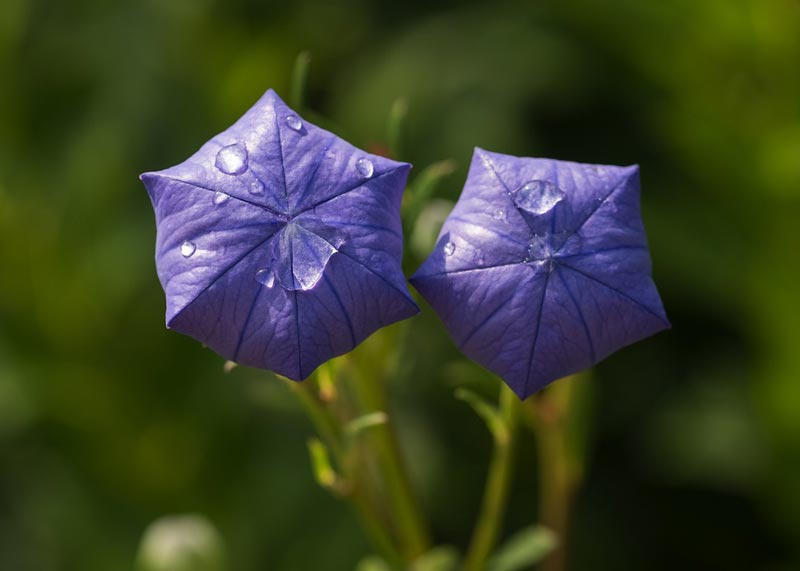
It can reach a height of up to 1.2 m, with a rhizome resembling a large bulb with roots. The leaves are light green, elongated toward the ends, and may have serrated edges. The bellflower flowers are large, up to 8 cm, and can be solitary or clustered in clusters of up to five on a stem, ranging in color from blue to white. The bellflower flower itself features distinct veins (thin lines) of a darker color.
Flowering begins in July and lasts for two months. During this time, an egg-shaped capsule forms, containing the seeds.
Platycodon grandiflora: known varieties with descriptions
| Variety | Height | Flowers | |
| Album | Erect, from 60 to 80 cm. They bloom all summer. |
Large, in a circle 8 cm. |
Thin lines of dark blue color. |
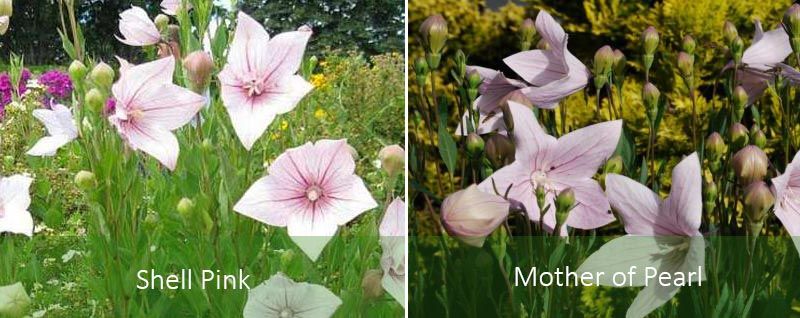
| Shell Pink | Pale pink with thin dark crimson lines. | ||
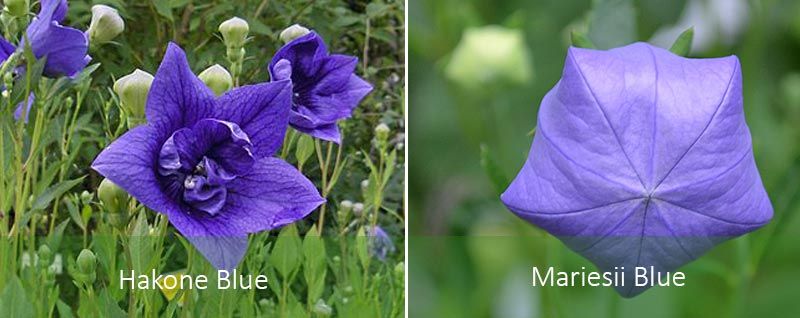
| Mary's blue | Only 35 cm. | Blue with lavender tint. | |
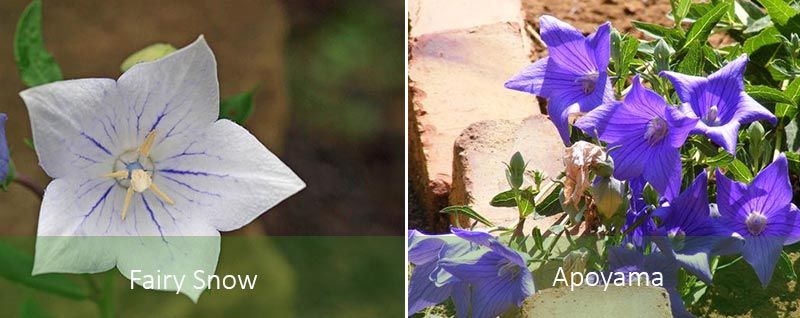
| Fairy Snow | About 80 cm. | Light lilac single, can be white with very thin blue lines. | |
| Apoyama | Low-growing plant, no more than 20 cm. | Blue-violet, they are often grown in alpine gardens and rockeries. | |
| Snowflakes | Up to 50 cm. | White with dark veins, semi-double. | |
| Mother of Pearl | Up to 60 cm. | Pale pink. | |
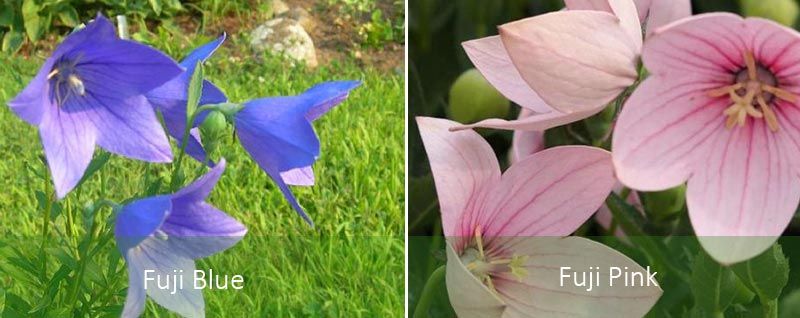
| Fuji Pink | It is considered short, up to 70 cm.
Blooms all summer. |
White, but due to the many dark pink veins, the effect is created as if the flowers were pink. | |
| Fuji Blue | Blue in color, with obvious thin lines (veins). | ||
| Astra Blue, AstraWhite |
This plant is like a miniature, no higher than 25 cm. | The inflorescences resemble the head of an aster, hence the name; the flowers, despite the low-growing plant, are large, up to 8 cm. | |
|
Hakone Blue Hakone White |
Compact spherical bush up to 50 cm. | With a double crown - white and blue. | |
Planting Platycodon in a garden plot
Planting should be done at the dacha at the end of May or in the first month of summer, when there are no more night frosts.
The best place is neutral acidity soil with sand; charcoal and mineral fertilizer are added to the hole, as for ordinary garden flowers.
Loosen the soil before planting the seedling. Bellflower thrives in its permanent location for up to 10 years, preferably in full sun, but can also be planted in partial shade. It's important to avoid groundwater in the area. This plant's roots reach 20-80 cm in length, so replanting bellflower is not recommended.
In the selected area, dig holes larger in diameter than the seedling pot, spaced 25 cm apart. Before planting, the seedlings should be thoroughly watered. Some recommend completely submerging the pot in water, then removing the seedling along with the soil and placing it in the hole, compacting the soil around it. After all the plants are planted, water the flowers.
Caring for Platycodon in a summer cottage
To grow this plant outdoors, water the seedlings 7 times a week for 2 weeks, then reduce this to 2 times a week. After watering, be sure to loosen the soil and remove weeds; mulching is recommended.
Feed it monthly with a fertilizer for regular flowering plants. The bellflower grows quickly, so in the spring of its third year, it should be sprayed with Atlete to slow its growth or pinched.
If the Platycodon does become tall, be sure to tie it up. To prolong flowering, remove faded inflorescences promptly.
Preparing for winter after flowering
In September, when the bellflower has finished blooming and the capsule begins to crack, you can collect the seeds, which will be useful for growing new plants.
Platycodon is covered for the winter by cutting the stems back to the base, leaving 10 cm above the ground, and then covered with spruce branches, dry leaves, and dusted with peat or sand. In the spring, the area around the platycodon is fenced off to prevent damage to the roots when digging.
Growing at home
The bellflower can be grown not only in a summer cottage, but also at home on a windowsill.
The procedure is the same as for preparing seedlings from seeds, but the following factors should be taken into account:
- Place on a windowsill, not on the fully sunny side, so as not to burn the leaves.
- Periodically loosen the soil in the pot.
- Water only when the soil becomes dry.
- Feed at the beginning of July before flowering.
- In winter, water less often and move the pot to a room where the temperature is +13…+15 °C.
Reproduction
Platycodon is propagated by seeds, cuttings or division of the bush.
Cuttings
This plant doesn't take well to propagation from cuttings. Take 10-cm-long cuttings with up to two internodes, then plant them in potting soil, or you can prepare your own soil by mixing equal parts of humus, sand, and peat. Then cover with a plastic bag or a plastic bottle.
Open the container periodically for ventilation; once the cuttings have rooted, the cellophane can be removed. Water and care as for an adult plant.
Seeds
Propagation by seeds is considered the most effective method due to its efficiency (number of shoots). They can be simply sown in the ground, uncovered, during the winter or spring, but if seedlings are needed, they are best grown in late February or the first month of spring.
First, place the seeds in gauze or a bandage and soak them in water for two days. Next, prepare a soil mixture of humus, peat moss, and sand in equal parts, in boxes or wide pots. Place the seeds on top of the soil, lightly dusting them with sand; some prefer to plant them deeper into the soil. Then, moisten the seedlings with a spray bottle. Cover with plastic wrap, place in a warm place, and wait for the first shoots to appear in 1-2 weeks.
Watering and caring for Platycodon is the same as for any other flowering garden flower seedling. Water when the soil becomes dry, loosening it lightly. As soon as the first shoots appear, remove the plastic wrap and move the pot or container to a cooler location with temperatures between 18 and 20°C.
When 3-4 leaves appear on the sprouts, they can be planted in small pots, in which they should be left until planting in the ground.
Dividing the bush
Platycodon doesn't like being repotted, so dividing the bush can kill it. First, water it generously, then carefully remove it from the soil, divide it into several sections (each root should have a growth bud). Sprinkle the cut rhizomes with either ash or crushed activated charcoal, and then plant.
Diseases and pests of Platycodon
| Name | Signs | Methods of elimination |
| Gray mold | It spreads throughout the plant due to a fungus that loves dampness (overwatering and incessant rain). | Treat the bush twice, every 10 days, with copper sulfate or Fundazol. Discard any infected plants. |
| Moles and mice | Rodents can damage the roots of the Platycodon. |
You can spread rodent poison around the area. Moles are more difficult to deal with: insert a hose into their burrow, connect the other end to your car's exhaust pipe, and turn on a chainsaw. Only then will the creature come running out. Another way to control moles is to make a rattle and place it in your yard. It's also important to remember that they don't dig burrows in soil where marigolds, garlic, or milkweed grow, or if the soil is dry. |
| Slugs | They eat leaves. | It's best to sprinkle ash or eggshells on the soil to prevent slugs from crawling on them. You can also bury a glass of milk or beer in the soil, or use a grapefruit slice to trap the slugs. |
Top.tomathouse.com recommends: use in landscape design
Platycodon is a wonderful decoration for paths and alpine slides, and goes well with phlox, marigolds, peonies and daylilies, as it is a perennial plant.
It is not recommended to use it for decorating ponds.