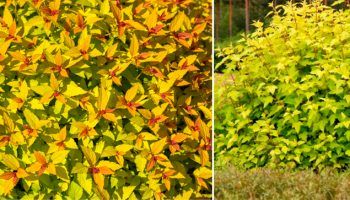
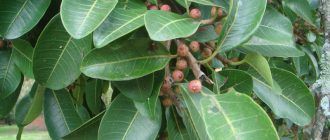
Plumeria, or frangipani, is a houseplant from the Apocynaceae family. It is a tropical tree growing up to two meters tall. Its smooth, wide, pointed leaves fall off and grow again each year. Its extensive root system takes up the entire pot.
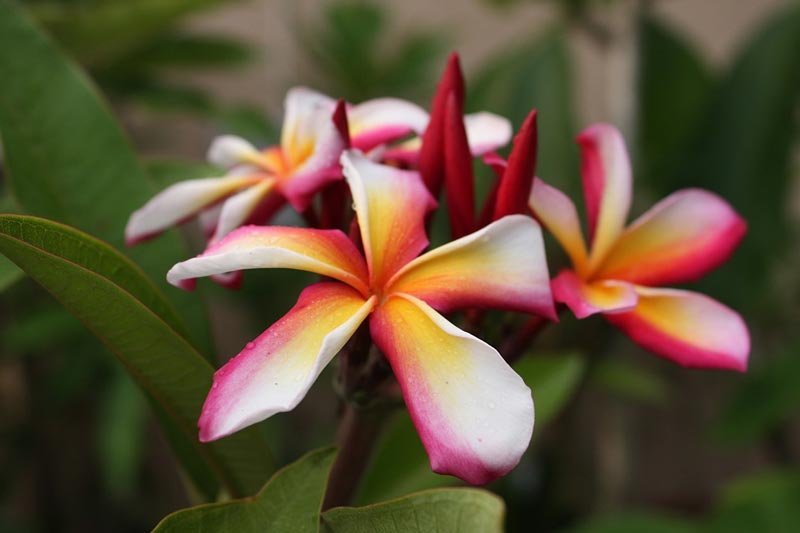
It is prized for its exotic flowers in mesmerizing shades of pink, purple, yellow, and white, all with a delicate fragrance. On tropical islands, it is used to make wreaths and garlands to greet tourists. Bali and Laos consider it a national symbol. Since ancient times, the Mayans have considered it an erotic and sexual symbol. And in India, plumeria is revered as the "Tree of Life," a favorite of Krishna.
Content
Conditions for a flower at home
This is a rather capricious plant, and in order to keep it, you need to make sure that the indoor conditions are suitable.
Lighting
Plumeria loves light and can tolerate direct sunlight all day. It can safely be placed on south-facing windowsills. Without sufficient light, the plant will not bloom.
Temperature
Frangipani thrives in warm conditions. In summer, it prefers temperatures of 25 to 30°C, while in winter, it thrives at room temperature, but not below 17°C. During warmer months, it can be moved outdoors, but be sure to place it in a location protected from the wind—the plant does not tolerate drafts.
Air humidity
Plumeria, accustomed to humid tropics, is also demanding of indoor air.
Its humidity should be at least 40%.
Main types
As indoor plants, flower growers use three main types: white, red and obtuse.
White plumeria (Plumeria alba)
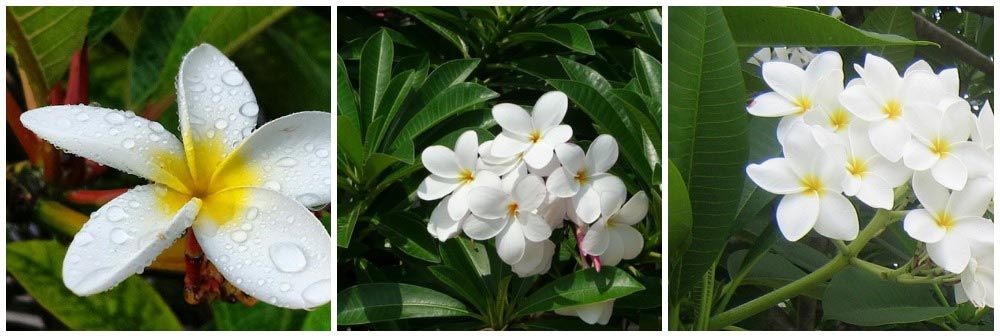
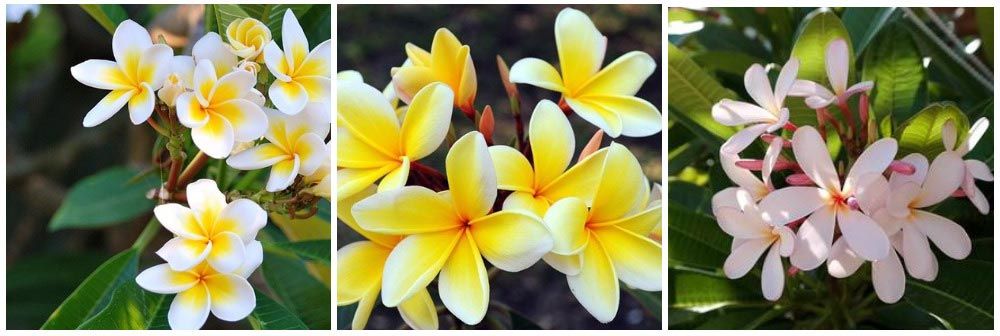
In its native Antilles, the white plumeria tree can grow up to 10 meters. Its long, narrow leaves with raised edges are covered with light-colored hairs on the back. The small, just over two centimeters long flowers are white with a bright yellow center.
Red plumeria (Plumeria rubra)
This is a low-growing South American plant. Its leaves are more rounded than those of the alba and larger, growing up to 50 cm in length. Its flowers are also twice as large and bloom in clusters of several flowers.
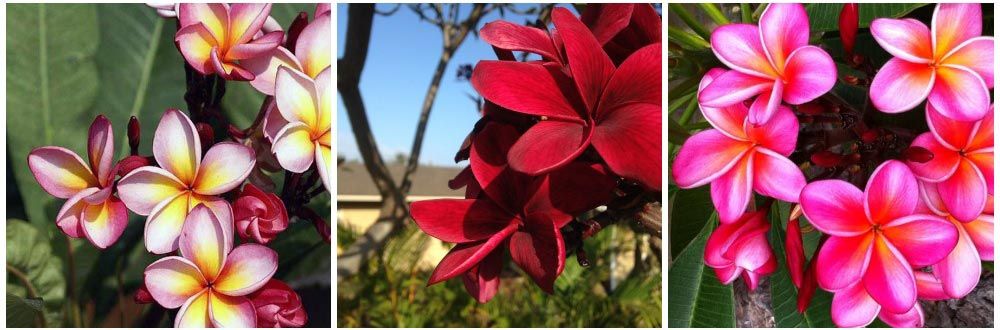
Their color range is widely described: numerous shades of red, pink, purple, and yellow; white ones are also common. Particularly popular is the "Pink Pearl" variety, with thin, dark pink petals, a yellow center, and distinctive straight red lines radiating from the base of the petals.
Plumeria obtusa
This African variety is distinguished by its low growth, large (up to 10 cm) and very fragrant snow-white flowers, and the absence of a dormant period – the plant does not shed its leaves in winter.
Caring for plumeria at home
If the proper conditions are met, frangipani is not too demanding in care.
Watering
Water the plant with soft water that has been settled for at least 24 hours. In winter, watering should be less frequent, and in summer, more frequent, but in either case, it's important to monitor the soil.
It should not be allowed to dry out, nor should it be over-watered.
The amount of watering also depends on the amount of sunlight - on cloudy days, more water is required than on sunny days.
Moisturizing
To maintain the necessary humidity, it is recommended to regularly mist your plumeria with a spray bottle. Use the same water you use for watering—settled and soft.
During flowering, misting is prohibited, as flowers do not tolerate drops of moisture on their petals. In such cases, moisture can be achieved by placing fresh moss or watered expanded clay in the tray around the pot.
Fertilizer
Fertilizers are added to the soil along with water for irrigation. In the spring, when the plumeria develops new foliage, a couple of times a month they are fed with mineral fertilizers for flowers.
In summer, phosphorus fertilizers are added, and the frequency of fertilizing is reduced in autumn. In winter, during the dormant period, fertilizing is not necessary.
Rest period
In winter, plumerias enter a dormant period, losing their leaves and entering a brief period of dormancy. This period lasts about a month, depending on the plant variety, after which active growth of young foliage resumes. During this period, water sparingly and with small amounts of water without fertilizer, and remove fallen leaves promptly.
Features of transplantation
Young plants require repotting every year, while mature plants require half as much. This procedure is carried out in early spring:
- The new pot should be a few centimeters larger than the old one and have drainage holes.
- If roots are too long, they can be trimmed if necessary.
- It is recommended to prepare the soil from a mixture of two parts turf soil and one part each of peat, humus and sand.
- Place expanded clay or gravel under the soil to a depth of 20% of the pot's depth. Adding crushed eggshells is helpful.
Reproduction
At home, plumeria is propagated by seeds and cuttings. With the former, the plant's appearance may differ from the parent plant, and the first flowers appear 2-3 years after planting. Cuttings ensure the preservation of varietal characteristics, and flowering occurs approximately a year later.
Seeds
Before planting, seeds are pre-soaked in a growth stimulant solution, placed on a damp cloth and kept in a warm place for 24 hours, periodically moistening the cloth with a spray bottle.
The soil for sowing is the same composition as for transplanting. It is poured into six-centimeter seedling pots with drainage holes.
Place the seed in the soil so that the wing remains above the soil level. After careful watering, cover the pot with plastic wrap and place it in a warm place. Air the seedlings twice a day.
It takes a week or two for the first sprouts to appear.
After germination, it's important to help the plant remove the wing—the remaining seed. To do this, soak the dry wing skin first and then carefully remove it from the seedling with tweezers.
Once the stem reaches 6 centimeters in height, it is time to begin the first transplant.
The pot should be a few centimeters larger in diameter and have holes. Drainage material is added to the bottom. The seedling is transplanted to the new location along with the root ball.
Cuttings
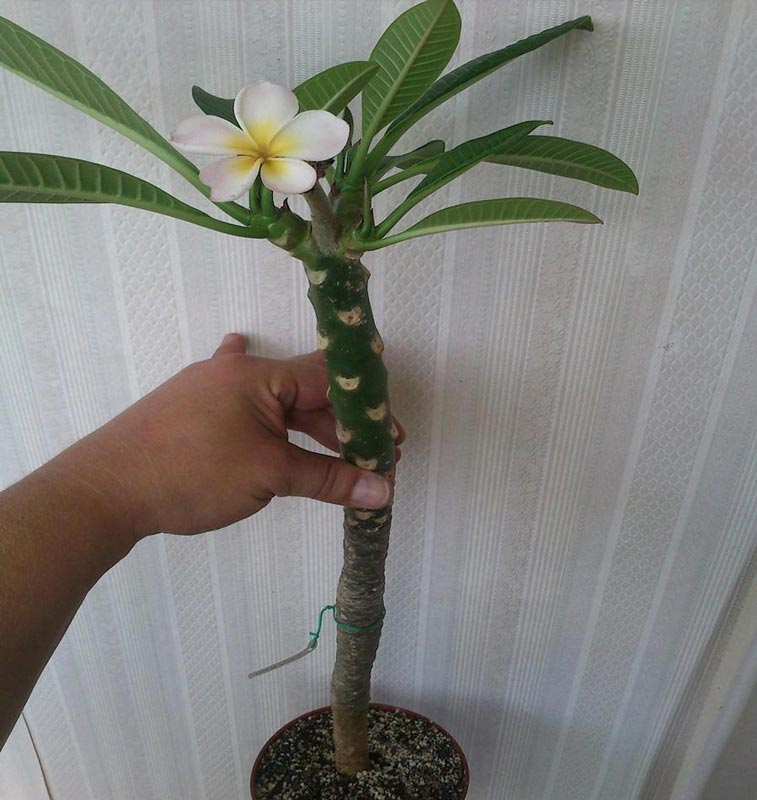
Cuttings are taken after the plant emerges from dormancy, in early spring. The cut should be at an angle. The cutting is immediately moistened with water, then with a root growth stimulant.
The pot is filled with three layers of soil: soil mix + perlite + soil mix. The cutting is placed in the pot at a right angle, with its tip resting in the middle, perlite layer. The pot is placed in a very warm (at least 25°C) and bright location. On cloudy days, provide additional lighting with fluorescent lamps.
Watering should be done carefully, gradually increasing the amount of water.
Rooting occurs within 2-3 months. The appearance of new leaves on the cutting will indicate its success.
Warning
Plumeria is a poisonous plant. It should be kept out of the reach of children and pets. The toxic sap causes skin irritation.
If this happens, for example, when cutting cuttings, you must immediately rinse the affected area with running water.
Top.tomathouse.com warns of pests and diseases
Frangipani rarely suffers from diseases or pests, thanks to the poison in its sap. However, growers may still encounter a few problems.
| Description of the problem | Possible reasons | Solution |
| In winter, leaves fall rapidly. | Rest period. | There's no need to take any action—this is normal. At this time, the plant needs cooler air and less frequent and frequent watering. |
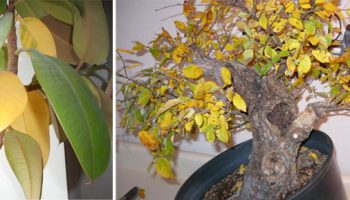
| Growth has stopped, the leaves are turning yellow and drooping. | Lack of moisture in the soil. | Increase watering. |
| The leaves are turning yellow and a rotten smell has appeared. | Excess moisture in the soil. | Stop watering until the top layer of soil is completely dry, then continue less frequently and in smaller doses. |
| Growth has stopped, branches become thinner and longer, and flowering does not occur. | Lack of light. | Provide the plant with more direct sunlight or use a special lamp. |
| Small yellow or brown spots appeared on the leaves. | Fungus infection. | Spray with fungicide. |
| The leaves lose color, small white specks and sometimes cobwebs appear on them. | The only pest that attacks plumeria is the spider mite. | Use specialized insecticides. To prevent re-infestation, maintain air humidity at the required level. |