Purslane, or dandur, is a plant native to the tropics of the Northern and Eastern Hemispheres. The family comprises approximately two hundred species, mostly found near bodies of water. It gained popularity as a garden plant in the Middle Ages, when the English began growing it near their homes.
In Russia, it can be seen growing wild in the Far East and the European part of the country. Domestic gardeners appreciate its attractive appearance during flowering—the variety of flowers and stem shapes, as well as the medicinal properties of purslane, make it a welcome guest in any garden or even on a windowsill. Furthermore, several varieties of purslane can be incorporated into landscape design, creating a very attractive appearance in parks or public gardens.
Annual and perennial purslane
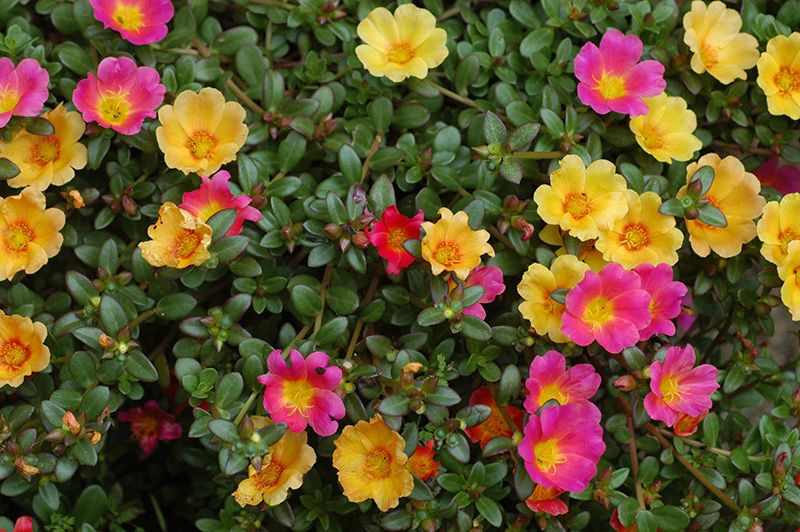
There are both annual and hybrid varieties that can be grown for more than one year.
Perennial hybrids thrive both indoors and outdoors. They grow outdoors in summer, but can be safely brought indoors for the winter. While these hybrids are long-lived, they're unlikely to offer lush blooms—annuals are considered more modest in terms of blooms.
If you're looking for colorful, luxurious flowers, consider annuals. Of course, they'll need to be replanted each season, but many gardeners are willing to sacrifice their time for the sake of appearance.
By the way, there is a method that does not require human intervention: you just need to plant it once and not dig up the soil near it, then the purslane will independently disperse seeds from year to year.
An important point is that this method is only suitable for warm climates, as the plant is considered heat-loving.
Types and varieties of purslane
Of the many species, only four are reproduced by humans. These are the ones most often seen in gardens and vegetable patches.
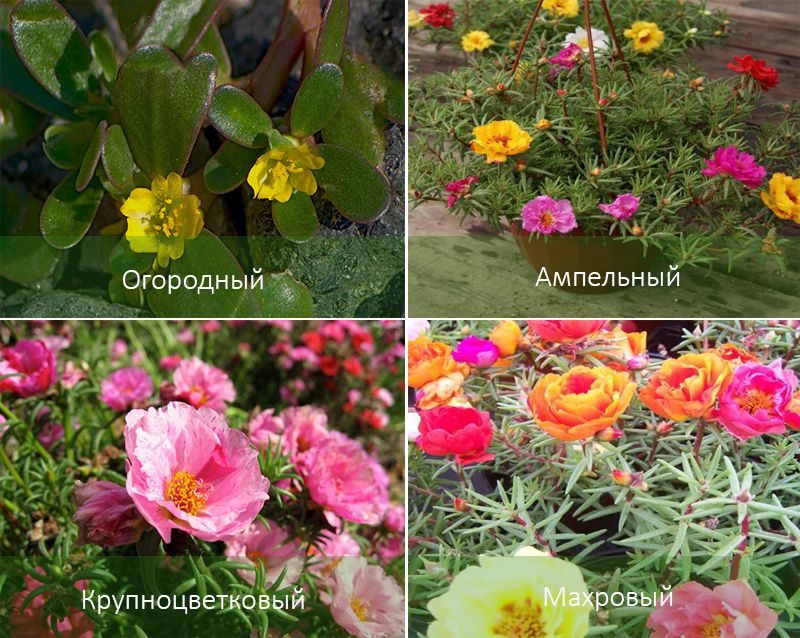
The most common types are:
| View | Description |
| Garden | An annual plant commonly seen in the wild along roadsides or in ravines. It is often compared to a weed due to its rapid reproduction. It is renowned for its medicinal properties. The optimal sowing period is from May 20 to June 10. The leaves have a rather coarse texture. |
| Ampelous | A hybrid obtained through selective breeding. Grown in pots, it looks great on balconies. The flowers can be either double or single. |
| Large-flowered | Typically, it doesn't exceed 30 cm in height. It has recumbent stems. Its leaves are cylindrical. The flowers reach up to 7 cm in diameter and are cup-shaped. Through selective breeding, it has been possible to develop a plant with not only red flowers, but also white and even cream ones. |
| Terry | It blooms all summer long. It's renowned for its attractive petal shape. It closes its buds at night, beautifully decorating the garden throughout the sunny day. Some varieties remain open 24 hours a day. |
Large-flowered purslane hybrids
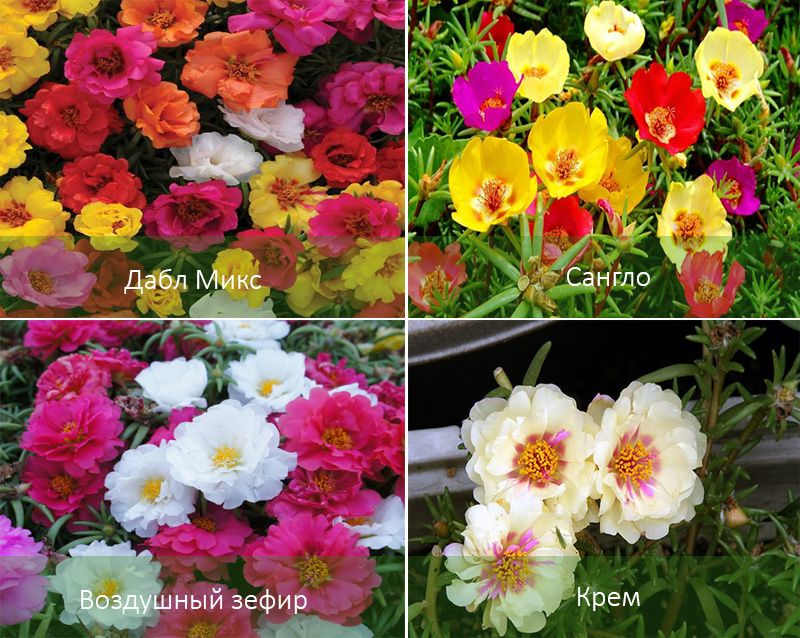
Breeders have long been working to develop varieties of this plant. Among the hybrids, the following stand out:
| Variety | Description |
| Double Mix | The buds have a complex structure and can come in a variety of shades, essentially being a mixture of several varieties of purslane. |
| Sanglo | Large buds that never close during flowering. |
| Airy marshmallows | A relatively small variety. The inflorescences are white and have a double structure. |
| Cream | Various shades of beige during flowering. |
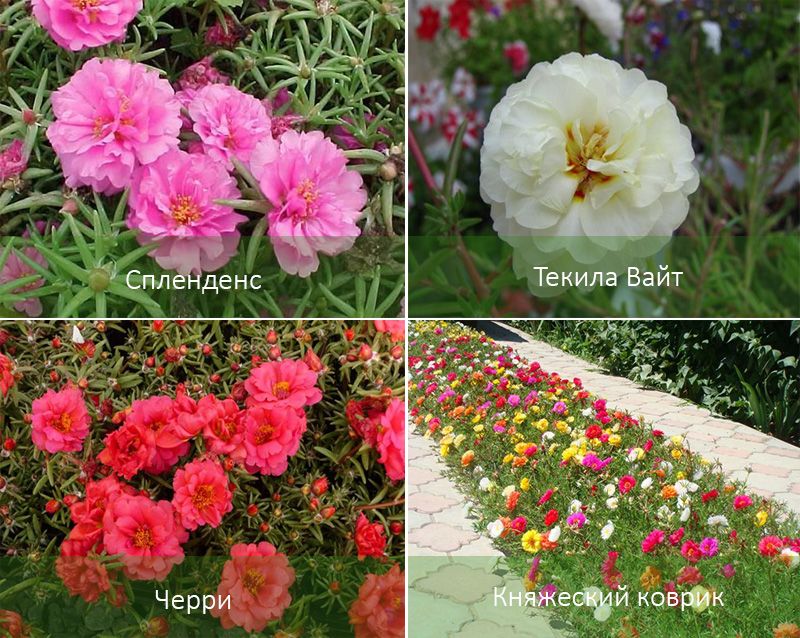
| Splendance | The bright pink hue pleases the eyes. |
| Tequila White | A hybrid bred through selective breeding. It features complexly structured flowers and a carpet of leaves that can reach up to 35 cm in diameter. It's tolerant of moisture, so it requires infrequent watering. |
| Cherry | A relatively short plant with cherry-colored inflorescences. |
| Princely rug | A combination of white, red and bright orange colors. |
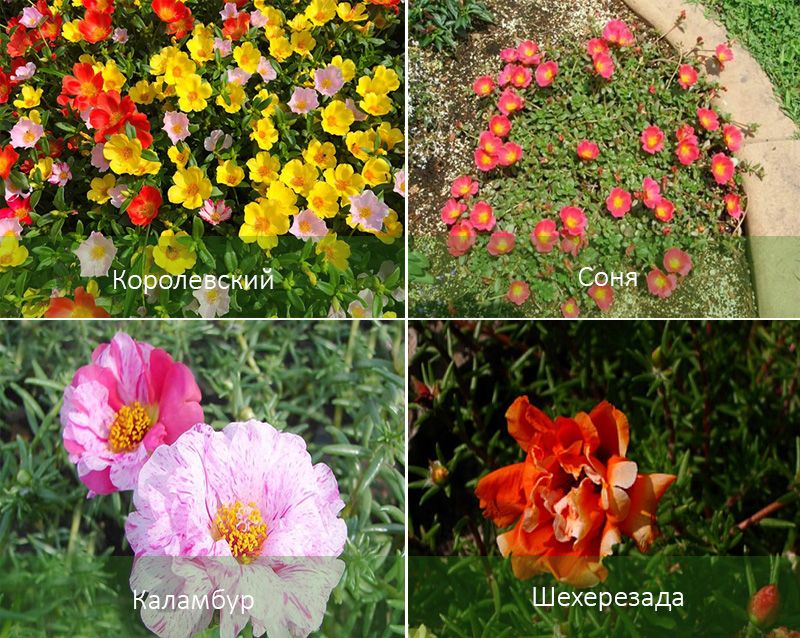
| Royal | During the flowering period, you can observe combinations of a wide variety of shades. |
| Sonya | The simple foliage harmonizes beautifully with the luxurious blooms of various colors and medium-length stems. Suitable for growing in hot climates. |
| Pun | Medium sized multi-colored flowers. |
| Scheherazade | A large-flowered variety that shows its full glory in July. The buds close at night and in cloudy weather. |
Propagation of purslane
The plant can be grown in the following ways:
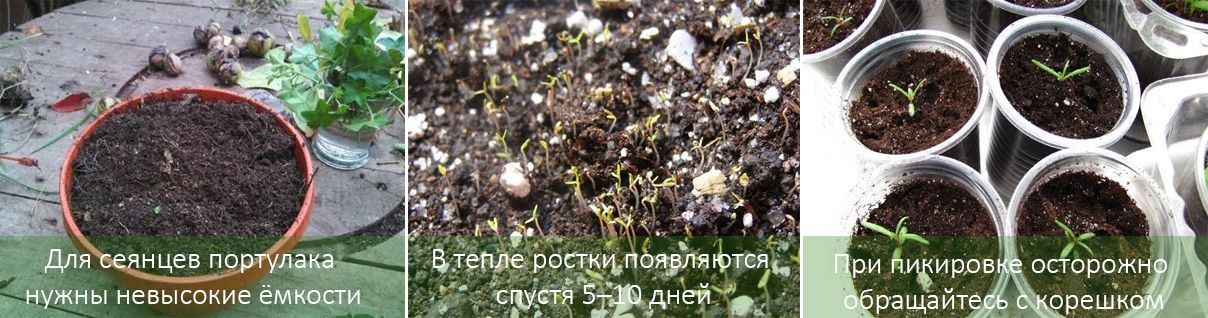
- Seedling method. This option is considered the most effective. The best time for planting is late February or early March, but April is also possible. When planting indoors, ensure the soil isn't too saturated with peat.
- Planting seeds in open ground. Seeds are sown in the ground in early summer. The recommended soil temperature is 20 to 25°C. Lower temperatures may cause the seedlings to die. The planting site should be well-drained. The soil should be moistened and, after planting, covered with plastic. When the first sprouts appear, remove the plastic. Water the growing plant as the top layer dries.
- Wintering. Since the climate in our country doesn't allow for growing purslane outdoors, the plant is grown indoors during the cold season and then moved there for the winter. Dandur plants reproduce well on their own, so you don't have to dig up the bed every year if they survive.
- Cuttings. Vegetative propagation is also possible. In the spring, take cuttings, remove excess foliage, and place them in water. Once roots form, you can replant them, moistening the soil first. The cuttings will thrive in a location that receives limited sun. Once the plant has grown, it can be transplanted from partial shade to its permanent location.
The choice of growing method should depend on preferences and the resources needed for proper growth.
How to care for garden purslane
To ensure your plant grows for a long time and produces beautiful flowers, follow these care recommendations:
- Growth and flowering. To speed up growth, it's best to water the dandur plant in hot weather. The water should be at a moderate temperature, and it should be applied directly to the roots. This should be done approximately once a week. Ash can be used as a fertilizer. For this, it can be mixed with water at a rate of approximately 20 grams per liter of liquid. Special fertilizers are generally not required.
- How to collect and save seeds. Seed collection is also quite simple—you just need to remove wilted flowers promptly. This is usually done in August and September.
However, you can completely avoid collecting seeds and allow the plant to propagate itself in its permanent location, if the climate allows.
Problems with growing purslane, diseases and pests
To ensure beautiful blooms, it's important to consider a number of conditions that purslane requires to produce healthy flowers. The most common problem is poor site selection or unsuitable soil. The plant won't bloom in the shade, and the soil shouldn't be oversaturated.
Growing from seed in soil that was fertilized even a few months ago can be problematic. Rich soil is a signal for growth, not reproduction. Adding sand or gravel solves the problem of dandura buds not opening.
Various pests rarely bother this plant. However, if aphids or thrips do set their sights on the shoots, they can be controlled with any insecticide. Essentially, planting and caring for purslane shouldn't pose any problems for both experienced gardeners and novice hobbyists.
Growing purslane on a windowsill seasonally
Regardless of the variety, the following should be followed:
| Factor | Warm season (spring/summer) | Cold season (autumn/winter) |
| Sunlight | Direct sunlight. | |
| Temperature conditions | +20…+25 °C | With additional lighting +18…+25 °C |
| Environmental humidity level | No additional spraying is required. | |
| Watering frequency | Once every 5 days. | Once a week. |
Watering, fertilizing and pruning at home
When growing purslane, it's important to avoid overwatering and stick to a schedule. Avoid overfertilizing the plant—it prefers poor soil and will thrive in saturated soil. Conversely, avoid overly fertile soil to ensure early flowering.
Top.tomathouse.com informs: Purslane medicinal properties and medicinal uses
The medicinal properties of this plant have been known since ancient times. It was once believed that dandura seeds could cleanse the human body of toxins and prevent death from any snake bite. There are also reports that the leaves were used to prepare a mixture to relieve eye swelling.
A number of historical sources also report the internal use of a gruel made from the seeds, mixed with wine – this is how the Ancient Greeks relieved stomach pain and combated discomfort in the bladder area.
In Middle Eastern medicine, purslane was used to treat warts and other skin conditions. Today, the plant is recommended for those suffering from mild forms of diabetes.