Planting a lawn in the fall is a very expensive undertaking, requiring considerable time and effort. The appearance of a finished lawn planted in the fall depends on many factors, including timing. For example, in the Urals and Siberia, timing varies greatly.
Advantages and disadvantages of autumn lawn seeding
Many gardeners wonder whether it's possible to sow a lawn before winter. The answer is yes, it is. However, it's important to note that fall sowing has both pros and cons.
Advantages:
- There is no need to wait for the soil to warm up.
- Grass that has survived the winter is more resistant to sudden temperature changes, parasites, and infectious and non-infectious diseases.
- Thanks to the spring melting of snow and the absence of heat, the lawn has time to soak up moisture, which has a beneficial effect on its appearance.
- Weeds are not capable of causing much harm to such grass, since its root system is already formed and sufficiently strong by the time they “awaken.”
- Preparing the soil doesn't take much time. Meanwhile, after the harvest, gardeners have a free hand in the fall. No longer do they have to juggle between planting other crops and the lawn, so they can easily clean up the area and sow seeds.
- Autumn weather is generally favorable for seeding a lawn. Even without frequent watering, seeds germinate much faster in the fall than in the spring. Young shoots don't burn because the sun is no longer strong.
Don't forget about the downsides:
- If the terrain of the site is uneven, the risk of planting material being washed away is quite high.
- Seedlings can be killed by subsequent frosts. The resulting bald spots can be corrected by partial overseeding.
Features and timing of autumn lawn planting
Lawns can be planted in early fall (before October 15) or before winter. In the former case, the root system has 45 days to develop. During this time, the young shoots will have time to transform into a lawn. If the above-ground portion is more than 10 cm, the young lawn should be mowed. It's important to note that the seedlings may be lost due to night frosts.
By sowing your lawn before winter, you'll see the first shoots as early as April. If you choose to plant your green carpet between late October and early November, you'll need to stock up on double the amount of seeds (at least 1.5 kg of seed per 30 square meters).
Natural stratification will kill weak seeds, while strong ones will quickly germinate. A temperature increase to 5°C is sufficient for this.
If the climate in the region is harsh, the plantings should be covered with spruce branches or peat.
Site preparation
First, you need to determine the basic soil parameters.
Ideally, the soil should be loamy, with a pH between 6.5 and 7. If the pH is significantly higher than this, fertilize the soil with ground sulfur. If the pH is below 6, neutralize the soil with lime and wood ash.
Before the onset of cold weather, add a fertilizer containing potassium and phosphorus to the soil. Both ingredients are essential for the root system during growth. It is recommended to avoid nitrogen-containing fertilizers, as this component accelerates the development of the grass itself.
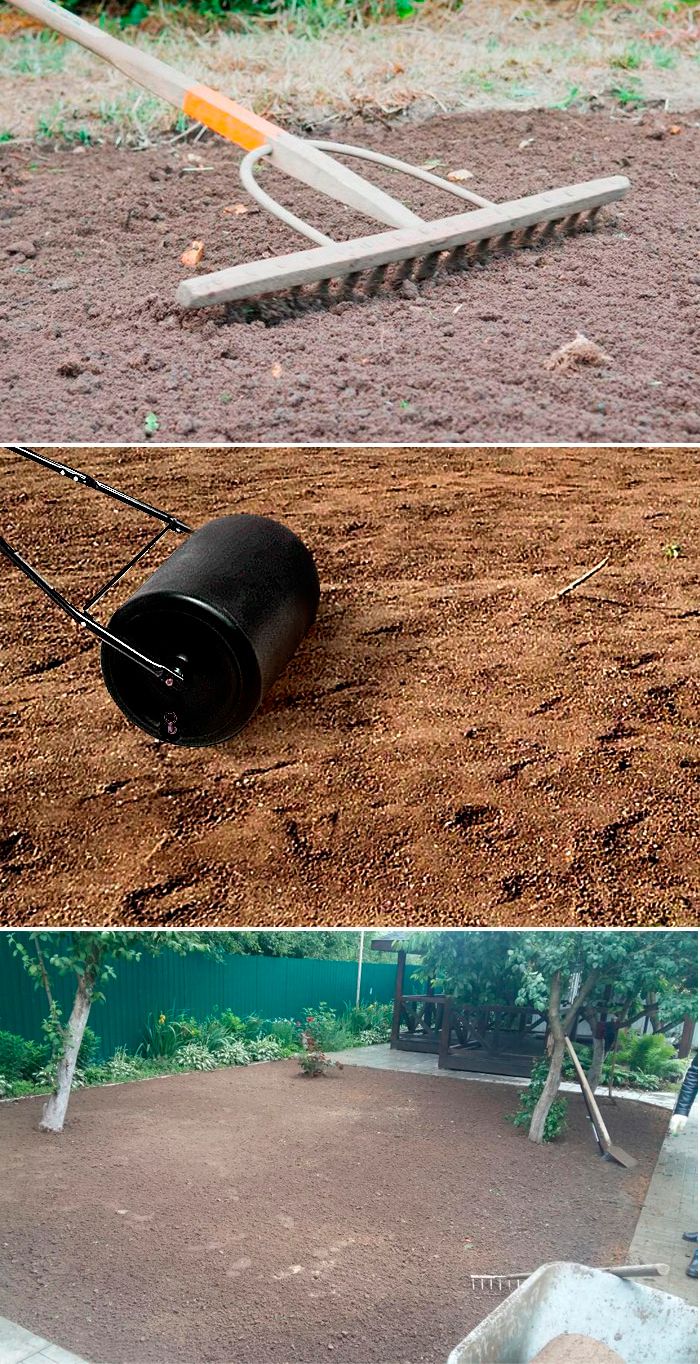
The area is being prepared for planting a lawn:
- Clear away trash, unnecessary vegetation, and weeds.
- They dig up the soil, not forgetting to remove any roots and stones that they find.
- Clay soil is loosened and sand is added; humus or compost is used to enrich sandy soil. If the groundwater level is too close to the surface, a drainage system will be required.
- The soil is treated with herbicides. If the area has not been used for a long time, the treatment should be repeated twice.
- After two weeks, begin leveling the area. Any bumps are removed and any holes are filled in. The smoother the lawn area, the less likely it is that the seeds will be washed away in the spring.
- The soil is rolled, compacted and watered (using a sprinkler).
To avoid getting lost in the vast amount of disparate information about lawns and lawn care available online, it's best to find a single source that presents everything in simple, understandable language. Our editorial team has created the book "DIY LAWN," which contains all the essential information about planting and maintaining a lawn. If you're interested, read more>>>
Before choosing a grass seed mixture, you need to determine the lawn type. It can be:
- Sports. This type of surface is resistant to mechanical impact. The mixture most often includes meadow bluegrass and fescue;
- Parterre. Considered the most elegant variety. A formal carpet is created from red fescue, velvet fescue, creeping and fine bentgrass, and meadow bluegrass. Experts recommend using grasses of a single species;
- Garden and park. Characterized by increased resistance to stress. The following plant seeds are selected for sowing: red and meadow fescue, creeping bentgrass, meadow bluegrass, timothy grass, and clover;
- Moorish. Lawns of this type resemble a flowering meadow.
When planting in the fall, it's important to choose grasses that are frost-resistant and temperature-tolerant. These include meadow grass, red fescue, and fine bentgrass.
Sowing lawn seeds in autumn
Lawns should be planted in cool, windless weather. Before sowing, the soil should be misted if there has been no rain.
There are three types of planting:
- Manually. No special equipment is required when planting by hand. To ensure the lawn meets all expectations, it's important to evenly distribute the seed over the area;
- Using a seeder. The process doesn't take much time. You'll have to mulch the seeds yourself;
- Using a hydroseeder. This is the best option for cultivating uneven terrain. The seed is immersed in a nutrient solution, which is then distributed over the area. The only drawback of this method is the high cost of the equipment.
Laying rolled lawn in autumn
Rolled turf is most often installed in shaded and elevated areas. The planting material is prepared in specialized nurseries. After cutting, the top layer of turf is carefully rolled into rolls and sold.
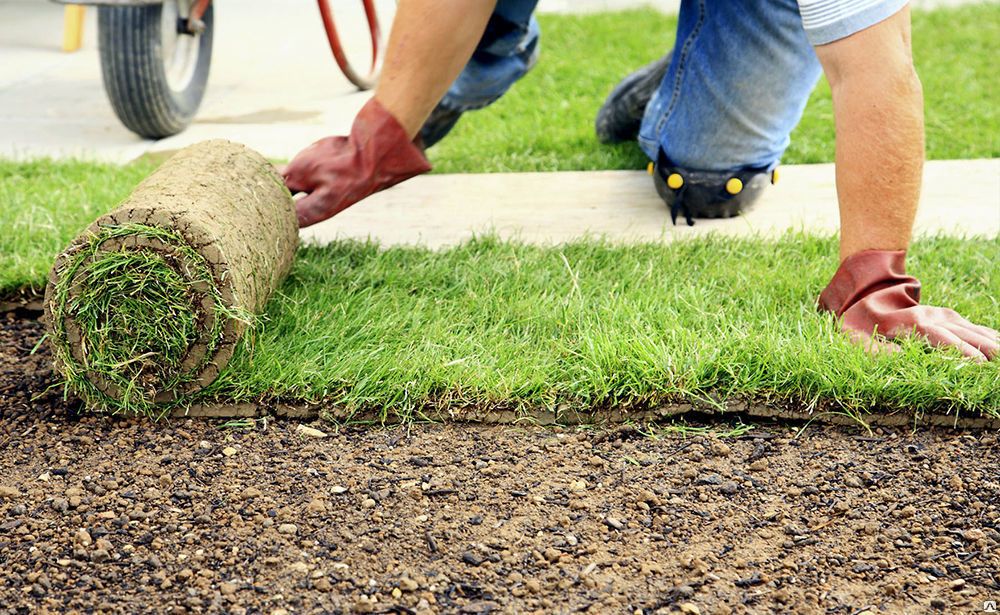
The lawn soil is processed according to the standard procedure. Don't delay placing the layers. The longer it takes to remove the sod from its original location, the less successful the grass will be. The laid lawn must be watered regularly.
When purchasing turf, carefully inspect the strips. Good quality is indicated by the absence of loose grass or bald spots, and an intact root system. The layer thickness should be at least 10 cm. The grass mixture is selected based on soil characteristics and climate conditions.