Because carrots retain a number of beneficial substances throughout the year, thereby promoting vitamin and mineral levels in the body, their harvest is highly prized. However, to obtain a bountiful harvest, carrots must be planted correctly and cared for appropriately.
Content
- 1 The best carrot varieties for open ground
- 2 Carrot sowing according to the lunar calendar in 2023, depending on the region
- 3 Choosing a location for a garden bed
- 4 Top.tomathouse.com recommends: carrot planting methods
- 5 How to care for carrots after planting
- 6 Carrot diseases and pests
- 7 When to harvest carrots and how to store them
The best carrot varieties for open ground
Below are the most common varieties, which have distinct advantages over all other varieties.
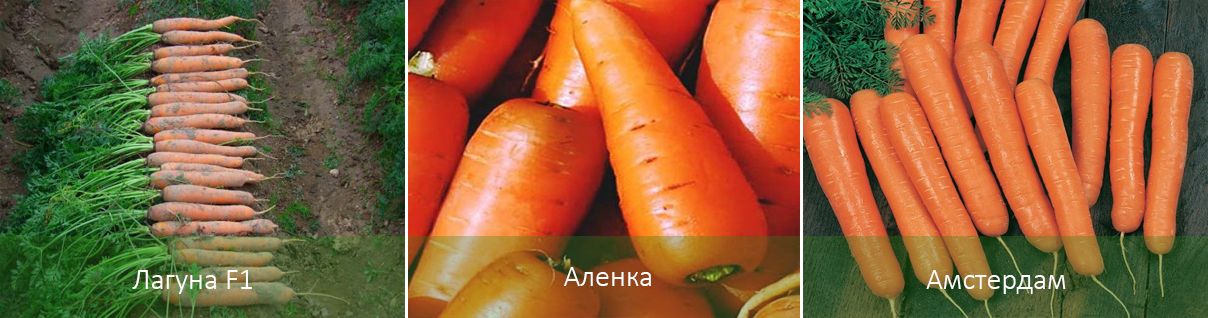
Early ripening
An ideal option for a gardener who wants to get a harvest quickly:
- Laguna F1;
- Alenka;
- Amsterdam;
- Dutch;
- Tushon.
Mid-season
Somewhat shorter in shelf life, but still suitable for canning:
- Tip-top;
- Vitamin;
- Losinoostrovskaya;
- Nantes.

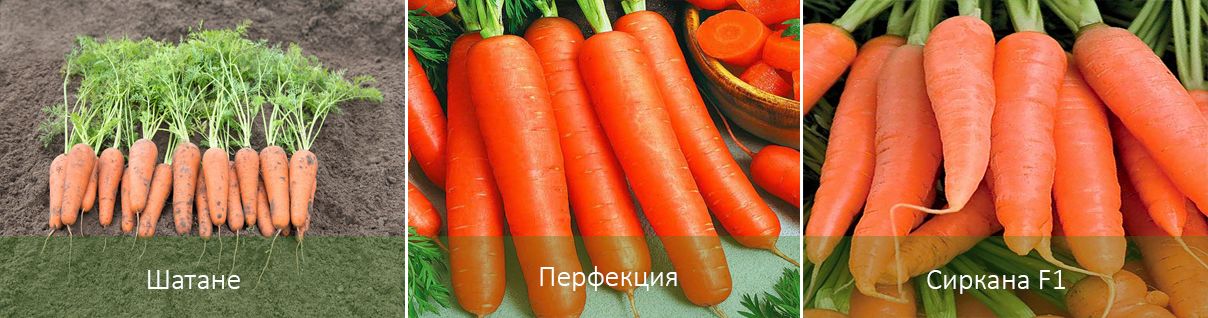
Mid-late and late varieties
Intended for winter storage:
- Shatan;
- Royal Chattan;
- Perfection;
- Sircana F1;
- Vita longa;
- Karlena;
- Red without core.
Carrot sowing according to the lunar calendar in 2023, depending on the region
Sowing according to the lunar calendar will have a positive effect not only on the timing of the harvest, but also on its quality.
| Region | Favorable days | Unfavorable days |
| South |
|
|
| Middle zone |
|
|
| Ural |
|
|
| Northwest | ||
| Siberia |
Choosing a location for a garden bed
Carrots thrive in a sunny location. Shaded areas will yield fewer carrots, and the flavor will be inferior. Sandy or loamy soil with a pH of 7 or slightly lower is the most favorable. Excessively compact soil will result in small carrots and rapid rot during storage.
Predecessors of carrots
It's best to plant carrots in a new location each season, but avoid planting them after greens like parsley or dill. Tomatoes, cucumbers, garlic, onions, and cabbage make excellent predecessors.
Seed preparation
Sort the seeds, leaving the healthiest ones behind, then soak them in a solution of table salt. After a short time, the bad seeds will float to the surface. Rinse the remaining seeds and leave them for 24 hours in a cloth soaked in a growth stimulant. Once dry, these seeds are ready to plant.
To promote further germination, leave the seeds at room temperature for a week, wrapped in a damp cloth. Swollen seeds, which have not yet sprouted, are best for planting. Well-dried seeds will be ready for planting.
If you purchase seeds in granules, on tape, such preparation is not necessary.
Preparing a bed for carrots
For spring planting, it's important to prepare the soil well in advance. In the fall, if the soil is compacted, dig it up and fertilize it with peat. For poor soil, compost is suitable. Avoid adding fresh manure and lime, as they will only harm the carrots. Remove weeds and small stones from the bed.
The soil prepared in the fall won't need to be dug again before planting, but it will still need to be leveled and free of large clods. Furrows for carrots should be made approximately 10 cm from the edge and 15 cm apart. The depth should not exceed 3 cm.
Top.tomathouse.com recommends: carrot planting methods
There are a wide variety of methods for successful planting. Among those presented below are time-tested ones dating back to the last century, as well as relatively new ones that are gradually replacing older methods. All of them vary in complexity, and their effectiveness also varies.
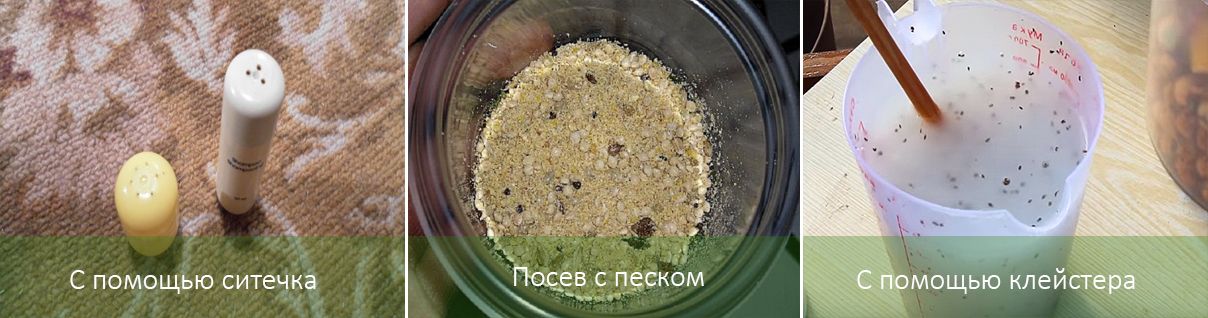
Using a strainer
Place carrot seeds in a sieve used for brewing and pour them into the prepared beds. Then, fill a shallow furrow with soil and water it. Any other container with holes through which the seeds can slip will also work.
Sowing with sand
This method is quite simple: simply mix seeds and sand in a ratio of 4 tablespoons of seeds to 1 bucket of sand. The resulting mixture should be moistened and left to sit for 15 minutes. During this time, you can make furrows into which the mixture will be spread and covered with soil. The furrows should be moistened. This method doesn't guarantee a completely favorable outcome, but it does help maintain the soil's essential nutrients, temperature, and moisture.
Using paste
The scheme for implementing this method includes several stages:
- Mix a tablespoon of wheat flour with 1 liter of water;
- Keep the resulting mass on low heat for 5 minutes;
- Let the mixture cool to +30 ˚C;
- Pour the seeds into the resulting paste and mix;
- Place the mixture in a container, such as a plastic bottle;
- Pour the contents into the grooves.
The method promotes early ripening.
Planting seeds in granules
Place the granules in the furrow, maintaining a distance of 5 cm. Thinning is not required. The method is simple, but careful selection of the manufacturer and variety is essential.
Planting carrots using tape
For this method you will need:
- Toilet paper;
- Low density paper (length corresponds to the length of the bed, width is about 2 cm);
- Special tape.
The required paste is obtained by mixing starch with water, which then helps adhere the seeds to the tape. Fertilizers are added to the paste only after it has cooled.
Place dots of paste on the strip at 2 cm intervals and place seeds on them. Then place the resulting strip into the furrows, cover with soil, and water. The first shoots will appear within a week.
In egg cells
Advantages of this method:
- Dosage, which allows not to carry out thinning in the future;
- Keeping the soil moist for a long time;
- Absence of weeds.
In a bag
In winter, place the seeds in a bag made of natural material, and plant it in the spring. After 2-3 weeks, sprouts will emerge, which should then be mixed with sand and planted outdoors. To create a greenhouse effect, cover the carrots with plastic. As early as June, you can harvest the carrots, which will be distinguished by their juiciness and size.
With the help of the mouth
This method was introduced into practice back in the 20th century. To implement it, you need to:
- Mix the seeds with water in a glass and stir;
- Make furrows in the soil;
- Take the resulting mixture into your mouth and spit it out into the place prepared for planting.
Sowing soaked and sprouted seeds
You can avoid thinning by planting already soaked and sprouted seeds. The main challenge with sowing is the small size of carrot seeds, which are difficult to separate and tend to cluster together when planted. As a result, the sprouts grow uncomfortably close to each other. This can be avoided by soaking and sprouting the seeds in advance, as swollen seeds are much easier to sprout. To do this, simply soak the seeds in a damp cloth until the sprouts emerge. Then, harden them off by refrigerating them for several days. Then, plant them outdoors.
Mixed sowing
Mix radish and carrot seeds together, adding sand. Then, pour the mixture into furrows, cover with soil, and moisten. The radishes will ripen first and be harvested much earlier, freeing up space for the carrots and eliminating the need for thinning. Any early crop can be used as a first seeding. This method is especially useful in small plots.
How to care for carrots after planting
To obtain a rich harvest, it is important not only to plant carrots properly, but also to provide comprehensive care for them later, which will include fertilizing, loosening, weeding, and thinning.
Watering and humidity
Watering carrots should be approached responsibly, as they are very demanding. Otherwise, the fruit will grow with obvious flaws, primarily reflected in its shape. Carrots should be constantly moistened during the initial growth stage, as this is when the roots lose a lot of water to evaporation. As the root system develops, reduce the frequency of watering. A fine-drip irrigation system is beneficial for carrots. Watering should be stopped one month before harvesting.
Top dressing
Soil fertilization is always done before carrot seeds are planted. During the growing season, fertilizing can increase nitrate levels in the crop, while magnesium fertilizers can increase carotene levels.
Loosening and weeding
The vegetable will benefit from proper loosening, as it increases oxygenation of the roots, which is essential for their growth and development. This will have a positive impact on the harvest itself. It is also necessary to ensure regular and thorough weeding.
Thinning
If seedlings are overly dense, thinning should be done before root formation occurs. Otherwise, carrots will become significantly deformed. This procedure should be carried out during the day, as evenings are more likely to attract pests. Also, avoid leaving the tops in the furrow. Plants should be spaced 3 cm apart, and it's best to compact the soil around them to keep the seedlings upright. After three weeks, thinning is usually repeated, doubling the distance between plants.
Carrot diseases and pests
The main pest of this vegetable is the carrot fly. It occurs in very dense plantings, as well as in situations of overwatering and the presence of weeds. The following symptoms indicate its presence:
- Curled leaves;
- Withered and dried out appearance.
To get rid of the insect pest, the plant should be immediately treated with insecticides.
As a preventative measure, you can plant marigolds nearby, whose smell carrot flies practically cannot stand.
Carrots are rarely affected by diseases, the most dangerous of which are phoma and alternaria. As a preventative measure, treating the furrows with a 1% Bordeaux mixture can be used.
When to harvest carrots and how to store them
Carrots are fairly frost-hardy; however, when temperatures drop below 8°C, the starch converts to sugar, which negatively impacts their shelf life. In our climate, carrots are usually harvested in early October. Dry weather is ideal. After removing the carrots from the ground, let them dry for two hours, avoiding direct sunlight. Then, remove the tops and sort the harvested carrots. Whole carrots should be stored in a container such as a box, which should be well-ventilated. A cool, dark location is ideal.