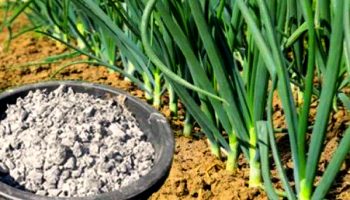
Onions are grown everywhere, but in the northern regions and the Moscow region, until recently, only spring planting was accepted. Now, even in these regions, fall planting is preferred. Since there are a huge number of winter onion varieties available, they survive the winter well and provide an early harvest the following year.
Content
Benefits of planting onions in the fall
Winter sowing of onions has many advantages:
- Cost-effectiveness. There's less gardening to do in the fall than in the spring. Winter plantings require less maintenance, as the crops emerge in the absence of weeds and pests, and the snow provides plenty of moisture, so watering is unnecessary. Furthermore, smaller onion sets are suitable for winter planting, resulting in cost savings.
- Productivity. Harvesting occurs almost a month earlier, and the bulbs are of higher quality and larger than those planted in spring.
- Storage. Onions planted in the fall ripen well, so they retain little moisture, which allows for a longer shelf life (though spring-planted onions store slightly better).
What types of onions can be planted in winter?
Almost all types of onions, except leeks, are suitable for winter planting. Typically, the following are planted:
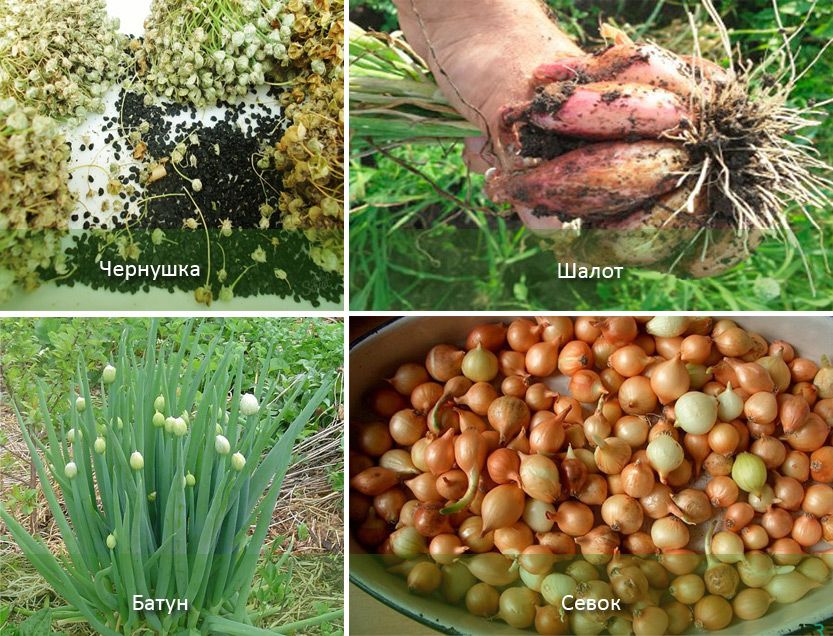
- Nigella is a seed material from which small onion bulbs for planting and onion greens are obtained in the spring.
- Ovsyuzhka (sevok) is planting material that produces a full head in July.
- Batun is a perennial variety that provides green vitamins in early spring.
- Shallot is a frost-resistant variety that produces up to 15 heads from one bulb.
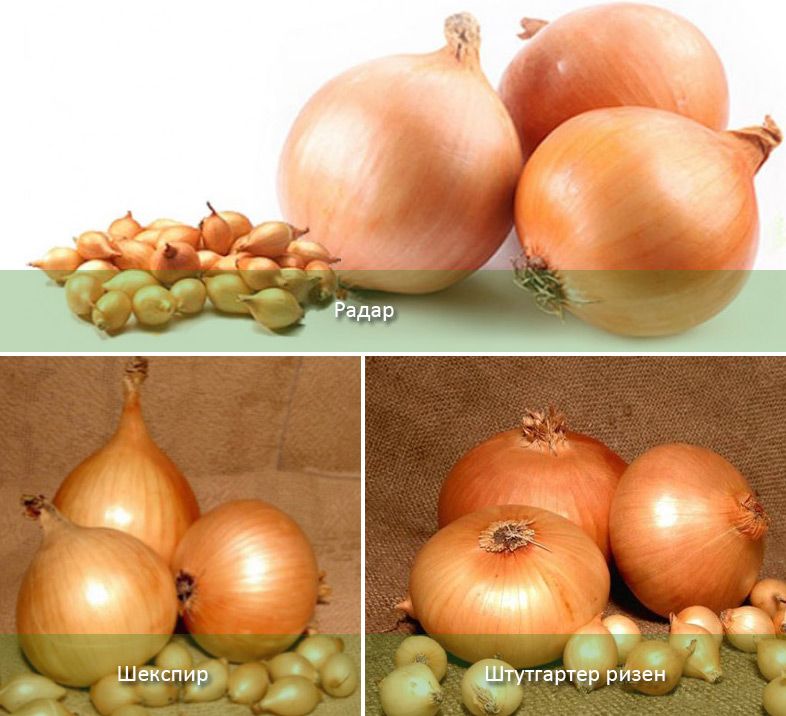
Popular winter varieties
| Name | Description, features |
| Radar F1 | A hybrid Dutch variety. It can withstand temperatures down to -25°C if covered by snow. It ripens early. The fruit is round and oblong, weighing up to 350 grams. It has a tangy flavor and keeps well. |
| Stuttgarter Risen | A German variety. Ripening period is mid-season (110 days). The fruit is flat, weighing up to 150 grams. The flavor is sharp. It keeps well. |
| Shakespeare | Frost-resistant to -18°C, with dense protective scales. Ripens early. The fruit is medium-sized, up to 120 grams. The flavor is semi-sharp. |
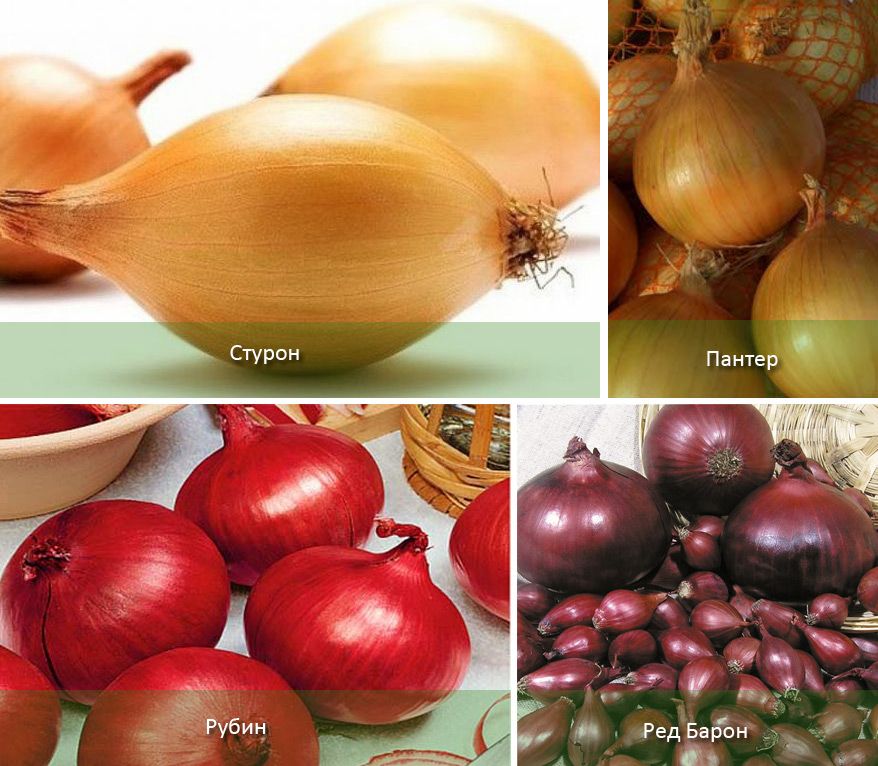
| Red Baron | Frost-resistant. Ripens early (90 days). The fruit is red, up to 250 grams. The flavor is tangy. It has a long shelf life. Resistant to pests and diseases. |
| Sturon | A Dutch hybrid. Cold-hardy. The fruit is elongated, elliptical, weighing up to 220 grams. The flavor is bitter-sharp, the aroma is pungent. It keeps well. |
| Panther F1 | A Japanese hybrid. Frost-hardy to -28°C. The fruit is round with a thin neck, weighing up to 200 grams. Resistant to bolting. Ripens late (135 days). |
| Ruby | A Ukrainian variety. The fruit is round, up to 80 grams (purple-silver). Ripens early (70 days). Keeps well. |
Autumn planting dates
Winter onions are planted before winter, depending on the variety and region.
Blackie
The sowing time for this onion variety is not critical. It can even be planted in frozen ground in late November or December. However, it's best to make furrows in advance. Direct planting on frozen soil with a backfill of warm soil is also possible. Mulch the crops.
Onion sets
Spring and fall planting are recommended. When planting in the fall, onion sets should have time to develop roots, but green shoots should not appear. This time is approximately two weeks before the first frost. The best time is when temperatures have been around 5-6°C for a week.
Shallots
Planting is possible in spring and fall. Winter planting is typically done in October, but the region still needs to be taken into account. Fall planting should be done a month before frost. Rooting time is needed, but sprouts should not be allowed.
Batun
This variety is planted three times a year: April, June, and October. When planting in the fall, follow the same recommendations as for onion sets. October is considered the best month, as welsh onions are among the first to produce green, vitamin-rich stems in the spring.
Onion planting according to the lunar calendar for different regions
As for all plants, autumn planting days for onions are determined for different regions depending on the lunar phases.
| Region | Days | Peculiarities |
| Southern | November — 2-4 (until 10:20), 11 (from 21:39)-12 (until 12:26), 29 (from 09:53)-30. | Mulching (sawdust, leaves). |
| Moscow region | October: 1-12, 16-22 (until 09:06). November: 2-4 (until 10:20), 11 (from 21:39)-12 (until 12:26), 29 (from 09:53)-30. | Covering (spruce branches, agrofibre). |
| Ural | September — 3 (from 18:00)-5 (until 23:05), 8 (from 07:59)-10 (until 19:35), 16-18 (until 07:58); October — 1-12, 16-22 (until 09:06). | Use frost-resistant varieties, reinforced protection (a large layer of spruce branches, thick agrofibre). |
| Siberia | September — 3 (from 18:00)-5 (until 23:05), 8 (from 07:59)-10 (until 19:35), 16-18 (until 07:58). | Plant only the most frost-hardy varieties (Radar F1, Panther F1), and provide strong protection (a thick layer of spruce branches, thick agrofibre). Severe frosts can damage crops. |
Planting technologies, schemes and rules
To get a good harvest, you need to choose the right location, prepare the planting material and plant the onions according to a specific pattern.
Selecting a site
When choosing a location, it is necessary to take into account a number of conditions:
- The plant should be placed on a sunny, slightly elevated spot where the snow will quickly melt in the spring.
- Stagnant water is unacceptable.
- When choosing a location, crop rotation rules must be taken into account.
After which crops should onions be planted?
There are a number of crops that help onion crops grow faster and yield a richer harvest, but there are also some that are not recommended, as they can cause the onions to become infected and the harvest will be small and of poor quality.
- Favorable predecessors are legumes, different varieties of cabbage, tomatoes, and cucumbers.
- Unfavorable predecessors are potatoes, parsley, celery, carrots, garlic, onions.
It is good to grow cereals (clover, buckwheat, mustard) before onions, except for rye and barley.
Soil
The onion bed is prepared in advance. The soil should be humus-sandy or loamy, with a neutral pH. To enrich it, we recommend adding:
- compost;
- superphosphate (1 tbsp. per 1 square meter);
- wood ash.
Planting nigella
To obtain greenery and planting material for the following year, plant the following seeds:
- On a prepared bed, nigella is sown in furrows according to a 2 by 25 pattern.
- Cover with warm soil to a thickness of 2 cm.
- Carefully water the bed with crops and mulch the crops.
Planting onion sets
Step-by-step planting of onions for winter:
- Select planting material (wild oats). For fall planting, choose small bulbs (about 10-12 mm, no larger). Larger bulbs are good for greens, but they bolt quickly, and the onion harvest will be of poor quality.
- Soak the wild oats in a warm solution (+45° C) of potassium permanganate (15 minutes), transfer to a cloth bag, and place near a warm radiator or stove for three days.
- On the prepared bed, mark out holes 10 by 25, approximately 6 cm deep.
- Place the onions, sprinkle with soil, and compact slightly.
- They cover the garden bed.
Growing onions isn't particularly difficult if you know the rules and timing of planting, and choose the right variety.