To get carrots in early spring, people plant them before winter. This requires knowing not only the optimal time and the varieties suitable for your region, but also other secrets.
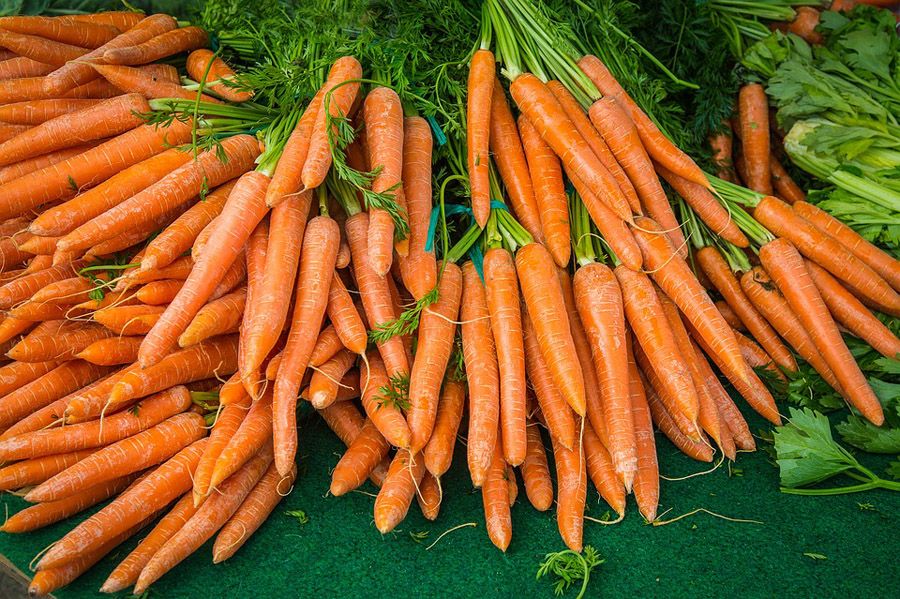
Advantages and disadvantages of autumn planting of carrots
Planting before winter provides the following positive aspects:
- You can get a vitamin-rich harvest earlier. If you cover the crops with plastic wrap, the root crop will ripen a month before the spring harvest.
- Winter is a form of natural selection, the seeds that survive are the strongest and produce healthy fruit.
- There is no shortage of moisture, as melting snow provides young shoots with the necessary amount of water.
- Pests that attack root crops are still dormant in early spring.
The disadvantages include the tendency of autumn carrot plantings to bolt.
Don't plant carrots in the fall if you want to store the harvest for a long time. They should be eaten in the summer and fall.
The subtleties of winter sowing
Planting carrots in the fall isn't difficult, but it's important to know a few tips on how to properly grow carrots. The biggest mistake is planting the root crop too early.
Since the weather varies from year to year, you need to determine the planting date yourself, taking into account the general recommendations of experts:
- The month is October, November, even December, depending on the region.
- Temperature - 1-2 weeks stays at +2°C, but not below -5°C.
- Lack of heavy rainfall.
By region
| Region | Month | Depth, shelter |
| Southern, Krasnodar Krai | mid-November - early December | 3 cm. Not required. |
| Middle, Moscow region | november | 5 cm. Mulch (peat, humus 3 cm, spruce branches). |
| Northern, Siberia, Urals | October | Cover with non-woven material, spruce branches. |
According to the lunar calendar in 2023
The favorable days for planting carrots in the fall are determined by the lunar calendar. In 2023, these are the following dates:
- October - 5 (from 15:32)-7, 13, 16-17 (for quick consumption, salad varieties), 18-22 (until 09:06);
- November — 2-4 (until 10:20), 9 (from 11:07)-12 (until 12:26), 14-18 (until 14:27), 25-26 (until 12:26), 28 (from 12:26)-30.
Try to avoid winter planting on October 14, 15, 28, 29, and in November on November 12, 13, 14, 26, 27, 28.
Selection of planting material
Frost-resistant varieties are selected for fall planting. These typically include mid-season and late-season varieties.
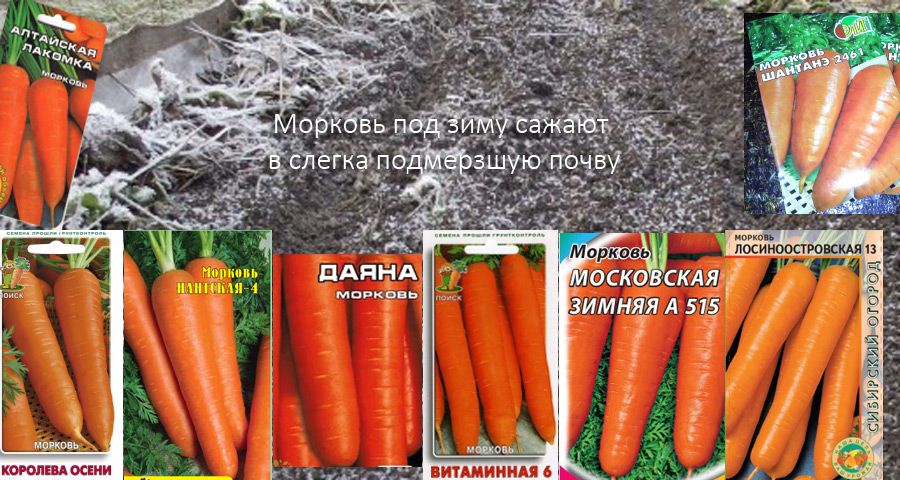
Due to recurrent frosts, early-ripening carrot varieties are not suitable for winter planting, as the young shoots will not survive the frost. Because autumn seedlings are prone to bolting, varieties resistant to bolting are chosen.
The most popular cold-resistant varieties for winter planting in the regions of Russia are the following:
| Variety | Growing season (days) | Description | Region of Russia |
| Nantes-4 | Mid-season (80-110) |
The fruit is 16 cm long and weighs up to 150 g. The shape is cylindrical. The tip is rounded. It contains a lot of sugar and carotene. | All regions. |
| Losinoostrovskaya 13 | Mid-season (110) |
Fruit: 15 cm by 4.5 cm, 100 g. Shape: elongated cylinder. Pointed tip. Resistant to leaf spot. | All except the Northern, Southern Urals, and East Siberian. |
| Shantane 2461 | Mid-early (70-100) |
Fruit is 15 cm by 5.8 cm, up to 250 g. Conical shape. The tip is blunt. Good shelf life. | All regions. |
| Vitamin 6 | Mid-season (95-120) |
Fruit: 15 cm by 5 cm, up to 165 g. Cylindrical shape. Blunt tip. Resistant to leaf spot. | All except the North Caucasus. |
| Callisto | Mid-season (90-110) |
The fruit is 25 cm long, weighing no more than 120 g. The shape is an elongated cylinder. The tip is pointed. High in vitamin A. | Central. |
| Incomparable | Mid-late (100-120) |
Fruit is 17 cm by 4.5 cm, approximately 200 g. Cylindrical shape. The tip is blunt. Drought-resistant. |
Southern Urals, Moscow region, North Caucasus, Far East. |
| Moscow winter | Late-ripening (120-130) |
Fruit: 17 cm, 170 g. Conical shape. Blunt tip. Resistant to leaf spot. Good shelf life. | Perfect for the central zone. Recommended for all regions. |
| Queen of Autumn | Late-ripening (115-130) |
Fruit: up to 30 cm, 230 g or more. Conical shape. Slightly pointed tip. Resistant to bolting. | Especially for the North. |
| Altai shortened | Mid-season (90-110) |
Fruit: 20 cm, 150 g. Cylindrical shape. Rounded tip. Tolerates low temperatures well. | Especially for Siberia and the Urals. |
| Diana | Late-ripening (120-150) |
Fruit: 28 cm, 210 g. Conical shape. Blunt tip. Tolerates extreme temperatures and low temperatures. | Siberia, Urals. |
Selecting a site
When choosing a site, keep in mind that seedlings will begin to emerge in early spring, when snow still remains on the ground. Therefore, the site should receive good sunlight, preferably on a slightly elevated site to allow the snow to melt more quickly.
It is necessary to take into account what plants were previously growing in the bed intended for carrots.
| The best predecessors | The worst predecessors |
|
|
It's not recommended to plant carrots in the fall in a bed where they were harvested in the fall. Such a bed will only be suitable for growing after 3-4 years.
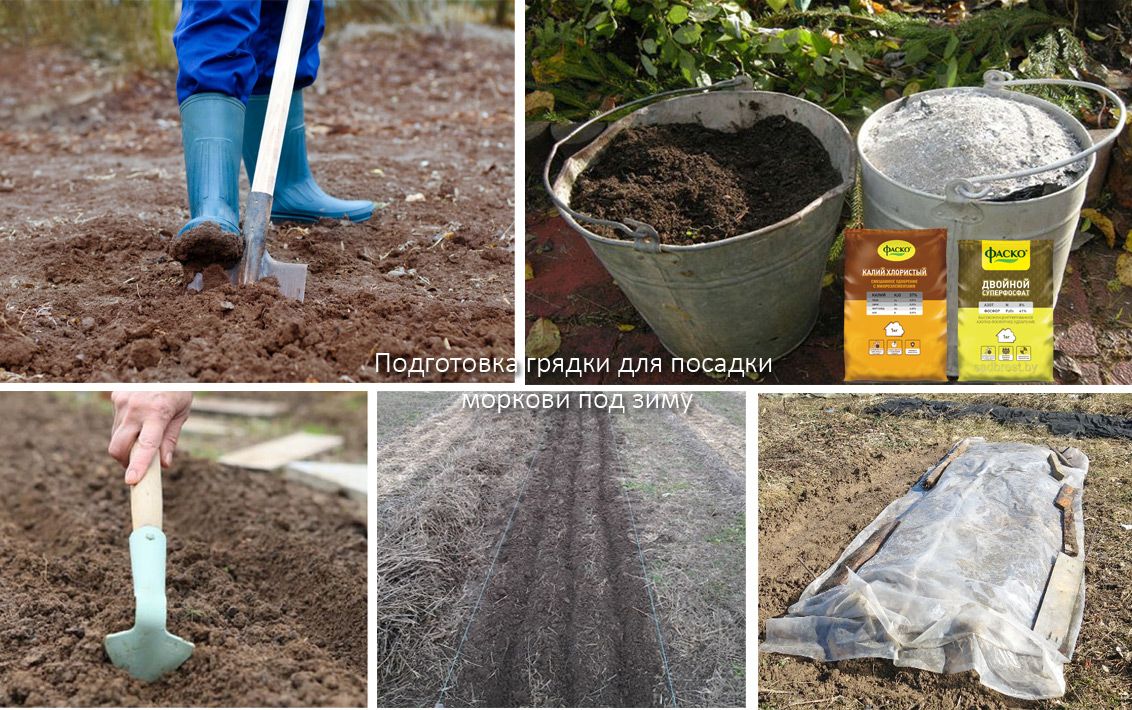
Preparing the garden bed
The planting bed is prepared in advance (preferably a month):
- The soil is cleared of weeds and dug to a depth of approximately 30 cm.
- Fertilizers are applied per 1 square meter: a glass of wood ash, 3 kg of rotted organic matter, 30 g of superphosphate, 15 g of potassium salt.
- Furrows are formed - 3-6 cm deep (depending on the region), the distance between them is approximately 20 cm.
- Covered with non-woven material or film.
Sowing
Planting is carried out according to the following scheme (it is important not to forget that the ground should be slightly frozen):
- The seed material is distributed into holes at a distance of approximately 2 cm from each other (more densely than during spring sowing).
- Cover with warm garden soil (prepared in advance). Crops are mulched (depending on the region).
- It is becoming denser.
- If there is snow, cover it with a little bit of it.
- Covered with spruce branches.
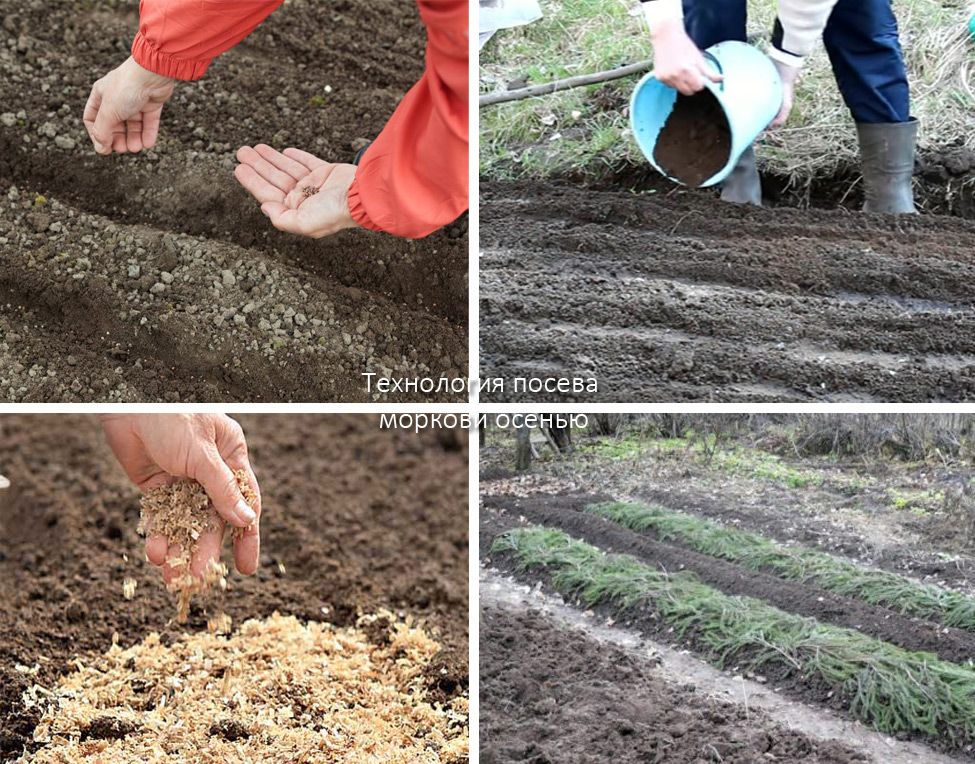
Important: Do not soak the seeds before sowing carrots in winter.
Caring for crops
In winter, planting and sowing don't require much care. Just make sure there's enough snow cover to prevent the seeds from freezing.
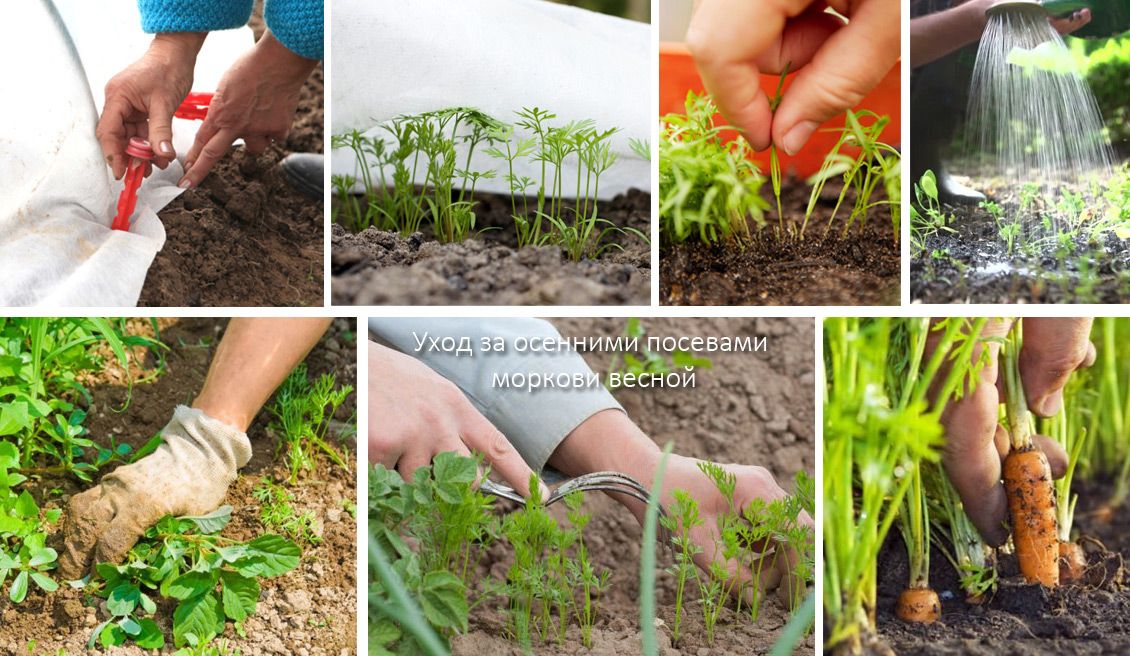
In the spring, when the snow melts, it is necessary to remove the covering (mulch, spruce branches) and put down film or non-woven material if there was none (preferably on small arches).
Further care for carrots is the same as for spring plantings:
- Weed to remove weeds.
- Loosen the space between rows to provide oxygen.
- Thin out the crops when several true leaves appear (the distance between the roots is approximately 2 cm).
- When the sprouts grow a little (3 weeks), repeat thinning (leave 5 cm).
- If the spring is dry, water the crops.