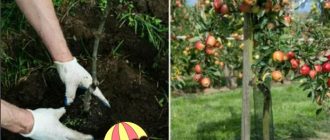
Cherry trees are typically planted in October. However, when choosing the right time, it's best to consider the climate zone and weather conditions. Planting occurs at temperatures up to +13°C.
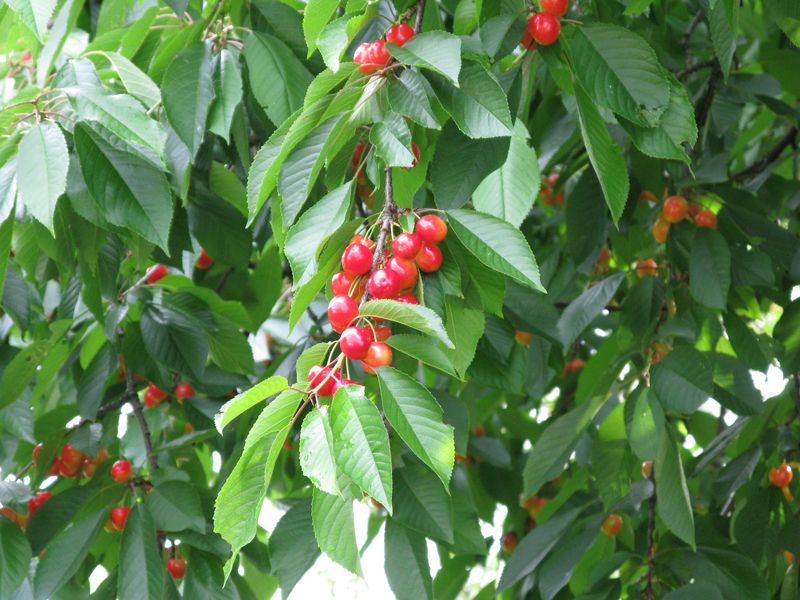
Before this, potassium or phosphorus fertilizers are applied. For the winter, small seedlings are covered with a special felt material to protect them from mice.
Content
Features of cherry cultivation
Planting cherries isn't difficult, but there are some specific considerations that affect both fruiting and optimal growth and development:
- seedlings are purchased from special nurseries, preferably three years old (low trees 70-90 cm);
- select trees with a well-formed root system and uniformly brown bark;
- The planting site should be chosen to be protected from groundwater and drafts.
Timing and varieties for different regions of Russia
In central Russia and the Moscow region, cherry trees are planted after the leaves have fallen and continue until mid-October. In the harsh and cold climate of the Urals and Siberia, planting is done in late spring, giving the cuttings time to adapt before the autumn cold sets in, allowing them to grow strong and germinate. The best months are May and late April.
In southern regions such as Krasnodar Krai, Rostov Oblast, and Volgograd, the tree is planted from October to the end of November.
For colder regions, select the most frost-resistant seedlings, such as Zhelannaya, Altayskaya Rannyaya 2, and Kristina. For the Moscow region, frost- and pest-tolerant varieties such as Apukhtinskaya, Turgenevka, and Lyubskaya thrive.
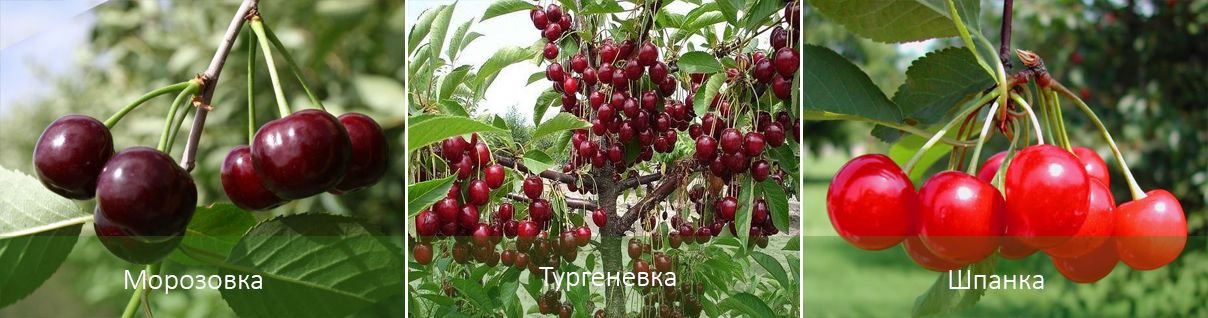
The best varieties for Russia:
- Morozovka is a sweet variety that ripens in June.
- Turgenevka is frost-resistant and is perfect for winter preparations.
- Shpanka is resistant to diseases, winter-hardy, the fruits do not store for a long time.
- Zhukovskaya – ripens late and has large fruits.
- The meeting is frost-resistant.
- Generous - sour fruits, produces a large harvest.
- Lyubskaya – does not tolerate cold well, but produces a lot of fruit.
Features and disadvantages of autumn planting
Advantages of planting cherries in autumn:
- A variety of planting material. All nurseries offer a wide selection of bare-root seedlings in the fall.
- Good survival rate. Autumn is the optimal temperature for planting, as this is when the cherry tree actively strengthens its roots.
- Save time in the spring. You can tend to other crops.
- Easy to care for. Rainfall will provide the seedling with the necessary moisture.
Among the disadvantages it is worth noting:
- A sharp drop in temperature usually has a negative impact on the root system, so early frosts can kill the seedling.
- Rodents are most active in autumn, so you will have to protect the tree with a special covering material.
If the planting deadline is missed, then do the following:
- in the garden plot, dig a long hole for the roots;
- the shoots are placed in a trench and secured at an acute angle;
- the root system is covered with a 10 cm layer of soil;
- watered with two buckets of water and covered with spruce branches to protect from pests.
The layer of snow near the trunk should not be more than 30 cm, otherwise the roots will begin to rot.
Choosing a landing site
Cherries thrive on sun, so they should be planted in well-lit areas. Sunlight is especially important for grafted scions. Ideally, the cherry tree should be exposed to sunlight from early morning until evening. The planting site must be protected from strong drafts and winds, as these can cause the plant to deform and break. If such a sheltered area is unavailable, a windbreak is installed.
They do not choose places near branched trees and in lowlands.
The plant is planted only once, as it does not tolerate transplantation to a new location well.
Groundwater has a negative effect on cherry tree growth; it should be at a depth of one and a half to two meters.
When planted near fruit bushes, the tree develops poorly, as the branches become intertwined and gradually die. Cherry trees thrive in garden plots near apple trees, plums, grapes, and gooseberries. Undesirable neighbors include peach, apricot, walnut, and black currant.
Soil
The soil for the tree should be fertile, sandy, or loamy. It should be neutral or slightly alkaline. Soil acidity is an important factor to consider before planting, so if the soil pH is different in the area, it can be adjusted with specific soil amendments. Acidic soil can be alkalized with chalk or limestone. Clay soil should also be avoided; otherwise, sand should be added.
Preparing and planting seedlings
Mandatory conditions before planting a seedling:
- Inspect the shoot for damage, cuts, and fractures in the roots and stem. Remove leaves that allow water to evaporate.
- Dry roots are placed in water for half a day up to the root collar.
- Place the root system in a solution of heteroausin.
Planting instructions
Prepare the soil in advance: add lime and till the soil. Fertilize with the following fertilizers: 10 kg of manure, 60 g of superphosphate, and 30 g of potassium chloride per square meter. Never use limestone and organic matter simultaneously.
Step-by-step landing instructions:
- A stake is installed about 2 meters high on the northern side of the hole dug for the seedling.
- They form a mound of fertile soil.
- Distribute the roots over the surface of the soil.
- They fill them up and compact the soil around the trunk, ensuring that the root collar is 4 cm above the soil surface.
- Water with 3 buckets of water.
Outdoor care
To ensure proper growth, development and fruiting of cherries, they need to be looked after.
Features of watering
A 25 cm mound of soil is piled around the sapling's trunk, and about two buckets of water are slowly poured into this hole. After the moisture has been absorbed, mulch the soil around the tree's trunk. Afterwards, water the cherry tree as needed.
Fertilizers
To ensure cherry trees thrive in open ground, fertilize them. Fertilize them only during the first two years. From the third year until the first bloom, nitrogen-containing fertilizers are added. The best option is to add fertilizer directly to the water. Once the cherry tree blooms, feed it with humus and compost. In summer, any organic matter can be used. In the fall, potassium-phosphorus fertilizers, such as monopotassium phosphate, are suitable.
Trimming
The sapling is pruned immediately after planting. A bare trunk of 50 cm should remain from the ground to the first branch; all remaining branches are pruned. Only six strong branches are left at an acute angle to the cherry tree's trunk—this forms the main crown of the plant. These branches are shortened by approximately 7 cm. The remaining branches are cut back to the stump of the trunk, and the cuts are sealed with garden pitch.
The crown is formed as follows:
- Begin in early spring by cutting back a one-year-old shoot to 80 cm in height. This will be the first level of branches.
- Next year, cut the central conductor from the highest branch to the first level by 80 cm. This will be the second tier with three branches around the circumference of the tree.
- Once the crown has formed, the cherry tree is limited in height to 2.5 meters. Close branches are thinned out.
Reproduction
Cutting method:
- They mark approximately two-year-old shoots near the mother tree next to strong roots.
- Avoid taking the cutting close to the root system, otherwise the mother tree's roots will be damaged. Then, cut off the root connecting the shoot to the mother tree. In the spring, this shoot is transplanted to a new location.
Method of propagation by seeds:
- Fresh bones are dried and placed in water for several hours. The seeds that sink to the bottom are suitable for planting, and the bones that float to the surface are removed.
- The first ones are placed in a container with sand and water and left in a dry place until warm weather, moistened and weeded as needed.
- Feed a little with fertilizers (superphosphate, potassium chloride).
- For the winter, cover the seedlings with film and leave them in a cellar or any other dry place.
Possible problems
Beginner gardeners often make mistakes that harm cherry trees and affect their growth and yield. The main drawbacks are:
- The planting hole is not prepared in advance, so the root collar goes deep into the ground, which impairs the tree's growth.
- They apply a large amount of fertilizer, which has a negative effect on the root system.
- They buy a seedling that is older than three years, because of this, the cherry tree takes longer to adapt to a new location.
- The tree is planted at the wrong time, which often leads to its death.
- They buy seedlings from individuals, and not from nurseries, where quality is guaranteed.
Diseases, pests
| Pest/disease | Problem | Method of elimination |
| Clusterosporiasis | Numerous holes and brown circular spots on leaves. | Diseased leaves and infected parts of the cherry tree are removed. A solution of copper oxychloride or cupritox is then used. |
| Coccomycosis | Small, bright red and pale spots appear on the leaves, with pink spores appearing underneath. The leaves then turn yellow and fall off. | The leaves are destroyed, the soil around the trunk is dug up. The tree is treated with copper oxychloride. |
| Moniliosis | A spot appears on almost every fruit, eventually filling it completely. The tree loses its entire crop. | Affected parts of the cherry tree are collected and removed. Bordeaux mixture is then applied. |
| Rust | The leaves become covered with rusty spots and fall off. | The affected parts of the tree are collected and burned at a distance. |
| Scab | Huge dark spots appear on the inside of the leaf, then they turn brown and dry out. | The leaves are burned, and then the tree is sprayed with Kuprozan. |
| Cherry sawflies | They destroy all the leaves down to the veins. | Trichogammas (natural enemies of sawflies) are released and treated with Piriton. |
| Cherry weevil | Green beetle that eats leaves and cherry buds. | They use Actellik and Rovikurt. |
| Aphid | It sucks the sap from the tree's tissues. The leaves curl into a tube. | They spray with chemicals such as Rovikurt or tobacco tincture with the addition of soap. |
| Plum codling moth | The butterfly lays eggs in green fruits. The berries spoil. | Treated with benzophosphate and carbophosphate. |
Winter protection
In winter, the tree is protected from rodents and the cold. The trunk is wrapped in felt. In spring, spruce branches are added to the tree to keep mice out.
During winters with little snow, dig snow into the hole to provide warmth. In early spring, remove all protective coverings and loosen the soil.