The apple tree is a fruit tree that is especially popular among gardeners. Many plant several varieties in their gardens. This diversity allows you to stock up on vitamins for the entire year. The plant is easy to grow and is resilient to various climatic conditions. It is best grown in temperate climates.
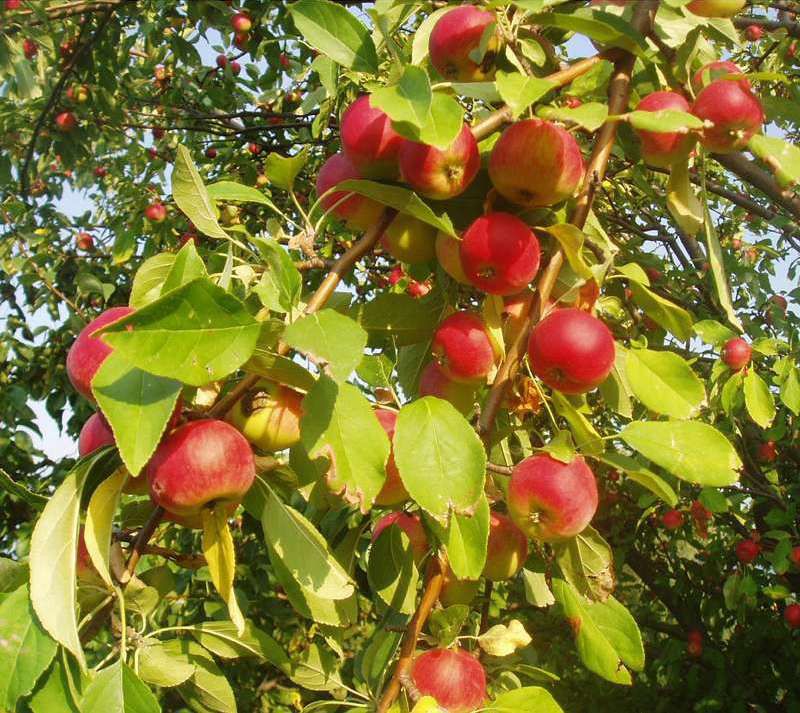
Traditional apple tree cultivation seems easy and simple at first glance. But that's not entirely true. To grow a healthy, fruit-bearing tree, you must plant it correctly from the start.
Content
When to plant apple trees
Seedlings can be planted in fall, summer, and spring. Each period has its pros and cons. Gardeners need to consider the climate, landscape, and variety characteristics. In the south, trees are planted in the fall. This is due to the lack of severe frosts and sufficient rainfall. In northern regions, spring is preferred.
Autumn: pros and cons
It is carried out from September to November. The exact date is determined based on climatic conditions. Rooting takes 4-5 weeks. Root growth continues until the air temperature drops below 4°C. Additional advantages include the cost of seedlings and the reduced need for frequent watering. Disadvantages of this method include severe frosts, snowfalls, wind, and rodents. Planting in the fall can result in the death of young trees, which, unlike mature trees, are sensitive to low temperatures.
In spring, pros and cons
The seedlings are transplanted into the soil after the soil has thawed. Another essential requirement is the presence of unopened buds. If you purchase plants with already opened buds, the acclimation period will be significantly longer. Signs of fungal diseases may appear. Advantages include rapid root development and the elimination of the need for long-term storage of the seedlings. Before purchasing a tree, the gardener can assess its condition.
When purchasing planting material in the spring, the selection is limited. Difficulties arise with seedlings whose buds have opened before they are planted in the soil. It's important to purchase early varieties before the sap begins to flow. Many note that producers don't always label their products, making it difficult to determine the species.
Planting of seedlings in spring should be completed by mid-May.
The main advantage is that the tree will root at above-zero temperatures (short-term frosts are not a problem). In the summer, the apple tree will grow and survive the winter relatively easily. Therefore, in Siberia, only spring planting is used.
Summer planting
This option is used only in cases of extreme necessity. Before planting, the gardener must fertilize the soil, spray the area with insecticides, and remove weeds. The technique remains the same. Monitoring the seedling's condition is more rigorous than when planting at other times of the year. This is because the plant is much more susceptible to illness after summer transplantation.
Choosing an apple tree seedling
Each variety has its own characteristics. One of the defining qualities is frost resistance.
- Among the early ripening varieties, the following stand out: Early Sweet and White Filling.
- Among the mid-season varieties, the Uralets is particularly popular. These apples are distinguished by their impressive aroma, vibrant blush, and sweet and sour flavor.
- Antonovka is a late-ripening variety. Its juicy fruits can be stored for quite a long time.
- Severe frosts can be tolerated by seedlings of varieties such as Veteran, White Anise and Velvet.
Selecting a tree is the first step. Its importance cannot be overstated. The algorithm is quite simple:
- Find out which varieties are suitable for growing in your region.
- Contact a nursery, or if there isn’t one, contact a gardening organization or private individuals.
- Purchase a seedling. To do this, you need to determine factors such as the fruiting period, the rootstock grade, soil characteristics, groundwater depth, and the age and overall condition of the plant.
- The cost depends largely on the packaging. The root system can be left exposed or placed in a special container. The latter option ensures the required moisture and preservation of the cuttings.
The seedlings are placed in soil as soon as possible after purchase to prevent the root system from drying out.
Location
Choosing a site for an apple tree is important. It should be chosen in advance. It's best if there haven't been any fruit trees growing there before. The site for the apple tree seedling should meet the following criteria:
- Good lighting.
- No drafts.
- Groundwater level. It should be no higher than 2 meters from the surface. To prevent unwanted contact, place a sheet of slate at the bottom of the hole. This will encourage the root system to grow laterally, but not downward.
- The distance between seedlings should be at least 2 meters. The gap should be equal to the height of the mature plant. This ensures that the trees do not interfere with each other.
- Diversity. Apple trees are considered cross-pollinated plants. Seedlings of several varieties are present.
- Location. Each variety has its own requirements. Apple trees should not be planted in areas near a main path. Otherwise, the crown will become an obstacle rather than an ornament.
Soil
The apple tree's yield depends on its soil composition. The tree prefers light, loose, slightly acidic soil. Preferably, it should be loamy. Difficulties can arise if the soil is marshy, rocky, or gravelly. It lacks the nutrients necessary for the seedling to thrive. For this same reason, gardeners do not recommend planting a tree in the same place as an existing apple tree. The soil needs to rest. To enrich depleted soil, it is mixed with mineral and organic fertilizers. Wood ash and superphosphate are among the most popular.
Planting hole
This is the name given to a hole prepared 3-4 weeks before planting the apple tree. This creates the most comfortable conditions for the seedling. The hole, 1 meter in diameter, has time to warm up and settle during this period. The soil from the circular hole is placed into two containers. Oilcloths can be used. The first pile contains the top fertile soil layer, and the second, the depleted lower soil layer.
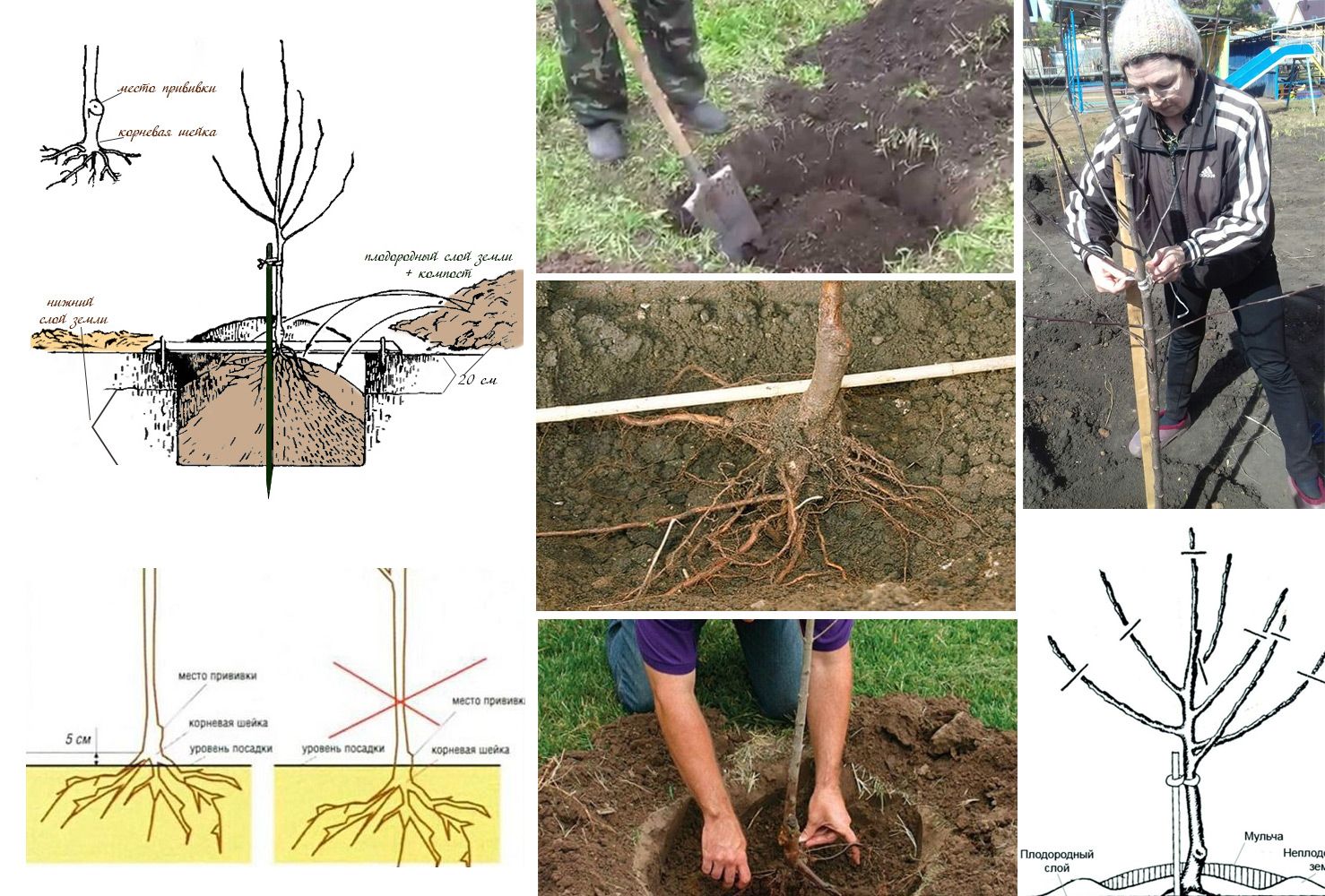
The sides of the hole are made vertical. Its depth is determined by the extent of the tree's root system and its variety. A stake is placed in the center of the hole; its diameter should be approximately 5 cm and its height approximately 1.5 m, so that it extends 40-50 cm above the ground. The portion of the stake that will be in the ground is necessarily baked. This is necessary to prevent rot. All unnecessary components, including stones, debris, and weed roots, are removed from the soil obtained during digging.
Fertilizers
To fertilize apple trees, use a mixture of mineral and organic matter. It can be purchased ready-made or made at home. When choosing the latter, consider the initial condition of the soil and its pH level. Typically, a complex fertilizer contains humus, potassium salt, and superphosphate.
If the soil is highly acidic, you can add about 200 g of slaked lime to the finished mixture.
How to Plant an Apple Tree: Step-by-Step Instructions
- The day before planting, the plant is placed in water. This allows the root system and stem to expand and absorb moisture.
- Before planting, remove all damaged shoots from the seedling. There should be no plaque, mold, or damage.
- The seedling is placed, spreading its roots over the mound in the hole. Carefully backfill and compact the soil, gently shaking the trunk to ensure there are no air pockets.
- To prevent breakage and increase wind resistance, the tree is secured to a pre-prepared support. Strips of soft fabric or plastic can be used for tying.
- Next, water the apple tree at the root. You'll need 3 to 5 buckets of water. The amount of water is determined based on the planting time. The hole left after compacting the soil is mulched with humus or sawdust.
- An annual plant is pruned, leaving 75 cm. For a two-year-old plant, the lateral shoots are shortened.
- Afterwards, the seedling requires proper care. Without it, the plant may die.
Mistakes when planting apple trees
Among the most common mistakes made when replanting an apple tree are:
- Incorrectly determining the root collar level significantly slows plant growth. Never cover it with soil. There must be at least 5 cm between the root collar and the ground. Otherwise, the apple tree will suffer from prolonged illness.
- When planting in a hole that has not been prepared in advance, the soil will settle, which will lead to unnecessary deepening of the root collar.
- Excessive watering kills positive microflora.
- Violation of proportions during the preparation of combined fertilizer leads to oxygen starvation and death of tissues that provide nutrition.
- Using fresh manure will release ammonia and hydrogen sulfide, which will only harm the young plant.
- Lack of support – stem damage.
Each of the listed errors will have a negative impact on both the overall condition of the tree and the future harvest.
Top.tomathouse.com recommends: tips for beginning gardeners
To ensure that the effort spent on planting an apple tree is worth it, it is necessary to take into account the following nuances:
- If the soil is clayey, drainage is essential. Tin cans, pieces of wood, and stones can be used for drainage. The hole will need to be deepened. These conditions will improve root development, prevent water stagnation, and reduce the risk of fungal diseases.
- The negative properties of sandy soil are eliminated by adding silt. It is applied to the bottom of the planting hole. This helps the soil stay moist longer.
- In Siberia, apple trees are grown on gentle hills, which are prepared in the autumn.
- If the groundwater table is close, the technique of using a planting hole will have to be abandoned. Under these circumstances, mounds formed on a flat surface are the best option. The soil is also dug and fertilized. This type of apple tree planting will complicate maintenance, but will protect the tree from rot.
- To promote horizontal root growth, cement can be used instead of drainage, slate, or other materials. It is poured into the bottom of the hole immediately before planting the apple tree. The result is a tree protected from pests, rot, and excessive moisture.
With proper preparation for planting, high-quality care, and strict adherence to step-by-step instructions and recommendations, the first harvest will be obtained in 5-6 years.