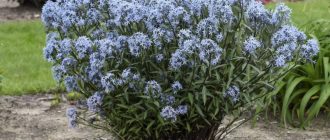
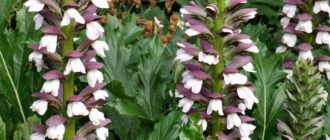
Eupatorium is a perennial plant belonging to the Asteraceae or Compositae family. Eupatorium is the largest of the existing genera. It is further divided into several species and cultivars. The plant grows in tropical Africa, Europe, America, and Asia. Only ornamental hybrids are planted in gardens.
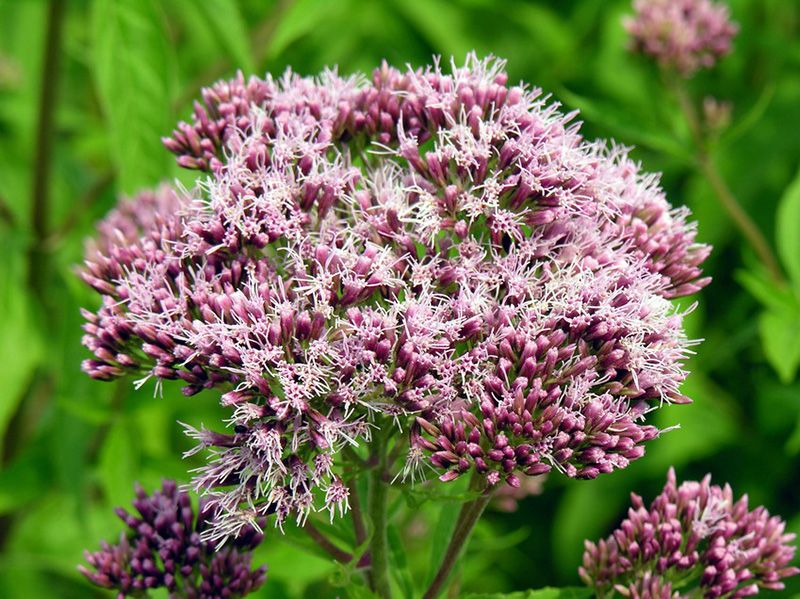
Description of Eupatorium
The flower has the following characteristics:
- height – from 30 to 200 cm;
- inflorescences – up to 25 cm;
- the fruit is an angular achene, decorated with a tuft;
- unbranched erect stem;
- leaf arrangement – opposite, whorled;
- attachment method – sessile, petiolate;
- shape – palmate and trifoliate, ovoid, rhombic, lanceolate, oblong, linear, elliptical;
- surface type – smooth, pubescent, rough;
- edges - serrated, solid;
- corolla color - pinkish, white, purple.
Eupatorium is native to North America. It is distinguished by its long, fragrant blooms (from mid-July until the first frost). The leaves are located along the entire stem. The flower is usually planted behind shorter plants and is often included in garden arrangements. Ornamental Eupatorium thrives among neighboring plants and resembles a hemp plant in appearance.
Popular varieties of hemp agrimony
Today, Eupatorium is rarely used in landscape design. Annual subshrubs are less common than perennials. Its distribution is quite extensive: marshy areas, tropical areas, damp meadows, and humid forests. Eupatorium is easy to care for. Its dense, spreading thickets attract insects.
Thanks to its high ornamental value, Eupatorium is becoming increasingly popular. Gardeners are planting different varieties.
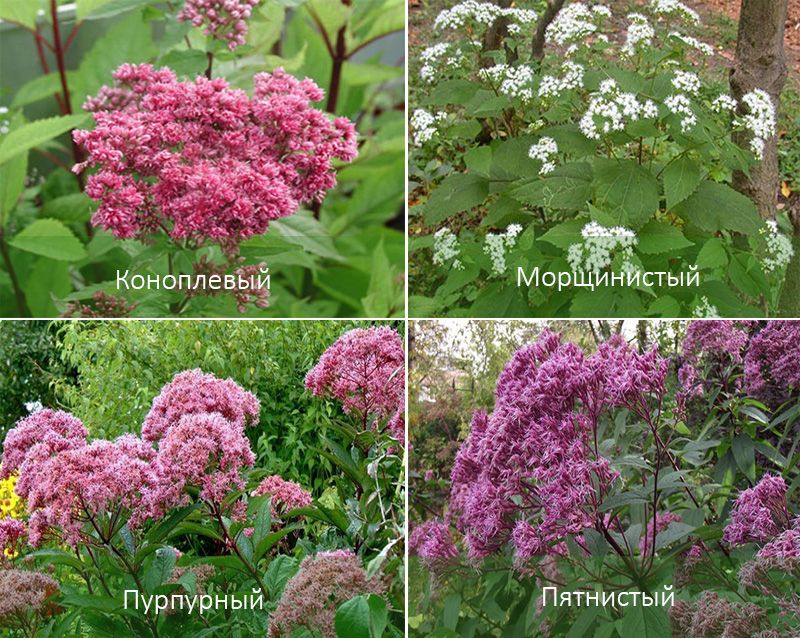
| Type and description | Leaves | Inflorescences/Flowering period | Varieties |
| Hemp Tall stems (up to 1.5 m), thickened root, fruits with a tuft. |
Dark green, five-fingered with a fluffy surface. | Dense baskets containing small silvery-pink corollas. It begins to bloom in mid-summer. |
|
| Wrinkly
Weak stems. |
Green, elongated, narrow, sharp. | White corymbose inflorescences. 3 months (August, September, October). |
|
| Purple
Height – up to 1.5 m, bluish stems. |
Fluffy, oval, pointed. | White, purple, pinkish. July-August. |
|
| Spotted It is distinguished by its winter hardiness, height – up to 1.8 m. |
Elongated. | Purple tint. Blooms until late autumn. |
|
Caring for Eupatorium
Growing Eupatorium doesn't require much effort. The gardener should create conditions that are as comfortable as possible for the plants growing in the area.
| Factors | Conditions |
| Lighting | It loves light, but should never be exposed to direct sunlight for long periods. The chosen location should be open. If planted in the shade, the flowering period will be significantly shortened, and the corollas will be less luxuriant. |
| Landing | This is usually done in early March. If done later, the plant may not take root. When replanting a large shrub, dig a hole. The distance between the holes should be at least 1 meter. Before planting, fill the hole with a mixture of bone meal, ash, and humus. The roots of the eupatorium must be freed from old soil. After the cuttings are secured, compact the soil and water the transplanted plant. |
| Soil | The soil should be loose and fertile. Neutral pH is essential. Avoid sandy loam or clay loam soil. To prevent soil compaction, loosen it regularly. |
| Humidity | It requires plenty of water. Planting near water is one of the best options. Watering should be frequent and generous. |
| Top dressing | This fertilizer is required for more lush flowering and vigorous growth of the hemp plant. For maximum results, mineral fertilizers are recommended. Fertilizer is applied 2-3 times throughout the season. The frequency depends on soil conditions. |
Pruning is another important step. It helps shape the crown. Timely removal of faded flower heads prevents self-seeding. Plants belonging to tall varieties require staking. If this method conflicts with the design, the Eupatorium is planted near a fence. Eupatorium shoots are removed when preparing the plant for winter.
Reproduction
There are several ways to obtain new plants. These include:
- dividing an adult bush;
- cutting off shoots;
- rooting cuttings.
The first method is considered the simplest. Division can be done in the fall or spring (once every 5 years):
- Only long shoots are pruned. The minimum length of the remaining part is 20 cm. Seedlings should have at least three growing points.
- The area where the functional layers have been damaged must be treated with a special solution.
- The bushes are planted in holes prepared in advance.
When choosing the second method, consider the shoot height, the number of regeneration buds, and the time of year. Pruning is performed only in the spring:
- Before starting, you need to prepare containers for the seedlings.
- Each shoot separated from the bush must be shaded.
- Watering should be moderate.
- The buds take root within a month.
- After this, the hemp agrimony can be transplanted into the garden.
Cuttings are a method of vegetative propagation. Green parts are cut at the end of the first month of summer. The necessary conditions include:
- the length of the expected cuttings is from 10 to 15 cm;
- the presence of three growth points.
To encourage rooting, the cuttings are placed in a mixture of peat and sand and covered with plastic wrap. This stage lasts 30 days.
Eupatorium in the landscape
The most popular varieties are purple and spotted atropurpureum. Their colors create a unique garden landscape. Flowering occurs in late summer and early fall. Eupatorium is most often planted in the background, harmonizing well with other garden plants.
By combining tall perennials, complex flowerbeds are created near water bodies, outbuildings, and in the garden. Miscanthus, clumps of reed grass, and molinia are also included in the compositions. In autumn, the plants turn golden and are complemented by the vibrant hues of eupatorium, eryngium, and chamomile.
Diseases and pests of Eupatorium
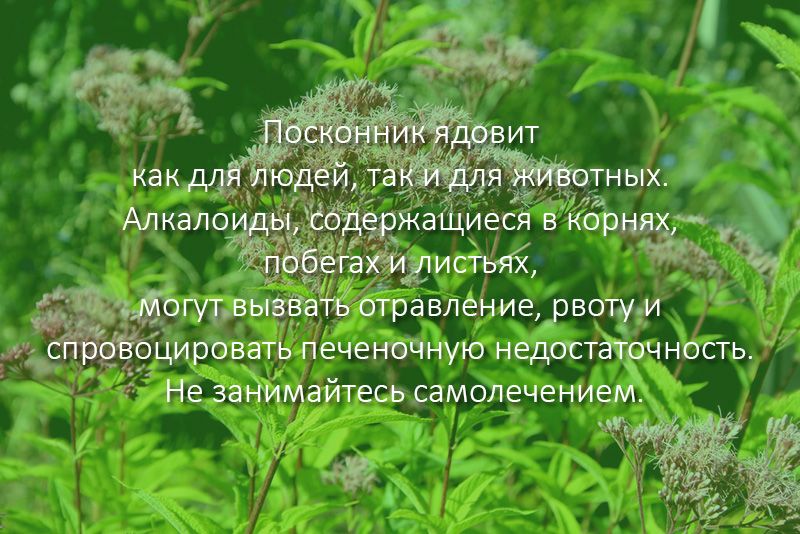
Eupatorium is considered a poisonous plant. Therefore, the risk of pest infestation is virtually nonexistent. To avoid leafminer infestation, it's important to treat the plant promptly and prune away damaged shoots and leaves. Flore Pleno, Purple Bush, and Phantom varieties are much less susceptible to pests than other Eupatorium species.
The benefits and harms of Eupatorium
Eupatorium's aesthetic appeal and ease of planting and care in open ground aren't its only advantages. Members of this genus also boast a host of beneficial properties.
For example, purple eupatorium is often used in folk medicine and homeopathy. This is due to its analgesic, expectorant, choleretic, bactericidal, and anthelmintic properties.
Despite its broad spectrum of action, bone marrow should be used with extreme caution, strictly adhering to the recommended dosage. Before beginning therapy, consult a doctor. They will inform the patient of its medicinal properties and any contraindications. These include pregnancy, lactation, childhood, and liver and kidney disease.