To ensure garlic takes root and produces a good harvest, you need to not only plant it correctly and harvest it on time, but also know which crops are good predecessors and which ones should not be planted after it.
The Importance of Crop Rotation
All plants, as they grow, draw nutrients from the subsoil or topsoil, specifically those needed for their growth. Growing the same crop in the same place runs the risk of a poor harvest, as the soil becomes depleted. To prevent this, crop rotation is essential.
Crop rotation is the successive planting of different plants to restore soil fertility.
It is needed for a number of other reasons:
- Proper replacement not only prevents soil depletion, but also enriches it.
- Prevents the development of plant diseases and their infestation by pests.
- Helps in weed control.
- Saves time and money by avoiding the need for large amounts of fertilizer and sanitary treatments.
Recommendations for predecessors
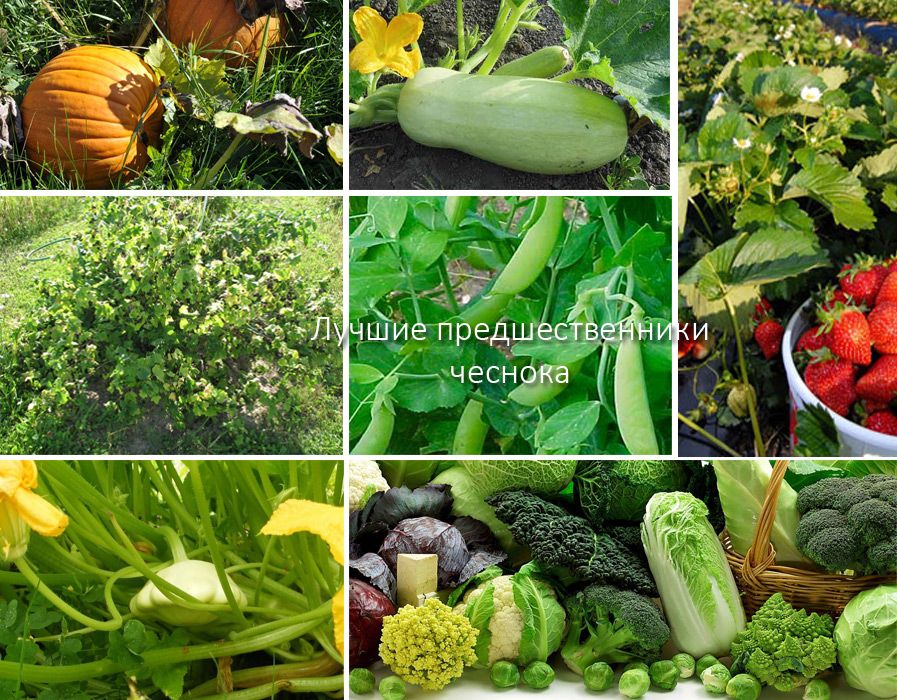
Fast-maturing plants are favorable predecessors for garlic. They don't have time to absorb all the nutrients and organic fertilizers applied to them. This organic matter will be used by the garlic after they've been harvested, especially since fresh organic matter is unsuitable for garlic. For example, pumpkins will not only provide the garlic with its nutrients but also won't transmit any diseases, as they have different types.
The best predecessors of garlic are legumes.
Bacteria in their roots produce nitrogen, which is an important fertilizer for garlic. The legume's root system also loosens heavy soil, enriching it with oxygen.
Berry plants such as currants, strawberries, and wild strawberries can also be beneficial. Places where mid-season crops were grown can be tolerated.
Gardeners recommend planting alfalfa, clover, and mustard in the summer in the garden bed where they plan to plant garlic in the fall. These will act as green manure, enrich the soil with beneficial micronutrients, and improve its structure.
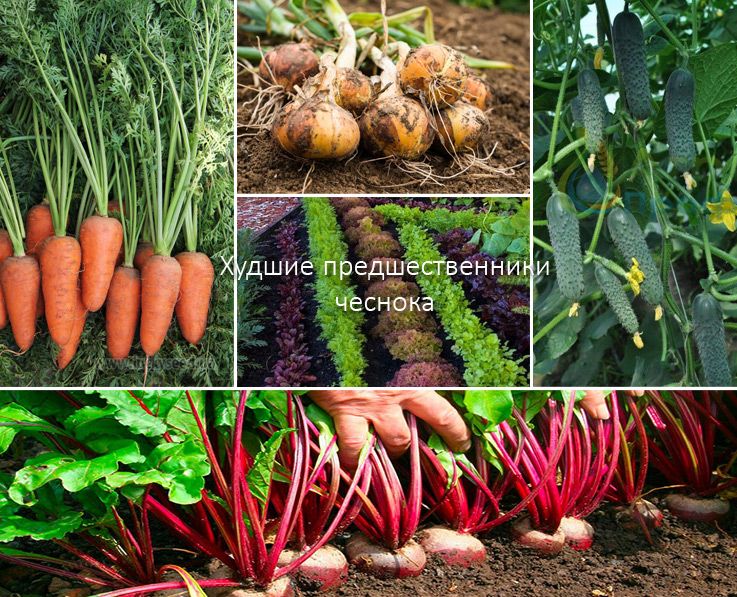
Since garlic roots draw nutrients from the surface layer, it should be planted after long-rooted plants that draw nutrients from deep within the soil, and never after root and tuber crops (potatoes, beets, onions, and greens) that deplete the surface layer. This is especially true since they share the same diseases as garlic (fusarium wilt and nematodes).
Herbs with a spicy smell inhibit the development of garlic and impair its aroma.
Garlic compatibility chart for specific crops
| Compatibility | Predecessors |
| The best |
|
| Possible |
|
| Not recommended |
|
Top.tomathouse.com recommends: Good Neighbors
Garlic is a natural insecticide, fungicide, protector, and can have a positive effect on other plants. Its scent even repels voles.
It should be planted next to lettuce, carrots, tomatoes, cucumbers, beets, potatoes, strawberries, and flowers to protect them from diseases and pests.
Garlic should not be planted next to legumes and cabbage.