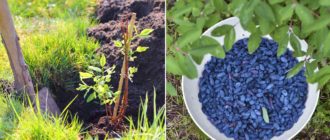
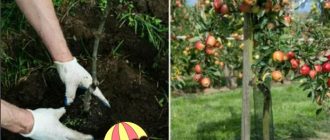
Grafting a mature apple tree helps preserve the trees' varietal qualities. While it's not always possible to replace old specimens with new ones, this procedure quickly and cost-effectively refreshes the orchard.
Apple tree grafting is a vegetative propagation method used by gardeners. It involves joining shoots from several trees.
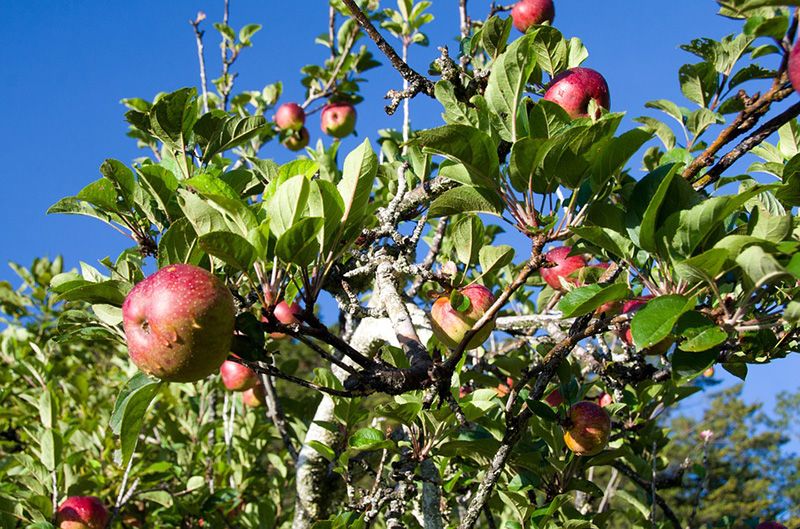
Horticultural professionals use the following terms:
- scion - a part of a tree (bud or shoot) that is grafted onto another plant to obtain new properties;
- rootstock - a donor tree (from which the necessary qualities are taken).
It is believed that this effect is achieved through the cambium, a structural tissue responsible for secondary stem thickening. It is located under the bark. It is important that the cambium layers of the scion and rootstock are in good condition, as close contact is essential.
Content
Objectives and goals
Vaccination is carried out in order to:
- preserve the value of a variety that is lost during pollination;
- reduce the fruiting period by half;
- to obtain a dwarf specimen that produces apples earlier;
- grow varieties that are not adapted to the climate of the region;
- one tree produced fruits of several varieties at once;
- to preserve a specimen injured by animals or aggressive environmental influences (for example, wind, hail, frost);
- try a new variety;
- increase fertility and endurance;
- graft a pollinator;
- update your garden without much expense.
When grafting, cuts are made on the scion and rootstock. The cambium layers are joined and pressed firmly to ensure fusion.
Deadlines
The timing of grafting depends on the climate in the region. For example, in the central part of the country and the southern Urals, apple trees are grafted in the second half of spring, when they emerge from winter dormancy and sap flow begins.
Grafting is also done in the summer (from mid-July to the second half of August), when the sap begins to flow again. Grafting in August is recommended for novice gardeners. This time of year is suitable for garden renovation in all regions of Russia.
Winter
In winter, young apple trees are grafted, which will be planted after the snow melts. This should only be done when the temperature is above freezing. This type of grafting is called "tabletop" because it is performed in special structures.
Step by step execution:
- the most favorable time: January-March;
- done half a month before planting;
- the scion is removed from the donor before frost, at a temperature of at least -8°;
- Before grafting, the branches are kept at 0°;
- in a couple of weeks the rootstock is transferred to a warm room;
- Grafted apple trees are kept at temperatures above zero before planting.
Grafting in winter can only be done by experienced gardeners, because it is quite difficult.
Autumn
Trees are grafted in the fall only as a last resort, for example, when the scion is a unique variety that cannot be preserved until spring. This is because sap flow slows during this period.
Rules of the event:
- in warm weather, when there is no wind;
- If the grafting is done at the beginning of September, it is better to choose the “budding” method;
- Until mid-October, the following methods are used: “in a cleft” (only indoors), “behind the bark” (no later than September, i.e. before frost sets in, otherwise the scion will die and will not be able to take root);
- temperature not less than -15 degrees.
What are these methods: “budding”, “in a cleft”, “behind the bark”, read in the section “Types and methods of grafting”.
It has a high survival rate of rootstocks from young scions.
Summer
Apple trees respond well to grafting. It's recommended to do this in early August, when the second phase of nutrient-rich fluid migration from the rhizome to the foliage begins. In southern regions of Russia, budding is commonly used. Other techniques can also be used.
Spring
The best time for grafting. Trees tolerate it well and recover quickly. This applies to both scions and rootstocks.
The most favorable time according to the lunar calendar is during the waxing moon. Temperatures are above zero and the weather is windless. The best time is morning or dusk.
Selecting scion and rootstock
Successful grafting also depends on the correct selection of trees. First, the rootstock is selected. The apple tree should be healthy, free of bark problems or dead branches, and frost-resistant. Both young and mature trees are used. When the goal is to modify the plant, a young specimen, up to three years old (a wilding), is used. Rootstock varieties that produce abundant fruit and thrive are used. These varieties vary by region.
The donor apple tree should be mature and bearing fruit for at least two years. This will help determine the fruit's flavor, how abundant it will be, and the plant's hardiness.
It's preferable for the scion and rootstock to be of similar varieties. This ensures survival, but is not a requirement.
Preparing cuttings
The apple tree from which the scions are taken for grafting must be fruitful, with good and consistent fruit production. The branches are cut from the southern part of the tree, mature and one year old. They are taken from the center of the crown.
Requirements for shoots for grafting:
- length - thirty to forty centimeters;
- circumference - six to seven centimeters;
- internodes are not short;
- absence of blossoming buds;
- the apple tree is no more than ten years old.
The timing of cuttings varies. They can be taken in early winter, spring, or just before grafting.
Types and methods of grafting
There are many grafting techniques, and they are selected based on the weather and the age of the apple tree. The following tools must be prepared in advance:
- garden saw;
- a well-sharpened knife or pruning shears;
- dressing material: thickened fabric, adhesive tape;
- garden var.
Before any grafting method, it is necessary to disinfect the instruments, wash your hands thoroughly, and try to avoid prolonged contact of the cuts with air.
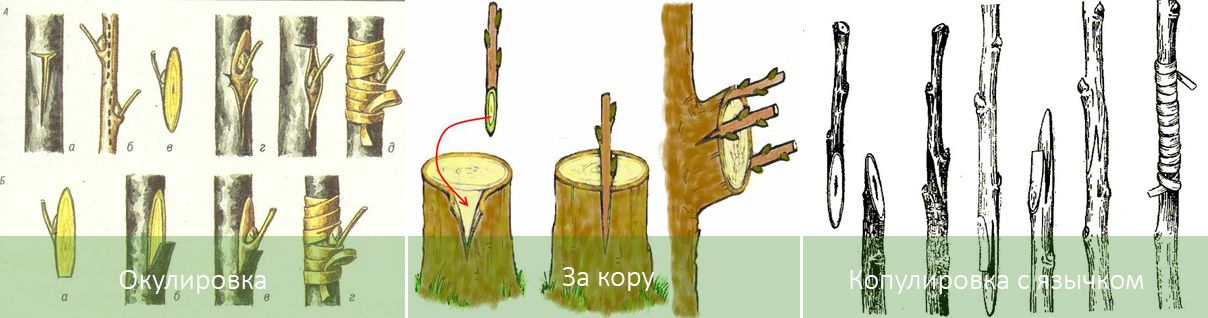
Budding
This technique is based on bud grafting. Its advantage is minimal trauma to the apple tree.
If grafting is done in the spring, a bud from the previous year is used. It is taken from a cutting taken in the fall. Inexperienced gardeners are advised to use a dormant bud, as it is less likely to be damaged.
Step-by-step budding:
- an incision is made on the rootstock from the northern region (the cambium must not be damaged);
- the bud is inserted with the cut close to the trunk;
- the injured area is covered with a dressing material;
- the grafting site is coated with garden pitch;
- All actions are performed quickly.
When the cutting begins to grow, the bandage is removed. If the grafting is unsuccessful, a second graft is made in the same location.
Butt budding is done in the same way. A bud with bark is used, which is applied to the rootstock where the cut scute was. Their sizes must match exactly. This method is used for young apple trees. It is usually performed in spring and summer, when the bark is well peeled off.
Bark grafting
Typically used in the fall, no later than September, it's used to renew the garden, restoring dead above-ground growth while still leaving the root system alive. The bark should be thoroughly peeled away from the trunk to expose the cambium.
Step-by-step instructions:
- a longitudinal cut is made on the rootstock, similar to a pocket;
- the cutting is cut along an oblique line;
- tightly pressed against the cambium;
- fixed by bark;
- is bandaged and treated with pitch.
In this way it is possible to graft several branches onto a wild stock at once.
Copulation with a tongue
This technique is used when the rootstock and scion are of the same diameter. Oblique cuts are made on both branches and they are joined. For a secure fit, notches can be made along the joining line.
After grafting, the damaged area is loosely bandaged and treated with varnish. Copulation can be used to graft several varieties at once.
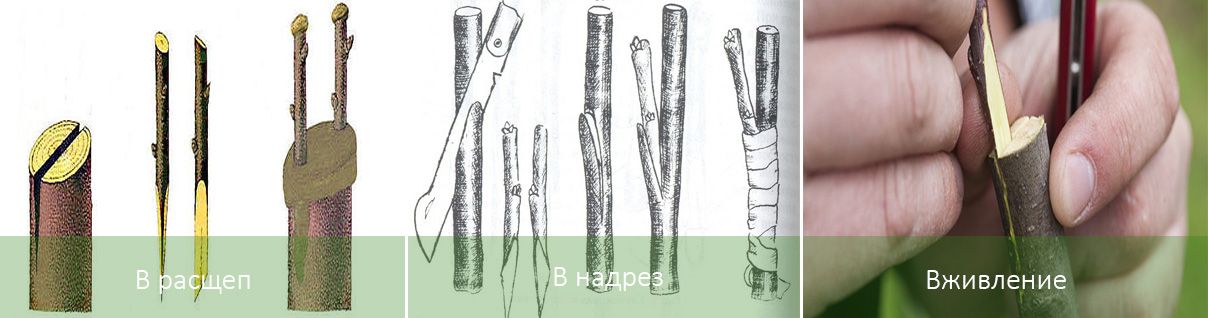
Into the cleft
Used to rejuvenate an old orchard, grafting helps revive the tree and improve the crown's condition. It's done like this:
- the top of the rootstock is sawed off;
- a horizontal cut of five to six centimeters is made on the stump;
- a cutting is inserted into the recess;
- when the circumference of the rootstock is twice as large as the shoot, several branches of the scion are taken;
- The damaged area is covered with a dressing material and treated with varnish.
When the cutting takes root, the bandaging material is removed.
In the fall, grafting is done indoors: after the steps described above, the rootstock and scion are planted in a container and taken to the basement. There, in slightly above-zero temperatures, they will be preserved until spring, when the fused seedlings will need to be replanted.
In the incision
Methodology:
- A seven to ten centimeter cut is made on the scion at an angle of 30 degrees.
- The rootstock is trimmed on both sides and the bark is removed.
- The cutting is inserted into the cut and treated with pitch.
- If the shoot is well connected to the trunk, no bandaging is done.
The method is used when the bark does not separate well from the trunk, damaging the cambium.
Implantation
The diameters of the scion and rootstock must be identical. Technique for implantation grafting:
- The rootstock cutting is cut off, located fifteen to twenty centimeters above the ground surface.
- The resulting stump is cut at an angle, two centimeters away from the branch;
- The upper end of the shoot is coated with pitch;
- The lower end is cut off, the branch is pressed against the rootstock;
- The grafting site is wrapped with polyethylene or PVC tape;
- A bag is put on top and tied.
When the first green leaves appear, the dressing material is removed.
Trees suitable for apple grafting
Apple trees can be grafted onto various trees. Plants of the same species grow together best. However, grafting is also suitable for other crops. What is grafted onto:
| Tree | Peculiarities |
| Pear | Various methods are used for grafting: behind the bark, in a cleft. |
| Rowan | The scion doesn't always take root, but if the grafting is successful, the apple tree will become frost-resistant and tolerant of soil. The fruit quality won't be compromised. In fact, the tree will produce an early and abundant harvest. |
| Plum | Both trees belong to the Rosaceae family, so grafting is successful. However, using plum as a rootstock is pointless. It has a shorter lifespan than apple trees. Its shoots are thinner, and the branches tend to break. There are no reports of good yields. |
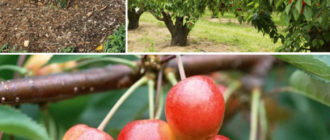
| Cherry | Belongs to the Rosaceae family. Successful grafting is not an indicator of subsequent good development. A harvest will likely not be achieved. |
| Quince | It is usually used only experimentally. The grafted part dies after several years. |
| Irga | It is a dwarfing rootstock. The graft is made fifteen to twenty centimeters above the ground. |
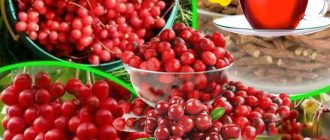
| Viburnum | Grafting makes the apple tree frost-resistant. However, it also results in smaller fruit. |
| Hawthorn | It is a low-growing tree. This reduces the fruiting period by a year or more. The tree grows together smoothly, without defects. Another advantage is that the hawthorn rhizome is located close to the surface soil. Therefore, after grafting, the apple tree can be grown in areas with high groundwater levels. |
| Birch | Grafting is possible, but the results are likely to be negative. Birch is a tall tree, so there's no point in using it as a rootstock: apples are difficult to harvest. |
| Aspen, bird cherry, sea buckthorn | They are used for experimental purposes. Even if the grafting is successful, the viability of the apple tree will be low. |
Reasons for failures
To avoid failure, you need to consider the following:
- budding is not done on the south side: direct sunlight can ruin everything;
- vaccination is not done in the rain;
- Fresh scion must not be used: shoots are cut when the tree is dormant;
- After grafting, careful care is required, otherwise the apple tree will reject the cutting;
- the bandage is removed after the branch has taken root (if this is not done, growth will slow down);
- shoots below the graft are removed;
- The growth of branches above the damaged area is restrained until the new cutting begins to receive nutrients.
If all rules and requirements are followed, the grafting is successful. There will be no further problems with the tree.
Top.tomathouse.com warns: safety is an important component
Safety regulations:
- grafting is done in dry weather, when there is no wind;
- you can't get distracted;
- When making cuts, make sure that your other hand is not under the knife blade;
- Before making a cut, mentally trace the movement of a sharp instrument;
- When processing the end of the cutting, direct the knife blade away from you.
Vaccinations involve dangerous equipment, so safety precautions are essential.