Physocarpus senna is a deciduous shrub belonging to the Rosaceae family. It gets its name from its bladder-shaped fruits. It grows primarily in northern America and eastern Asia.
There are several dozen different species and varieties of Physocarpus, found virtually all over the globe. In gardening, it is used as part of landscape design to give a site a beautiful, unique appearance.
Content
- 1 Features of Physocarpus
- 2 The most popular types of Physocarpus
- 3 Popular red-leaved varieties
- 4 Popular yellow-leaved varieties of Physocarpus
- 5 Popular varieties with green leaves
- 6 Planting bladder senna in open ground
- 7 Caring for Physocarpus
- 8 Possible damage to the bladderwort
- 9 Propagation of Physocarpus
- 10 Top.tomathouse.com recommends: using Physocarpus in landscape design
Features of Physocarpus
It grows quite rapidly, reaching a maximum height of 3 meters. It has a very lush and dense crown, and thanks to its easy pruning, it is often used as an ornamental plant. Its leaves are very similar in shape to those of viburnum. Flowering begins towards the end of spring, characterized by the appearance of beautiful small white flowers. They grow up to 1.5 cm in diameter and form inflorescences of up to 10 on a single branch. In Russia and the CIS, two species are most popular; they are similar to each other.
It is widely used as a decorative element in landscape design because the shrub thrives in any environment.
The most popular types of Physocarpus
In Russia and the former Soviet Union, the plant is grown exclusively for ornamental purposes. This practice dates back to the mid-19th century.
The total number of popular varieties is about 14, which are widespread in Europe and Asia.
Amur bladder senna
Found in Asian forests, it grows up to 3 meters tall. The leaves are large and heart-shaped. The undersides are covered with a rough white coating.
The inflorescences consist of small specimens, 15 pieces maximum.
Viburnum-leaved bladder-senna
It grows in American forests, valleys, and river terraces. Its distinctive features include its large growth habit and a semi-spherical crown. Its flowers are pink or white with red speckles (stamens).
There are a large number of different variations of this species with different leaf colours.
Popular red-leaved varieties
Plants in this subgroup prefer sunny, open locations. In the shade, they are unable to fully open and bloom. Therefore, a beautiful red flower will turn into a plain green in shady areas.
Diabolo
A very beautiful variety with a beautiful appearance. The leaves are glossy purple and have a spreading crown. It grows to 3 m in height and requires pruning.
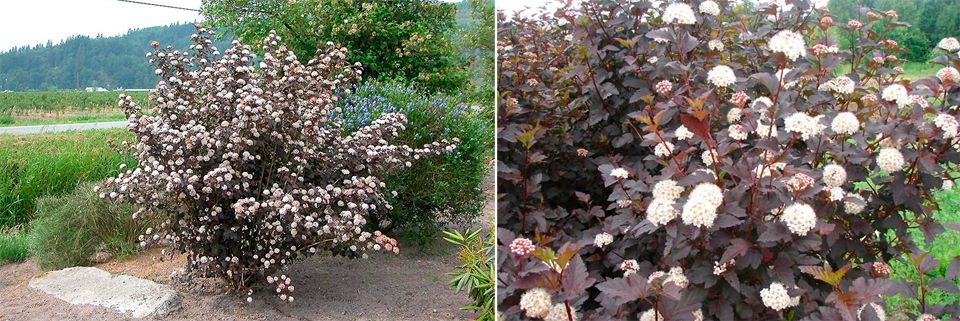
With the arrival of spring, it does not lose its original appearance; however, in shady areas where there is not enough light, it can easily lose its proper beauty.
Red Baron
The crown has a spreading shape, up to 2 m in height and about the same in width.
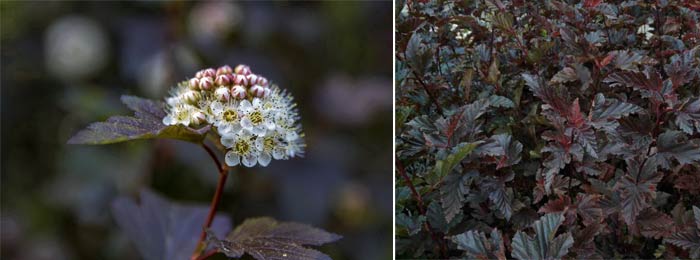
In autumn the leaves change colour to bronze.
Summer Vine
The name translates as "Summer Wine." It has a spreading crown and wine-colored foliage with a metallic sheen. It reaches 2 meters in height, and with the arrival of spring, lush blooms appear, revealing white inflorescences.
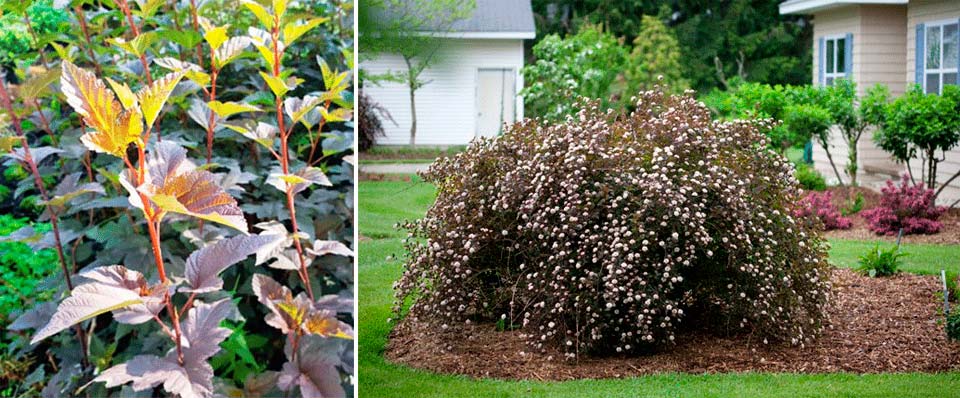
Quite resistant to low temperatures.
Lady in Red
The foliage is a light red hue, the flowers are approximately the same, pink.
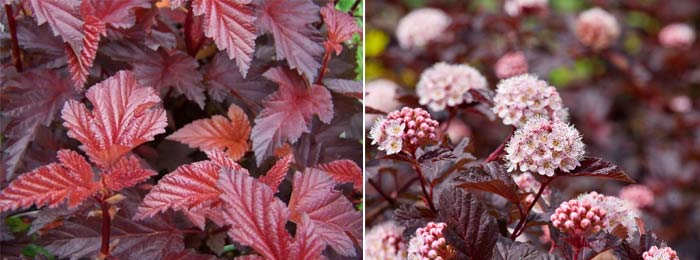
It reaches a height of no more than 1.9 m. In autumn the foliage darkens.
Andre
It grows to 2 m in size, the foliage is orange, in early summer this color changes to bronze with red tints.
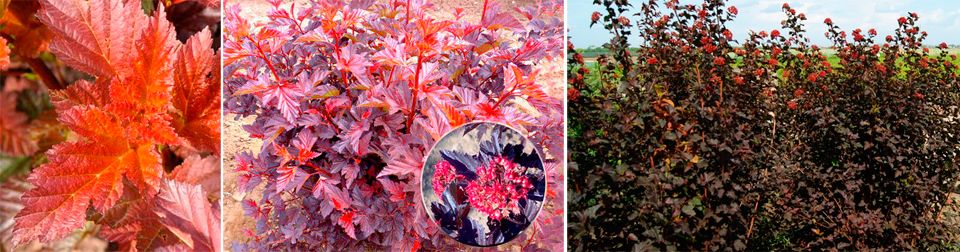
The leaves are medium-sized, about 10 cm long. Flowering occurs in June with white flowers.
Shukh
The foliage, like Summer Vine, has a wine hue, flowering begins towards the end of spring, characterized by the appearance of pink flowers.
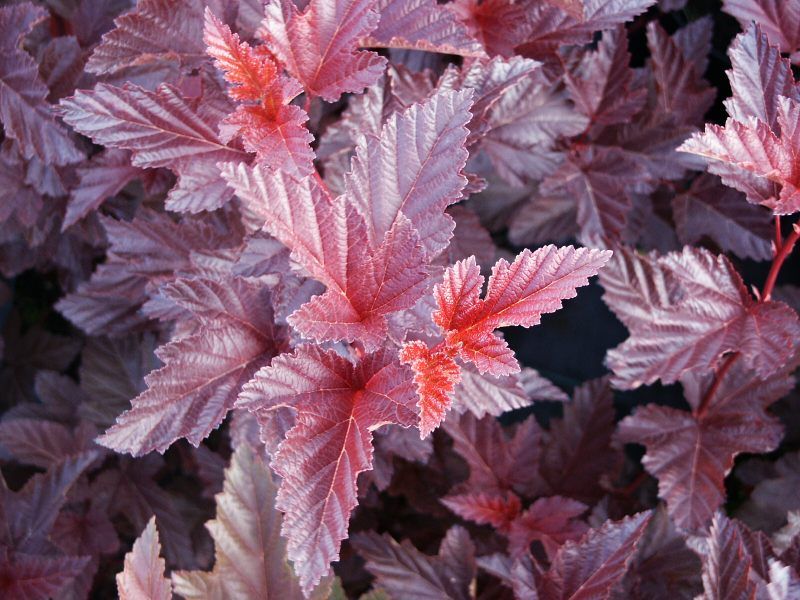
It reaches 2 m in width. It has good resistance to low temperatures and sudden changes.
Little Angel
The variety has a self-explanatory name, reaching a maximum of 1 m in width and height. The leaves are also small in size.
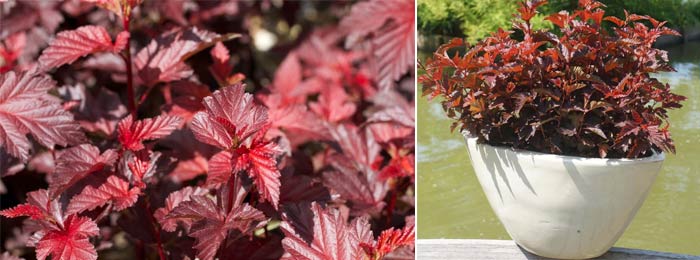
They have an orange tint, which turns burgundy over time.
Midnight
It is the most somber and dark of the existing subspecies of Physocarpus. Mature shrubs have dark burgundy leaves.
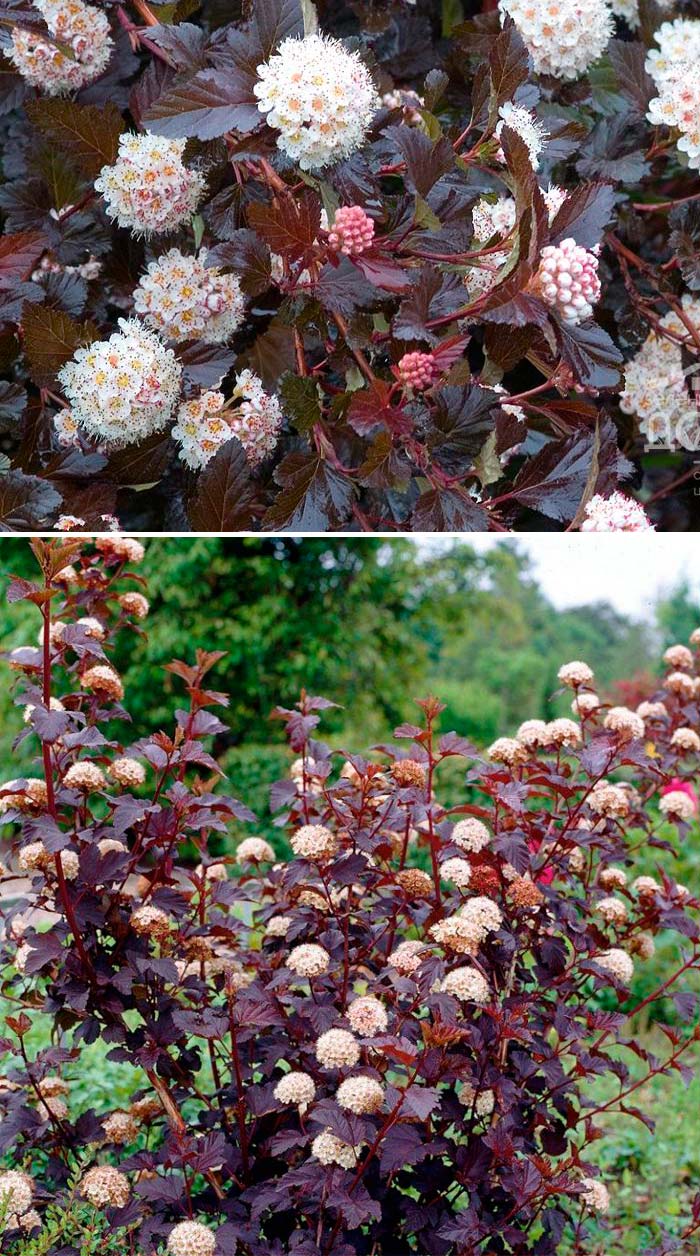
This plant produces pinkish flowers. It grows 1.8 m tall and 1.5 m wide. In autumn, the leaves turn orange.
Little Joker
It also has a telling name and small purple leaves. In the fall, the foliage turns brown.
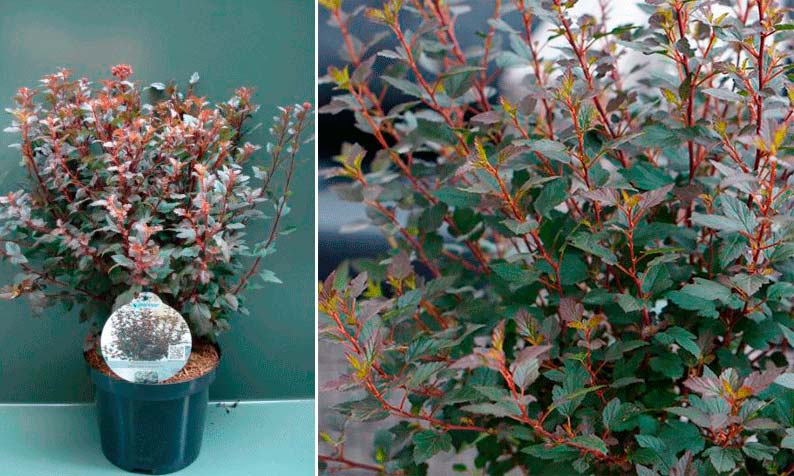
However, the flowers remain white throughout the entire time.
Tiny Vine
1.3 m high, less than 1 m wide. It is an excellent solution for those who want to decorate a small garden.
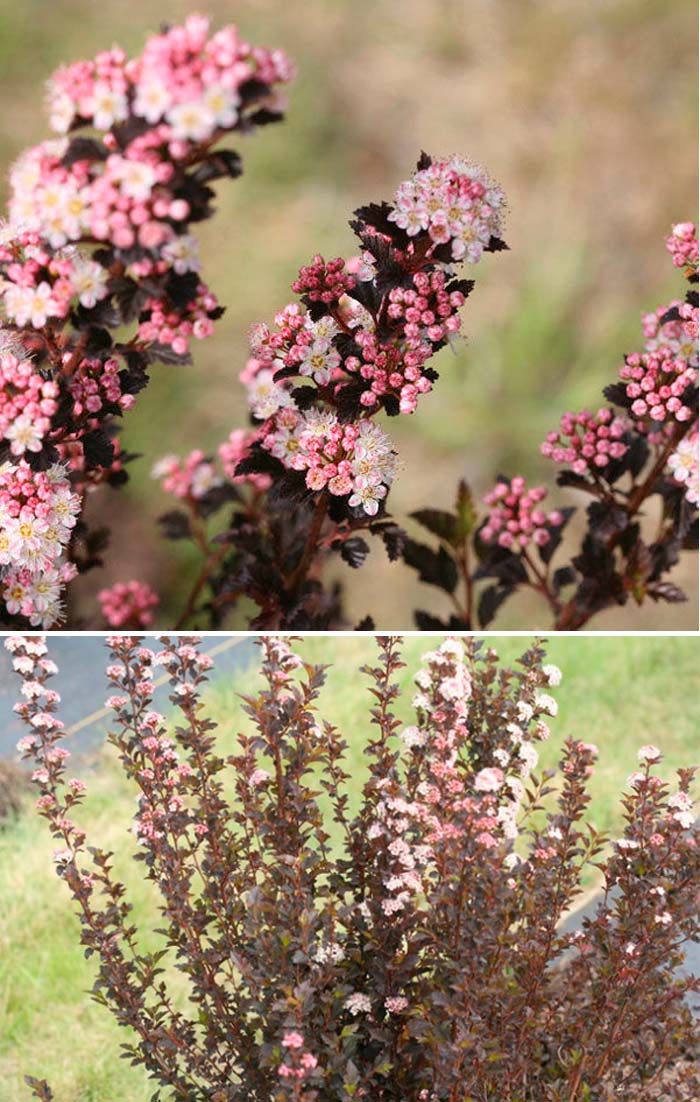
The foliage is a deep burgundy. The inflorescences are white with pink highlights.
Popular yellow-leaved varieties of Physocarpus
Just like red-leaved varieties, these varieties need sunlight to reveal the full range of their colors.
Luteus
It can grow up to 3 m in height, with a crown diameter of 4 m.
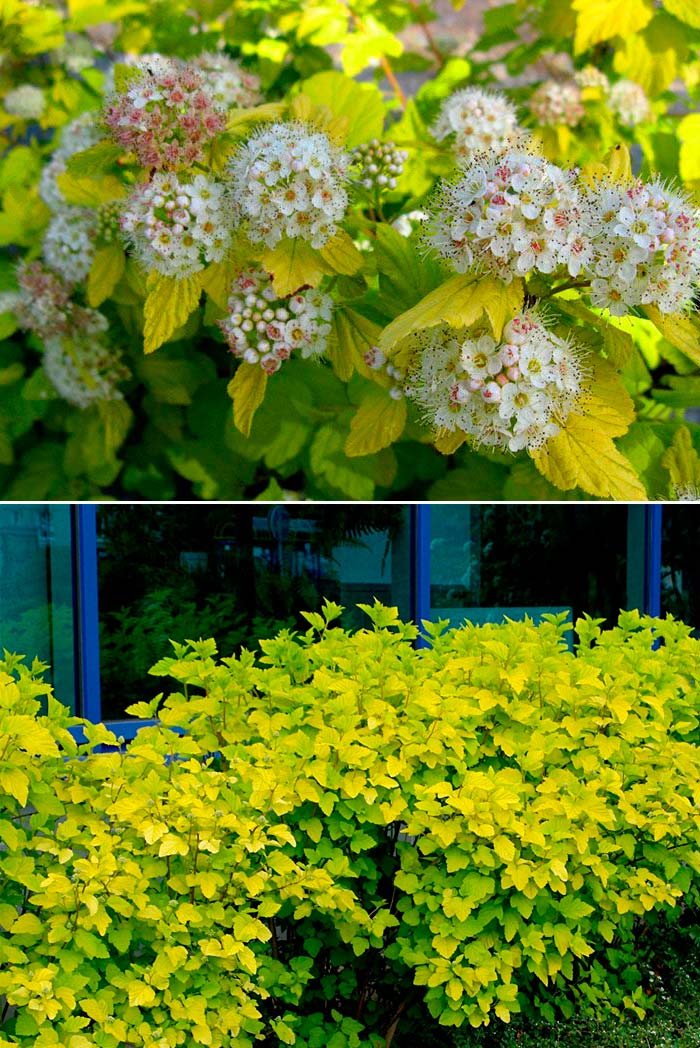
The foliage changes color throughout the year.
Darts Gold
Average height, 1.6 m.
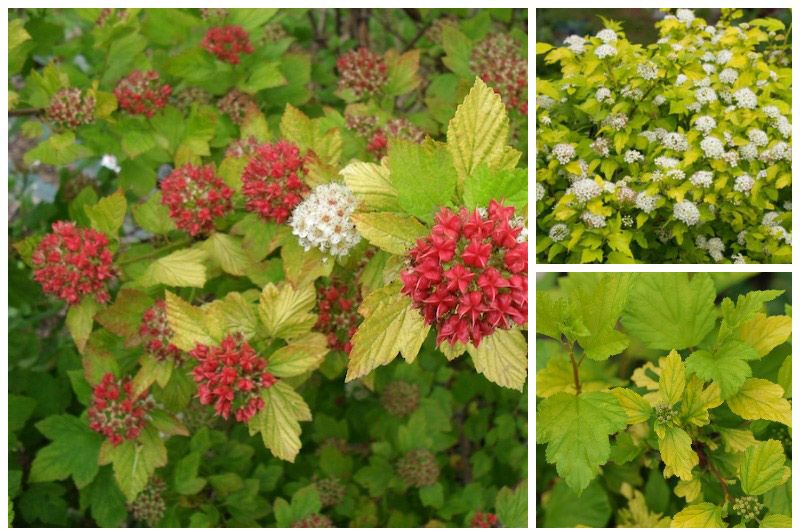
At the time of blooming, the leaves have a light shade, in summer they change to a green transition, and in autumn they turn bronze and yellow.
Nugget
Medium-sized, up to 2 m in height.
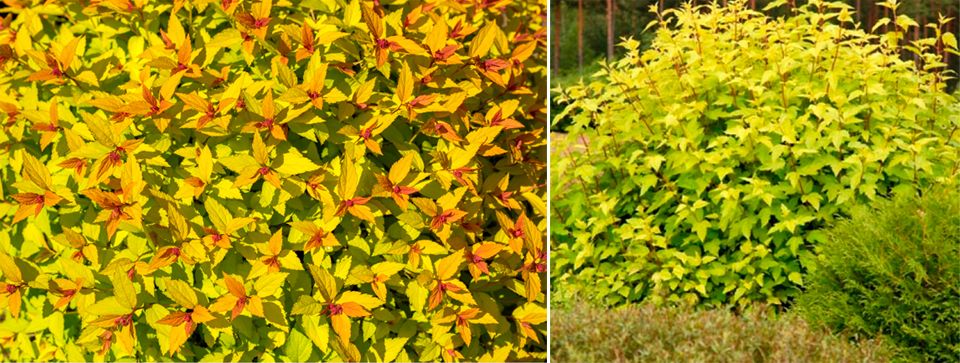
The leaf blades are also small, at the time of flowering they have a faint yellowish color, but then acquire a green tint.
Enis Gold
It differs from the others by its variegated leaves.
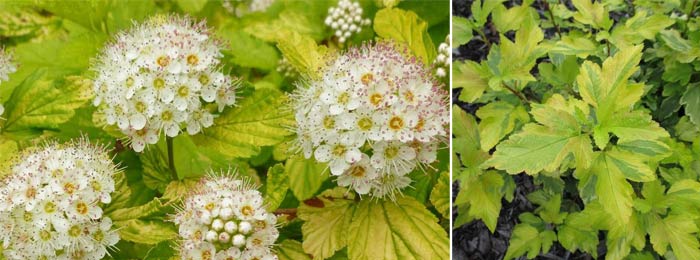
The bush itself is quite small, with a crown in the shape of half a ball.
Amber Jubilee
Belongs to the British selection, most in demand for decorative purposes.
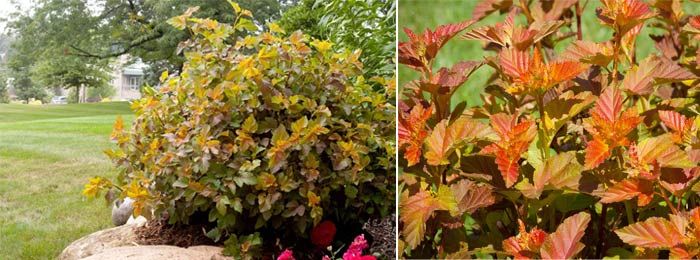
A distinctive feature is its small crown, reaching 1.5 m.
Aurea
Medium-sized, 2.5 m in height.
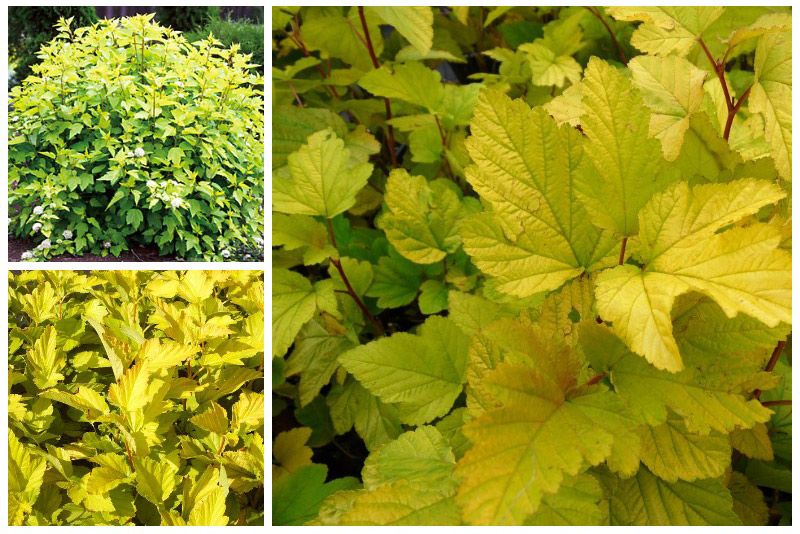
The foliage retains its bright yellow color during flowering, but turns golden in the fall.
Popular varieties with green leaves
Green-leaved varieties are virtually universal in use and can easily be combined with subspecies of other flowers.
Nanus
The plant's distinctive feature is its compact form, with heights ranging from 70 cm to 1.3 m and widths reaching no more than 0.8 m.
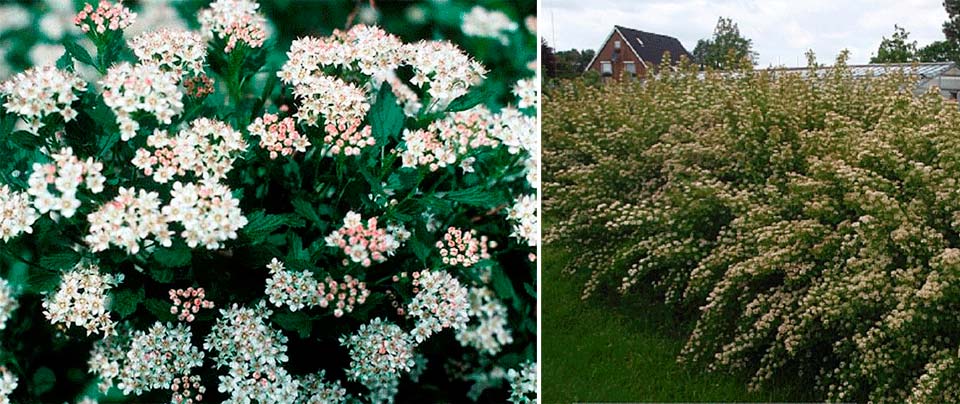
The foliage is green in color.
Chameleon
This is also a compact variety, but slightly larger than the previous one. It reaches a height of 1.5 m and has a unique coloring. The leaves are green with a reddish-yellow tint.
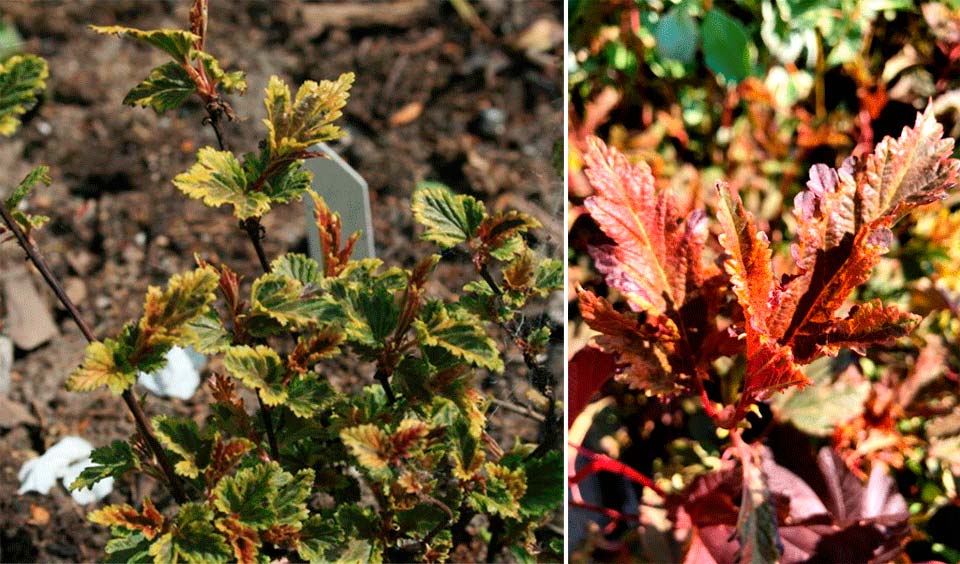
At the beginning of growth, the foliage has a purple edge, and as it matures, it becomes light green.
Planting bladder senna in open ground
Although the bladder senna is a fairly unpretentious plant, it still has some preferences.
Planting dates
The planting time depends on the root system of the bladder senna seedling. If the plant has a closed root system, it can be planted any time except winter. If it has an open root system, only early spring or fall is suitable.
Location and soil
A sunny site is best, away from large trees. The shrub isn't fussy about soil type, but it does have some requirements.
It is necessary that the soil be drained and contain lime.
Landing technology
When preparing a hole for planting, make sure it's deep enough to accommodate a rich layer of soil. The position of the root collar is crucial. It should be at the surface.
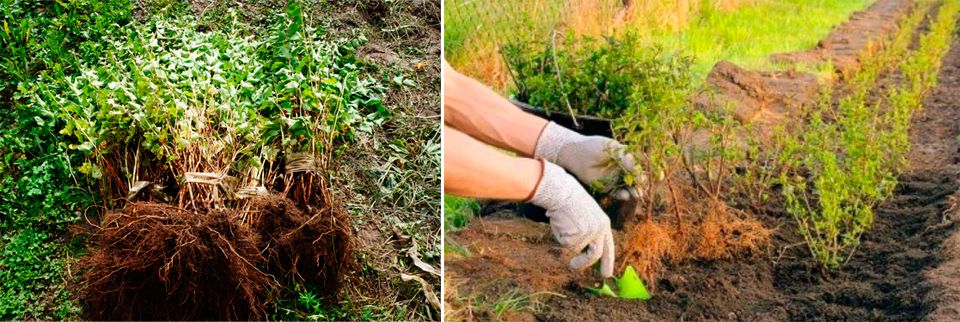
Preparing the planting holes should begin 15 days before planting. This will allow the fertilized soil to settle, ensuring the most effective planting. Once the plants are in the hole, ensure ample and regular watering.
If the soil starts to sag, you need to add more.
Caring for Physocarpus
The plant is fairly easy to maintain and doesn't require extensive care. However, to maintain its decorative qualities, certain rules must be followed.
Watering and fertilizing
Watering is crucial; the shrub absolutely hates drought. Care must be taken to avoid water getting on the leaves, as this will cause sunburn. To prevent this, water in the morning and evening, when the sun is not too hot. In summer, water at least twice a week, with at least four buckets of water per plant.
If the area is not mulched, the soil must be thoroughly loosened after each watering.
Fertilizers are applied no more than twice. This is done in spring and fall; the mixtures vary depending on the season. In spring, we recommend applying: 1 bucket of water, 500 g of mullein, a tablespoon of saltpeter, and a tablespoon of urea. About 1.5 buckets are required per bush.
In the fall, apply 10 liters of water and 2 tablespoons of nitroammophosphate. Use 1.5 buckets per bush.
Bush formation
The plant responds well to pruning, which is necessary not only for decorative purposes but also for sanitary reasons. In the spring, pruning is done as a preventative measure to prevent infection. All dead, inward-growing branches are removed.
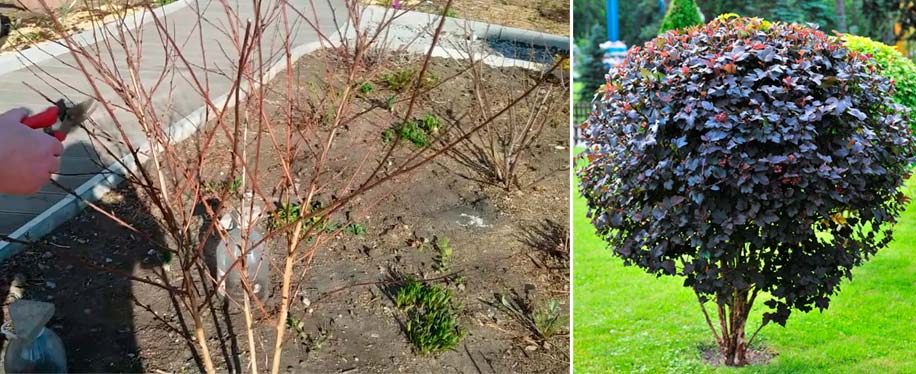
Autumn pruning is a preparatory step for winter. To give the shrub a fountain-like shape, remove thin stems at the very base, leaving only about five of the strongest and healthiest.
If the goal is to make the bush wide, pruning is done at a height of 50 cm.
Transfer
It may be necessary to relocate a plant. This could be due to a sudden illness affecting the plant or its neighbors, a sudden cold snap, etc.
It's recommended to repot mature plants only in early spring, before the buds swell. This can also be done in the fall, after the leaves have fallen.
Repotting is done with a large root ball. Before repotting, the plant is pruned, removing all weak, damaged, and diseased branches. Those that remain should be shortened to a length of 20-30 cm. This is done to reduce the strain on the root system, as it will be difficult for the plant to establish itself in the new location and immediately begin feeding on the larger branches.
The planting process is exactly the same as when planting a seedling in open soil. The only difference is that the leaves need to be treated with a special pest control solution.
Preparing for winter
Despite its high tolerance to low temperatures, if a harsh winter is expected, care should be taken to preserve the plant. To do this, first tie it with twine, then carefully place a cone of roofing felt on it, preferably a tar paper. Lutrasil wrapping is also an option.
Before mulching, the soil surface should be covered with a layer of mulch. This layer should be at least 5 cm and no more than 9 cm thick. Young plants need to be pruned before mulching.
Possible damage to the bladderwort
The plant is disease-resistant. However, it can still be damaged. Because the shrub dislikes drought, inexperienced gardeners often overwater it, causing waterlogging in the soil. This waterlogging can lead to rot, which in turn can negatively impact flowering.
If the plant lacks a nutrient, the leaves will begin to turn yellow. To correct this problem, spray the plants with an iron-containing solution.
Propagation of Physocarpus
Obtaining young shoots of this plant is possible in various ways, each of which has a list of specific advantages.
Cuttings
For this purpose, shoots at least 15 cm long are used. Cuttings are taken before the shrub begins to bloom, otherwise significant damage can occur.
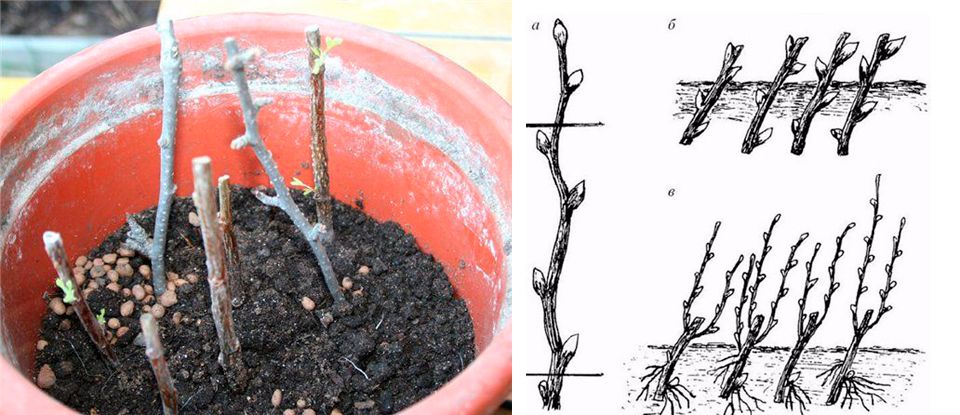
After harvesting, the cuttings are treated with special solutions and placed in a greenhouse.
Layers
This is the simplest existing method. It involves rooting a young shoot growing at the edge of the bush. It is cleared of its lower leaves and then anchored in a trench 10 to 12 cm deep. The shoot is placed in the hole and covered with soil.
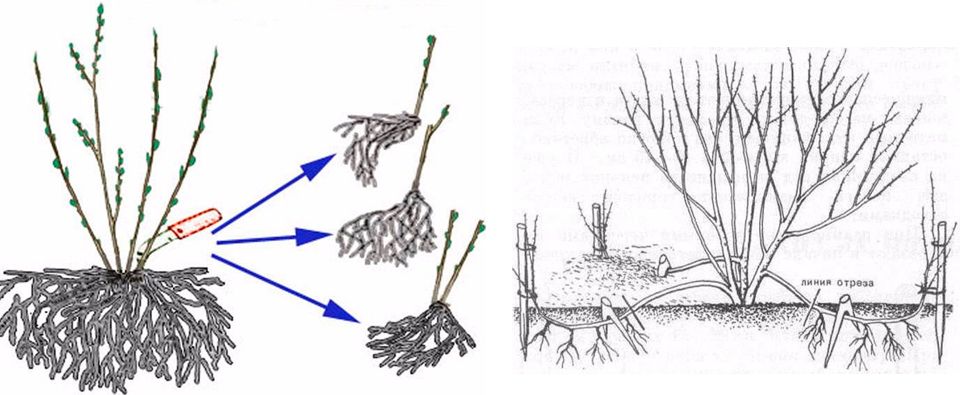
Dividing the bush
It's recommended to perform this procedure twice a year, in spring or fall. However, it's important to remember that a plant's root system dries out very quickly when not in soil.
Seeds
The most difficult of the methods.
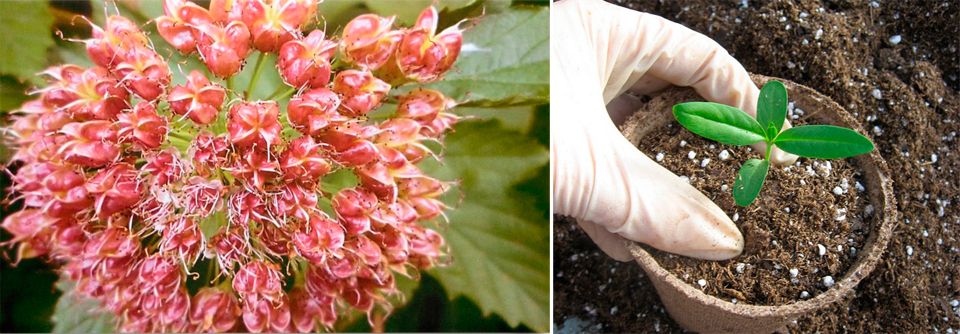
It is used much less frequently than the others because young shoots can have a completely different color than the bush from which the seeds were taken.
Top.tomathouse.com recommends: using Physocarpus in landscape design
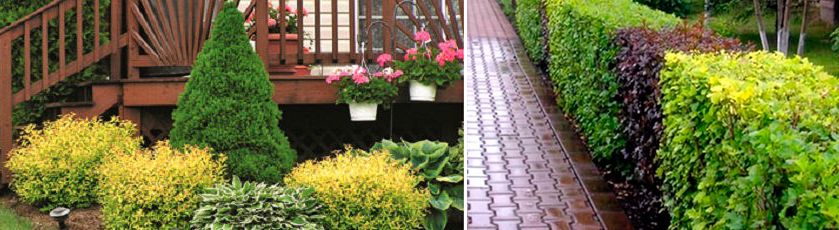
Since people noticed the wide variety of colors of the leaves of this plant, the shrubs have been used quite widely.
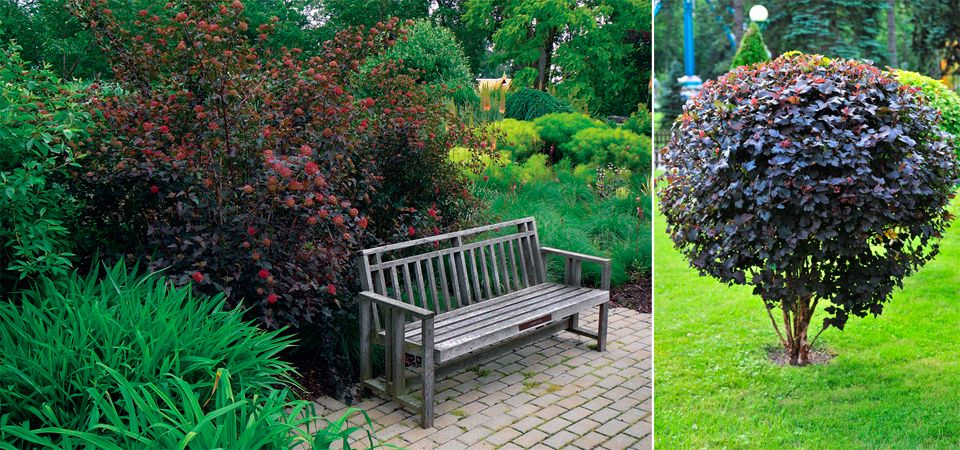
They are used for landscaping park areas, creating hedges, and various flower borders.